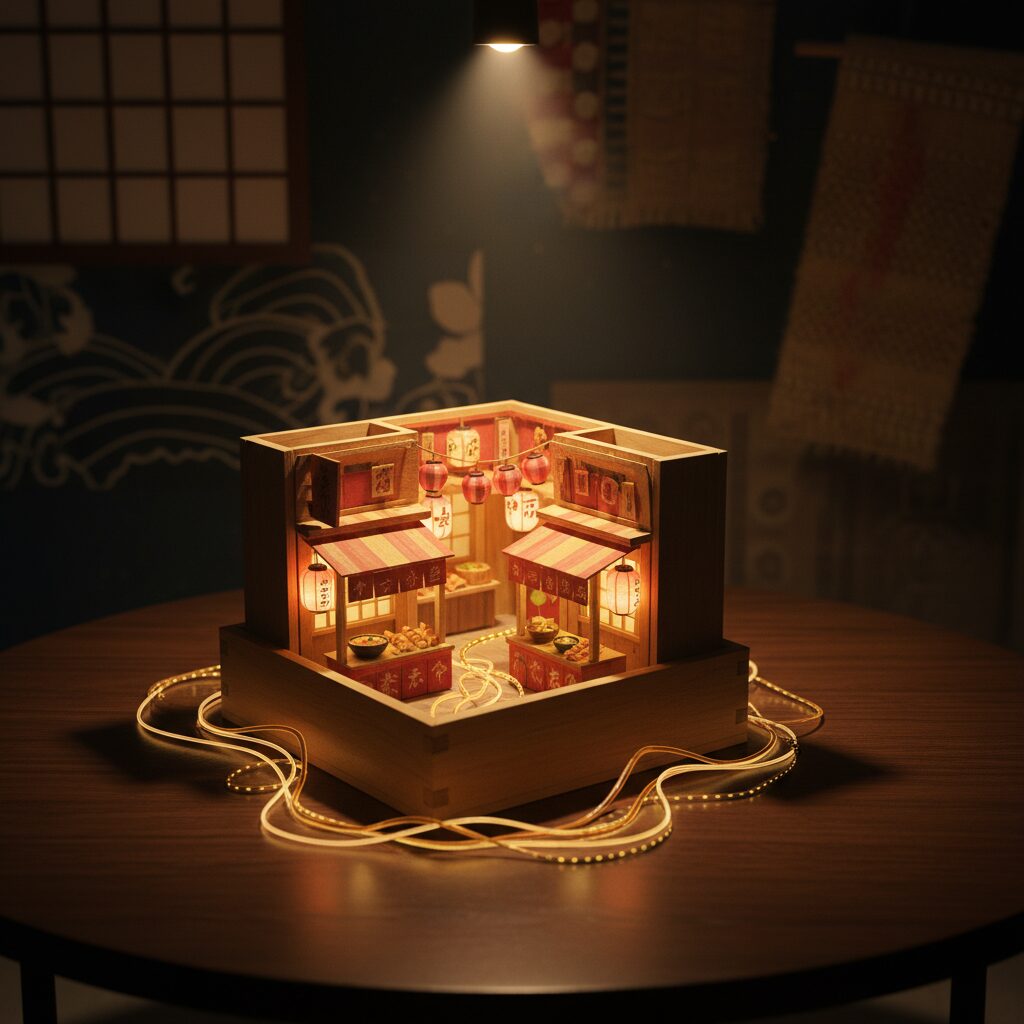
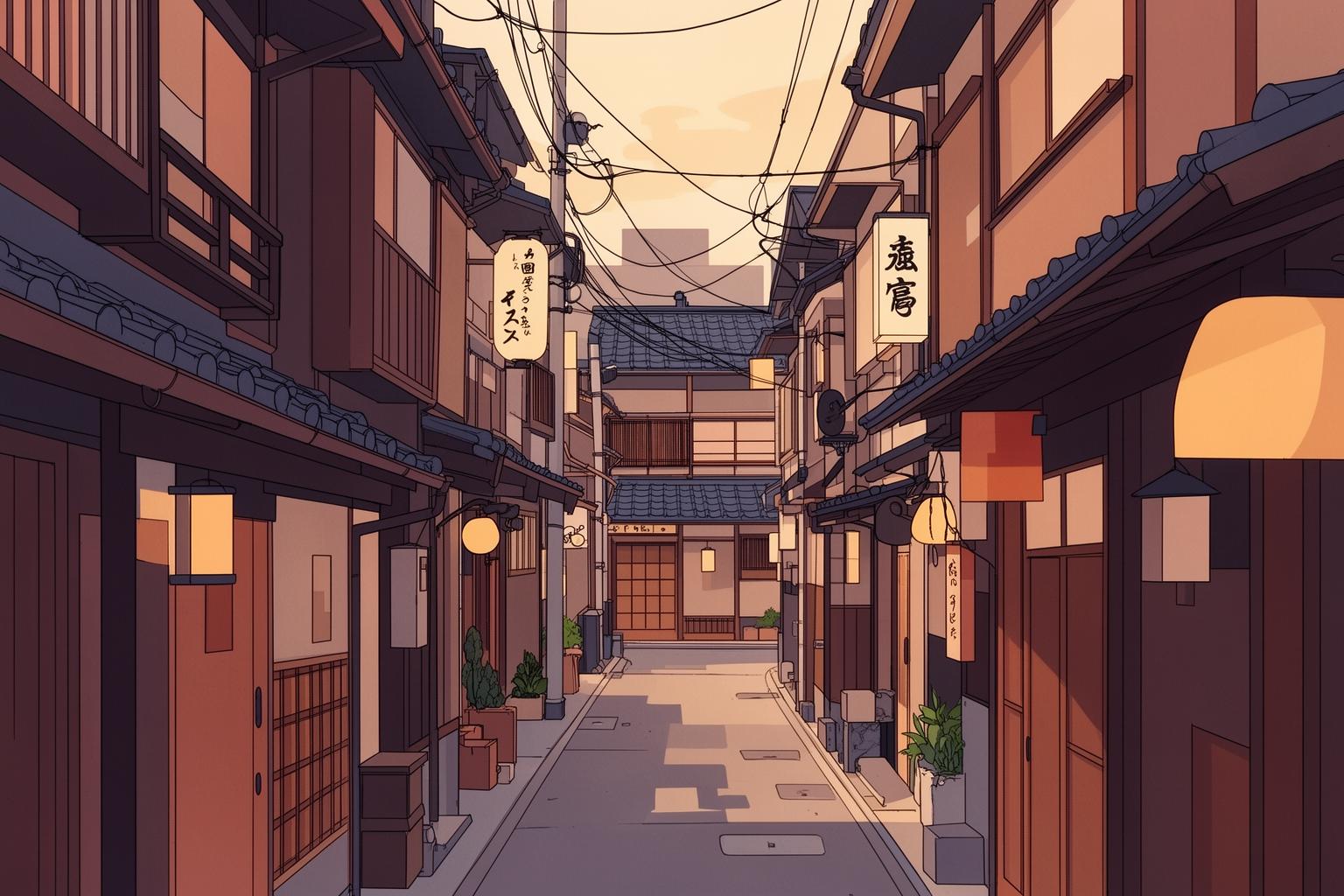
Walk away from the blinding lights of Shinjuku’s main drags or the synchronized scramble of Shibuya Crossing, and you’ll eventually find them. Tucked into the creases of the city, breathing softly between concrete behemoths, are the yokocho—the back alleys. To call them just ‘streets with bars’ is like calling a library a ‘room with books.’ It misses the entire point. A yokocho is a tightly wound ecosystem, a living museum of Showa-era grit, and one of the most revealing social theaters in all of Japan. Step under the low-hanging tangle of wires and faded paper lanterns, and you’re not just entering a place to drink; you’re stepping onto a stage where a very specific, unspoken drama unfolds every night.
My first encounter felt like stumbling into a secret. The air, thick with the scent of grilled chicken skin and sweet soy, pulled me in. I parted a stained noren curtain and was met with a wall of sound and heat. Ten people, maybe twelve, were pressed shoulder-to-shoulder along a worn wooden counter, their movements economical, their voices a low hum beneath the sizzle of the grill. There was no host stand, no menu board, just the quiet authority of the old man behind the counter, his hands a blur as he turned skewers and filled glasses. It was immediately clear that this was not a place you simply conquer. It was a place you had to understand. These alleys, with their closet-sized bars and ramshackle charm, operate on a dense, invisible web of social contracts. They are a masterclass in reading the room, and for the uninitiated, they can feel as impenetrable as they are enticing. But if you learn the code, you gain access to one of the most authentic and rewarding experiences Japan has to offer.
Amidst the subtle drama unfolding in Japan’s compact back alleys, the enduring allure of 80s Japanese city pop serves as a sonic parallel to the era-defining spirit of these urban refuges.
The Architecture of Intimacy
Before understanding the rules, you must first comprehend the space. The design of a typical yokocho bar is intentional; it forms a deliberate framework for a specific type of human interaction. These places aren’t crafted for privacy or expansive comfort. Instead, they are built for friction—fostering incidental, fleeting connections that modern life has largely diminished.
Designed for Proximity, Built for Harmony
At the core of the yokocho is the counter. Most venues consist of nothing more than a long wooden plank, a few stools, and a cooking area so close you can feel the grill’s heat on your face. The space is restrictive. You cannot avoid your neighbor. Your elbows might touch. You will overhear their conversation. In many cultures, this enforced closeness could provoke social anxiety, but here, it serves a distinct purpose. It removes the illusion of personal space and, in doing so, creates a shared vulnerability. Everyone is navigating the same “human Tetris.”
This physical intimacy demands heightened social awareness. You learn to make yourself smaller, to move thoughtfully. You place your bag in the small basket provided, keep your coat tucked in, and eat your skewers with careful precision. This is a physical reflection of the Japanese social value of not imposing on others (meiwaku wo kakenai). The design compels consideration, and through this mutual respect, a unique harmony emerges. Each tiny bar forms its own universe, a sekai-kan (worldview) thoughtfully shaped by its owner. The chipped sake cups, vintage movie posters, and quiet jazz playing from an old speaker all signal the expected behavior within these few square meters.
The Counter as a Stage
The counter serves as more than just a place for food and drink; it acts as the proscenium arch of this intimate theater. On one side are the customers—the audience and supporting cast. Opposite them stands the taisho (master) or mama-san, the lead actor, director, and stage manager rolled into one. They operate within a compact space, much like a ship’s galley, with every tool and ingredient within easy reach. Their movements are a well-practiced dance—a performance of quiet skill.
This arrangement creates a unique dynamic. The master is not a distant, anonymous worker but the host of a very small, very public dinner party. They see and hear everything. They serve as the central hub through which all social energy flows. They might subtly introduce two customers who share an interest or deftly steer a conversation away if it becomes too loud or tense. Their quiet approval serves as the currency of the space. Pleasing the master is not about being obsequious but demonstrating understanding and respect for the world they’ve crafted. Thus, the counter is not a barrier but a bridge—a shared space where commerce and community intertwine.
The Unspoken Social Contract
Navigating a yokocho successfully hinges less on what you say and more on what you do—and what you avoid doing. The unwritten rules are learned through careful observation and, at times, gentle guidance from a regular or the master himself. Central to this is the concept of kuuki wo yomu, or “reading the air,” an ambient social intelligence that shapes all interactions.
Reading the Air: Entry and Seating
Your test begins before you even sit down. You don’t simply walk into a small, crowded bar. Proper etiquette calls for a pause at the entrance, often marked by a sliding door or a cloth curtain. You peek inside, aiming to meet the master’s eye. A brief, subtle glance suffices. In that instant, a silent negotiation occurs. The master evaluates: Is there an open seat? Are the current patrons a tight-knit group who might be unsettled by a newcomer? Are you, the newcomer, projecting the appropriate energy—quiet, respectful, observant?
If there’s room, you’ll receive a slight nod, a gesture toward an empty stool, or a quiet “douzo” (please, go ahead). If the bar is full or the moment calls for ‘regulars only,’ you may be met with a polite, apologetic wave-off or a simple bow. This is not a personal rejection but the master managing their space. Arguing or insisting is a cardinal sin. You simply nod, smile, and move on. Once inside, you take the seat you’re shown. It’s not up for negotiation. The seating arrangement is a delicate puzzle, and the master knows exactly how the pieces fit.
The Economy of Time and Space
A yokocho bar isn’t your living room. It’s not a spot to linger for three hours over a single beer while scrolling through your phone. Both the business model and social rhythm depend on flow. Space is precious, and occupying it longer than necessary violates the social contract. This is the realm of senbero—a blend of sen-en (1,000 yen) and berobero (drunk)—the notion that you can enjoy a pleasant buzz at a modest price.
The unspoken agreement is to have a drink or two, order a few small plates, and then leave gracefully, freeing up your seat for the next customer. This bar-hopping culture is known as hashigo-zake, or ‘ladder drinking,’ where you move from one venue to another through the evening. Lingering too long, especially when others wait outside, is inconsiderate. Knowing when it’s time to pay without being prompted and departing with a quiet “gochisousama deshita” (thank you for the meal) marks someone who truly understands.
The Art of Conversation
In the West, bars often encourage loud, lively talk. In a yokocho, the volume is turned way down. While striking up a conversation with the person beside you is possible—and often appreciated—it requires finesse. Again, you must read the air. Is your neighbor absorbed in a book? Having a quiet, intense discussion with a friend? Displaying closed-off body language? If so, respect their space. Unlike Western bar culture, comfortable silence here is perfectly fine. There’s no social pressure to fill the silence with chatter. You’re free to simply sit, eat, drink, and be.
When conversation does arise, it tends to be light and situational. You might comment on the food, ask where someone is from, or share a laugh about something happening in the bar. Deep personal topics or heated debates are generally avoided. The master often serves as the conversational hub, connecting people or maintaining smooth banter. Engaging the master is always a good choice: ask about the sake, compliment the food, inquire about the shop’s history. This shows respect and genuine interest. Remember, you’re a guest in their home and should behave accordingly.
The Cast of Characters: Master, Regular, and Newcomer
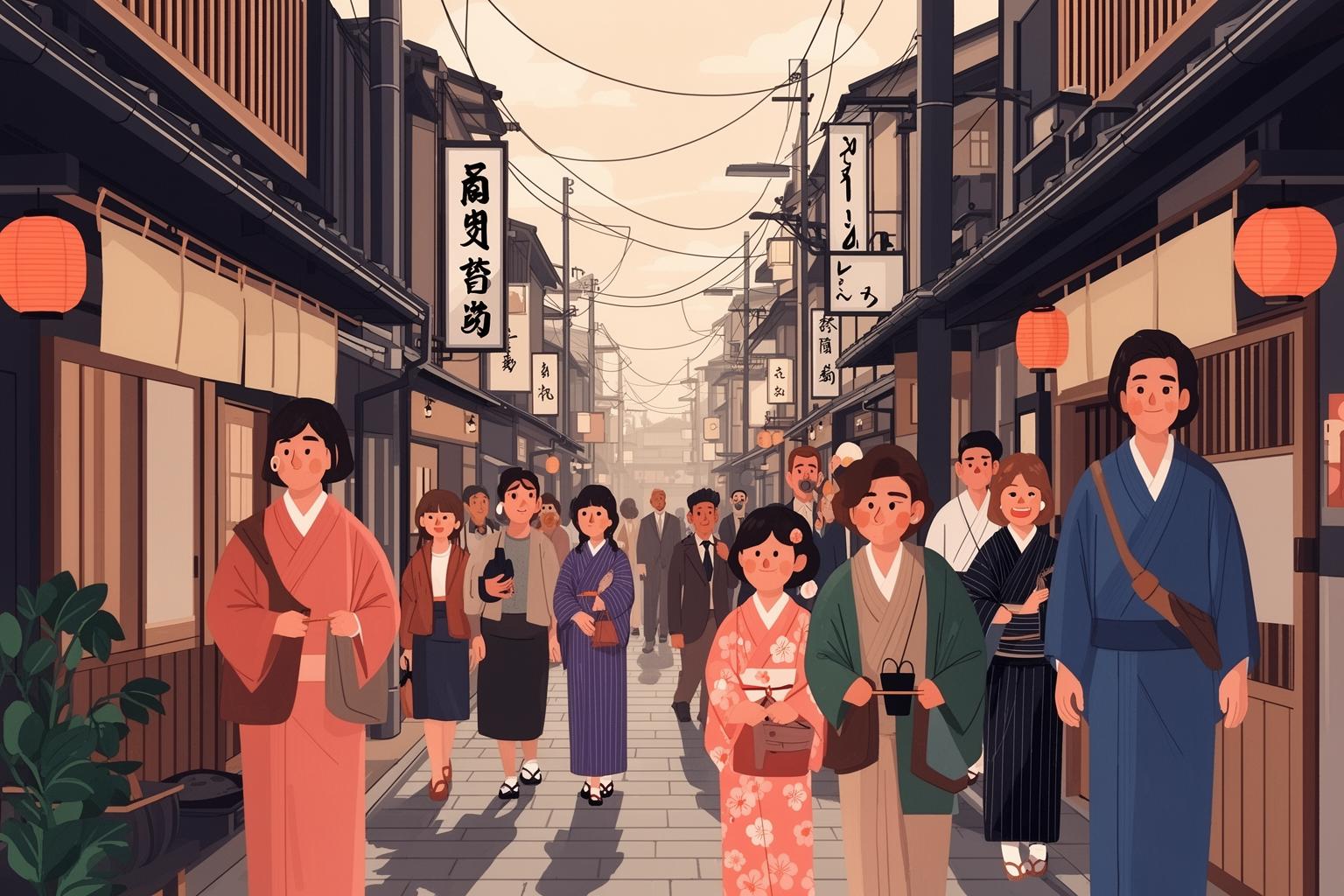
Every yokocho bar functions as a micro-society, complete with its own unique cast of characters and well-defined social roles. Grasping these roles is essential to discovering your place within this ecosystem.
The Master (Taisho) and Mama-san
At the heart of this world stands the owner. Whether it’s a seasoned taisho who has been grilling skewers for forty years or a warm mama-san who recalls every regular’s favorite drink, they are the steady anchor of the establishment. They are more than just staff; they curate the entire experience. Their personality shapes the character of the bar. Some are outgoing and talkative, others are reserved and silent, expressing themselves solely through their craft. Patrons select a bar not only for its menu but for the distinctive atmosphere the master cultivates. They serve as gatekeepers, confidantes, and the steady hand guiding the evening. Earning their quiet nod of approval after a few visits marks the first step toward becoming part of the fabric of the place.
The Regular (Jouren-san)
The regulars form the foundation of any yokocho bar. They are those who have invested the time and understand the rhythm and unspoken rules intuitively. Each has their spot, drink, and easy familiarity with the master. They act as guardians of the bar’s culture. For newcomers, the jouren-san serves as a living instruction manual. Observe how they interact—note the shorthand they use to order, the respect they show to the master, and how they make room for others. They are not an exclusive clique aiming to keep outsiders out; rather, they are pillars supporting the entire structure. Their presence ensures the bar stays true to its essence. Being accepted by the regulars—invited into a round of conversation—is a clear sign you’ve successfully read the atmosphere.
The Outsider’s Role (Ichigen-san)
As a first-time visitor, you are an ichigen-san. This term is not derogatory; it simply states the fact. Your role is to observe with humility. Speak softly, order simply, and pay close attention to your surroundings. Do not take up too much space, either physically or audibly. Avoid assuming familiarity. The goal is not to perform but to blend in.
With each respectful visit, you gradually shed the anonymity of the ichigen-san. The master may begin to remember your face, then your usual drink. You might exchange more words with each visit. This slow and patient transformation from stranger to familiar face is one of the most rewarding aspects of the yokocho experience. It cannot be rushed; it must be earned. It’s a quiet journey from being a mere customer to becoming part of a small, transient community—a welcome face in a hidden world.
Ultimately, the yokocho is more than the sum of its parts. It stands as a testament to a different way of being together. The crowding and silence, the rules and roles—they are not barriers meant to exclude. Instead, they are the very elements that create the magic. They form a temporary pocket of humanity, a refuge from the cold efficiency of the modern metropolis. In these cramped, smoky alleys, you find a connection to a Japan that values community, consideration, and the quiet harmony born when people agree to share a small space, for a brief time, with grace.