You’ve probably heard it. Maybe it was late at night, scrolling through YouTube, when the algorithm served up a video with a still from a forgotten 80s anime. A stylish woman with big hair, silhouetted against a pastel skyline. The title was in Japanese, but the music that started playing felt instantly, uncannily familiar. It was smooth, optimistic, and impossibly chic—a sound both retro and futuristic. You clicked, you listened, and you fell down a rabbit hole. You discovered City Pop.
This music, the soundtrack to Japan’s dizzying economic boom in the 1980s, has found an unexpected and fervent second life online. Decades after its peak, tracks by artists like Mariya Takeuchi and Tatsuro Yamashita rack up tens of millions of views, primarily from a global audience that has no memory of the era it represents. It’s become the unofficial score for a certain kind of internet mood: a wistful, stylish melancholy for a past that most of us never lived.
But why? Why has this specific sound, from this specific time and place, resonated so deeply with a new generation of listeners? It’s more than just a good algorithm. City Pop is a cultural echo, a musical time capsule from a future that never quite arrived. It’s the sound of boundless optimism, captured just before the bubble burst. To understand its appeal is to understand the powerful allure of nostalgia for a better tomorrow, even if that tomorrow belongs to yesterday.
Delving deeper into the era’s exuberance, one can trace the origins of this enduring soundtrack to a bubble-fueled fever dream that encapsulated Japan’s remarkable economic optimism.
The Sound of an Unspent Future
To truly understand City Pop, you need to imagine the world it emerged from. This was more than just music; it was the sonic outcome of a national economic boom. Japan in the 1980s was a nation riding an extraordinary wave of prosperity. The phrase “Bubble Economy” hardly captures the full picture. It was a time of immense national pride, where Japanese technology, design, and capital appeared ready to dominate globally. Sony Walkmans were ubiquitous, Japanese cars were leading global markets, and Tokyo’s real estate was famously valued higher than all of California’s combined. This was the setting: a society flush with wealth and convinced of its endless upward path.
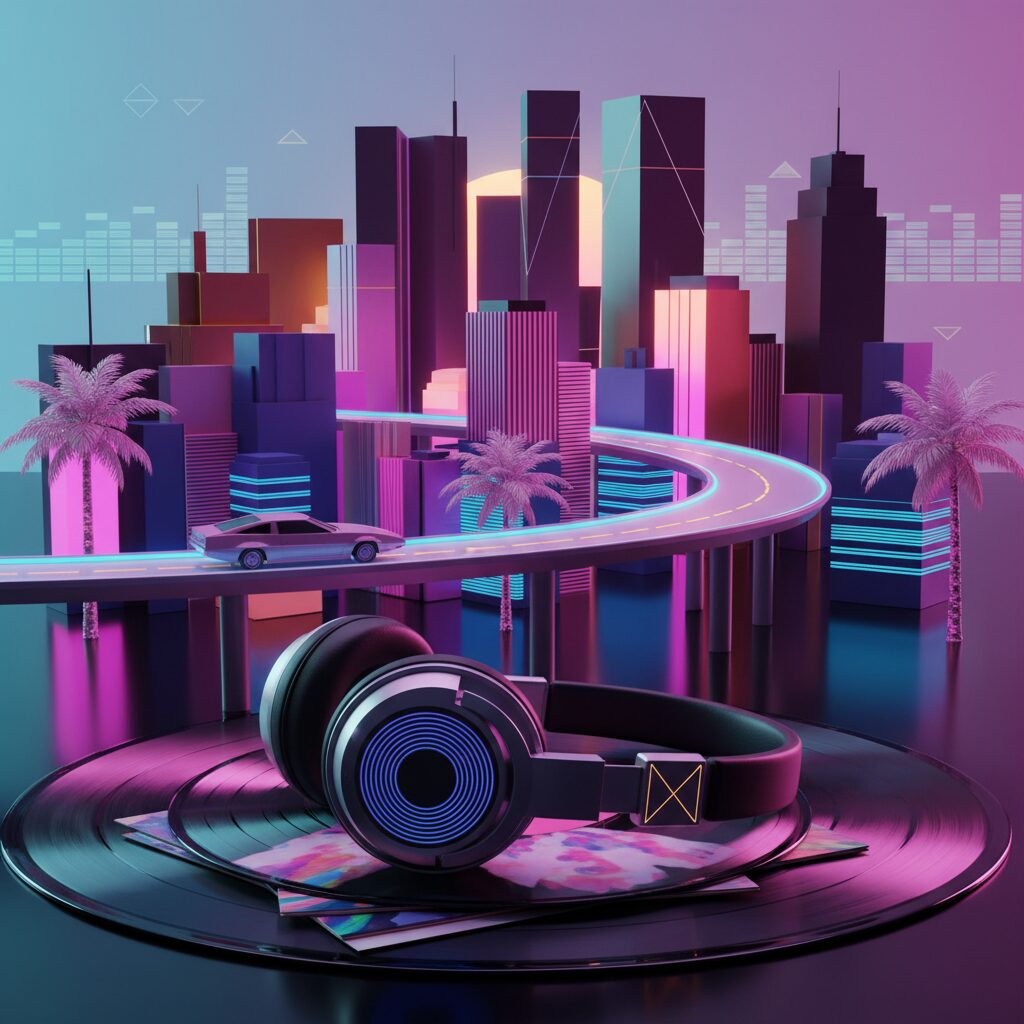
City Pop was the soundtrack for this new urban leisure class. It represented luxury music for a lavish lifestyle. It was meant to be played on a high-end stereo in a sleek minimalist apartment, on a car cassette deck cruising the Shuto Expressway at night, or through headphones aboard a bullet train headed for a weekend by the sea. It’s aspirational, crafted to conjure images of coastal highways, rooftop pools, and sophisticated romance.
A Polished Fusion of East and West
The sound itself was a brilliant fusion. Japanese musicians and producers, equipped with massive studio budgets and cutting-edge recording technology, drew inspiration from American genres gaining popularity: funk, soul, disco, and especially Adult-Oriented Rock (AOR). But they weren’t merely copying. They filtered these styles through a uniquely Japanese lens, emphasizing complex melodic structures, refined harmonic progressions, and meticulous production standards.
The result is a sound that’s impeccably clean and polished. You hear crisp, precise drum machines, popping basslines played with virtuosity, shimmering Fender Rhodes electric pianos, and layers of lush synthesizers. Add soaring string sections, punchy brass arrangements, and smooth, often bilingual vocals, and you have the essence of City Pop. Artists like Tatsuro Yamashita, often hailed as the “king” of the genre, were studio perfectionists, layering dozens of vocal tracks to achieve their signature wall-of-sound harmonies. His partner, Mariya Takeuchi, showcased remarkable songwriting prowess, crafting catchy, emotionally impactful pop hooks, exemplified by her mega-hit “Plastic Love.” Others, such as Toshiki Kadomatsu, added a harder-edged funk and R&B vibe, creating anthems perfect for late-night city drives.
This was not just music for Japan; it was music with a global sound. It carried an international cool, referencing Miami beaches, New York nightclubs, and Californian sunsets. It was the sound of Japan confidently staking its claim on the world stage, producing a cultural product that could stand alongside Western counterparts.
The Digital Archaeologists
For years following the bubble burst in the early 90s, City Pop largely vanished from mainstream Japanese awareness. It became “dad music,” an outdated sound reflecting a bygone era of excess. Its remarkable revival didn’t come from Japanese radio stations or record labels, but from the internet, propelled by a global community of digital explorers.
YouTube’s Algorithm as Accidental Curator
The main driver of this rediscovery was YouTube’s recommendation algorithm. In the early 2010s, a perfect storm began to form. A handful of dedicated crate-diggers and fans started uploading rare City Pop tracks from old vinyl records and cassettes. One upload in particular—a fan-made video for Mariya Takeuchi’s 1984 song “Plastic Love”—became a crucial catalyst. As a few thousand people found and listened to it, the algorithm took notice. It started suggesting the track to users who enjoyed similar genres like funk, soul, or 90s J-pop. This sparked a massive, self-sustaining feedback loop. Suddenly, millions who had never sought out Japanese music were introduced to this incredibly catchy and evocative song. “Plastic Love” became a gateway drug, with the algorithm as the dealer, ready to serve the next hit from artists like Miki Matsubara or Junko Ohashi.
The platform effectively became an accidental archivist and a global radio station for a forgotten genre. It shattered geographical and temporal boundaries, enabling a song recorded in a Tokyo studio four decades ago to find new audiences overnight in São Paulo, Warsaw, or Los Angeles.
The Visual Aesthetic: Found Nostalgia
The music was only half the story. The other half was the visual language that developed around it online. Most of these YouTube uploads weren’t official videos—they often paired the tracks with static images, usually still frames from classic 80s or early 90s anime series like City Hunter, Kimagure Orange Road, or Maison Ikkoku. Whether intentional or not, this pairing was a brilliant stroke.
These anime, with their stylishly drawn cityscapes, fashion, and romanticized urban life, perfectly matched the music’s mood. The visuals offered a ready-made world for the sound to inhabit. It wasn’t just a song anymore; it was a complete aesthetic. Pastel sunsets, neon-drenched skylines, and impossibly cool characters created a strong sense of place and era. For listeners outside Japan, this fusion of sound and image became their defining mental picture of 80s Tokyo—a clean, sophisticated, pre-digital urban paradise. It was a potent form of manufactured nostalgia, a yearning for a beautifully curated fiction.
Vaporwave’s Ghostly Precursor
City Pop’s revival is closely connected to the rise of the internet-native microgenre Vaporwave. In the early 2010s, Vaporwave artists sampled 80s and 90s Muzak, commercial jingles, and smooth jazz, manipulating them into hypnotic, often eerie soundscapes. Vaporwave served as a ghostly critique of consumer capitalism and a commentary on the fading memory of late 20th-century utopianism. Its aesthetic was rooted in hollow nostalgia.
Listeners and creators of Vaporwave soon realized that City Pop was, in many respects, the pure, unaltered source material. It was the genuinely optimistic, high-budget pop music that Vaporwave sought to deconstruct. Discovering City Pop was like unearthing a pristine artifact within the ruins Vaporwave explored. Many fans transitioned from Vaporwave’s ironic detachment to City Pop’s sincere, joyful escapism, finding it more emotionally fulfilling. The two genres remain sibling aesthetics, forever linked by a shared fascination with the commercial and cultural output of the late 20th century.
A Soundtrack for Global Melancholy

The technical factors behind City Pop’s resurgence—the algorithm, the anime aesthetic—don’t fully capture its profound emotional impact. Why does this relentlessly upbeat music from a hyper-capitalist boom era resonate so deeply with a generation facing economic uncertainty, climate anxiety, and digital overload?
Nostalgia for a Better Tomorrow
The key lies in the contrast. City Pop represents the sound of a future that once seemed bright, assured, and full of promise. It’s a relic from a time when technological advancement felt entirely positive, economic growth appeared limitless, and life was about aspiring to luxury rather than mere stability. Listening to it today feels like eavesdropping on a more optimistic age. It offers a temporary respite from the cynicism and unpredictability of the 21st century. Our nostalgia is not only for the past but for the past’s hopeful vision of the future—one far more optimistic than our own.
The music’s natural escapism is central to its charm. Its lyrics often focus on love, dancing, and escaping the city for the coast. It’s essentially carefree music. In a world demanding constant alertness and engagement with a relentless, often grim news cycle, the polished simplicity of City Pop provides a moment of blissful detachment. It doesn’t urge critical reflection on society; it invites you to imagine driving a convertible along the ocean at sunset.
The Anemoia Effect
For most of its new global audience, the nostalgia evoked by City Pop is for a time and place they never actually experienced. This phenomenon is called anemoia—a wistful longing for a past you never lived through. City Pop serves as an ideal soundtrack for this feeling. Since most listeners don’t understand Japanese, the lyrics blend into the overall soundscape. The vocals express emotion—joy, yearning, coolness—without the literal meaning of the words interfering. This ambiguity lets listeners project their own feelings and experiences onto the music, making it deeply personal.
The foreignness is an asset, not a drawback. It heightens the escapism, transporting listeners to a semi-fictional, idealized version of 1980s Japan. This world is crafted from cultural fragments of anime, vintage advertisements, and the music itself—a clean, safe, and stylish dreamscape that’s far more appealing than the messy reality of any actual historical period.
An East Asian Perspective on the ‘Bubble’ Dream
From my perspective as someone deeply engaged with cultural narratives across East Asia, City Pop carries a special resonance. Japan’s post-war economic miracle was the region’s first of its kind, serving as a model viewed with a mix of admiration and envy by its neighbors. Decades later, China underwent its own explosive, transformative economic growth. For a time, the atmosphere in China’s major cities mirrored the one captured in City Pop: a sense of boundless possibility, rapid modernization, and the rise of a new, globally aware urban middle class.
Listening to City Pop today can feel like hearing an echo from an earlier chapter of a familiar story. It recalls the shared Asian dream of prosperity and advancement. Yet it also serves as a poignant reminder of the fleeting nature of such booms. Japan’s “Lost Decade” following the bubble’s burst is a well-known cautionary tale. The music is thus imbued with a unique dramatic irony. We hear the unrestrained optimism, but we also know what follows. It’s a bittersweet sound—a celebration of a high point, forever shadowed by the inevitable decline that came after.
Beyond the Algorithm
What started as a niche internet phenomenon has now firmly crossed into the real world, creating a tangible impact on the music industry and contemporary culture.
From Reissues to New Influences
The online enthusiasm has revived the careers of the original City Pop artists. Record labels, recognizing the strong demand, have begun officially reissuing long-out-of-print albums on vinyl and making catalogs available on streaming platforms. Original pressings of classic City Pop records, once buried in dusty bargain bins in Tokyo, have become highly sought-after collector’s items, with prices climbing into the hundreds of dollars. Mariya Takeuchi, long after her peak fame in Japan, has emerged as an unexpected global icon.
More significantly, the sound has started to infiltrate the DNA of contemporary music. In Japan, a new generation of bands like Suchmos and Awesome City Club openly draw from the slick, funk-infused sounds of their 80s predecessors. Internationally, the influence is equally evident. Artists such as Tyler, the Creator and Thundercat have explicitly cited City Pop as an inspiration, blending its lush arrangements and sophisticated chord progressions into their own music. The sound has become part of the global pop lexicon.
The Fading Echo?
As City Pop becomes more mainstream, it encounters a familiar challenge. The rich historical and cultural context that gave the music its deep significance—the specific socioeconomic conditions of the Bubble Economy—risks being flattened and forgotten. For many, it is already reduced to another subgenre of “chillwave” or an aesthetic to accompany lofi hip-hop beats for studying. The danger lies in the vibe overshadowing the history, transforming a complex cultural moment into a shallow pastiche of neon and nostalgia.
Still, the power of the music persists. City Pop is a ghost in the machine, an artifact of a distinct era that has, through the strange magic of the internet, become timeless. It stands as a testament to the universal appeal of masterful songwriting and flawless production. It evokes a time when the future felt like a glamorous, open road. As we navigate our own more complicated present, it’s no surprise we keep turning up the volume on that digital echo, hoping to catch a fleeting glimpse of that neon-lit horizon.