If you spend any time in Japan, you’ll see it. On the packed morning train to Shinjuku, the salaryman next to you isn’t reading the news on his phone; he’s staring intently as shimmering digital cards fly across his screen. In a quiet café in Shimokitazawa, a university student isn’t scrolling through social media; she’s performing a ten-pull “summon,” her face a mask of anxious hope. They are playing gacha games, a multi-billion dollar industry that has evolved from a simple gameplay mechanic into something resembling a national pastime. To an outsider, it can look baffling—people spending real money, sometimes vast sums, for a chance to win a virtual item. It seems irrational. But to understand gacha, you have to understand that it’s not just about gambling. It’s a phenomenon woven from deep-seated psychological principles and cultural tendencies that have been part of the Japanese landscape for decades, long before smartphones existed. It’s a digital distillation of the joy of the unknown, the thrill of the collection, and the uniquely Japanese relationship with chance, now perfectly optimized for the modern world and carried in millions of pockets.
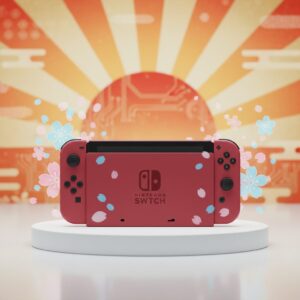
Reflecting this intricate blend of technology and tradition, the Nintendo handheld phenomenon has similarly captured Japan’s urban spirit, echoing the allure behind its gacha game obsession.
From Plastic Capsules to Digital Currency
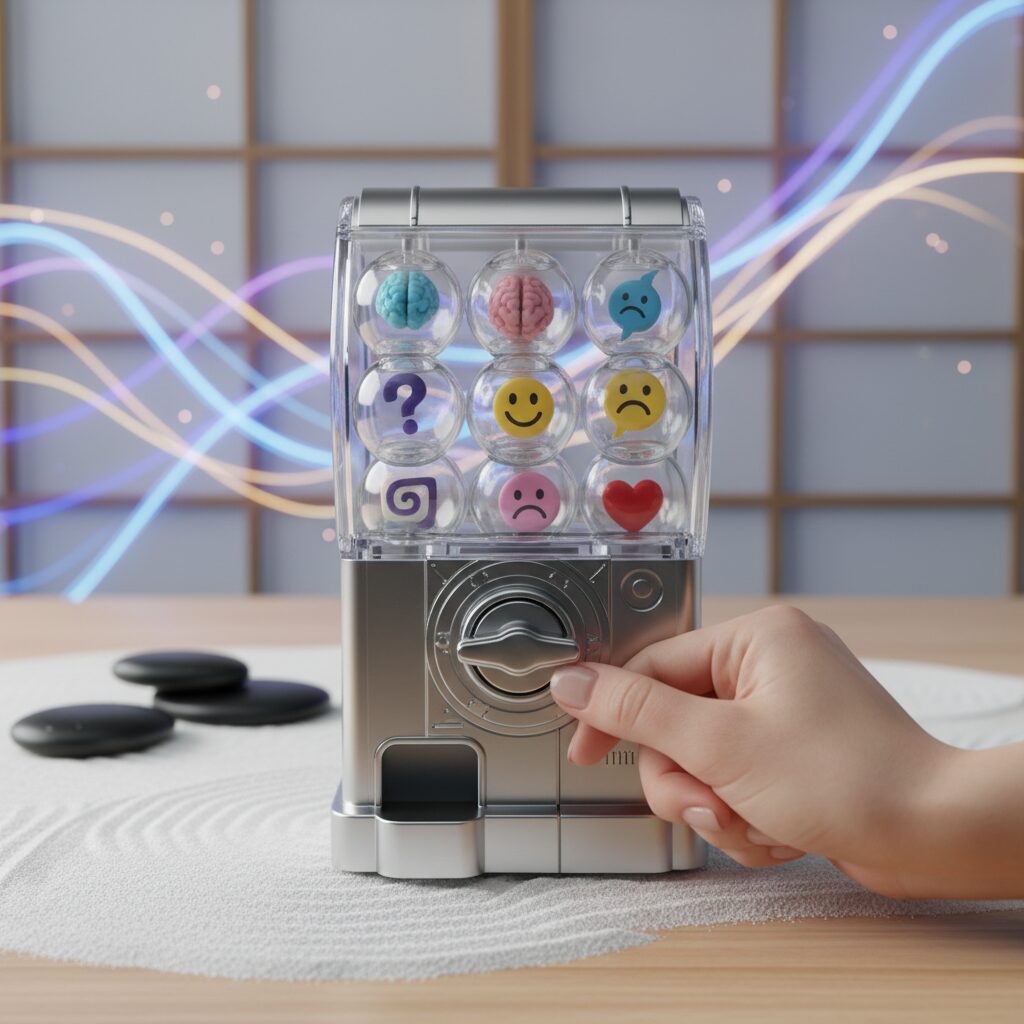
The essence of gacha games lies not in code, but in plastic. Anyone who has been to Japan has seen rows of “gachapon” (or “gashapon”) machines gathered outside electronics shops and in arcades. You insert a few hundred yen coins, turn a stiff crank that produces a satisfying gacha-gacha noise, and a plastic capsule drops out with a pon. Inside is a small, often intricately detailed toy or keychain. You never know exactly which one from the series displayed on the front you’ll receive. Will it be the rare, limited-edition figure, or a common one you already own three of?
This straightforward, tangible experience forms the foundation of the digital gacha phenomenon. It transformed a familiar childhood excitement into the virtual world with remarkable effectiveness. The core mechanism remains the same: you spend a resource (yen coins versus in-game currency) to get a randomized reward. The physical crank of the gachapon machine is replaced by a dramatic summoning animation—a glowing portal, a barrage of magical arrows, or an elaborate character reveal. The creators of the earliest mobile gacha games grasped an important insight: they were not merely selling game items; they were selling the thrilling feeling of anticipation. They digitized the dopamine rush of the unknown, a sensation that Japanese people have been indulging in at vending machines for over fifty years.
This cultural context is crucial. It provided gacha games with inherent legitimacy. Unlike loot boxes in the West, which frequently sparked immediate controversy and were likened to unregulated gambling, gacha mechanics felt like a natural extension of an established, socially accepted pastime. It was simply a new, more convenient iteration of the capsule toy machine you treasured as a child, or the `fukubukuro` (lucky bags) you purchase at New Year’s, packed with mystery items worth more than the bag’s price. This cultural conditioning meant the system met far less initial resistance, allowing it to root itself deeply in the gaming world before anyone questioned its psychological hold.
The Architecture of Compulsion
To dismiss gacha as mere gambling overlooks the sophistication of its design. These systems are skillful implementations of behavioral psychology, crafted to keep players engaged and, often, spending money. They rely on principles that are highly effective at capturing and maintaining human attention.
The Skinner Box in Your Pocket
The core mechanic at work is variable ratio reinforcement, a concept famously illustrated by psychologist B.F. Skinner. In his experiments, pigeons rewarded with food pellets at random, unpredictable intervals pecked a lever much more compulsively than those rewarded consistently. It’s the unpredictability that fosters addiction. A guaranteed reward becomes dull; a possible reward turns into an obsession. Gacha games serve as the perfect digital Skinner box. You don’t know if your next pull will yield a worthless common item or the ultra-rare character you’ve been hoping for. This uncertainty makes each pull thrilling. The system doesn’t reward you consistently but just enough, and at unpredictable moments, to make you believe the next big win is imminent. This explains why a streak of bad pulls often doesn’t discourage players. On the contrary, it can reinforce the idea that a lucky pull is “due,” a classic gambler’s fallacy these games masterfully exploit.
The Collector’s Instinct
Humans have a natural drive to collect. We seek to complete sets and impose order on chaos. Gacha games exploit this powerful instinct. Characters and items come in sets, series, or galleries. The game interface continually displays empty slots in your collection, subtly reminding you of what’s missing. This visual cue of incompleteness generates psychological tension that can only be relieved by obtaining the missing pieces. It elevates the game from a mere pastime into a mission for completion. The most infamous and now banned incarnation of this was `kompu gacha` (complete gacha), where players had to gather a full set of specific common items to unlock a rare one. This mechanic was so effective at driving spending that the Japanese government banned it in 2012. Though the mechanic has disappeared, its spirit endures in numerous game events that reward players for collecting a full roster of limited-time characters.
Social Pressure and the Fear of Missing Out
Today’s gacha games are deeply social experiences, even when played solo. They integrate with social media, where players proudly showcase their rare pulls. This fosters a powerful dynamic of social proof and comparison. Seeing friends or online influencers celebrate their luck triggers two strong emotions: envy and the Fear of Missing Out (FOMO). This feeling is intensified by limited-time events and seasonal characters. That special summer-themed version of a popular hero? She’s only available for two weeks. Miss your chance now, and you might have to wait an entire year—or she may never return. This artificial scarcity creates urgency that overrides sound financial judgment. The game ceases to be just a game; it becomes a timed cultural event, and opting out feels like being left behind.
A Tailor-Made Fit for Japanese Life

The psychological appeal of gacha would be far less effective if it didn’t fit so seamlessly into the rhythms and structures of modern Japanese society. The context in which these games are played is just as crucial as the mechanics themselves.
The Commuter’s Ritual
The average Tokyo commuter spends a considerable amount of time on trains—often more than an hour each way—in crowded yet quiet carriages. This setting provides the perfect environment for mobile gaming. Gacha games are specifically designed for this situation. They can be played with one hand, in a vertical orientation, and require no sound. The core gameplay loop—logging in for daily bonuses, using accumulated energy, and performing a few pulls—can be done in short bursts. It breaks up the monotony of the commute, delivering small, satisfying doses of progress and excitement. The train carriage becomes a silent, informal arcade where many people are simultaneously engaged in the same digital ritual.
Low-Friction Community
Japanese culture often places great value on harmony and indirect communication. While close friendships are highly important, casual interaction with strangers tends to be less common than in many Western cultures. Gacha games provide a form of low-effort socializing. Players can join guilds, collaborate on raid bosses, and compare character collections without needing direct, real-time conversation. Sharing a screenshot of a lucky pull online serves as a way to broadcast success and join a community dialogue without the social pressure of face-to-face interaction. It’s a method of connecting over a shared passion that respects personal space and cultural norms around communication, making it an exceptionally comfortable social outlet for many.
The High Cost of Digital Desire
Certainly, there is a much darker aspect to this phenomenon. The business model of gacha games relies on a small subset of players, called “whales,” who spend vast sums of money to support the game for the majority who play without paying. Stories of individuals spending thousands, or even tens of thousands, of dollars in a single month are far from rare. This has sparked widespread concern about gambling addiction and financial devastation.
This issue has not been completely overlooked by the industry or government. The `kompu gacha` ban was a notable early step. Nowadays, all games are legally required to publicly disclose the pull rates for every item, so players are fully aware of how slim their chances are—often less than a single percent for the rarest characters. Many games have also implemented “pity” systems, which ensure a high-rarity item after a certain number of pulls. These actions implicitly acknowledge the system’s dangerously addictive nature. They serve as a form of consumer protection, a delicate safeguard against the most exploitative elements of the randomized reward model.
Yet the industry continues to prosper. For every tale of financial struggle, millions of players participate more casually, spending nothing or only a small, controlled amount. For them, it remains a hobby—a source of daily enjoyment, social connection, and the occasional thrilling rush of extraordinary luck.
To truly understand gacha is to recognize it not merely as a game, but as a complex cultural and psychological ecosystem. It is shaped by a long history of collecting and games of chance, enhanced by a ruthlessly efficient, data-driven grasp of human desire. It mirrors a society that prizes perseverance, finds solace in collecting, and has adapted to living life within the brief, intermittent moments of a busy day. It is a digital capsule toy machine for adults, offering a fleeting, costly, yet undeniably potent fantasy: the chance to summon fate from the palm of your hand.