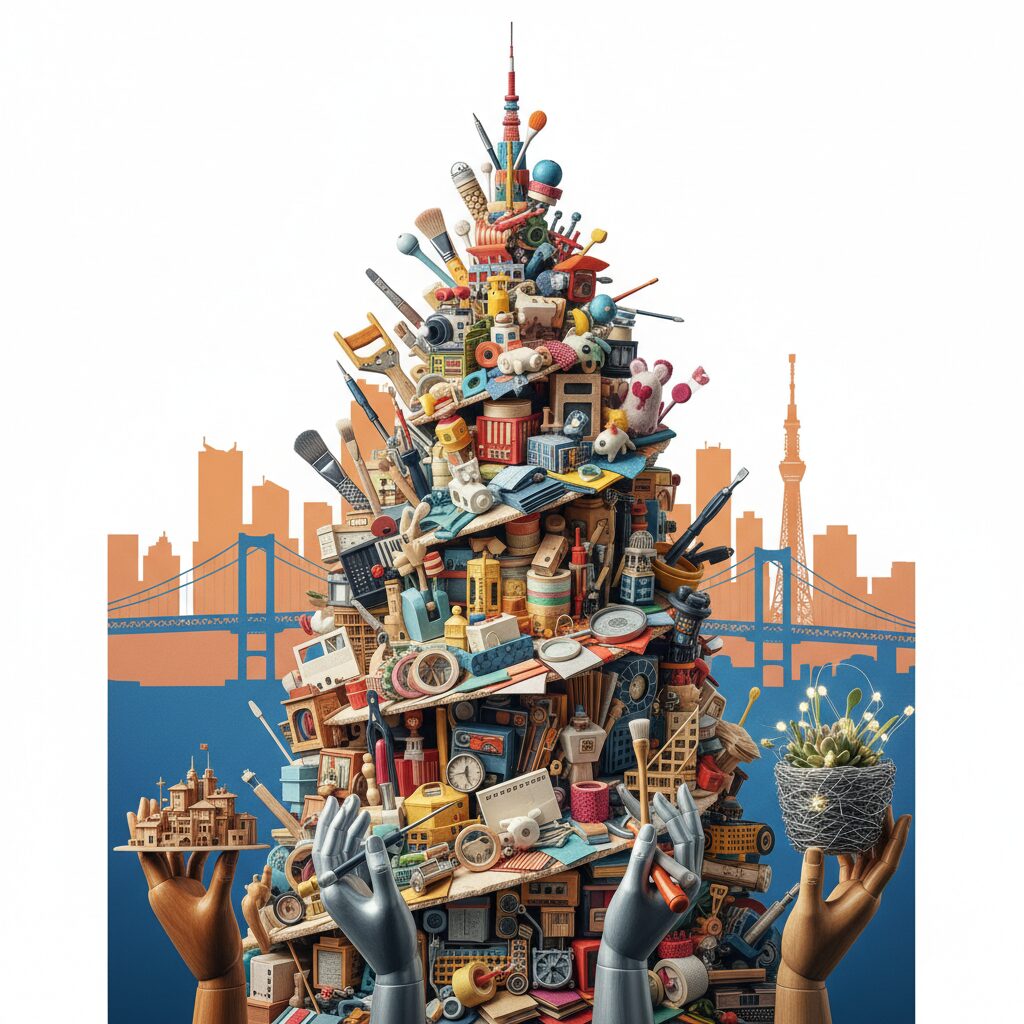
You know that feeling. You need something specific. Not just any old thing, but a very particular item to solve a very particular problem. Maybe it’s a tiny, left-handed screw with a non-standard thread. Or a single sheet of translucent, waterproof paper made from mulberry bark. Or perhaps a specialized brush, no thicker than a toothpick, designed exclusively for cleaning the dust from a camera sensor. In most cities, this quest would send you down a multi-day rabbit hole of specialty shops, online forums, and frustrated sighs. In Japan, you just go to Tokyu Hands.
To call Tokyu Hands a department store is technically correct but misses the point entirely. It’s like calling a library a bookstore. It’s a place that sells things, yes, but its true purpose is to provide resources, to supply potential. The store’s official slogan is “The Creative Life Store,” and that’s not just some empty marketing phrase. It is the core philosophy, the organizing principle for a retail experience that is part hardware store, part art supplier, part science lab, and part home goods boutique. It’s a cathedral for creators, a sanctuary for DIY enthusiasts, and a tangible manifestation of a very Japanese approach to life: that with the right tools and a bit of ingenuity, anything can be improved, customized, or made from scratch. Understanding Tokyu Hands is understanding a key facet of the modern Japanese subculture of making, where the line between consumer and creator is beautifully, intentionally blurred.
This intriguing blend of innovation and tradition also echoes the delicate aesthetics found in the Mori girl subculture, where the balance between creative inspiration and cultural heritage comes to life.
The Anatomy of Inspiration
Entering a multi-story Tokyu Hands, such as the iconic former Shibuya or Shinjuku locations, is like stepping into a carefully curated universe of possibilities. Unlike the expansive, single-story layout common in Western big-box stores, Hands is vertical. Each floor represents a self-contained world dedicated to a different aspect of “creative life,” and moving from the basement to the top floor is a gradual progression from raw materials to refined living. The arrangement is intentional; it’s a thoughtful curation that guides you through the entire creative process, from beginning to end.
Foundations: The Professional’s Playground
The journey often starts in the basement or on the lowest floors, specifically the B-フロア (B-Floor), which is devoted to DIY. This area forms the foundation of the entire store. It carries the scents of sawdust and machine oil. Here, you’ll find not only hammers and screwdrivers but also professional-grade power tools, laser cutters, and welding equipment. You can purchase wood in a wide variety of species and finishes—not just standard sizes—and have it precisely cut by expert staff. There are sheets of acrylic in every color and thickness, blocks of modeling foam, metal rods, leather hides, and an entire wall filled exclusively with adhesives, each designed for a specific, specialized purpose. This section delivers a clear message: this is not a place for amateurs working on flimsy craft projects. This is a space that takes making seriously. It provides you with the same materials and tools used by professional carpenters, architects, and designers, trusting that you, the customer, are capable of excellence.
Hobbies as a High Art
Moving up from the raw materials, you enter the domains of specialized hobbies. These floors celebrate the Japanese dedication to niche interests, or otaku-level passion. One area is devoted entirely to leathercraft, offering every imaginable tool for cutting, stamping, sewing, and finishing leather, alongside hides of varying quality and color. Nearby, you’ll find the plastic model section, an institution in its own right, featuring not just Gundam kits but also hyper-detailed scale models of historical battleships, cars, and airplanes. Importantly, this section also stocks the extensive ecosystem of paints, airbrushes, tiny decals, and weathering powders needed to transform a model from a toy into a museum-quality piece. These sections cater to a subculture of serious hobbyists who regard their pastime as a form of art. The store provides everything necessary to pursue that passion to its most obsessive-compulsive depths. It’s a validation of their niche, a declaration that their interests, no matter how specific, deserve a world-class range of tools and materials.
The Cerebral Core: Stationery and Science
On the middle floors, you’ll invariably encounter two of the most cherished—and to outsiders, most surprising—departments: science and stationery. The science section resembles a well-stocked high school chemistry lab. You can find beakers, test tubes, petri dishes, alcohol lamps, and even anatomical models. It reflects a culture that values curiosity, experimentation, and hands-on learning. It’s ideal for the home chemist, the aspiring botanist, or the parent seeking an alternative to video games for their child.
Then there’s the stationery floor. Japanese stationery is renowned worldwide for its quality and innovation, and the Tokyu Hands selection is a grand showcase. This isn’t just about pens and paper. It’s an expansive universe of specialized notebooks for bullet journaling, fountain pens available in dozens of ink colors, high-precision mechanical pencils, washi tape in thousands of patterns, and planners designed to organize every conceivable aspect of daily life. This department attracts artists, writers, designers, and anyone who delights in the analog act of putting pen to paper. It reinforces the idea that creativity extends beyond workshops to how we organize our thoughts and plan our lives.
The Domestic Laboratory
The upper floors typically focus on the home: kitchenware, cleaning supplies, and bath goods. But this is Tokyu Hands, so these aren’t ordinary pots and pans. The kitchen section is a foodie’s paradise, stocked with specialized tools for Japanese cuisine—perfectly balanced santoku knives, cypress-wood sushi presses, and intricate molds for shaping rice. The cleaning section showcases Japanese ingenuity, offering a dedicated tool for every cleaning task imaginable, from brushes that scrub window tracks to electrostatic cloths that attract dust. This is the “Creative Life” concept applied to the domestic realm. It’s about enhancing daily routines through clever design and quality tools, turning chores into acts of mindful improvement. It’s DIY for everyday living.
The Philosophy of the Creative Life Store
Why does a place like Tokyu Hands exist and flourish in Japan? It’s more than just a successful retail concept; it serves as a cultural landmark that mirrors deeper societal values while addressing the practical demands of Japanese life. It’s a venue founded on the dual foundations of urban necessity and a deep appreciation for craftsmanship.
Optimizing the Urban Box
Japanese cities are densely populated, and apartments are famously compact. In a world where space is limited, the ability to customize and optimize one’s surroundings is not a luxury but a necessity. Tokyu Hands embodies this mindset. It offers the tools and materials for residents to create custom shelving fitting awkward nooks, install smart storage solutions that maximize every square centimeter, or repair a treasured piece of furniture instead of replacing it. This DIY ethos stems from practicality—it’s about taking control of your small personal space and making it uniquely and functionally yours. The store empowers apartment dwellers to become their own interior designers, carpenters, and repair experts.
The Democratization of Monozukuri
At a deeper level, Tokyu Hands channels the spirit of monozukuri (ものづくり). This Japanese term, which literally means “thing-making,” embodies a complex philosophy of craftsmanship, skill, and the pursuit of perfection. It’s the driving force behind Japan’s world-renowned manufacturing, from cars to cameras. Tokyu Hands democratizes this professional, industrial ethos, putting the power of monozukuri into the hands of everyday people. It conveys that this dedication to quality and creation is not reserved for master artisans or corporate engineers but is a mindset anyone can apply to their hobbies, homes, and lives. By offering professional-grade materials and expert guidance, the store elevates making from a simple hobby to a meaningful pursuit of excellence.
For the Serious Amateur
Tokyu Hands’ target customer isn’t the casual shopper seeking a cheap, easy fix. It caters to the “pro-sumer”—the serious amateur, the dedicated hobbyist, the discerning consumer who prioritizes quality over convenience. This is the person who will spend an hour selecting the perfect piece of wood, understands the distinctions between different types of glue, and seeks to repair their own leather shoes not merely to save money but for the satisfaction of doing the job well. The store meets a desire for competence and self-reliance, operating on the assumption that its customers are intelligent, curious, and capable. This respect for the consumer is tangible and a major reason for its loyal following. At Tokyu Hands, you don’t just shop—you graduate to a higher level.
More Than Just a Transaction
What truly distinguishes Tokyu Hands is the experience. It offers a highly interactive and sensory environment. The aisles feel like a treasure hunt, where you might uncover a material previously unknown or a tool that solves a problem you’ve struggled with for years. It invites browsing, discovery, and serendipity. It’s a place where you enter for one item and leave with three new project ideas.
This is supported by the store’s greatest asset: its staff. The employees are more than just retail workers; they are specialists. The person in the woodworking section can provide expert advice on joinery. The staff member in the stationery area can explain the subtle differences between various paper weights and pen nibs. This elevates the shopping experience from a simple transaction to a consultation, fostering a sense of community and shared knowledge, making the store a hub for makers to learn and grow.
Many locations also offer workshops and demonstrations, further solidifying their role as a center for creative living. You can attend a class on Kintsugi (the art of repairing broken pottery with gold), learn basic leatherworking, or watch a demo of a new power tool. It’s an active, vibrant space, not just a passive warehouse of products. This is where the subculture comes together, where like-minded individuals gather, share their passion, and learn from experts. It’s the physical embodiment of an online DIY forum.
The Soul in the Machine
In an age dominated by one-click purchases and disposable items, Tokyu Hands serves as a compelling counterpoint. It is a thoroughly analog institution that celebrates the tangible, the skillful, and the enduring. It offers more than just products; it offers the potential held within them. A block of wood becomes a future sculpture. A roll of leather turns into a future wallet. A set of precision screwdrivers provides the power to repair, not to discard.
It embodies the belief that the best life is not passively consumed, but actively created. This philosophy finds deep fulfillment in the process of making, in the slow, intentional act of turning raw materials into something useful, beautiful, or uniquely personal. Tokyu Hands is more than a store. It is a vault of solutions, a toolkit for the imagination, and a quiet reminder that in a world of mass production, the most valuable things remain those we craft with our own hands.