
You’ve seen them, I’m sure. Maybe on your first trip to Japan, or perhaps scrolling through photos, a detail that snagged your attention. You’re walking through the quiet grounds of a Shinto shrine, or maybe just hiking a mountain path far from any city, and there it is: a thick, plaited rope of dried straw, sometimes startlingly massive, wrapped tightly around the trunk of an ancient, gnarled cedar tree. Or maybe it’s stretched across the front of a great, mossy boulder that looks like it’s been sitting there since the dawn of time. Often, little white paper zigzags, like stylized lightning bolts, hang from the rope, fluttering in the breeze. Your first thought might be practical. Is it holding the tree up? Is it some kind of marker for a trail? But the placement feels too deliberate, too ceremonial for that. It feels like a statement. And it is. This is not a structural support or a rustic decoration. It’s a boundary marker. You’re looking at a shimenawa, and it’s a profound signpost indicating the line between our world and the world of the gods. These ropes don’t make something sacred; they announce that it already is. They are the most visible manifestation of Shinto, Japan’s indigenous faith, and its core belief that divinity isn’t locked away in some distant heaven but is right here, dwelling within the fabric of the natural world. To understand these ropes is to begin to understand the deep-seated animism that quietly shapes the Japanese mindset, influencing everything from garden design to the way people treat their possessions.
In embracing the intertwining of the sacred and the everyday, Japan’s reverence for tradition is also reflected in its quest for the perfect white bread, a cultural pursuit as meticulous as the ritual of shimenawa.
The Rope and the Ritual: What is Shimenawa?
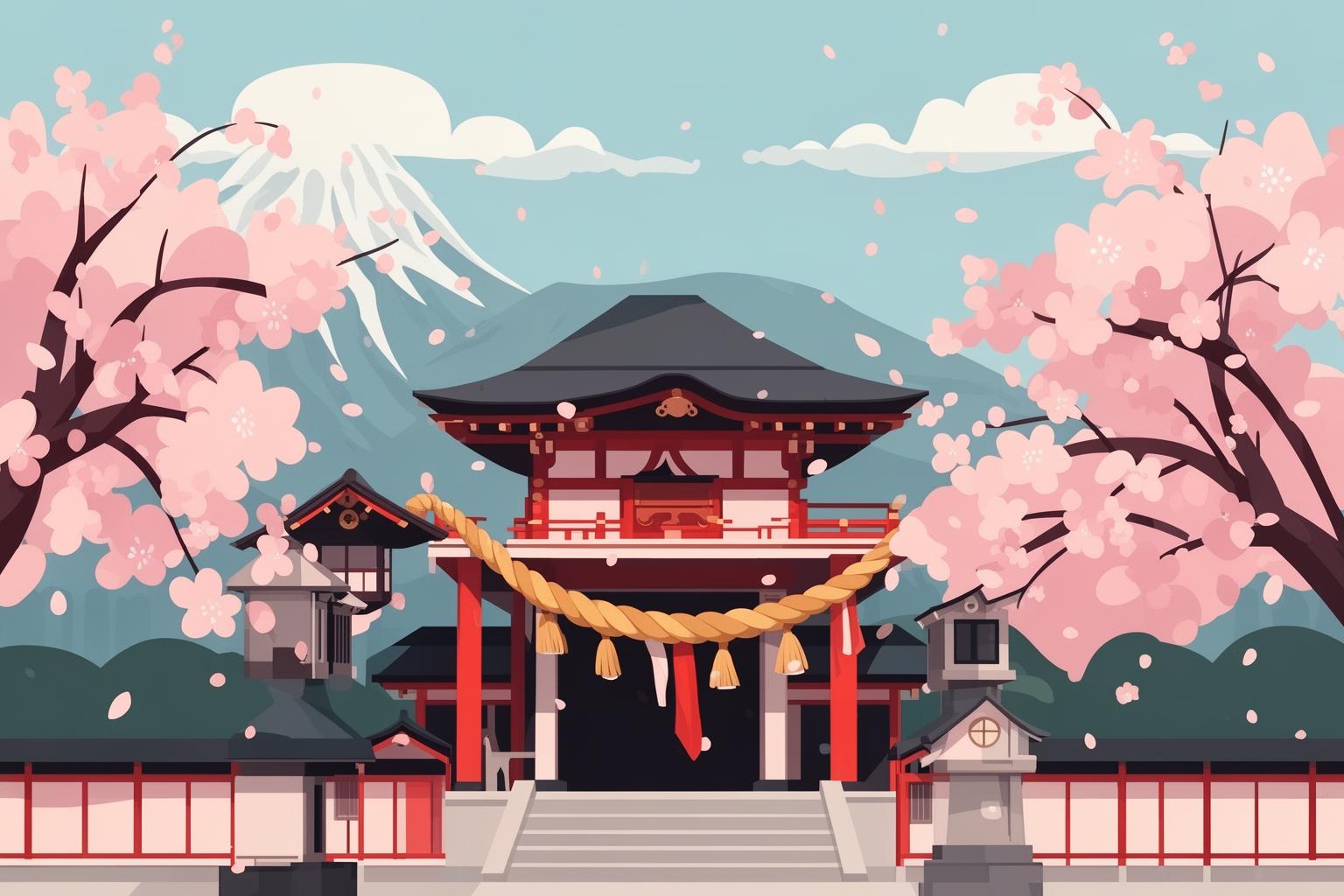
At its core, a shimenawa (注連縄) is a sacred rope serving as a spiritual boundary. It marks a space or object as purified, holy, and deserving of reverence. When you encounter one, it signals that you are in the presence of something special—a place where a kami—a god, spirit, or divine essence—is believed to dwell or descend. It is a profound gesture of respect, a means of setting something apart from the ordinary clutter of daily life.
More Than Just Straw
The material itself holds deep symbolism. Shimenawa are almost always hand-woven from rice straw. In Japan, rice is far more than a staple food; it stands as the cultural foundation, historically a measure of wealth and the symbolic heart of the community. According to Shinto mythology, the knowledge of rice cultivation was a divine gift from the gods—a sacred pact ensuring life and prosperity. Using rice straw, the byproduct of this holy grain, imparts the rope with purity and vitality. Twisting the straw into a thick rope is a ritual act, a form of purification. Attached to the rope are often paper streamers known as shide (紙垂). Their zigzag shape represents lightning—a powerful and awe-inspiring natural force—symbolizing the potent energy of the kami. The entire object is a concentrated symbol of spiritual meaning, a piece of folk art that also conveys a theological message.
A Boundary Against the Impure
The main purpose of the shimenawa is to serve as a barrier. It divides the sacred space (shinsen) from the profane or ordinary world (zoku). Consider it as a spiritual clean room. Within its boundary, the area is regarded as purified and shielded from harmful or impure influences. This explains why they are often stretched across the entrance gates (torii) of Shinto shrines, hung from the eaves of the main prayer halls, and even placed above the doors of traditional homes during New Year celebrations to invite benevolent deities and repel misfortune. When tied around natural objects like trees or rocks, the message remains clear: this is a consecrated space. It is a respectful but firm request to proceed with reverence, recognizing that you are stepping onto hallowed ground. It transforms a simple part of the landscape into a place of veneration, a natural altar open to the sky.
Reading the Landscape: Where Gods Reside
The key to understanding why certain natural objects are chosen lies in the Shinto concept of yorishiro (依り代). A yorishiro literally means a “vessel to approach” or an “object to which a spirit is drawn.” It refers to a natural or man-made object believed to attract and house a kami. The shimenawa serves as both a formal invitation and a marker for that vessel. The rope does not create the divinity; rather, it acknowledges an existing potential for it. In the Shinto worldview, the world is filled with millions of kami, who are especially drawn to places and things that exhibit extraordinary life force, age, or presence.
The Ancient Trees (Shinboku)
This explains why shimenawa are often found around trees, particularly those that are exceptionally old, large, or uniquely shaped. Such trees are called shinboku (神木), or sacred trees. A massive, thousand-year-old camphor tree with a trunk that takes ten people to encircle is much more than an impressive specimen of flora. Its sheer longevity and resilience are regarded as tangible evidence of a powerful, indwelling spirit. It has witnessed centuries of human history, endured countless storms, and kept growing. This potent life force essentially represents the kami. Wrapping a shimenawa around it is a way of recognizing that power and honoring that spirit. Standing before such a tree, you can sense the reason behind it: a palpable presence and sense of gravitas that goes beyond biology. The rope invites you to pause and appreciate that feeling, to perceive the tree not just as an object, but as an elder being.
The Immovable Rocks (Iwakura)
In a similar way, rocks may also serve as potent yorishiro. These sacred rock formations, called iwakura (磐座), are chosen for their immense size, unusual shape, or dramatic placement within the landscape. A huge boulder precariously balanced on a mountainside or a pair of rocks rising together from the sea become centers of reverence. Their permanence is their strength. While trees grow and eventually die, these rocks symbolize eternity, anchoring the transient human world to a timeless geological past. They are regarded as stable seats for the kami. Perhaps the best-known example is Meoto Iwa (夫婦岩), the “Wedded Rocks” off the coast of Ise. These two rocks—a large “husband” and a smaller “wife”—are connected by a massive shimenawa that is ceremonially replaced several times a year. They represent the union of the creator deities Izanagi and Izanami and stand as symbols of marital harmony and a sacred gateway for worshipping the sun goddess Amaterasu. The rope physically and spiritually binds them, transforming the rocks from a geological curiosity into a living myth.
Animism in the Modern Mindset
It’s important to recognize that for most modern Japanese people, this practice is not about “worshipping” a rock or a tree as a monotheistic religion worships a single, all-powerful God. It reflects a distinctly different sensibility. It is a deeply ingrained cultural instinct of respect and acknowledgment. The gesture emphasizes harmony rather than supplication, acknowledging that humans are not the sole owners of the world. This animistic worldview—the belief that a spiritual essence inhabits all things—quietly influences Japanese culture far beyond the confines of a shrine.
It’s Not Worship, It’s Acknowledgment
This perspective encourages a relationship with nature centered less on domination and control and more on coexistence and appreciation. It embraces a view that values beauty and meaning in the transient and imperfect, encapsulated in the concept of mono no aware. This is why the fleeting life of the cherry blossom is so passionately celebrated and why a Japanese garden seeks not to impose strict symmetry, but to arrange rocks, water, and plants to evoke an idealized natural landscape. The shimenawa stands as the clearest symbol of this worldview, yet the pervasive reverence for the non-human world exists everywhere. It reflects an instinctive sense that the world is inhabited by presences, not merely resources.
Echoes in Everyday Life
This animistic sensibility resonates in intriguing ways throughout everyday life. Take the concept of tsukumogami (付喪神)—the belief that tools and household objects can acquire a spirit after a hundred years of use. This fosters a culture that treats objects with great care and respect. It explains ceremonies such as hari-kuyō, where broken and worn-out sewing needles are brought to a shrine for a memorial service, thanked for their service before resting in a soft block of tofu. It’s why Japanese craftsmen speak of their tools with affection bordering on reverence, and why even a simple meal is presented with meticulous attention to detail. Beneath it all lies a belief that everything possesses an inner character deserving of respect. The rope on the tree is merely the most visible and ancient expression of a much broader and more intimate cultural practice: the art of paying attention.
Seeing the World Through a Shinto Lens
Once you grasp the meaning of the shimenawa, you can never view the Japanese landscape quite the same way again. A walk through a forest turns into a lesson in theology. You begin to notice which natural features have been singled out for reverence. You spot a waterfall with a rope stretched across its flow and understand it’s not merely a scenic spot, but a kami in motion, its purifying power honored. You see a small, modest stone tucked in a corner of a temple garden, wrapped in a thin straw rope, and recognize it as a quiet focal point of sacred energy.
A World Alive with Presence
These ropes invite you to look beyond the surface, to see the world not as a collection of inert objects but as a realm brimming with life and spirit. They retune your senses. You start to develop an eye for what makes a particular tree or rock feel special. Is it the way the light hits it? Its great age? Its solitary defiance? The shimenawa serves as a guide, pointing you toward these moments of natural wonder and framing them as encounters with the divine. It transforms the ordinary into the meaningful, reminding you that in the Shinto worldview, a temple is not necessarily a building made by human hands. Sometimes, it’s a clearing in the woods, with an ancient tree for a pillar and the sky for a roof.
The Feeling Beyond the Form
Ultimately, the humble shimenawa conveys a profound lesson. It embodies a worldview where divinity is not an abstract idea confined to scripture but a tangible presence felt in the rustle of leaves, the coolness of a stone, and the enduring strength of a tree. It nurtures a sense of gratitude and humility, a recognition that we are part of a vast, interconnected web of existence. In a world that often feels disenchanted and separated from nature, these simple ropes of rice straw serve as quiet yet powerful reminders. They connect the present to the ancient past, the human to the natural, and the physical to the spiritual, suggesting that the most sacred places of all are not those we build, but those we have the wisdom to recognize.