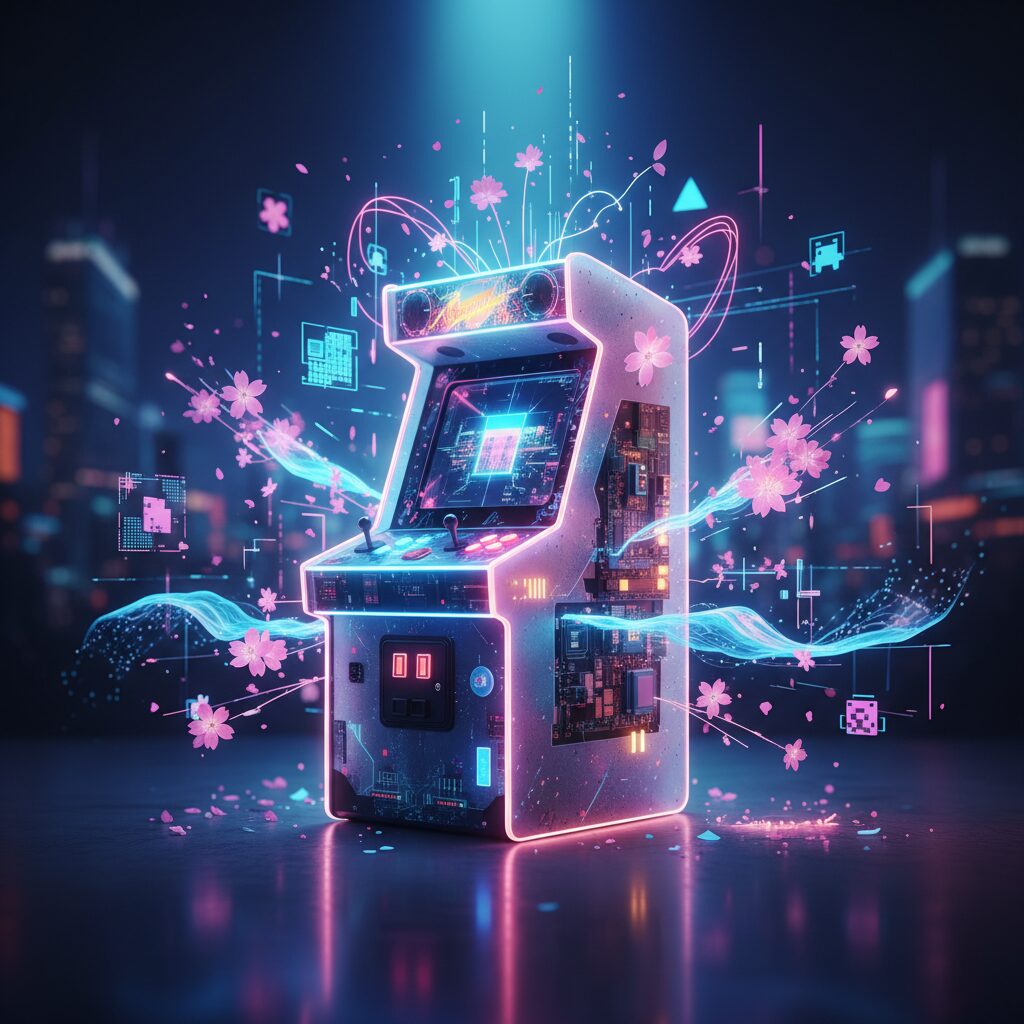
Walk past a game center in any Japanese city and the first thing that hits you isn’t a sight, but a sound. It’s an overwhelming, chaotic, and somehow harmonious wall of noise—a crashing wave of digital music, synthesized explosions, announcer catchphrases, and the clatter of plastic tokens. Your second impression is the light. It spills out onto the pavement, a neon-soaked invitation to a world that seems to operate on a different frequency from the orderly street outside. For most Westerners, the word “arcade” conjures a dusty, slightly forlorn image from the past: a handful of vintage cabinets in the back of a bowling alley, their floors sticky with spilled soda. In Japan, that image couldn’t be more wrong. The game center, or gēsen as it’s colloquially known, is not a relic. It’s a thriving, multi-story cultural institution that has endured the rise of home consoles and mobile gaming not just by offering better technology, but by serving a fundamental social need that a screen in your living room never can. To understand why they’re still packed on a Tuesday night, you have to stop thinking of them as just places to play games. You have to see them for what they are: intricate, multi-layered social hubs, each floor a different ecosystem catering to a different tribe.
The intricate pulse of these game centers echoes the vibrant energy of Japan’s extracurricular life, as seen in the dynamic school club scene, where passion turns everyday interactions into cultural phenomena.
The Architecture of Escape: A Floor for Every Feeling
One of the first things you’ll notice about a major urban game center is its vertical design. These centers often occupy entire buildings, five or six stories tall, with each level carefully curated to create a unique atmosphere and cater to a specific audience. This isn’t a random assortment of machines; it’s a thoughtfully crafted ecosystem.
The Ground Floor: The Hook
The ground floor is almost always a dazzling array of UFO catchers, or crane games. The glass cases aren’t filled with generic teddy bears but with highly sought-after, often limited-edition prizes linked to the latest anime, manga, or video game releases. You’ll find exquisitely detailed figurines, oversized plushies of popular characters, and quirky branded merchandise that you simply can’t buy in a typical store. This floor serves as the wide-open mouth of the funnel. It’s designed for broad appeal: couples on dates, groups of friends seeking casual fun, and tourists drawn in by the spectacle. The entry barrier is just 100 yen. The psychology is brilliant. The prize is visible and tangible. The near-miss—the claw just brushing against the prize—creates a powerful feedback loop that whispers, “Just one more try.” It’s less about the game and more about the quest for a trophy, a physical memento of the moment. This floor isn’t meant for the hardcore gamer; it’s for everyone.
The Middle Floors: The Arenas of Skill
As you go up, the vibe shifts. The music grows louder, the rhythms more intricate. These floors are dedicated to core gaming communities. One level might be dominated by rhythm games, featuring rows of machines like maimai and Chunithm. Here, you’ll see players moving with a fluid precision bordering on superhuman, their hands a blur over touchscreens and glowing buttons, their feet tapping out complex sequences. It’s as much a performance as a game, and it’s common to find a small crowd—a gyararī (gallery)—gathered behind a particularly skilled player, watching in respectful silence. Another floor will host the fighting game community. Rows of Street Fighter or Tekken cabinets are set back-to-back, creating an intense, gladiatorial environment. This is the modern dojo where players test their skills—not against faceless online opponents, but rivals sitting just feet away. You can read their body language, feel the tension in the air, and after the match, talk to them—share strategies, build rivalries, and foster a real-world community. These floors are the vibrant heart of the game center’s subcultures.
The Upper Floors: Niche Havens
At the very top, the energy shifts once again. You’ll often find purikura booths. These are no ordinary photo booths; they’re sophisticated digital studios in miniature. Groups of young women, couples, and friends squeeze in to take a series of photos which they then decorate with a seemingly endless array of stamps, filters, and digital ink. The process itself is a social ritual: the fun of posing together, the collaborative creativity in decorating the images, and the final act of printing and cutting the sticker sheets to share. It’s about creating and preserving shared memories. Nearby, or on another dedicated floor, you might find the medal games. This space feels almost like a small, family-friendly casino. Large, intricate machines filled with glittering plastic tokens whir and jingle. Patrons, often older, sit for hours nursing a bucket of medals, enjoying the low-stakes thrill of watching tokens cascade. It’s a more relaxed, meditative form of entertainment, demonstrating that the gēsen’s appeal spans generations.
A Stage for Subculture and Performance
The true ‘aha!’ moment occurs when you realize that for many patrons, the game center is not merely a place of consumption but also a stage for performance. The most dedicated rhythm or fighting game players aren’t simply aiming for a high score; they’re performing for an audience of their peers. The machines are built with this in mind. Rhythm games are flashy, loud, and visually impressive, capturing the attention of anyone passing by. The screen displays the player’s accuracy and combo, showcasing their skill to everyone nearby. This public recognition is a key part of the appeal. It turns a solitary pastime into a shared spectacle. Spectatorship plays an active role in the culture. Watching an expert play serves as a way to learn, demonstrate respect, and engage with the community even if you aren’t the one playing. This transforms the game center into a vibrant theater where emerging subcultures can take root and thrive. It offers a physical space where communities often formed online can meet, compete, and connect face-to-face. You’re not just an avatar; you’re the person capable of pulling off that incredible combo, and everyone there recognizes it.
The Perfect Low-Stakes Social Space
Beyond the hardcore subcultures, the game center plays a vital role as a versatile social lubricant in a society that can often be quite formal. Suggesting coffee might feel like an interview. A dinner can feel like a serious commitment. But suggesting a trip to a game center? It’s casual, fun, and refreshingly low-pressure. For a first date, it’s ideal. The noise and constant activity fill any potential awkward silences. You have a built-in series of shared activities, from trying a UFO catcher together to competing in a silly racing game. You get to know the other person through action, not just conversation. For a group of friends, it’s an easy spot to gather without the need for plans or reservations. You can drop in, play for a while, and drift out. No commitment required. The game center also offers a socially acceptable form of public solitude. It’s one of the rare places where you can be completely alone, absorbed in your own world for hours, yet still be surrounded by the ambient energy of others. For the ohitorisama (party of one), it serves as a comfortable third space—neither the pressure-filled environment of work nor the quiet isolation of home.
Constant, Calculated Reinvention
The final piece of the puzzle is economic. Japanese game centers have thrived because they excel at adaptation. Many are directly operated by the game manufacturers themselves—Sega, Taito, Bandai Namco. This vertical integration provides them with a direct pipeline of new, exclusive machines and a strong incentive to make the in-person experience engaging. They continuously rotate games, introduce new technologies, and refresh their prize offerings to remain relevant. When VR became a buzzword, large VR installations quickly appeared. When a new anime becomes a cultural phenomenon, crane games immediately fill with its characters. They aren’t selling nostalgia for the 8-bit era. They are selling what is new and exciting right now. This business model, centered on event-based experiences and exclusive, time-sensitive merchandise, guarantees there is always a reason to return. The game center today looks and feels different from the one five years ago. This ongoing reinvention prevents stagnation and keeps the experience fresh. It’s not a museum of old games; it’s a laboratory for new forms of entertainment. That’s the secret. The Japanese game center isn’t about escaping to the past. It’s about escaping into a vibrant, ever-changing present, a loud and brilliant world where for just a few hundred yen, you can be a performer, a competitor, a collector, or simply an anonymous face in a happy, noisy crowd.