When you think of a dedicated fan, what comes to mind? Maybe it’s a teenager with posters plastered on their bedroom walls, or sports fans painting their faces in team colors. In the West, we call it fandom, a hobby, maybe even a guilty pleasure. But in Japan, a different, more profound concept has taken root and blossomed into a full-fledged cultural phenomenon: oshikatsu. To translate it simply as “fandom” is to miss the point entirely. It’s like describing a meticulously prepared seven-course kaiseki meal as just “dinner.” The word itself gives us a clue. It’s a compound of oshi (推し), meaning the one you support or “push” forward, and katsu (活), short for katsudō (活動), meaning activity. This isn’t passive consumption; it’s an active, all-encompassing lifestyle built around the devoted support of a chosen person or character. It’s a verb, a mission, a way of structuring one’s life. From J-pop idols and anime characters to obscure stage actors and even sumo wrestlers, the object of affection—the oshi—becomes a focal point for creativity, community, and profound self-expression. This is not just about liking something. It’s about building a part of your world around it, and in doing so, defining a part of yourself.
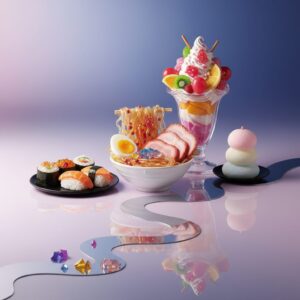
This devotion extends into Japan’s culinary scene, where the imaginative presentation of fake Japanese food mirrors the passionate creativity found in every facet of oshikatsu.
The Anatomy of an Oshi
First, we need to grasp what transforms a simple “favorite” into an oshi. An oshi is not just the person you like most on a team or the character you find the most appealing. The connection runs deeper, resembling a form of patronage. You don’t simply admire your oshi; you actively contribute to their success. Their victories feel like your own because you’ve invested in them—emotionally, financially, and with your time. When your oshi lands a leading role, tops the music charts, or wins a match, you experience a wave of vicarious pride. You played a part in making that happen, even if only in a small, indirect way.
This feeling is often captured by the word tōtoi (尊い). Literally translated as “precious” or “sacred,” in the context of oshikatsu it conveys a sense of something so pure and extraordinary that it feels almost holy. It’s an emotion of awe and reverence that goes beyond a mere crush or admiration. An oshi is tōtoi because their presence brings light, motivation, and joy to your life. This isn’t necessarily about romantic desire, although that can be part of it for some. More commonly, it’s a powerful, almost spiritual, appreciation for their talent, dedication, and the happiness they create. You want to protect that preciousness and support the person who provides it. This is the emotional core of oshikatsu. Your oshi is your muse, your champion, your reason for pushing through a tough week at work. Their existence is a gift, and your support is your way of giving back.
The “Katsu”: A Universe of Active Devotion
The true essence of oshikatsu lies in the “katsu”—the activities. This is where the lifestyle transitions from mere feeling into action. It’s a multifaceted endeavor that channels energy into creative and ritualistic forms of support. These activities are not arbitrary; they are established, well-understood practices within the community that transform passive admiration into a tangible, shared culture. Simply saying you support someone isn’t enough; you must enact that support through a rich array of actions.
The Rituals of Curation and Display
One of the most prominent aspects of oshikatsu involves merchandise, though not in the conventional sense. Collecting items is less about consumerism and more about curation and self-expression. It’s about constructing a personal monument to one’s devotion.
The most iconic example is the ita-bag (痛バッグ). The term literally means “painful bag,” a self-deprecating reference to how it may appear embarrassing to outsiders. These bags, usually tote bags or backpacks with a clear vinyl window on the front, showcase a carefully arranged collection of badges, keychains, acrylic stands, and other merchandise featuring one’s oshi. Crafting an ita-bag is an art form that demands a keen eye for design, color coordination, and symmetry. It serves as a declaration of loyalty—a mobile shrine carried proudly that signals to the world who you support. It’s both a fan flag and a personal billboard.
This curatorial drive extends into the home. Many fans dedicate a corner of their room, a bookshelf, or an entire cabinet to their oshi. These spaces, often called saidai (祭壇) or altars, are meticulously arranged with photos, figures, concert tickets, and other memorabilia. They are not haphazard piles but thoughtfully curated displays. Lighting, placement, and theme are carefully considered. This act of arrangement becomes a meditative process, a way to physically organize affection and create a sacred space within the home.
Creative Expression as Worship
Oshikatsu is deeply creative. Fans aren’t satisfied with merely consuming their oshi’s media; they are compelled to create inspired works themselves. This is an essential factor that distinguishes it from passive fandom. The DIY spirit thrives here.
A common craft is the creation of custom uchiwa (うちわ), or handheld fans. For concerts, fans spend hours designing and decorating these fans with their oshi‘s name, messages of encouragement, or requests like “wink at me!” They embellish them with glitter, ribbons, and neon paper to make their uchiwa stand out in large venues, hoping to catch their idol’s attention, even briefly. It’s a stadium folk art—a personalized beacon in a sea of faces.
Beyond crafts, there exists a vast ecosystem of fan-made content, including fan art that ranges from simple sketches to professional-grade illustrations, and fan fiction that explores characters and relationships in new ways. At the apex of this realm is dōjinshi (同人誌), self-published works, often manga or novels, sold at large conventions like Comiket. These events attract hundreds of thousands of attendees, all participating in a vibrant economy of fan-made art. This isn’t just a pastime; it’s a semi-professional creative outlet for many artists and writers.
The Social Life of a Supporter
While oshikatsu is intensely personal, it is seldom a solitary endeavor. Community is the foundation of the experience. Connecting with fellow fans, or oshi-tomo (推し友, “oshi friends”), is a significant part of the journey. These friendships are forged through shared passion, built on mutual understanding that outsiders often don’t grasp. Social media, especially X (formerly Twitter), serves as the main hub for these communities. Fans operate dedicated accounts to share news, post pictures of their merchandise collections, and engage with others supporting the same oshi.
This online community spills into real-world activities. A classic oshikatsu event is the honnin fusai no tanjōkai (本人不在の誕生日会), or “birthday party without the person themselves.” On their oshi‘s birthday, fans rent karaoke rooms or private spaces in restaurants, decorate them with pictures and merchandise, order custom cakes featuring their oshi‘s face, and celebrate as if the guest of honor were present. They sing their songs, watch videos, and toast to their continued success. It’s a joyful, communal ritual that strengthens bonds and honors their shared affection.
Another popular social event is the collaboration cafe. Companies have tapped into oshikatsu by partnering with anime series or idol groups to host themed cafes for limited times. These cafes offer character-inspired menus, exclusive merchandise, and a physical space for fans to gather. Securing a reservation can be fiercely competitive, but for fans, it’s a meaningful pilgrimage. It presents an opportunity to literally consume the world of their oshi and share that experience with friends.
A newer, endearingly quirky trend is the nui phenomenon. Nui (ぬい) are small, often exaggeratedly proportioned stuffed dolls of characters or idols. Fans carry their nui everywhere—to cafes, on trips, to work—and take pictures of them, an activity called nui-dori (ぬい撮り, “nui photography”). These photos are posted online. The nui acts as a proxy for the oshi, allowing fans to incorporate their beloved into daily life and create a shared narrative. It’s a way of expressing, “I’m experiencing this beautiful moment, and I’m thinking of you.”
The Psychology of Purposeful Passion
Why does oshikatsu resonate so profoundly in modern Japan? The reasons are multifaceted, involving identity, community, and the quest for meaning within a highly structured society.
For many, oshikatsu offers a strong sense of purpose and a clear framework for life. The Japanese work and school environments can be demanding and conformist, leaving little space for personal expression. Oshikatsu presents a parallel world with its own calendar, goals, and rewards. There is always something to anticipate: the next album release, a new anime episode, or an upcoming concert tour. This creates a rhythm to life beyond professional or academic responsibilities. Saving money becomes more tangible—it’s for concert tickets. Developing a new skill, such as graphic design, can enhance fan art. Oshikatsu channels energy into a productive and fulfilling pursuit that is uniquely personal.
It also serves as a powerful means of identity formation. In a group-oriented society, being a fan of a particular group or character allows individuals to express their uniqueness while still belonging to a collective. It’s a chosen identity, complete with a built-in community and shared language. When you meet someone with the same oshi, there’s an immediate connection—a shorthand for shared values and interests. This can be especially meaningful for those who feel marginalized or misunderstood in other parts of their lives. Within the world of oshikatsu, they are seen, understood, and appreciated for their passion.
Moreover, it provides a safe and structured outlet for intense emotions. Openly expressing strong feelings is not always encouraged in Japanese culture. Oshikatsu offers a space where it is not only acceptable but encouraged to experience and express overwhelming joy, excitement, pride, and even sadness. Crying at a concert because of being deeply moved by a performance is a valid and shared experience. Emotional highs are heightened by the community, and the lows—such as missing out on a ticket lottery or an oshi announcing retirement—are softened by mutual support.
The Economic and Cultural Mainstreaming
What was once a niche subculture has grown into a significant economic force and a widely recognized cultural concept. Companies have quickly acknowledged the considerable purchasing power of this dedicated demographic. The term “oshi-katsu economy” has become widespread, referring to the billions of yen spent yearly on merchandise, events, and related activities.
Specialty stores catering specifically to the oshi-katsu lifestyle have emerged throughout Japan. Shops in areas like Ikebukuro and Akihabara sell not only the merchandise itself but also the tools of devotion: multi-colored binders for organizing photo cards, protective sleeves for keychains, customizable acrylic stands, and all the materials needed to assemble the perfect ita-bag or uchiwa. The market has become highly sophisticated, meeting every imaginable need of the devoted fan.
The language of oshikatsu has also seeped into the mainstream. A few years ago, “oshi” was slang used exclusively by otaku. Today, it’s a term familiar to everyone. People casually refer to their favorite ramen shop or a specific stationery brand as their “oshi.” The idea of passionately supporting something has become a universally understood cultural expression.
This mainstreaming is also evident in the digital world. The rise of Virtual YouTubers (VTubers) has opened a new frontier for oshikatsu. Fans can support their digital idols directly through donations during livestreams, known as “super chats.” This fosters an even more direct and tangible connection between fan support and the creator’s success, making the patronage aspect of oshikatsu clearer than ever before.
The Other Side of Devotion
Of course, no intense passion is without its potential drawbacks. The world of oshikatsu isn’t always filled with sunshine and tōtoi emotions. The financial commitment can be overwhelming. With a steady flow of new merchandise, limited-edition items, and costly concert tickets, the pressure to spend can cause significant financial strain. It’s not unusual to hear of people taking on second jobs just to support their oshi activities.
There is also an emotional cost. When your happiness depends so heavily on someone else’s fortunes, you become vulnerable. An oshi becoming embroiled in a scandal, choosing to retire, or announcing a marriage can feel like a personal setback. Burnout is a genuine risk, and the intense emotional investment can lead to exhaustion and disappointment.
Like any fandom, communities can sometimes become toxic. Rivalries between fans of different groups, or even disagreements within the same oshi fanbase, can occur. The pressure to be the “best” fan—the one who buys the most merchandise or has the deepest knowledge—can foster a competitive and exclusionary environment.
However, it’s important to see these not as flaws inherent to oshikatsu itself, but as risks that come with any deep and meaningful involvement. Most participants manage these challenges and find great joy and fulfillment in their pursuits. They remain mindful of maintaining a healthy balance to keep their passion sustainable.
A Lifestyle of Self-Definition
Viewing oshikatsu merely as an extreme form of fandom overlooks its deeper cultural significance. It represents a complex and creative lifestyle that offers structure, community, identity, and a deep sense of purpose. It turns the passive enjoyment of entertainment into an active, participatory mission to support a creator. By curating merchandise, producing art, and fostering communities, individuals are not only celebrating their oshi but also expressing their own identity.
This reflects the human desire to find something meaningful to believe in and dedicate oneself to beyond the conventional roles of employee, student, or family member. In a world that can often feel isolating and repetitive, oshikatsu provides a vibrant and emotionally rich alternative. It is a way of transforming love for another into an act of self-creation. It’s not just about who you support; it’s about the person you become in the process.