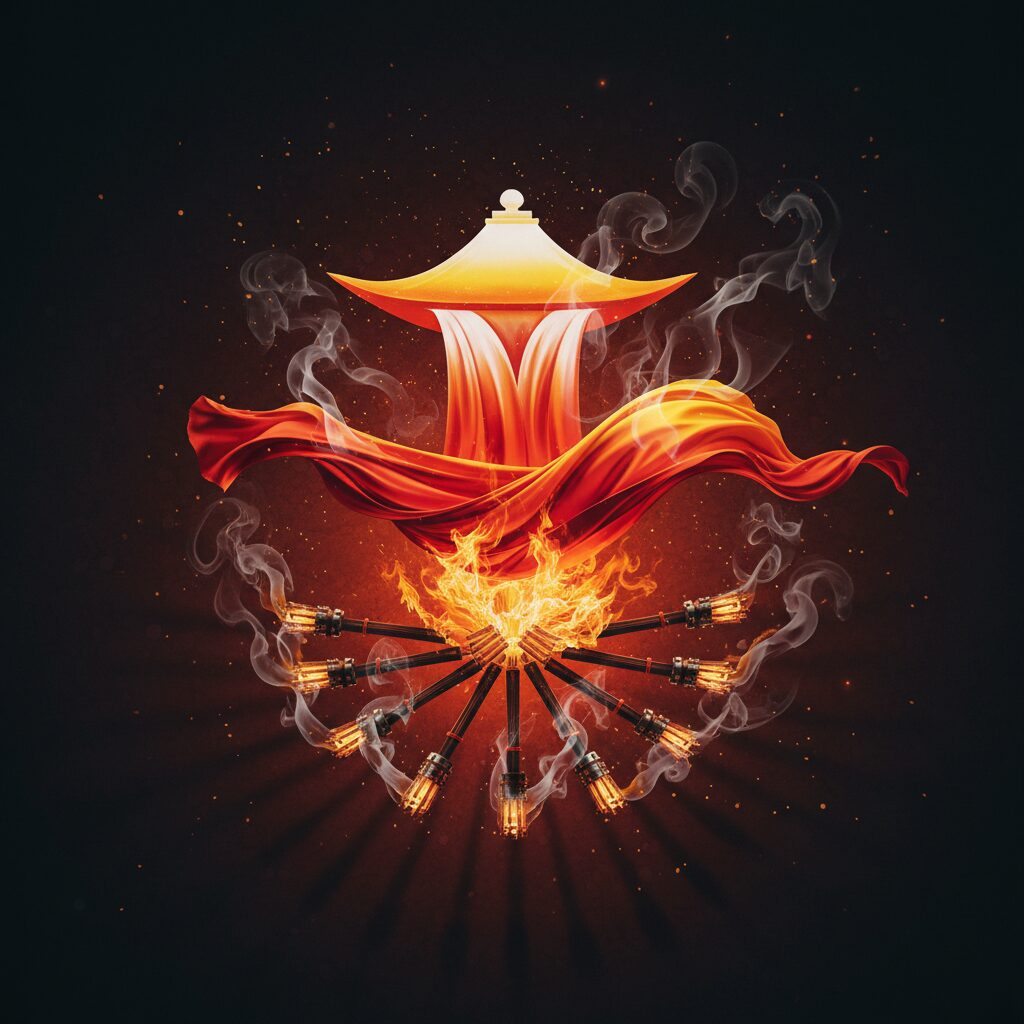
Every year, on July 14th, a corner of the Kii Mountains in Wakayama Prefecture becomes a vision of a beautiful, terrifying hell. Twelve colossal torches, each weighing over fifty kilograms and blazing with ferocious intensity, are carried down a stone path slick with moss and humidity. The men carrying them, dressed in simple white, chant and roar as they heave the pillars of fire, seemingly oblivious to the embers and ash raining down on them and the crowds packed just feet away. This is the Nachi no Ogi Matsuri, or the Nachi Fire Festival. And standing there, feeling the wave of heat wash over you, smelling the sharp scent of burnt pine, and watching sparks fly dangerously close, you can’t help but ask: How is something this chaotic, this palpably risky, considered a sacred ritual?
It’s a fair question. Most images of Japanese spirituality revolve around serenity—the silent raked gravel of a Zen garden, the quiet dignity of a shrine nestled in a forest, the measured grace of a tea ceremony. The Nachi Fire Festival is the polar opposite. It’s loud, sweaty, and feels genuinely perilous. Yet it is one of Japan’s most revered religious events, a spectacle of purification that draws thousands to the ancient Kumano Nachi Taisha Grand Shrine. To understand it is to understand a more primal, elemental side of Japanese faith, one where the divine isn’t just contemplated but confronted, and where purification requires a trial by fire. This isn’t a performance for tourists; it’s a raw, living act of devotion where danger is the entire point.
The intensity of the festival invites a broader exploration of Japan’s vibrant traditions, such as discovering the gourmet allure of department store basements that reveal an unexpected side of cultural innovation.
The Sacred Stage: Kumano’s Ancient Path
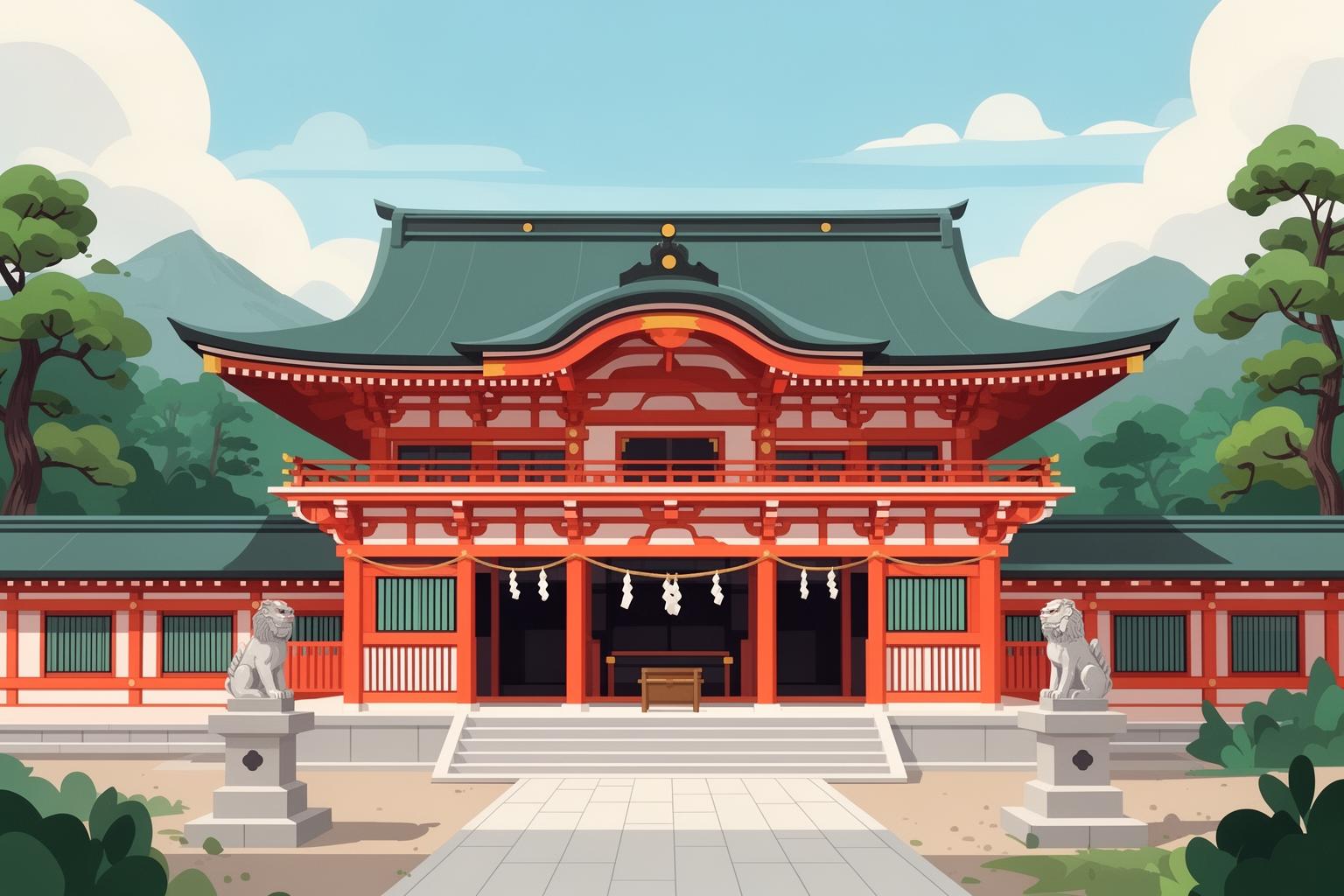
To understand why this festival feels so powerful, you first need to know where it takes place. This is not just any shrine. Kumano Nachi Taisha is the destination of the Kumano Kodo, a network of ancient pilgrimage routes that have traversed the Kii Peninsula for over a thousand years. For centuries, everyone from emperors to samurai to humble peasants has journeyed these demanding mountain paths, seeking purification and spiritual rebirth in the region regarded as the mythical “land of the gods.”
The entire area is immersed in a unique fusion of Shinto, Buddhism, and the esoteric mountain ascetic practice known as Shugendo. This is not a place of neatly separated doctrines. It’s a landscape where nature itself is revered as the primary deity. The focal point is the breathtaking Nachi Falls, Japan’s tallest single-drop waterfall, plunging 133 meters down a sheer cliff. Long before shrine buildings existed, the waterfall itself was venerated as a kami, a divine spirit. At its heart, the fire festival is a ritual that pays homage to this powerful, life-giving deity.
Kumano Nachi Taisha is located partway up the mountain, overlooking the falls. Adjacent to it is Seiganto-ji, a Buddhist temple. Their close proximity is no coincidence; it perfectly illustrates the fluid syncretism that shaped Japanese religion for much of its history. This festival belongs to the Shinto shrine, yet its raw, ascetic energy is deeply tied to the Shugendo practitioners—the mountain hermits who pursued enlightenment through intense physical trials in the wilderness. The festival unfolds on the stone staircase that descends from the shrine towards the falls, a path trodden by pilgrims for generations. The setting is not merely a backdrop; it is an active participant, a sacred stage charged with a millennium of prayer, hardship, and devotion.
Choreography of Chaos
The festival’s official name, Nachi no Ogi Matsuri, translates to the “Fan Festival of Nachi.” It refers to the twelve towering ōgi-mikoshi—portable shrines adorned with fans, mirrors, and vivid vermilion lacquer. Each shrine stands about six meters tall and symbolizes one of the twelve deities of Kumano, whose spirit temporarily inhabits the mikoshi. More significantly, they embody the spirit of Nachi Falls.
The main event commences when these twelve divine effigies are carried out of the shrine. Their mission is to undertake a pilgrimage to the base of the waterfall, their original home. However, the path must first be purified. This is where the fire plays its role.
Enter the torchbearers. These aren’t small tiki torches but massive bundles of cypress and pine slats, weighing up to 60 kilograms, known as o-taimatsu. Twelve men, dressed only in white loincloths and headbands, hoist these blazing pillars onto their shoulders. As sacred water is poured over their backs to offer some protection from the heat, they begin their frantic, staggering dance down the stone steps. They chant “Hariha, hariha!”—a sacred, untranslatable phrase—as they charge forward, swinging the enormous torches in arcs that shower sparks and burning embers into the air.
It is an intense sensory onslaught. The roar of the fire is deafening, a continuous whoosh reminiscent of a jet engine. The heat is so fierce you can feel it on your face from a distance. The air thickens with smoke, stinging your eyes and scratching your throat. And there is a genuine, palpable sense of danger. The path is narrow, the crowd tightly packed, and the bearers move with a frenzied, barely controlled momentum. They lurch and spin, and the enormous fireballs they carry come terrifyingly close to everything and everyone. It’s not a polished procession; it’s a raw, powerful, and exhausting ritual that pushes its participants to their physical limits.
Purification by Fire
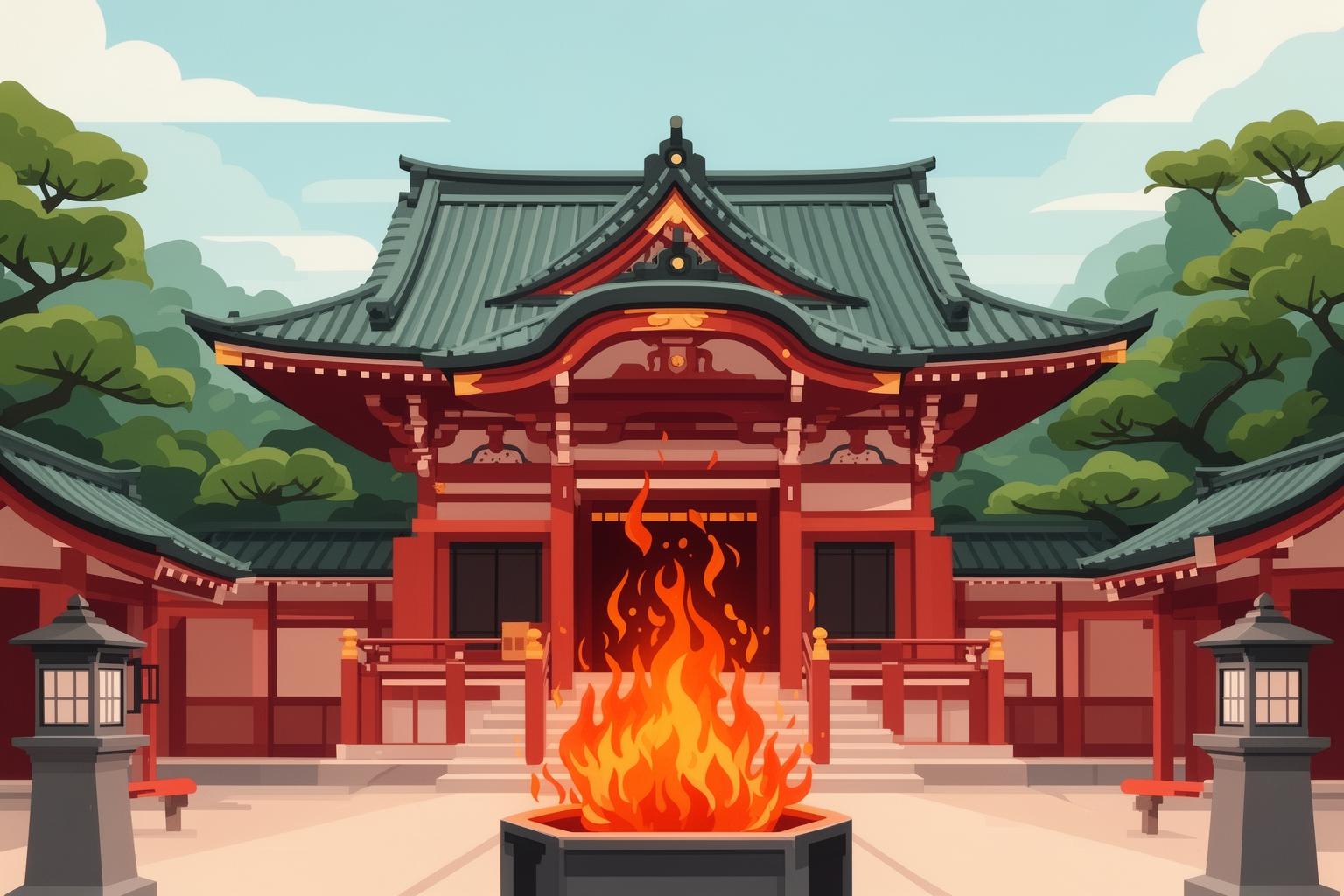
So, what is the purpose of all this striking, overwhelming chaos? The answer is found in the core Shinto concept of purification, or oharai. Shintoism teaches that impurity, or kegare, builds up over time through contact with death, disease, or simply the stresses of everyday life. This impurity can anger the kami and bring misfortune. Hence, regular purification is crucial to restore balance and harmony. Among the Shinto methods, few forces are as powerfully purifying as fire.
The fire of the o-taimatsu plays a vital role: it ritually cleanses the path for the gods. As the torchbearers rush down the mountain, they symbolically burn away all spiritual impurity accumulated over the past year. They scorch the air, the stone, and even the souls of the spectators, clearing the way for the twelve ōgi-mikoshi to safely journey to the waterfall. The fierce intensity of the flames isn’t for mere spectacle; it reflects the strength of the purification. A small, meek flame wouldn’t suffice to cleanse a path for gods of this magnitude.
That is why the danger is not only accepted; it is essential. The physical challenge faced by the torchbearers is a form of devotion. By bearing the immense weight and heat, by risking burns and exhaustion, they show their sincerity and dedication. Their effort is a sacrifice, an offering to the kami. For the onlookers, standing close enough to feel the heat and dodge the sparks becomes a way to engage in this purification. They aren’t simply watching a performance; they are being touched by the same elemental force, purified by the same sacred fire. The risk makes the sacredness tangible. It transforms the event from a mere reenactment into a living, breathing ceremony with genuine significance.
Who Comes for a Holy Inferno?
This festival offers a glimpse into a side of Japan that challenges the typical stereotypes of quiet reflection and meticulous order. It serves as a powerful reminder that Japanese spirituality has deep, primal origins that remain very much alive. The atmosphere is less like a Zen garden and more like a pagan bonfire.
The crowd reflects this spirit. Naturally, there are tourists with high-end cameras, eager to capture the perfect shot. But most attendees are Japanese. You see families who have attended for generations, with the festival woven into the fabric of their year. You see young people, perhaps attracted by the raw energy and sheer spectacle. You see serious-looking men and women who seem like modern-day pilgrims, possibly having walked part of the Kumano Kodo and viewing this event as a spiritual climax.
What binds them is a desire to connect with something genuine and powerful. In an increasingly digital, sterile, and controlled world, the Nachi Fire Festival is an unapologetic burst of the real. It connects to the earth, the mountains, and a form of faith expressed not through quiet words but through sweat, muscle, and fire. Those drawn to this experience aren’t seeking a peaceful escape. They want to be shaken, overwhelmed, to stand before something awe-inspiring and slightly daunting.
Ultimately, the Nachi Fire Festival feels dangerously sacred because it refuses to separate the two. It embodies the ancient understanding that true power—whether natural or divine—is inherently wild and uncontrollable. Approaching it means risking getting burned. The festival doesn’t attempt to sanitize this power for safe consumption. Instead, it invites you to stand at the edge of the inferno and feel the heat. It reminds us that some things can only be purified by fire, and sometimes, the most profound spiritual experiences are those that make your heart race and your skin tingle with the sublime thrill of being alive and just a bit too close to the flame.