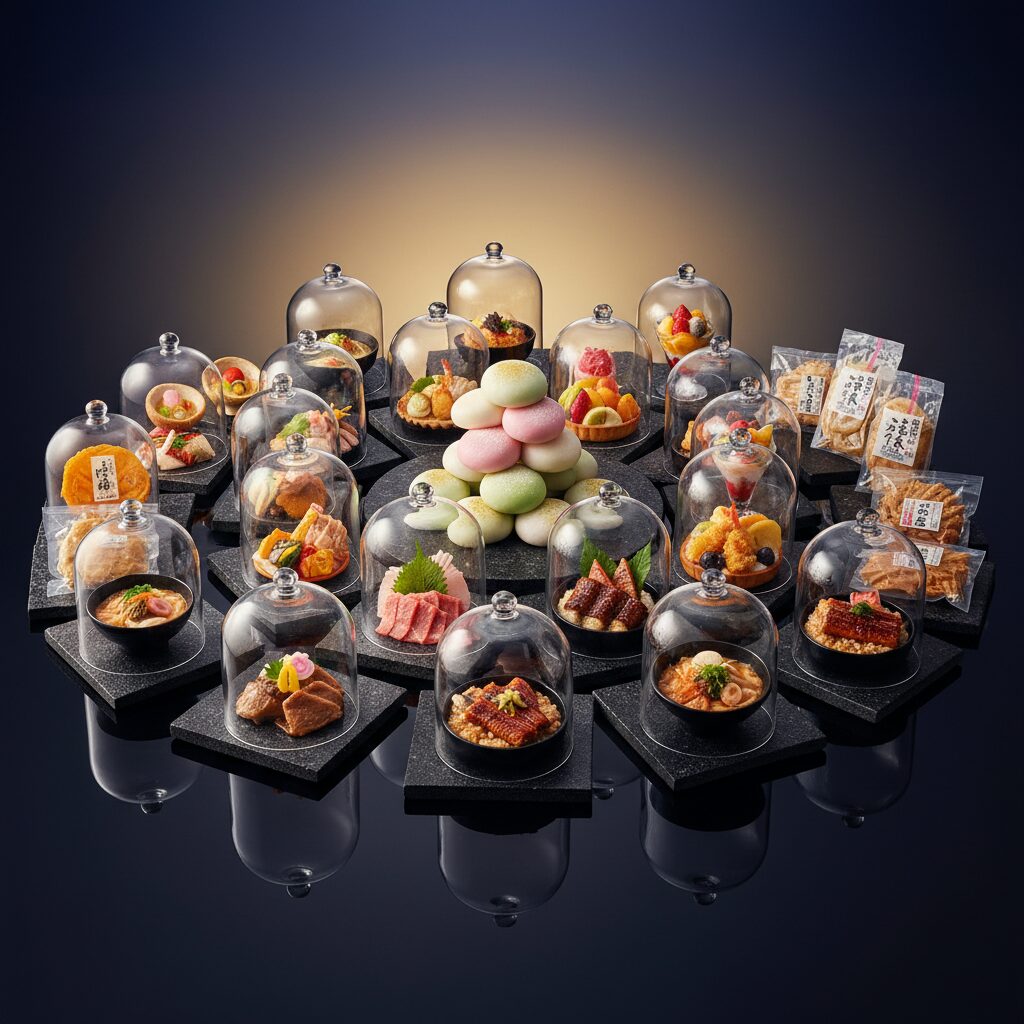
You asked me why the basement of a Japanese department store is such a big deal. It’s a fair question. In most parts of the world, the basement is where you find storage, parking, or maybe a clearance section with questionable lighting. A food court, if it exists, is often an afterthought—a place for functional, uninspired refueling. But in Japan, when you descend the escalator of a grand department store like Mitsukoshi, Isetan, or Takashimaya, you’re not just going downstairs. You’re entering a different world entirely. Welcome to the depachika, the dazzling, subterranean universe of gourmet food that is less a marketplace and more a meticulously staged theater.
Forget everything you know about food courts. The depachika is not a place of plastic trays and generic fast food. It is a sprawling, brilliantly lit landscape of edible luxury. The air hums with a polite energy, scented with freshly baked bread, savory grilled fish, and the delicate sweetness of traditional confections. Glass cases gleam like jewel boxes, displaying everything from perfectly marbled cuts of wagyu beef to single, flawless strawberries that can cost as much as a good bottle of wine. It’s a sensory overload in the best possible way, a living, breathing gallery where every exhibit is delicious. But to understand the depachika, you have to look past the beautiful food and see the cultural performance unfolding. It’s a stage that tells you everything you need to know about Japan’s relationship with food, craftsmanship, and the art of giving.
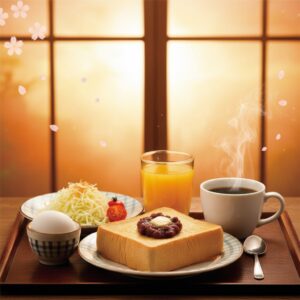
This subterranean gourmet paradise finds a kindred spirit in Japan’s refined early morning kissaten breakfast ritual, where even the simplest meal becomes a celebrated performance.
A Stage for Perfection: The Curation of Depachika
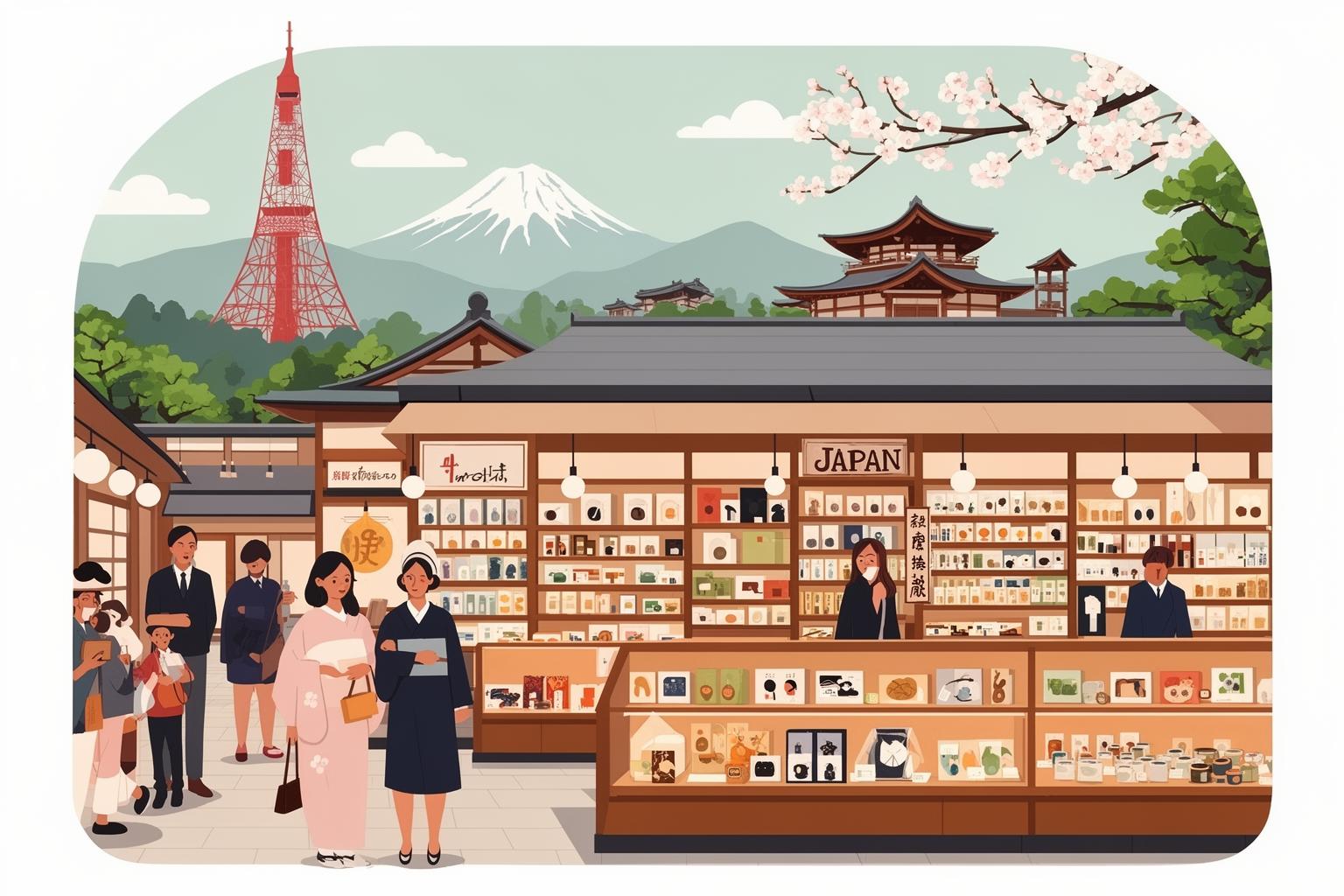
The first thing to grasp is that nothing in a depachika is placed there by chance. This isn’t an open market where any vendor can simply rent a stall. Every single brand, from the most renowned national confectioner to the smallest local pickle maker, has been carefully chosen, vetted, and invited by the department store. Being featured in a top-tier depachika signifies supreme quality and prestige. Since the department store’s reputation is at stake, the selection process is uncompromising.
This leads to a remarkable level of specialization. You won’t find a generic “bakery.” Instead, you’ll encounter a counter from a famous Parisian boulangerie that sells only croissants and baguettes, right next to a historic Japanese bakery that has perfected the craft of anpan (sweet red bean buns). Just a few steps away, there may be a stall devoted exclusively to castella, a type of sponge cake from Nagasaki, and another that sells only senbei (rice crackers) from a legendary shop in Kyoto. This intense dedication to excelling at one thing embodies the shokunin spirit—the artisan’s lifelong commitment to mastering their craft.
This meticulous curation also transforms the depachika into a culinary map of Japan. Department stores vie to bring in the most coveted meibutsu—famous regional specialties—from across the country. You can purchase white shrimp crackers from Toyama, special yokan jelly from a centuries-old Kyoto shop, and mentaiko (spicy cod roe) from Fukuoka, all without leaving Tokyo. For many Japanese people, the depachika is more than just a place to buy dinner; it’s a way to journey through their taste memories, to savor a cherished flavor from a distant hometown or memorable trip. It’s a pilgrimage site for the palate.
The Performers: From Master Chefs to Gifting Gurus
If the food takes center stage, the staff serve as the essential supporting cast. Observe them for a few minutes, and you’ll witness their performance in full swing. Nearly all are dressed in crisp, spotless uniforms, often complemented by hats and gloves. Their movements are efficient and precise—a ballet of grace and economy. When they hand you your purchase, it’s frequently done with both hands and a slight bow, a gesture showing respect for both the customer and the product.
This is omotenashi, the uniquely Japanese spirit of hospitality that anticipates a guest’s needs before they are even spoken. It’s reflected in how a vendor offers you a tiny, perfect sample (shishoku) on a toothpick, paired with a friendly smile but no pressure to buy. It’s evident in the careful, almost reverent way they handle the food. Nothing is casually tossed into a bag. This is particularly true of the packaging, which is an art form in its own right and central to the depachika experience.
In Japan, a gift carries a message, and wrapping is a vital part of that message. A simple box of cookies from a depachika isn’t just placed in a plastic bag. Instead, it is first placed in a beautifully branded box. That box might then be wrapped in exquisite, heavy paper, with the corners folded with geometric precision. It’s then set in a branded paper bag, the handles carefully arranged for easy carrying. Sometimes, a small sticker seals the bag, or a ribbon is tied around it. For perishable items, a small ice pack is discreetly included. This elaborate process transforms a simple purchase into a meaningful gift that says, “I thought of you and chose something special.” The packaging is not an obstacle to the food; it is the opening act of the ritual of consumption.
The Audience and the Ritual: More Than Just Shopping
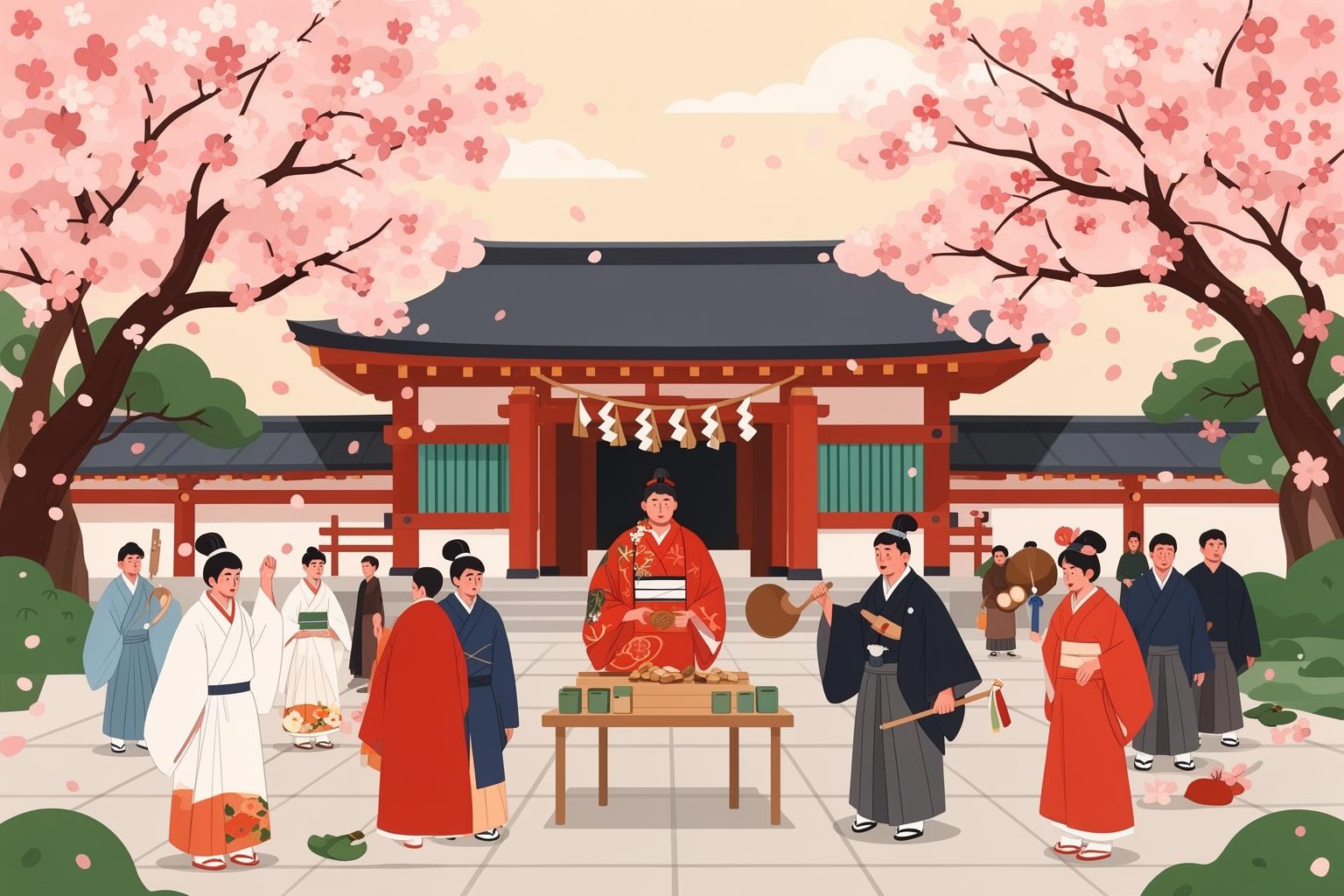
The people you encounter in a depachika represent a diverse slice of urban Japanese life, each participating in their own unique food ritual. There are the dedicated home cooks, often older women, who come seeking a specific high-quality ingredient unavailable at a typical supermarket—such as a particular type of miso, freshly shaved katsuobushi, or a rare seasonal vegetable. They rely on the depachika for its unwavering quality.
Then you have office workers dropping by on their way home to pick up a bento box for dinner. However, these are not your average convenience store bentos. These are gourmet creations featuring perfectly cooked rice, grilled fish with crispy skin, and a colorful assortment of exquisitely prepared side dishes, all presented in an elegant container. It’s a way to enjoy a sophisticated, balanced meal without any effort, a small daily indulgence.
And naturally, there are the gift-givers. In Japan, gift-giving is a deeply rooted tradition for various occasions: visiting someone’s home, thanking a colleague, or as seasonal greetings (oseibo in winter, ochugen in summer). The depachika is the go-to place for these gifts. The high quality, beautiful packaging, and renowned brand names guarantee that the gift will be well-received and reflect positively on the giver. The process of selecting the perfect gift, considering the recipient’s preferences and the season, is a ritual in its own right.
Speaking of seasons, the entire depachika setup is refreshed every few months to mirror the changing seasons, a fundamental principle of Japanese cuisine. In spring, stalls burst with pink hues, featuring sakura-themed sweets and cakes made with fresh strawberries. Summer brings cooling jellies, matcha-flavored treats, and artfully arranged platters of seasonal fruit. Autumn celebrates chestnuts (kuri) and sweet potatoes (satsumaimo), including everything from mont blanc pastries to roasted sweet potato yokan. Winter offers heartier dishes and special items for New Year festivities. This ongoing transformation turns each visit into a new discovery and deeply ties the urban food experience to the rhythms of nature.
The Final Act: The Time Sale Spectacle
If you truly want to experience the depachika come alive, visit about an hour before closing. The calm, gallery-like ambiance undergoes a striking transformation. This is the moment of the taimu seru—the time sale. The polite, reserved vendors suddenly find their voices, calling out discounts in a rhythmic, sing-song chant. “Iかがですかー!” (“How about it?”) they shout, holding up bento boxes and salads.
This isn’t a chaotic fire sale. It’s an organized, lively, and uniquely Japanese spectacle. A crowd gathers, but there’s no pushing or shouting. People move with swift yet orderly purpose, grabbing high-quality sushi, tempura, and prepared dishes at 20, 30, or even 50 percent off. The driving force behind this daily ritual is the concept of mottainai—a profound cultural aversion to waste. It would be a great shame for this beautiful, fresh food to go unsold. The time sale is the perfect solution, allowing stores to clear their inventory while offering customers an excellent bargain. It’s an exciting, win-win finale to the day’s performance.
Thus, the depachika is much more than a basement food hall. It’s a cultural institution condensed into a single floor. It’s a living museum of Japanese culinary craftsmanship, a tribute to the importance of seasonality and presentation, and a daily stage for the rituals of hospitality and gift-giving. It embodies the Japanese belief that food should not only be delicious but also beautiful, respectful of its origins, and shared with care. It’s a place that engages all the senses and tells a story about a culture that views food not just as sustenance, but as an art form.