If you ask most people to picture a typical Japanese breakfast, they’ll probably describe a beautiful, intricate spread: a piece of grilled fish, a bowl of steaming rice, miso soup, pickles, and perhaps a block of tofu or some natto. And they wouldn’t be wrong. That is the classic washoku breakfast, a meal of profound balance and tradition. But there’s another morning ritual, one just as deeply ingrained in the daily life of Japan, that happens outside the home. It’s a ritual of dark wood, velvet chairs, the clink of porcelain, and the rustle of a freshly opened newspaper. It’s the culture of ‘Morning Service’ at a local kissaten.
Let’s get one thing clear from the start. ‘Morning Service’, or mōningu sābisu as it’s known here, has nothing to do with religion. It’s a uniquely Japanese café tradition, a kind of breakfast special that’s one of the best deals you’ll find anywhere in the country. For the price of a single cup of coffee, a neighborhood coffee shop will provide a complimentary light breakfast to go with it. But to see it merely as a cheap meal is to miss the point entirely. Morning Service is a social institution, a community hub, and a quiet ceremony that sets the rhythm for the day. It takes place in a specific type of establishment: the kissaten, the classic Showa-era coffee house that acts as a living time capsule. Stepping into one is to step back into a slower, more deliberate Japan, and participating in its morning ritual is one of the most authentic local experiences you can have.
The gentle pace of a kissaten morning finds a harmonious parallel in the art of spring foraging, where each seasonal flavor invites a renewed connection with nature.
What Exactly is a ‘Kissaten’?
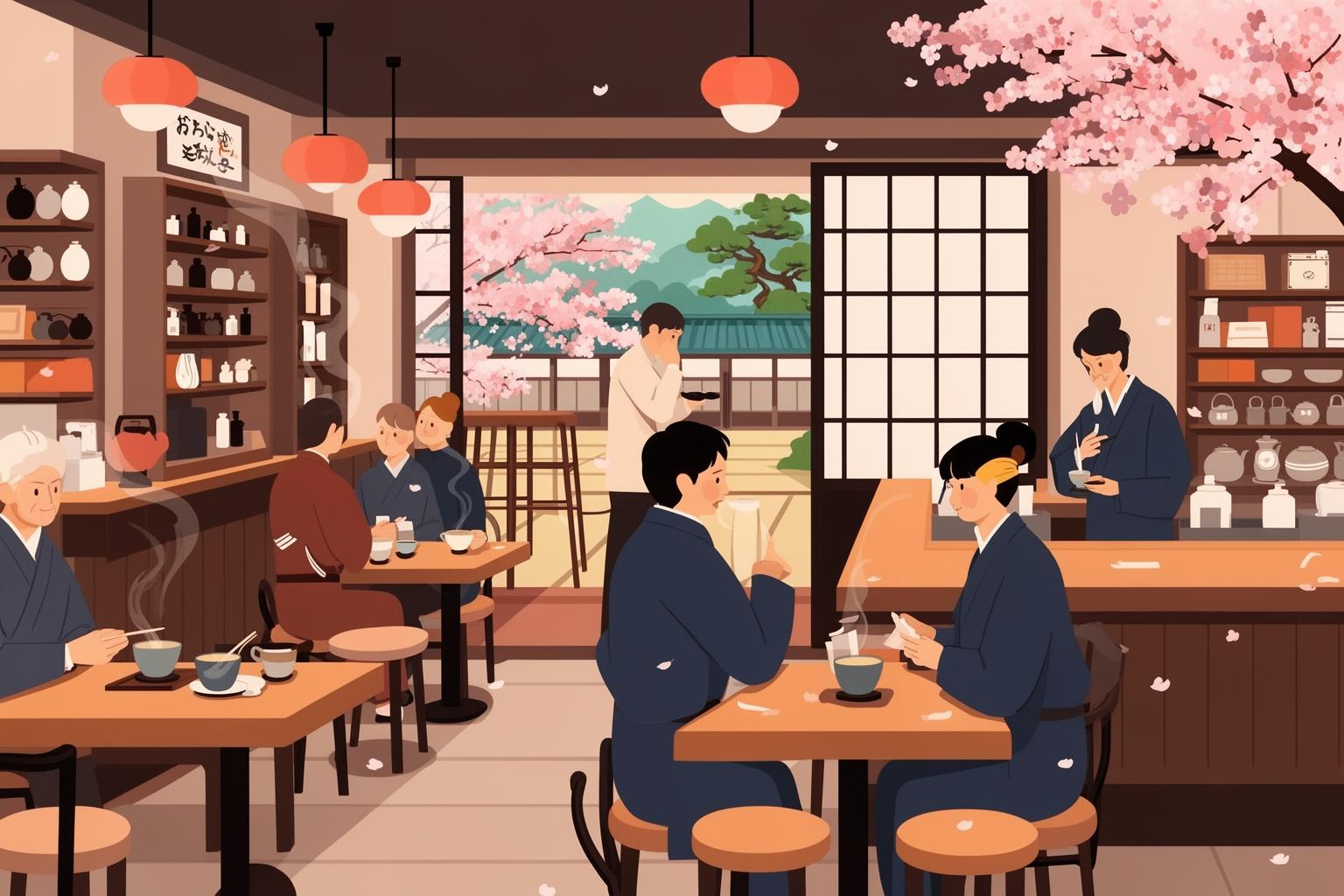
Before discussing the meal, we first need to understand the setting where this ritual takes place. A kissaten (喫茶店) is far more than just a café. In a world filled with minimalist, third-wave coffee shops serving single-origin pour-overs and offering free Wi-Fi, the kissaten stands as a dignified contrast. The term itself translates roughly to ‘tea-drinking shop’, a nod to its origins, but nowadays it is predominantly about coffee.
Think of it as the opposite of a modern, quick-service coffee chain. You don’t grab a paper cup and rush off. Instead, you find a seat and linger. The ambiance is crucial. Lighting is often soft and warm, highlighting dark, polished wood panels and furniture that has endured for decades. Seating is rarely purely functional; expect plush, high-backed armchairs upholstered in velvet or faux leather in hues of burgundy, forest green, or mustard yellow. You might notice stained-glass lamps, elaborate wallpaper, and shelves stocked with manga or old magazines for customers to peruse. There’s a tangible sense of history in the air, a quiet comfort that feels earned.
At the center of every authentic kissaten is the ‘Master’ (マスター, masutā). This is typically the owner, a figure as integral to the shop’s character as its décor. Often a man of a certain age, dressed neatly in a crisp shirt and sometimes wearing a waistcoat or apron, the Master is not a cheerful barista but a craftsman. You might find him quietly polishing glasses, carefully brewing coffee with a siphon or flannel drip, or exchanging a few familiar words with regulars. His presence provides stability; this is not a place with rapid staff turnover. The Master has been here for years and will likely be here tomorrow as well.
The kissaten serves as a true ‘third place’—a space that is neither home nor workplace. For many local residents, especially older patrons, it acts as a communal living room. It’s a place to be alone without feeling lonely. The soft hum of activity, gentle jazz or classical music playing from an aged stereo, and the presence of others sharing the space create a cocoon of shared solitude.
Decoding ‘Morning Service’: The Best Deal in Japan
Now, for the main attraction. ‘Morning Service’ is usually available from the shop’s opening until around 11 a.m. The basic idea is straightforward: order a drink—almost always coffee—and a meal is included, either free or for a very small extra charge. This business model is built on hospitality and routine, aiming to attract locals and help them start their day well.
The Unbeatable Formula: Coffee + Something Extra
The classic Morning Service set exemplifies satisfying simplicity. It’s a formula you’ll find replicated with minor variations in kissaten throughout Japan. At its core is the coffee. This isn’t the fruity, acidic coffee typical of the modern specialty scene. It’s generally a dark, robust ‘blend coffee’ (burendo kōhī), smooth and low in acidity, meant to be savored slowly.
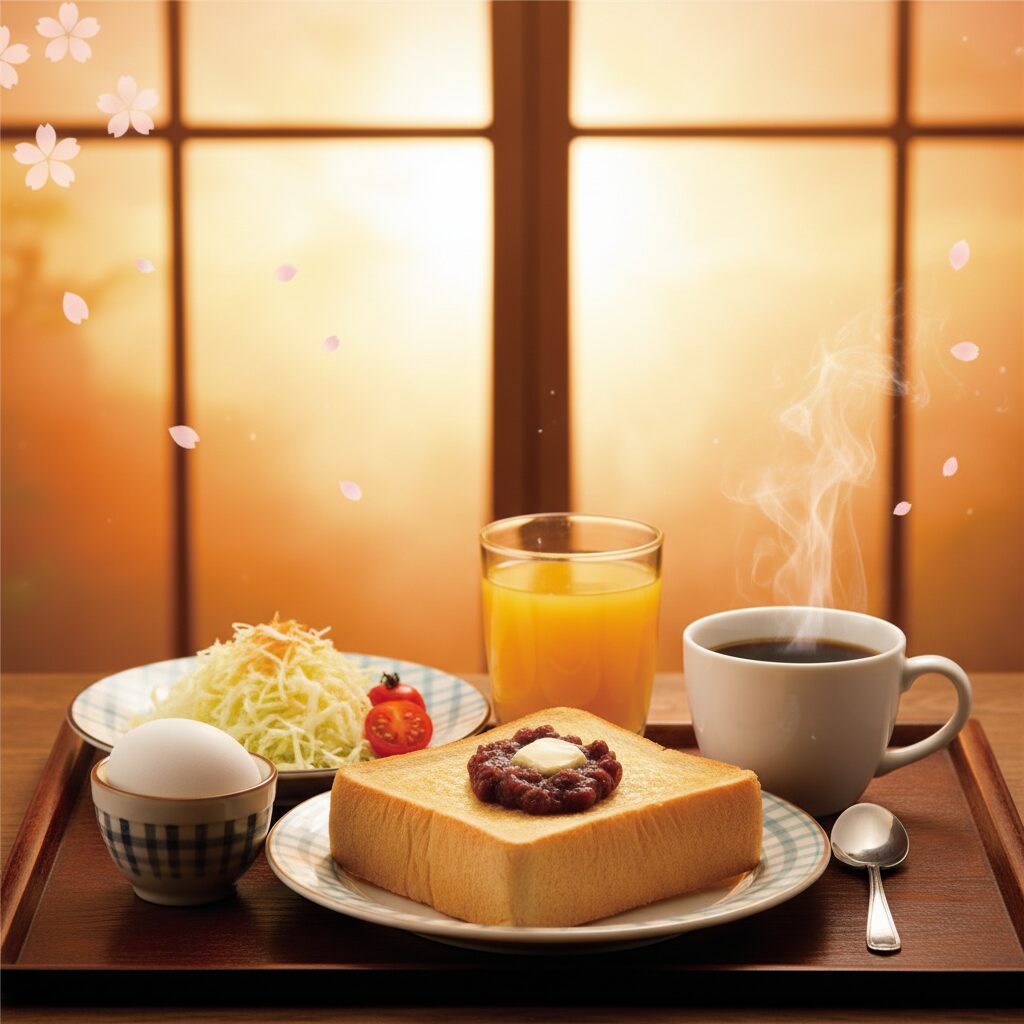
Accompanying your coffee will be the essential trio of the Morning Service plate:
Thick-cut Toast: This is no ordinary slice of bread. It’s shokupan, fluffy Japanese milk bread, cut into a thick slab, often at least an inch and a half thick. It’s toasted to a perfect golden-brown on the outside, while the inside stays incredibly soft and pillowy. It comes pre-buttered, with the melted butter soaking into the crumb.
A Boiled Egg: A single hard-boiled egg (yude tamago), typically served warm in a small dish with a shaker of salt. There’s a small, satisfying ritual in cracking and peeling the shell as your coffee cools to the ideal temperature.
A Small Side: This is where local flavor shines through. It could be a tiny bowl of yogurt with a dollop of jam or a small serving of potato salad. Often it’s a simple green salad, little more than a few iceberg lettuce leaves and a cucumber slice, dressed with a distinctively Japanese sesame or carrot-ginger vinaigrette.
For the price of a 400 or 500 yen cup of coffee, you receive the entire set. It’s a perfectly balanced, comforting way to start the day that feels both generous and just right.
Regional Variations and Lavish Upgrades
While the classic toast-and-egg set is the nationwide norm, the culture of Morning Service reaches its peak in the Chubu region, especially in Nagoya and nearby Aichi Prefecture. According to legend, the tradition began in Ichinomiya, where textile factory owners would treat their business clients to coffee and snacks. Local kissaten owners, noticing this practice, began including snacks for free as a competitive tactic, giving rise to the culture.
In Nagoya, Morning Service becomes an art form. The ‘free’ extras can grow surprisingly elaborate. The simple buttered toast might be swapped for ogura toast—the same thick slice of shokupan topped with a generous spread of sweet red bean paste (anko). While it might sound unusual to a Western palate, the blend of savory butter, fluffy bread, and sweet, earthy beans is a beloved local delicacy.
But that’s not all. Depending on the café, your ‘service’ might include chawanmushi (a delicate, savory steamed egg custard), a small bowl of udon or soba noodles, a rice ball (onigiri), or even spaghetti. The competition among cafés to offer the most impressive morning set is intense, transforming a simple breakfast into a lavish, multi-dish experience—still all included in the price of a single cup of coffee. It’s a remarkable expression of regional pride and customer-focused hospitality, or omotenashi.
The Unspoken Rituals: How to Behave Like a Regular
Experiencing Morning Service is about more than just having a meal. It’s about fitting yourself into a well-established daily rhythm. There are unspoken rules and a subtle choreography that, once grasped, make the experience all the more fulfilling.
Entering and Finding Your Seat
When you open the door, often setting off a small chime, you’ll be greeted with a soft, polite “Irasshaimase” (Welcome) from the Master behind the counter. This is not an exuberant greeting; it’s a calm acknowledgment of your arrival. Take a moment to look around. Don’t rush to the first empty seat you spot. Observe the flow of the room. Notice where the other customers—the regulars—are seated. Some spots might be silently reserved for certain patrons. It’s usually best to pick a seat that’s off the main traffic path, allowing you to settle comfortably.
Once seated, you’ll be brought a glass of water and an oshibori, a small, damp towel. In winter, it will be steaming hot; in summer, refreshingly cool. Wiping your hands with the oshibori is the first official step of the ritual. It’s a moment to pause, cleanse your hands and mind, and transition from the outside world into the calm of the kissaten.
The Art of Ordering and Lingering
Ordering is usually straightforward. If you arrive during the proper hours, you can simply say, “Mōningu, kudasai” (Morning Service, please). If there are several options (e.g., butter toast, jam toast, or ogura toast), the Master will indicate them on the menu. Your main choice will be your drink. While the default is the house blend, you may also find options like ‘American coffee’ or ‘charcoal-roasted coffee’ (sumibiyaki).
Once your coffee arrives, the next part of the ritual begins: settling in. Glance around, and you’ll spot a wooden rack filled with the day’s newspapers and magazines. Feel free to take one. This is an essential part of the experience. The rustle of a broadsheet newspaper is the trademark sound of a kissaten morning. You’ll see older men studying the Nikkei financial pages, while others flip through the bold headlines and colorful photos of sports dailies. Even if you don’t read Japanese, holding the paper and looking at the pictures is a way to participate.
The most important thing to grasp is the pace. You’re not expected to hurry. No one is waiting for you to leave. The entire point is to linger. Nursing a single cup of coffee for an hour or more is entirely normal. This is your time to read, reflect, and watch the neighborhood awaken through the window. It stands in stark contrast to the modern ‘grab-and-go’ culture.
The Social Silence
One of the most remarkable aspects of a morning kissaten is the nature of its quiet. It’s not an awkward or empty silence. It’s a comfortable, shared stillness. Most customers arrive alone, immersed in their own worlds. They are together, yet apart. This is a social contract everyone implicitly respects. Speaking loudly on your phone or engaging in boisterous conversation would feel like a serious breach of this space.
That isn’t to say it’s completely silent. You’ll hear the gentle clinking of spoons against porcelain, the soft rustle of turning pages, and the low murmur of exchange between a regular at the counter and the Master. This gentle soundscape forms part of the ambiance. It’s the soundtrack to your morning meditation. You are an anonymous, welcomed guest in a space governed by routine and mutual respect.
Why Does This Culture Persist?
In a nation renowned for its relentless modernity and efficiency, the slow, seemingly inefficient realm of the kissaten and its Morning Service feels like an oddity. Yet it persists, especially in residential neighborhoods beyond the busy centers of major cities. Its endurance reveals much about the values underlying Japanese society.
A Community Living Room
For many, particularly Japan’s large elderly retiree population, the daily visit to the kissaten serves as an essential social lifeline. It offers a structure to the day, a reason to get dressed and step outside. The Master knows their names and usual orders. They might exchange a few words about the weather or local news. This low-pressure social interaction provides a vital sense of connection and helps combat the loneliness that often accompanies old age. In a very real way, it functions as their club.
For local office workers or small business owners, it serves as a transitional space—a place to gather thoughts, read the paper, and mentally prepare for the day ahead in a calm environment that is neither home nor office.
A Taste of the Showa Era
The kissaten is a physical link to the Showa period (1926-1989), an era that holds a significant place in the modern Japanese imagination. It was a time of post-war recovery, rapid economic growth, and a distinctive, perhaps more hopeful, public mood. These coffee shops have preserved the aesthetics of that era not as a ‘retro’ gimmick, but simply because they have never changed. The dark wood, the siphons, the jazzy music—it’s all genuine.
In a world of constant change, where buildings are demolished and trends shift instantly, the unchanging nature of the kissaten offers a deep sense of comfort and stability. It represents a tangible piece of the past that continues to meet present-day needs.
Having breakfast at a kissaten is more than just eating an inexpensive meal. It is participating in a quiet, daily ritual that reaffirms the importance of community, routine, and taking a moment to simply be. It offers a glimpse into a side of Japan that moves at a more human pace. So next time you’re here, skip the hotel buffet. Seek out a small, family-run shop tucked away on a quiet side street, look for the sign that says モーニングサービス, and push open the door. Settle into a velvet chair, take a deep breath, and listen to the gentle rhythm of a neighborhood waking up, one cup of coffee and one thick slice of toast at a time.