You see it everywhere in Japan, once you know what to look for. Tucked away in a quiet Kyoto neighborhood, a massive, gnarled camphor tree, centuries old, is wrapped in a thick, braided straw rope. In a forest on a remote peninsula, a cluster of colossal boulders stands silently, cordoned off from the path by the same sacred rope. At the base of a thundering waterfall, you find not a viewing platform, but a shrine gate, treating the cascade not as a spectacle but as a presence. You start to wonder: Why is this tree, this rock, this waterfall treated with such specific, formal reverence? In most places, it’s just scenery. Here, it’s something else entirely. It feels alive.
That feeling is the key. You’re not just imagining it; you’re tapping into the very foundation of Japan’s indigenous spiritual tradition, Shinto. To understand Japan’s profound and often paradoxical relationship with nature, you have to understand this core principle: the world is not an inanimate object created by a god. The world is full of gods. And those gods, or kami, are not distant, ethereal beings in a far-off heaven. They are the ancient tree, the commanding rock, the life-giving waterfall. This is animism, not as a primitive relic, but as a living, breathing worldview that continues to shape Japanese culture, art, and the very feel of the landscape itself. It’s a way of seeing that transforms a simple walk in the woods into a potential encounter with the divine. So, let’s unpack why a stone isn’t always just a stone in Japan.
Just as nature is seen as a living force, Japan’s intricate senpai-kohai system embeds deep-seated respect into the fabric of daily life.
The World of Kami: Beyond the Word “God”
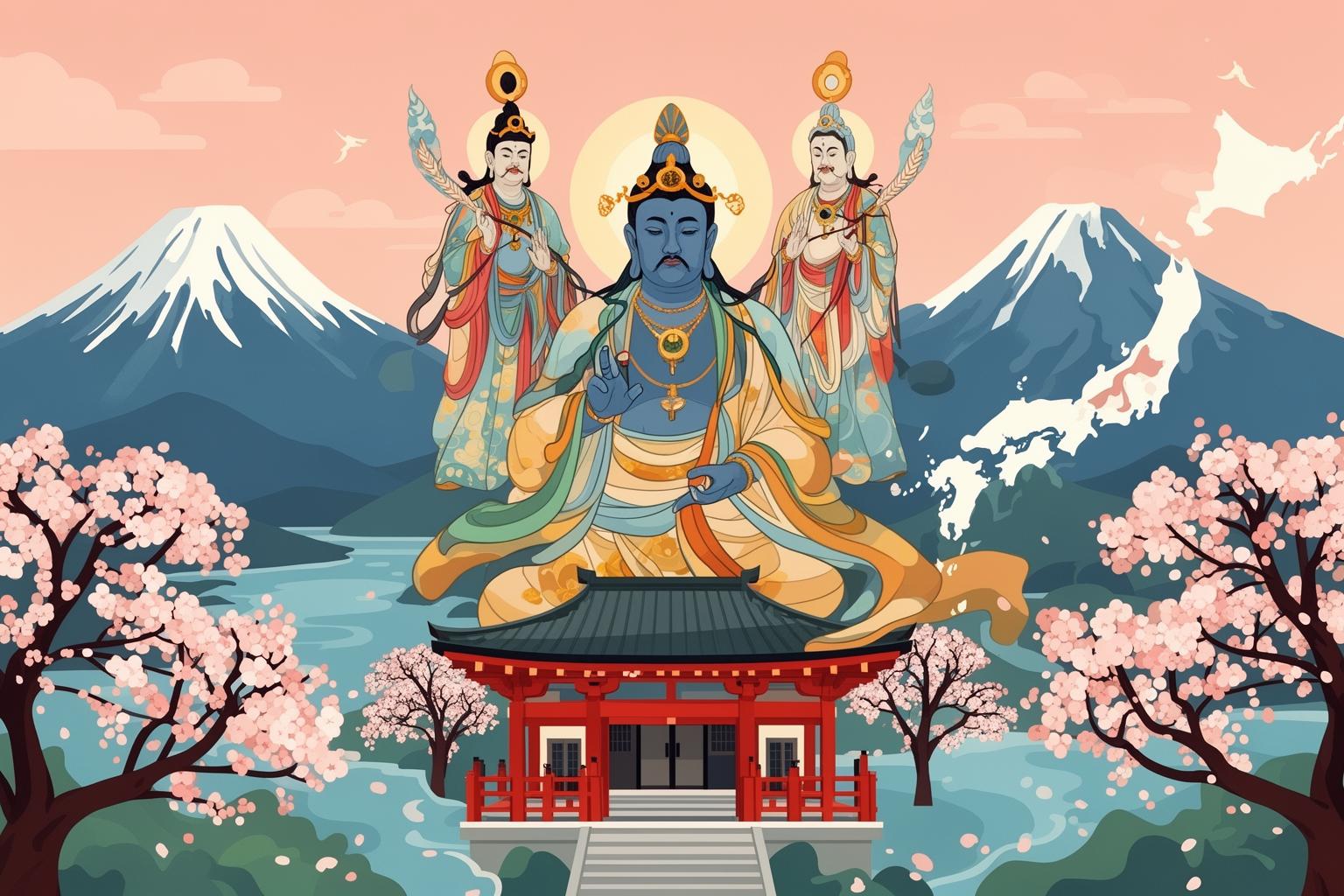
The first obstacle to understanding lies in translation. When we see the character for kami—神—our Western-trained minds instinctively replace it with the word “god.” This is an understandable but profoundly misleading shortcut. The idea of a single, omnipotent, all-knowing creator God who exists apart from and separate from His creation has no true counterpart in Shinto. A kami belongs to a completely different category of being.
So, what exactly is a kami? The 18th-century scholar Motoori Norinaga provided the most well-known definition, which is worth considering. He described kami as anything extraordinary, possessing superior power, or inspiring awe. This includes not only obvious deities from traditional mythology but also mountains, rivers, trees, and rocks. It can be a natural force such as the wind or thunder. It may be an ancestral spirit or a notable historical figure. Even qualities like fertility or growth can be kami. The key trait is not personality or physical form but a concentration of sacred energy or presence that evokes awe, reverence, or even fear. It’s a power that you sense instinctively before your intellect fully grasps it.
This explains why Shinto is often characterized by the phrase yaoyorozu no kami (八百万の神), meaning the “eight million gods.” This is not a literal count of deities but a poetic, expansive way to say “countless,” “myriad,” or “infinite.” It evokes a vision of a world inherently alive and filled with spiritual presences. Divinity is not a rare essence contained in a single being; it is the universe’s default state, emerging wherever there is exceptional power and beauty. This is the critical difference: in monotheism, God creates nature. In Shinto, the kami are nature itself. The divine is not the creator of the world; it is woven into the very fabric of the world.
This perspective fundamentally reshapes humanity’s relationship with the environment. If a mountain is a kami, it is not merely a rocky mass to be exploited or conquered. It is a powerful being to be respected, approached humbly, and perhaps petitioned for permission before climbing. If an ancient forest is inhabited by countless spirits, clearing it for development becomes not just an environmental issue but a spiritual violation. This view doesn’t automatically prevent environmental harm, as demonstrated by Japan’s modern history, but it adds cultural and spiritual significance to such actions, giving them a weight they might lack elsewhere.
Reading the Landscape: How Sacred Spaces Are Identified
If the world is filled with eight million kami, how can anyone discern which particular tree or rock is one of them? It’s not random. There is a logic behind it—a method of “reading” the landscape for signs of concentrated spiritual energy. Certain natural features, through their immense size, distinctive shape, or commanding presence, declare themselves as special. They become natural altars, tangible anchors for the formless divine.
Iwakura: The Power of Stone
Long before elaborate shrine buildings existed, Shinto practice often focused on an iwakura (磐座), a sacred rock or rock formation. These are no ordinary stones. They are generally massive, unusually shaped, or positioned in a way that dominates their surroundings. They possess an undeniable gravity, a sense of permanence and ancient power that makes them feel like natural focal points.
The central concept here is the yorishiro (依り代), which roughly means “approach substitute” or “vessel.” A yorishiro is a physical object that attracts and provides a temporary dwelling for a kami. The kami is a free-floating energy, but it can be invited to reside in a specific location. The largest rock in the area becomes the most fitting seat for the local deity. Thus, the iwakura is not just a symbol of the god; it is its home, a physical embodiment of its presence. When you bow to the rock, you are bowing to the kami residing within.
A prime example is the renowned Meoto Iwa (夫婦岩), or the “Wedded Rocks,” in the sea off the coast of Ise. These two rocks—one large and one small—are connected by a massive, five-ton shimenawa—a sacred rope made of rice straw. They symbolize the union of the creator deities, Izanagi and Izanami, and by extension, the sacred bond of marriage. The rocks themselves are the kami; they are not statues representing them. The shimenawa binding them is replaced several times a year in a solemn ceremony, visually affirming their sacred status and purifying the space around them.
Shinboku: The Soul of the Tree
Just as rocks can serve as vessels for the divine, so too can trees. A shinboku (神木), or sacred tree, is a familiar sight on the grounds of a Shinto shrine and sometimes in the midst of a village or field. These are almost always ancient, towering specimens—often camphor (kusunoki), cedar (sugi), or ginkgo trees—that have stood for centuries, witnessing countless generations of human life. Their age and size lend them an aura of wisdom and endurance that commands respect.
Like an iwakura, a shinboku is frequently marked by a shimenawa tied around its trunk. This rope serves as a boundary, separating the sacred from the ordinary. The white, zigzag-shaped paper streamers hanging from the rope are called shide, and they signify purity and the presence of the kami. The rope signals: “This is no ordinary tree. This is a spirit’s residence. Approach with reverence.” Cutting down such a tree would be unthinkable—a profound act of desecration that might bring misfortune.
This reverence extends beyond individual trees to whole forests. Many shrines are located within a sacred grove known as a chinju no mori (鎮守の森), or “guardian forest.” Passing from a busy city street through a shrine’s torii gate and into its grove is an unmistakable experience. The temperature drops. The city noise fades, replaced by the rustling of leaves and the cawing of crows. The air feels different—thicker, cleaner, more charged. This grove is not just landscaping; it is an essential part of the shrine, a collective kami and a natural sanctuary that purifies the area and protects the local community. It is a living fragment of the primeval forest from which Japanese civilization emerged, preserved as a sacred space.
Nachinotaki: The Divinity of the Waterfall
While rocks and trees embody stillness and permanence, waterfalls signify the dynamic, life-giving, and awe-inspiring force of water. A waterfall is a site of immense natural energy, sound, and motion. It is both beautiful and perilous, a source of life yet a display of overwhelming power. It’s no wonder, then, that many of Japan’s most prominent waterfalls are considered kami in their own right.
The most striking example is Nachinotaki (那智の滝) in Wakayama Prefecture. It is Japan’s tallest single-drop waterfall, plunging 133 meters in an unbroken, shimmering veil of white against a dark cliff face. But it’s not simply a tourist destination. The waterfall itself is a deity named Hiryū Gongen. There is a shrine, Hirō Jinja, but its main hall is unconventional. It does not house a statue or a mirror within a closed building. Instead, the shrine is built at the waterfall’s base, and its object of worship is the waterfall itself. Standing on the worship platform, looking up, you are directly in the presence of the god.
This is Shinto at its most elemental. No metaphor or representation is required. The raw power of nature is the divine, experienced firsthand. Worshippers come not just to admire the waterfall but to be in its presence—to feel its spray, hear its roar, and connect with the immense life force it embodies. It is a powerful reminder that in Shinto, the grandest cathedrals are not human-made; they are shaped by the living rock and flowing water of the land itself.
Ritual and Relationship: How to Engage with a Nature God
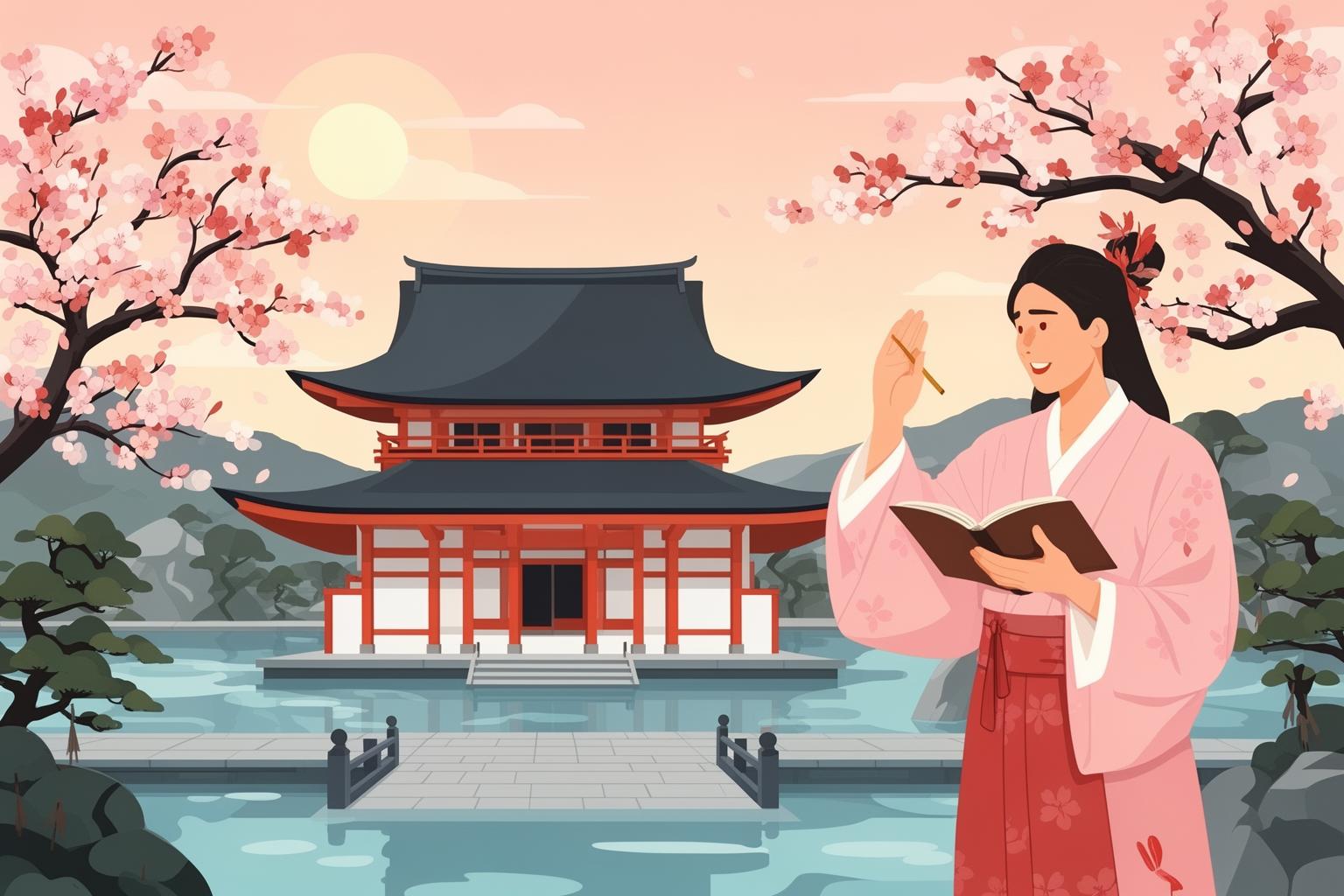
Revering nature as divine is not merely a passive act of admiration. It is an active, ongoing relationship governed by rituals and attitudes intended to preserve harmony between the human world and the realm of the kami. This relationship is grounded in a fundamental understanding of purity and pollution.
Purity, Pollution, and Preparation
At the heart of Shinto practice are the concepts of hare (purity, cleanliness, vitality) and kegare (impurity, pollution, spiritual defilement). Kegare is not a moral sin in the Christian sense but a state of contamination that results from contact with death, disease, bloodshed, and other disruptive occurrences. It is a natural aspect of life, yet it clouds the spirit and creates a barrier between a person and the kami, who embody ultimate purity. Therefore, purification is necessary before engaging with a kami.
This explains the purpose of the temizuya (手水舎), the water basin located near the entrance of every shrine. Visitors perform a simple purification ritual here: they take a wooden ladle, rinse their left hand, then their right, pour water into a cupped hand to rinse their mouth (spitting the water beside the basin, not back into it), and finally rinse the ladle’s handle. This washing is not about physical cleanliness but a symbolic cleansing to wash away the kegare of the outside world, preparing oneself to enter a sacred space.
A more rigorous form of purification is misogi (禊), a ritual cleansing in natural water. This may involve standing under a waterfall (taki-gyō), a practice often observed among Shinto priests or ascetic practitioners. By immersing in the cold, powerful water of a sacred waterfall such as Nachinotaki, one undergoes deep physical and spiritual purification, removing impurities and being revitalized by the direct power of the kami.
The Shrine as a Meeting Place
While early Shinto sites were simply designated natural spaces, over centuries, influenced by Buddhist temple architecture, permanent structures called jinja (神社), or shrines, were established. Nevertheless, their primary purpose remains unchanged: to serve as a designated place for humans to commune with the kami.
The shrine’s layout is a carefully arranged progression from the profane to the sacred. Visitors pass through the torii gate, a symbolic threshold leaving the ordinary world behind. They walk along the sandō, the approach path to the main hall, allowing their minds to quiet. They perform purification at the temizuya. Only then do they approach the haiden, the hall of worship.
The prayer ritual itself is simple and direct. Visitors may toss a coin into the offering box (an offering to the kami), ring the bell to announce their presence, bow deeply twice, clap their hands twice (to welcome the kami), say a silent prayer, and then bow once more. This standardized sequence of gestures is both a physical expression of respect and a means to focus the mind. One is not praying to a building but using it as a focal point to communicate with the kami of that place—whether a deified ancestor, a mythological figure, or the spirit of the mountain on which the shrine stands.
The Modern Echoes of Animism in a Secular Age
It’s easy to dismiss all of this as ancient history, irrelevant to life in hyper-modern, largely secular Japan. However, that would be a mistake. This animistic worldview is so deeply ingrained in the cultural DNA that it continues to emerge everywhere, often in non-religious settings.
Aesthetics, Design, and Art
Japanese aesthetic principles are profoundly influenced by this reverence for nature. The concept of wabi-sabi, for example, embraces beauty in imperfection, impermanence, and the natural process of decay. It’s about valuing the moss-covered old stone lantern or the crack in a ceramic bowl—appreciating the intrinsic, unembellished beauty of materials as they exist. This represents a secular counterpart to the Shinto admiration for a rock or a tree not because it’s flawlessly shaped, but because its natural form exudes powerful character.
Consider Japanese architecture, both traditional and modern. There is a focus on using natural materials such as wood and paper, along with a desire to harmonize the building with its surroundings rather than overpower them. The concept of shakkei (借景), or “borrowed scenery,” in garden design involves framing views to incorporate the broader landscape, like a distant mountain, into the garden’s layout. The mountain is not merely a backdrop; it is an integral part of the intended experience. This reveals a mindset that views human-made spaces as existing in dialogue with, not in opposition to, the natural world.
This worldview is perhaps most vividly expressed in contemporary media through the films of Hayao Miyazaki and Studio Ghibli. My Neighbor Totoro is a beautiful portrayal of childhood innocence, but it also tells the story of two sisters befriending the ancient, furry kami of a giant camphor tree. Princess Mononoke is an epic historical fantasy that centers on a brutal conflict between human industry and the forest gods—the wolf clan, the boar god, and the majestic Forest Spirit. These films are not mere fantasies; they serve as modern myths that introduce a new generation to the core principles of Shinto animism: that nature is sentient, spirits inhabit the wild, and disrespecting them brings grave consequences.
A Lingering Connection
This animistic undercurrent also shapes everyday life and social attitudes. The national fascination with the fleeting beauty of cherry blossoms in spring (hanami) or the vibrant hues of maple leaves in autumn (momijigari) is more than simple seasonal admiration. For many, it is an almost ritualistic engagement with nature’s cycles, a moment to pause and connect with something greater than oneself. It is a secular pilgrimage to honor nature’s gentle, captivating power.
Even amid Tokyo’s concrete canyons, this connection endures. One can find a small Inari shrine with its fox statues nestled between skyscrapers, or a grand temple whose grounds shelter a 400-year-old ginkgo tree, its roots likely disrupting subway lines below. When a new building is erected, a Shinto priest is almost always invited to conduct a groundbreaking ceremony, the jichinsai (地鎮祭), to purify the land and seek permission from the local earth deity. To outsiders, this might appear as mere superstition. But to many in Japan, it is a fundamental act of respect, an acknowledgment that humans are guests on the land, not its masters.
Thus, when you stand before a great waterfall in Japan, you are not merely viewing a geographical feature. You stand in a place where the veil between worlds feels thin, where the earth’s raw power and beauty concentrate and have been recognized as divine for centuries. The Shinto worldview offers a perspective that brings the landscape to life. It reminds us that the world is not simply a collection of resources to be exploited, but a community of beings to be respected. The rock is a god because it has presence. The tree is sacred because it has a soul. And in feeling this, you grasp something essential about the heart of Japan.