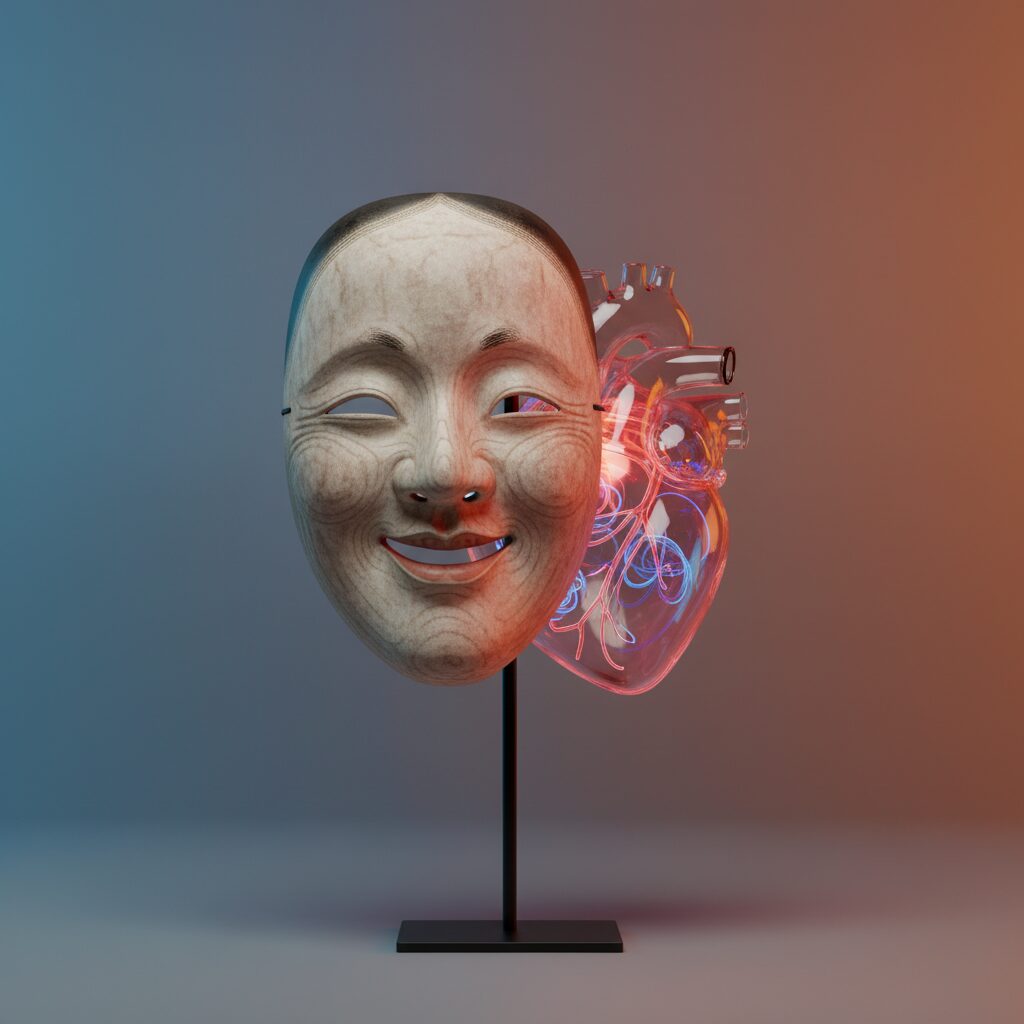
You’re in a sleek Tokyo conference room. You’ve just spent twenty minutes passionately pitching a project you poured your soul into. The Japanese team on the other side of the table listens intently, nodding in all the right places. When you finish, the senior manager smiles warmly and says, “A very interesting proposal. We will consider it in a forward-facing manner.” Maemuki ni kentō shimasu. You leave the building feeling a surge of success, already mentally drafting the triumphant email to your boss. A week passes. Silence. You send a polite follow-up. The reply is equally polite, but vague. Two weeks. Nothing. The deal evaporates into a mist of pleasantries. You weren’t lied to. You were initiated. You just had your first, and certainly not your last, encounter with one of the most fundamental, misunderstood, and essential concepts in Japanese society: the intricate dance of honne and tatemae.
To the uninitiated, this dynamic can feel like navigating a hall of mirrors. It can be maddening, confusing, and feel deceptively dishonest. But to write it off as simple hypocrisy is to fundamentally misread the social contract that underpins almost every interaction in Japan. This isn’t about being two-faced; it’s about possessing two faces, and knowing precisely when and why to use each one. Honne and tatemae are not a bug in the system; they are the operating system itself. Understanding this duality is the key to moving beyond the tourist-brochure version of Japan and starting to grasp the logic that governs the world’s most complexly harmonious society.
Reflecting on this delicate interplay of inner truths and public facades, one might also ponder how the fleeting glow of komorebi captures a similarly subtle balance in Japanese aesthetics.
The Core Concepts: A Public Face and a Private Heart
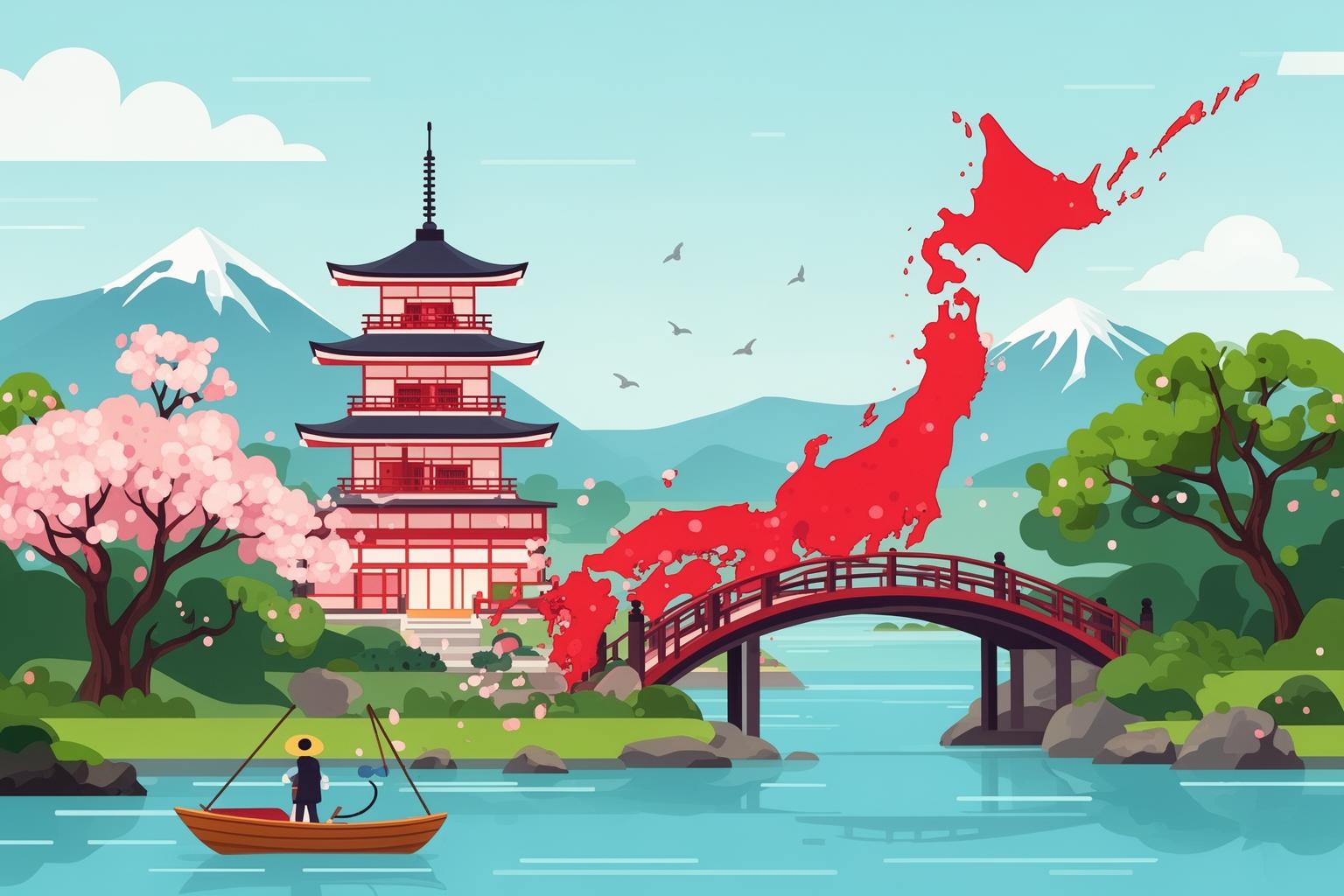
At its most basic, the difference is clear.
Honne (本音) literally means “true sound.” It represents your genuine, unfiltered thoughts, feelings, and desires. It’s what you vent into a pillow, confess to a close friend after a few drinks, or silently think while stuck on a crowded train on a Monday morning. Honne is the raw essence of your inner world—personal, private, and potentially disruptive. In a culture that highly values group harmony, revealing your raw honne at the wrong moment or to the wrong people is like pulling the pin from a social grenade.
Tatemae (建前), in contrast, means “built in front” or “façade.” It’s the public face, the official stance, the carefully crafted words and behaviors you show to the world to facilitate smooth, harmonious interactions. Tatemae is the opinion you share in a business meeting, the compliment you offer to a host about their cooking, the polite excuse you provide for declining an invitation. It is a performance, but one where everyone implicitly knows the script. It serves as the social lubricant that keeps the complex machinery of Japanese life running smoothly without grinding to a halt.
A Western perspective often views this as a clash between truth and falsehood. This is the first and most common misunderstanding. In the Japanese context, it is better seen as a distinction between private reality and public necessity. Tatemae is not meant to deceive maliciously; it serves to protect. It guards others’ feelings, preserves group harmony, and shields you from the social repercussions of being unnecessarily blunt.
The Roots of the Dualism: Why Harmony is the Ultimate Prize
This system didn’t emerge spontaneously. It is the logical result of centuries of geographic, agricultural, and philosophical influences. Japan is a small, mountainous, and historically densely populated island nation. For much of its history, life was centered around tight-knit villages where survival depended not on rugged individualism, but on absolute, unwavering cooperation. Planting and harvesting rice required collective effort and synchronization. If a single family chose to act independently, it could threaten the entire village’s food supply.
This historical circumstance gave rise to the cultural imperative of Wa (和), a concept often translated as “harmony,” but which holds a deeper, more active meaning. Wa is not merely the absence of conflict; it represents the deliberate, ongoing effort to maintain social balance. It is the fundamental value guiding etiquette, business negotiations, and personal relationships. In this setting, placing your individual feelings (honne) above the needs of the group is considered selfish and immature. Consequently, tatemae became a crucial mechanism for upholding Wa. It enables individuals with different, and potentially conflicting, private views to coexist and work together toward a shared goal.
When combined with the influence of Confucianism—with its strict social hierarchies and focus on fulfilling one’s role within the group—the result is a society where public behavior is highly regulated. Your status—as a junior employee, a senior manager, a customer, or a host—determines the appropriate tatemae. Deviating from that role is not merely a personal shortcoming; it disrupts the social order. That is why performing tatemae is regarded not as insincere, but as a demonstration of social maturity and respect for the system.
Tatemae in Action: A Field Guide to the Japanese Public Face
Once you know what to look for, tatemae becomes visible everywhere. It is the unspoken language of daily life, a subtle code guiding interactions from the convenience store to the corporate boardroom.
The Office: Where Tatemae is Law
The Japanese workplace is perhaps the most prominent stage for tatemae. Meetings are a prime example. A Westerner might expect a meeting to be a forum for brainstorming and lively debate. In many Japanese companies, however, meetings often serve as ceremonies to officially confirm decisions already made behind the scenes.
This behind-the-scenes effort is called nemawashi (根回し), which literally means “turning the roots” and refers to the careful process of building consensus individually before a group gathering. A manager meets with team members one-on-one, gathering opinions, smoothing over disagreements, and securing agreement. By the time the formal meeting begins, everyone is already aligned. The meeting’s purpose is to present a unified front. When the boss asks, “Does anyone have any objections?” the silence is not from apathy or fear; it marks the successful culmination of nemawashi. To suddenly express a strong, dissenting honne in that public forum would be a serious breach of protocol, embarrassing all involved.
Social Invitations and the Art of the Soft ‘No’
Navigating social plans can be challenging for the uninitiated. In many Western cultures, a direct “no” is valued for its straightforwardness. In Japan, such directness can seem harsh and dismissive, creating discomfort for the inviter.
Instead, you will encounter a rich array of ambiguous refusals. If you invite a colleague to a weekend barbecue, you are more likely to hear “Let me check my schedule and get back to you” or the famously vague “That might be a little difficult…” (chotto muzukashii…) than a simple “Sorry, I can’t make it.”
Importantly, both parties understand the subtext. The inviter knows this is a polite refusal. The person declining has successfully avoided a direct rejection, preserving the relationship. Tatemae acts as a buffer, allowing the interaction to end without anyone losing face. The goal is not to mislead the other person into false hope; it is to soften the social blow.
The Language of Ambiguity
The Japanese language itself is finely tuned to support tatemae. It is a high-context language, where meaning is often conveyed more by what is implied, hinted at, or left unsaid than by explicit statements. Vague expressions, passive voice, and non-committal phrases are common.
The ability to interpret unspoken subtext is called kuuki wo yomu (空気を読む), or “reading the air.” It is one of the most crucial social skills in Japan. Are people becoming tense? Is the mood shifting? Is what this person says different from what they communicate through tone and body language? Reading the air lets you sense the underlying honne without anyone risking social fallout by stating it outright.
For instance, if you present work and your boss says, “I see,” and then goes silent, they aren’t waiting for you to continue. They’re reading the air to check if you understand this is a lukewarm or negative reaction. A junior employee is expected to pick up on this and respond with something like, “I will take another look and see where improvements can be made.” This avoids direct confrontation where the boss has to say, “This isn’t good enough,” and the employee must absorb that criticism head-on.
Finding the Honne: Reading Between the Lines

This might suggest a society where no one ever truly says what they mean. However, that’s not entirely accurate. Honne is expressed, but it is reserved for certain situations and trusted relationships. The key lies in understanding the boundary between your inner and outer circles.
The Role of Nomikai and Private Spaces
The institution of the nomikai (飲み会), or company drinking party, is well-known for a reason. While they are not the wild, mandatory binge-fests sometimes depicted, they serve a vital social purpose. In this setting, alcohol functions as a socially accepted lubricant that temporarily lowers the barriers of tatemae. It creates an environment where colleagues can vent frustrations, share gossip, and speak more openly about work and life.
Comments made during a nomikai often exist under a kind of social amnesty. A junior employee might offer a surprisingly blunt critique of a recent project to their manager—something unthinkable during office hours. The next day, the formal hierarchy is usually reinstated, but the valuable honne has been shared and acknowledged. It acts as a controlled release valve for the pressures built up by continuous professional performance.
Uchi-Soto: The Circle of Trust
The most crucial concept for understanding where honne resides is uchi-soto (内 Soto), meaning “inside/outside.” This cultural practice categorizes people into an in-group (uchi) and an out-group (soto).
Your uchi group is your inner circle: family, your closest colleagues within your team, and lifelong friends. With these individuals, the need for strict tatemae fades. You can be more direct, relaxed, and share your true feelings. The relationship is strong enough to endure the friction of differing opinions.
Everyone else—customers, clients, colleagues from other departments, new acquaintances—belongs to the soto category. With them, tatemae remains the default mode of communication, shaped by roles and social distance. It is polite, respectful, and formal. This is not cold or unfriendly; rather, it’s a way of respecting the boundary between you.
For foreigners in Japan, the journey often involves gradually moving from the soto sphere to the uchi sphere in their relationships. This requires time, consistency, and demonstrating an understanding and respect for local social norms. When a Japanese friend or colleague begins to share their honne with you, it marks a meaningful sign of trust and acceptance.
More Than Just ‘Two-Faced’: A Final Reframing
It’s easy to view the honne-tatemae dynamic through a Western lens that idealizes radical honesty and individual expression. From this viewpoint, tatemae might appear as weakness or, worse, deception. But this completely misses the point.
Consider the small social rituals we observe in the West. When someone you know asks, “How are you?” the expected reply is “Good, thanks! You?” rather than a detailed account of your financial troubles and existential anxieties. That’s tatemae. When given a gift you don’t particularly like, you say, “Thank you so much, it’s lovely!” instead of, “I’ll be returning this tomorrow.” That’s also tatemae.
Japan simply applies this principle more consistently and across a far broader range of social interactions. It’s not about lacking integrity; it’s about a different kind of integrity, where social responsibility—the duty to make others comfortable and preserve peace—is a virtue equal to, and often prioritized over, expressing your raw personal truth.
Navigating this world doesn’t mean becoming a different person. It demands becoming a more attentive observer. It asks you to listen not only to the spoken words but also to the silences between them. It challenges you to understand that communication isn’t always about directly conveying information, but about delicately maintaining relationships.
To live in Japan is to exist within this duality. It means appreciating the remarkable public order, impeccable service, and deep respect people show one another—all products of a society shaped by tatemae. And it means treasuring those moments of genuine connection, often found in a quiet bar or over a shared meal, when the façade falls away and you glimpse the true, honest sound of another’s heart. The skill lies in recognizing which face is being presented and responding with the grace the situation calls for.