Picture Japan in the mid-1960s. The country is a paradox, humming with the energy of its post-war economic miracle. Tokyo is gleaming, newly polished from the 1964 Olympics, a global showcase of a nation reborn. Bullet trains slice through the countryside, symbols of futuristic ambition. Yet, beneath this veneer of high-tech progress, society remains deeply conservative, governed by a rigid code of politeness, conformity, and respect for elders. The youth culture, such as it is, is tame. Music is dominated by sentimental kayōkyoku ballads and heart-wrenching enka演歌—songs for adults, sung by adults, about adult problems. Then, in 1966, a typhoon of a different sort hits Japan. Four young men from Liverpool land at Haneda Airport, and nothing is ever the same again.
The Beatles’ arrival was less a concert tour and more a cultural detonation. It unleashed a wave of energy that the country’s gatekeepers were completely unprepared for. Out of this chaos, a new sound was born: Group Sounds, or GS. This was Japan’s explosive, heartfelt, and occasionally clumsy answer to the British Invasion. It was a movement of young men with electric guitars, sharp suits, and hair just a little too long for comfort. For a few frantic years, from roughly 1966 to 1969, Group Sounds dominated the charts, television screens, and the screaming daydreams of a generation of teenagers. It was Japan’s first real homegrown rock ‘n’ roll phenomenon, a youthquake that shook the foundations of a society that valued quiet deference above all else. This isn’t just a story about music; it’s about the moment a generation found its own voice, and how the adult world tried, and ultimately failed, to shut it down.
While the Group Sounds movement redefined youth culture, many Japanese adults embraced an unexpected path to calm by meditating with plastic models, revealing a striking contrast in the era’s cultural landscape.
The Calm Before the Storm: Post-War Japan on the Brink of Change
To grasp why Group Sounds made such a powerful impact, you must understand the profound silence it broke. The early 1960s in Japan were marked by intense, concentrated national effort. The generation that had endured the war was now at its peak, channeling its energy into rebuilding the country with a single-minded, almost obsessive determination. This was the age of the “company man,” lifelong employment, and the collective good prevailing over individual expression. The national mood was one of hopeful yet disciplined reconstruction. The 1964 Tokyo Olympics were more than a sporting event; they served as a grand unveiling, announcing to the world that Japan had returned—modern, efficient, and peaceful.
The Sound of a Generation… of Adults
The popular music scene mirrored this environment. The airwaves were dominated by kayōkyoku, a polished and melodic form of pop. It was refined, impeccably produced, and performed by solo artists like Kyu Sakamoto, whose hit “Ue o Muite Arukō” (known in the West as “Sukiyaki”) gained international acclaim. Alongside this was enka, a genre of deeply emotional ballads often focused on themes of loss, heartbreak, and nostalgia for one’s hometown. Its dramatic, trembling vocal delivery became the soundtrack of smoky bars and tearful reminiscences.
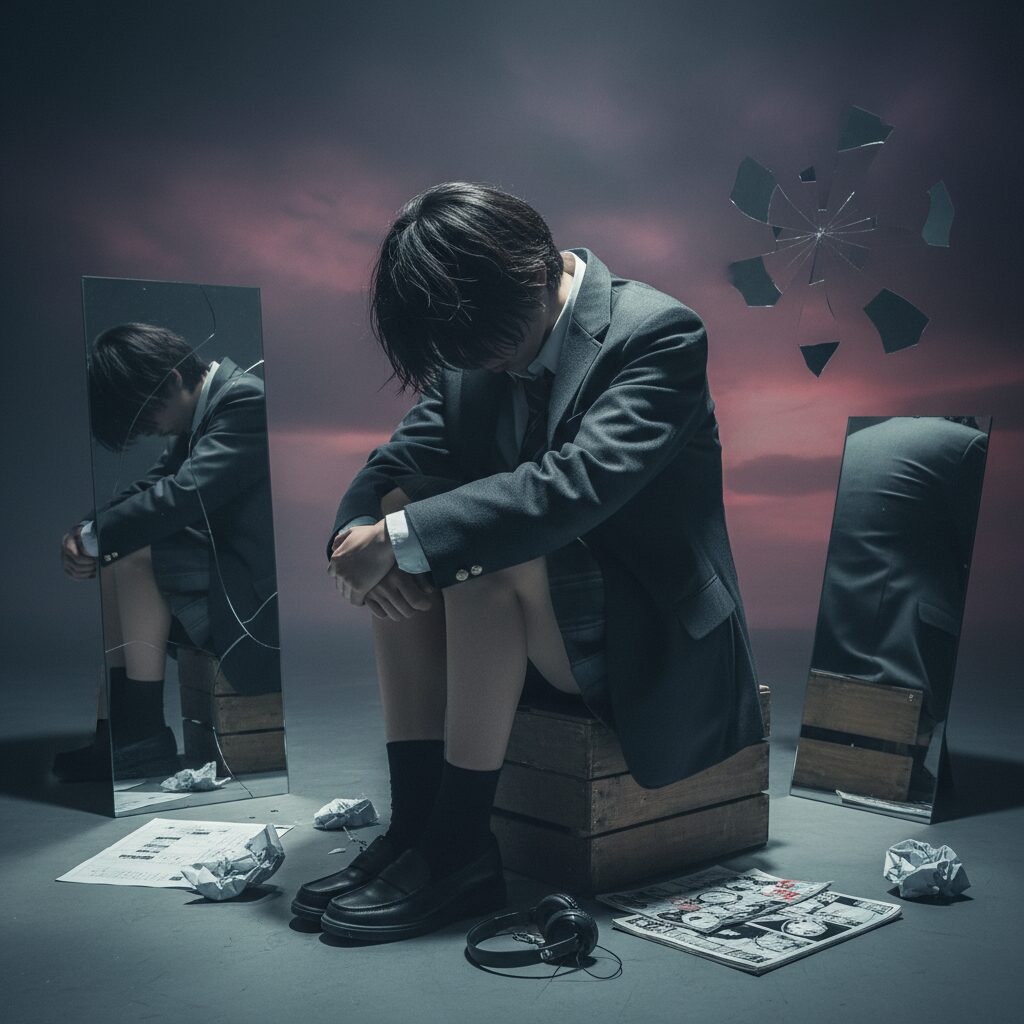
What united these genres? They were overwhelmingly adult-oriented. The themes were mature, the performers were solo artists accompanied by professional orchestras, and the entire production system was controlled by powerful record labels and talent agencies. While young people certainly listened to this music, it wasn’t their music. It didn’t express their emerging desires, frustrations, or the sense of belonging to a new post-war generation with a fresh worldview.
There were signs of change. American rock ‘n’ roll, thanks to Elvis Presley, and the instrumental surf rock of The Ventures had begun to make an impact. Young Japanese musicians were assembling in jazz kissa, dim, serious cafes dedicated to playing imported jazz records, sharpening their instrumental talents. Near American military bases, some were even performing in clubs, soaking up Western rock and R&B firsthand. However, these were dispersed, niche subcultures, not yet unified into a mainstream youth movement. The prevailing format for young people’s musical engagement was the utagoe kissa, or “singalong cafe,” where students gathered to perform folk songs and patriotic tunes in a controlled, wholesome setting. This was a stark contrast to the raw energy of rock ‘n’ roll.
This was the scene: a society focused on the future but anchored to a conservative past, with a youth culture that was polite, organized, and waiting for a catalyst.
When the West Hit Hard: The Beatles and the Birth of a Scene
That spark ignited on June 29, 1966. The Beatles’ arrival in Japan was a nationwide event, covered by the media with the seriousness of a state visit and the hysteria of an alien invasion. Over three days, they performed five shows at the Nippon Budokan, an arena originally built for martial arts, which deeply offended traditionalists. Security was overwhelming, with a wall of police officers separating the band from the audience, who were instructed to stay seated. But you can’t command a cultural revolution to sit quietly. The sound of thousands of Japanese teenagers, mostly young women, screaming with a fervor their parents had never imagined, echoed throughout the nation. It was a raw, liberating noise that frightened the establishment.
Dubbed the “Beatles Typhoon” by the press, it did more than just fill concert halls. It introduced a completely new model for what a band could be. Here were four young men who were not just performers but a self-contained unit. They wrote their own songs, played their own instruments, and possessed a collective charisma more powerful than any solo star. For aspiring musicians in the jazz kissa and provincial towns, it was a revelation.
From Copycats to Contenders
The immediate impact was an explosion of amateur bands. The dream shifted from being a polished solo singer backed by an orchestra to gathering three friends, buying electric guitars, and becoming a Japanese Beatles. Early GS bands, many of which had been toiling for years playing instrumental covers or backing singers, adapted swiftly. The Spiders and Jackey Yoshikawa and His Blue Comets were among the most prominent early pioneers. Equipped with musical skill and professional experience, they quickly transitioned from covering Western hits to creating original material that captured the new energy.
This shift was pivotal. Playing someone else’s music was no longer sufficient. The Beatles had demonstrated that authenticity and self-expression were essential. Japanese record labels, recognizing the commercial potential, scrambled to sign these new “group sounds.” The race was on to discover Japan’s own Fab Four.
The Anatomy of a Group Sounds Band
A distinctive formula emerged, merging Western cool with a uniquely Japanese sensibility. The electric guitar was the core element. Brands like Teisco, Yamaha, and Guyatone became iconic, their slightly unusual shapes and bright, trebly tones defining the GS sound. Each band featured a lead guitarist, a rhythm guitarist, a bassist, and a drummer. Often, one or more members sang, creating vocal harmonies that were a hallmark of the British Invasion style.
But the music was only part of the equation. The visuals were equally vital. The bands adopted a uniform, a look that was both rebellious and impeccably neat. This involved matching tailored suits, often in velvet or vibrant fabrics, paired with Cuban heels or Beatle boots. And, of course, the hair. By today’s standards, it might seem tame—a neat, collar-length mop-top. But in 1960s Japan, where crew cuts were standard for young men, this was a bold statement. It was a visual shorthand for rebellion, a deliberate break from the buttoned-down world of their parents. The look was as important as the sound; it was a package, a tribe, a new identity for Japanese youth.
The Golden Age of GS: Idols, Anthems, and Mass Hysteria
The years 1967 and 1968 represented the absolute peak of the Group Sounds phenomenon. What had once been a niche interest rapidly transformed into a nationwide obsession. It produced superstars, anthems that defined a generation, and a level of fan devotion previously unseen in Japan. During this time, GS was more than just a musical genre; it was the vibrant, pulsating core of youth culture.
The “Big Four”: The Spiders, The Tigers, The Tempters, and The Blue Comets
Though hundreds of bands flooded the scene, a handful of titans rose to the top, each with a unique identity and fiercely loyal fanbase.
The Spiders were respected pioneers. Formed in 1961, they were seasoned pros by the time the GS boom arrived. Slightly older and musically refined, they brought a playful, almost Vaudevillian stage presence, with members like Masaaki Sakai and Jun Inoue engaging in comedic banter between songs. Their sound was sophisticated, melding rock with elements of R&B and kayōkyoku. Their 1966 hit “Yūhi ga Naiteiru” (The Evening Sun is Crying), featuring a melancholic melody and surf-influenced guitar line, stands as a quintessential early GS ballad.
The Tigers were the undisputed kings who turned the boom into a blaze. Their 1967 debut revolutionized the scene. At the heart of it was their lead singer, Kenji Sawada, affectionately known as “Julie.” With his androgynous looks, doe-eyed gaze, and magnetic stage presence, Julie became Japan’s first genuine rock idol. He was the Japanese McCartney and Jagger combined. The Tigers incited hysteria akin to Beatlemania, with teenage girls screaming, crying, fainting, and breaking through police barriers to reach the stage. Their hits like “Boku no Mary” (My Mary) and “Seaside Bound” were perfect pop-rock gems, but the phenomenon was as much about their personalities as their music.
The Tempters acted as gritty, rebellious rivals to the polished Tigers. Fronted by Kenichi Hagiwara, nicknamed “Shoken,” they contrasted with the beautiful prince Julie through Shoken’s brooding bad-boy image. He slouched, sneered, and sang with raw, bluesy passion. The Tempters’ sound was rougher, drawing inspiration from The Animals and The Rolling Stones. Their iconic track “Emerald no Densetsu” (The Legend of the Emerald) showcased fuzzed-out psychedelic pop driven by Shoken’s charismatic wail. The rivalry between The Tigers and The Tempters sparked countless teen magazine features and passionate fan debates.
Jackey Yoshikawa and His Blue Comets were the most musically ambitious of the leading acts. Masters of melody, they seamlessly incorporated orchestral arrangements and intricate harmonies into their rock sound. Their biggest success, “Blue Chateau,” won the prestigious Japan Record Award in 1967— a remarkable feat for a “rock” band in an industry dominated by traditional pop. This victory bestowed much-needed legitimacy on the entire GS movement, proving it was more than just disposable teenage noise.
The Sound: A Unique Hybrid
What made the GS sound so captivating was its fusion of diverse elements. It was a musical dialect, not a mere copy of Western rock. Familiar components included the driving beat of rock ‘n’ roll, twangy surf guitar reverb, the swirling tones of the Farfisa or Vox organ, and the gritty fuzz pedal texture. Yet the melodies and emotional core were often deeply Japanese.
Many GS songs were built on a melodic structure called yonanuki onkai, a pentatonic scale common in traditional Japanese folk music and enka. This imparted a distinctively melancholic and sentimental tone, even when backed by pure rock instrumentation. Lyrically, the songs generally avoided overt rebellion or social commentary, instead focusing on themes of romantic longing, heartbreak, and the beauty of nature—subjects familiar to kayōkyoku listeners. This unique blend allowed a song with a wild fuzz guitar solo to still feel unmistakably Japanese. It served as a bridge between the new and the old worlds, making the foreign sound of rock emotionally accessible to domestic audiences.
The Look and the “Long Hair” Controversy
In the West, 60s counterculture challenged war, politics, and social norms. In Japan, rebellion was primarily stylistic, with hair as the main battleground. The mop-top hairstyle, seemingly innocuous now, became a powerful symbol of youthful defiance. It visually rejected the rigid conformity imposed on young men by schools and companies.
Schools enforced hair-length regulations, with teachers measuring students’ hair with rulers. The media ran sensational stories linking long hair to delinquency and moral decay. For the older generation, it signaled laziness and a distasteful imitation of Western trends. For bands and fans, long hair was a badge of honor, declaring allegiance to the new culture and separation from the stifling adult world. Though the controversy may seem trivial today, it underscored the profound culture clash GS embodied—a struggle for identity and the right to self-expression, waged one haircut at a time.
The Backlash and the Inevitable Decline
Like all fervent youth movements, the Group Sounds boom was bound to flame out. Its very intensity set the stage for its downfall. The same forces that pushed it to nationwide fame—media hype and commercial interests—ultimately smothered it. Meanwhile, the establishment, initially confused, quickly mounted a strong backlash.
“Fuhō Kōi” – The Moral Panic
The fan hysteria surrounding bands like The Tigers rapidly became a focus for the conservative establishment. The sight of young women screaming and displaying such emotional abandon in public unsettled a society that valued emotional restraint. The PTA emerged as one of the loudest critics, alongside conservative media voices, framing the GS phenomenon as a threat to public morals.
Concerts were branded as hubs for fuhō kōi (delinquent acts). Although vague, the term carried weight, encompassing everything from truancy to alleged sexual promiscuity. This moral panic had tangible repercussions. Schools began prohibiting students from attending GS concerts. Even more damaging, Japan’s public broadcaster NHK, wielding significant cultural influence, effectively blacklisted most GS bands from its popular music shows. Being barred from NHK was a serious setback to a band’s prestige and reach, signaling exclusion from respectable Japanese culture.
The Idol Machine Grinds On
Simultaneously, the music industry, driven by an insatiable appetite for the next big hit, started to devour the scene. Inspired by the success of top bands, record labels churned out a flood of imitators. Suddenly, hundreds of GS bands appeared, all sporting matching suits, similar hairstyles, and songs following a proven formula. The market became saturated. This pattern, which would recur throughout Japanese pop music, is referred to as massan (mass production).
This dilution of talent transformed an authentic musical movement into a formulaic idol-making factory. The focus shifted from musical innovation to telegenic looks and marketable personalities. The original rebellious spirit was co-opted and commercialized. For many serious musicians, this was profoundly disheartening. The scene they had helped build was being reduced to a shallow parody of itself.
The Coming of “New Rock”
As the 1960s ended, the global music scene was undergoing significant change. The polished pop-rock of the early British Invasion was yielding to heavier, more complex sounds. Psychedelia, blues-rock, and hard rock entered Japan via imported records. The music of Cream, Jimi Hendrix, and Led Zeppelin made the GS pop anthems seem quaint and simplistic to a growing number of discerning listeners.
This sparked a new movement in Japan called “New Rock.” Bands like The Golden Cups, who had always leaned more toward authentic rhythm and blues, and later Flower Travellin’ Band and Blues Creation, embraced a heavier, more technically skilled, and less commercial sound. They sang in English as often as in Japanese and prioritized musical authenticity above all else. This new generation of musicians and fans looked down on Group Sounds as mere commercial pop, dismissing it as kayōkyoku played on electric guitars. By 1970, the GS boom was essentially over. The bands either disbanded or, in some cases, attempted to shift toward the new, heavier style—often without much success. The moptops and matching suits quickly fell out of favor, replaced by long hair, denim, and a more serious, anti-commercial attitude.
The Lingering Echo: The Legacy of Group Sounds
Though the Group Sounds boom was brief, its influence on Japanese music and culture was deep and enduring. It marked a cultural turning point that forever transformed the relationship between youth, music, and media in Japan. The reverberations of those fuzzed-out guitars and passionate fans remain audible even today.
From GS Stars to Showbiz Legends
While many GS bands gradually faded from the spotlight, the biggest stars demonstrated remarkable longevity. They leveraged their GS fame as a springboard for diverse and lasting careers within the broader Japanese entertainment world, or geinōkai. Kenji “Julie” Sawada of The Tigers launched a highly successful solo career in the 1970s, reinventing himself as a glamorous, androgynous glam-rock icon and becoming one of Japan’s most prominent music superstars. Kenichi “Shoken” Hagiwara of The Tempters earned acclaim as one of his generation’s most respected film and television actors. Masaaki Sakai of The Spiders became a beloved comedian and television presenter, remaining a household name for decades. Their sustained success proved that GS was more than just a passing trend—it was a star-making forge that created some of Japan’s most iconic entertainers.
A Blueprint for J-Pop
Arguably the most important legacy of Group Sounds is the model it established for the modern Japanese idol industry. The GS phenomenon was the first to emphasize the “group” as a marketable product. The focus on a band’s collective visual identity, the development of distinct personalities within the group (the handsome leader, the rebellious one, the comedian), the strategic use of media like teen magazines and variety shows to cultivate a fanbase, and the management of fan frenzy—all these approaches originated during the GS era.
This prototype laid the foundation for the influential male idol agency Johnny & Associates, founded in the 1960s, which would go on to dominate the Japanese music scene for decades with acts such as SMAP and Arashi. The entire J-pop system, with its emphasis on carefully crafted image, cross-media exposure, and devoted fan interaction, directly inherits the strategies developed to promote and market Group Sounds bands. GS was effectively the experimental phase for the idol-producing machinery that now shapes much of Japanese pop culture.
Nostalgia and Revival
Today, Group Sounds is cherished with warmth and nostalgia. For those who grew up in the late 60s, it provides the soundtrack to their youth—a period filled with excitement, rebellion, and emerging modernity. Its music remains a staple on classic radio shows, and many of its hits have become karaoke classics.
There have been occasional reunion tours and revival performances, attracting enthusiastic audiences—now in their 60s and 70s—eager to relive the magic. The genre also enjoys appreciation from a new generation of music lovers and garage rock fans who admire its raw energy, distinctive hybrid sound, and stylish vintage look. It is remembered not as a failed copy of the West, but as a vital and inventive moment in its own right. Group Sounds was Japan’s first crucial step toward crafting its own rock ’n’ roll language—a charming, slightly naive, yet utterly essential burst of sound and style that inspired a generation of kids to pick up a guitar and create glorious noise.