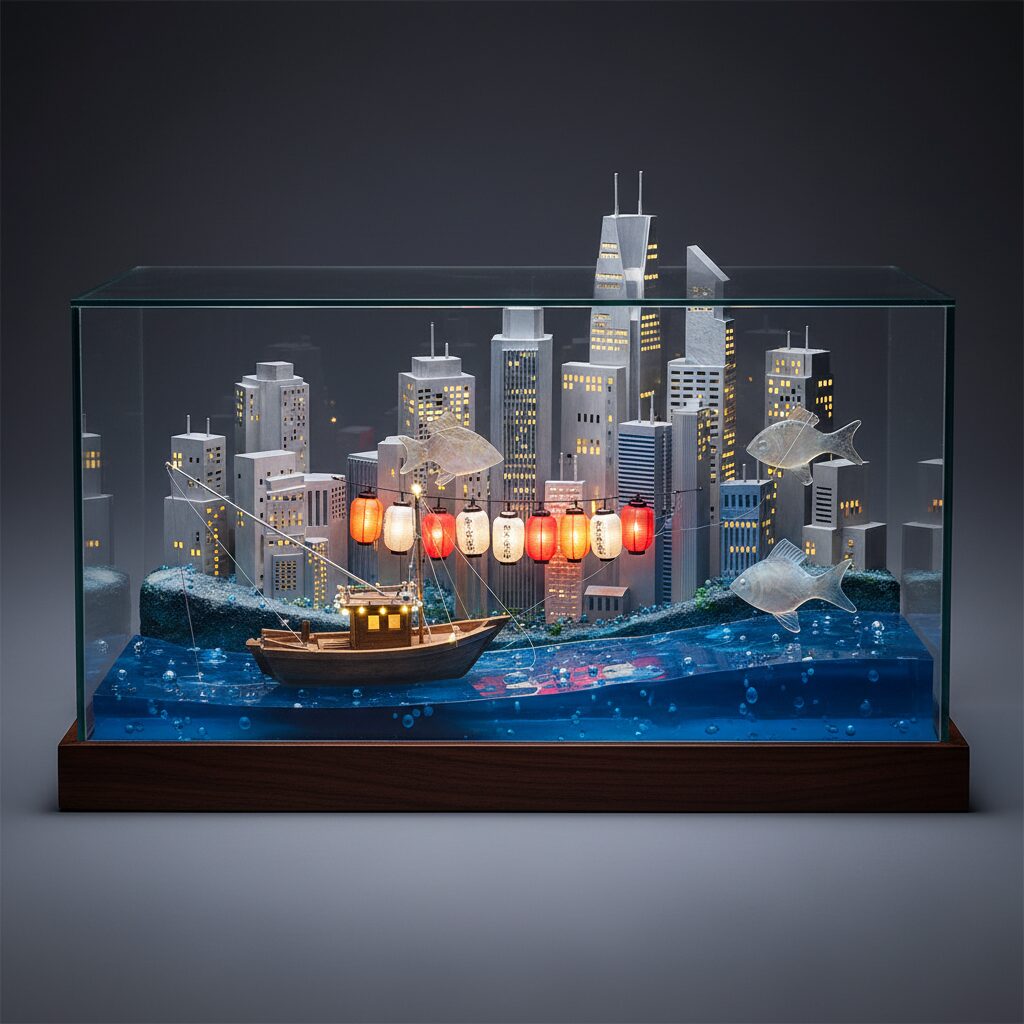
You see them along the concrete-banked rivers that slice through Tokyo, Osaka, and a hundred other Japanese cities. A lone figure, often an older man but sometimes a younger office worker, still in his slacks, staring intently at a sliver of water wedged between a highway overpass and a condominium. His fishing rod is a simple, telescopic wand, the line so fine it’s nearly invisible. The river itself looks more like a drainage canal than a thriving ecosystem, its water a murky grey-green, reflecting the indifferent sky and the steel of the surrounding city. The casual observer might walk past and feel a pang of pity. What a bleak, desperate way to spend an afternoon. What could you possibly hope to catch in a place like that?
This is a fundamental misunderstanding of the act. That person isn’t there for a trophy fish or a fresh dinner. They are not engaging in a poor substitute for a “real” fishing trip in the mountains. They are practicing a distinct and deeply Japanese form of urban meditation. They are tapping into a mindset that is both a quiet rebellion against the city’s relentless demands and a profound way of finding peace within it. This isn’t just fishing; it’s a philosophical stance, a deliberate choice to find nature, stillness, and a sense of self in the most unnatural of places. To understand the urban angler is to understand a crucial survival tactic for the modern soul in Japan: the art of creating a sanctuary in plain sight.
This tranquil defiance in urban spaces echoes the subversive energy of Japan’s 1960s underground theater, where creative dissent reshaped traditional norms.
The Concrete River as a Liminal Space
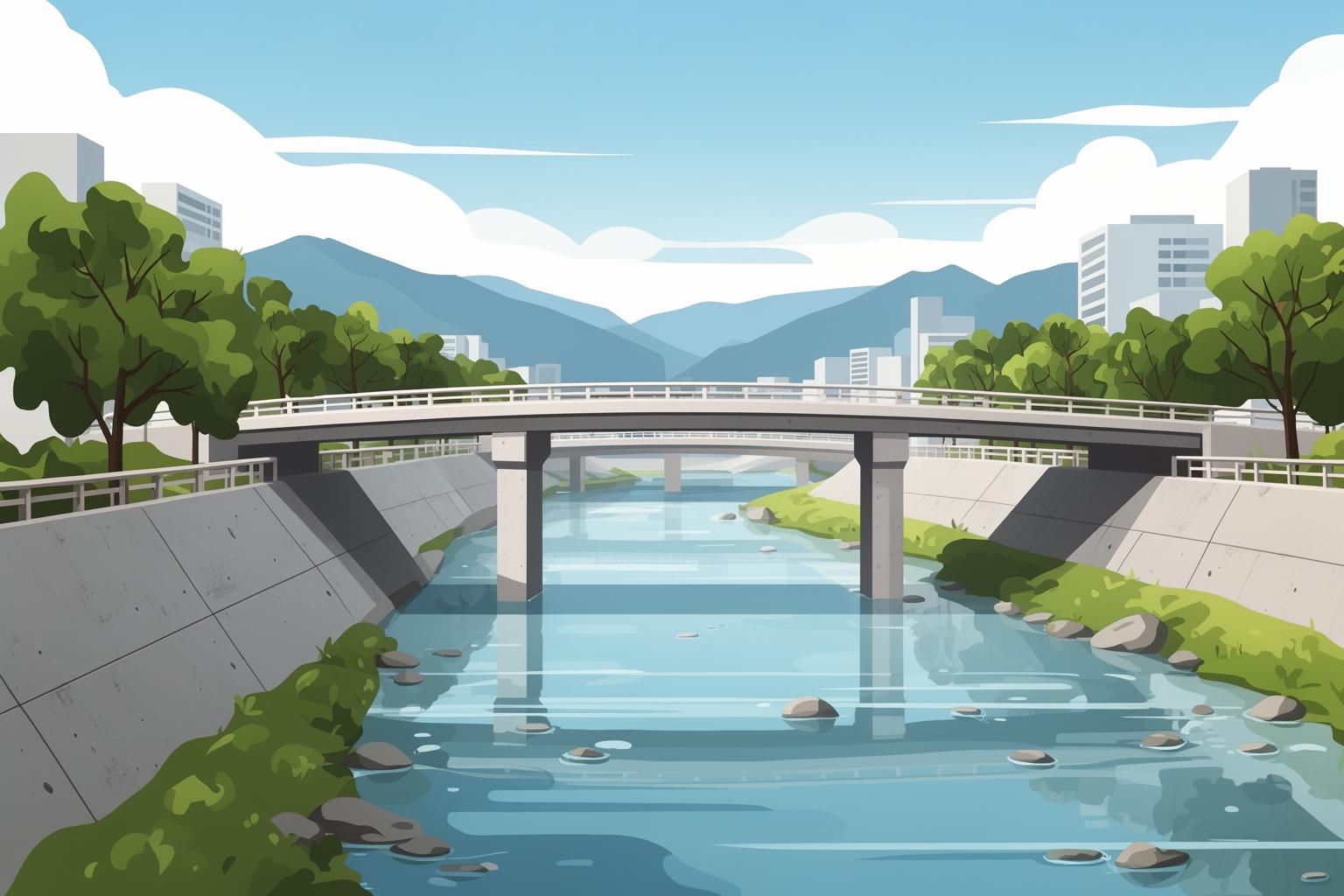
First, you need to recalibrate your understanding of “nature.” The Western ideal of fishing often conjures images of pristine wilderness: a crystal-clear stream in Montana, a vast, silent lake in Canada. It’s about escaping civilization entirely. In Japan, where most of the population lives in densely packed urban corridors, the boundary between man-made and natural is constantly blurred. The urban river, the kasen (河川), exemplifies this fusion perfectly.
These waterways are frequently heavily engineered. Their banks are sheer concrete walls, built for flood control. Their courses are straightened and channeled to meet the city’s logistical demands. They flow beneath train tracks and alongside the humming vents of office buildings. Yet, they remain undeniably wild. They are living systems, responsive to the rhythms of rain and the seasons. Water flows, life endures. This makes the urban river a liminal space—a threshold between two worlds. It is neither fully city nor fully wilderness. It’s an in-between zone where the rules of the metropolis seem to pause.
For the urban angler, this is precisely the point. They aren’t looking to escape the city; they seek a different way to exist within it. By positioning themselves on the riverbank, they place themselves physically on the boundary. Behind them, the hum and clatter of millions of people. Ahead, the silent, patient flow of water. This physical stance triggers a powerful mental shift. The city’s noise becomes ambient, like the distant sound of the ocean, rather than a series of urgent, individual demands. The angler enters a bubble of personal space, a temporary territory defined by the reach of their cast.
The fish themselves embody this liminal identity. You won’t find delicate, high-status trout here. Instead, you find the survivors: hardy carp (koi), resilient crucian carp (funa), bottom-dwelling catfish (namazu), and perhaps a slippery eel (unagi). These creatures are not glamorous. They are tough, adaptable, and used to living in the city’s shadow. In a way, they make perfect mascots for the urban angler—thriving quietly in an environment that seems hostile to life.
A Ritual of Intentional Inefficiency
In a society fixated on efficiency—from the hyper-punctual train system to the streamlined workflows of the workplace—urban fishing stands as an act of deliberate, glorious inefficiency. The gear itself reveals the story. Many anglers rely on a simple telescopic rod called a nobezao. It has no reel, with the line tied directly to the rod’s tip. This is fishing stripped down to its most fundamental elements: rod, line, float, hook, and bait. The whole setup can be collapsed and carried in a small shoulder bag, making it the ideal tool for an impromptu escape after a long day at work.
The process is a slow, intentional ritual that sharply contrasts with the fast pace of city life. It begins with searching for a spot. The angler may walk along the bank for some time, observing the current and looking for subtle signs of fish hiding nearby. Then follows the careful preparation of bait, often a simple blend of bread, gluten, and attractants, kneaded into small, precise spheres. Each step is exact and unhurried—attaching the hook, adjusting the float to the perfect depth, casting gently underhand so the bait lands with a soft plip on the water’s surface.
And then, the waiting begins. This is the essence of the practice. The angler’s entire focus narrows to one vivid point: the brightly colored tip of the float. Their eyes remain fixed on it, watching for the slightest dip or tremor that signals a bite. Everything else dissolves—the quarterly report due tomorrow, the crowded commute home, last night’s family argument—all become irrelevant. The mind enters a state of singular focus. This is mindfulness, not as a trendy app or weekend retreat, but as a practical, accessible discipline.
This dedication to process over result is deeply embedded in many Japanese arts, from the tea ceremony to calligraphy. The aim isn’t simply to make tea or write a character; it’s about finding beauty and focus in the act of performing the steps. Urban fishing is the everyday person’s expression of this—a solitary ceremony conducted on a concrete altar, with no audience but oneself.
The Psychology of the Urban Angler: Finding ‘Ma’ in the Metropolis
To truly understand the mindset, you need to grasp the Japanese concept of ma (間). It’s a notoriously difficult word to translate, but it denotes the space between things, the interval, the pause. It’s the silence between musical notes that gives a melody its power. It’s the empty space in a room that imparts meaning to the furniture. Japanese culture intuitively recognizes that empty spaces are just as significant as those that are filled.
Modern urban life relentlessly assaults ma. Schedules are packed, trains are crowded, apartments are cramped, and digital notifications are constant. There is no empty space. Urban fishing becomes a powerful act of reclaiming ma. The time spent waiting for a bite isn’t empty time; it is a potent, meaningful emptiness. It is a mental space that the angler carves out of the day. In that space, the mind can relax. There is no pressure to perform, to speak, or to consume. There is only the simple state of being and observing.
This offers a vital sense of control in a life often dictated by external forces. The city is a realm of schedules, rules, and expectations imposed by others. But here, on the riverbank, the angler is the master of their small domain. They choose the spot, mix the bait, and decide when to cast and when to wait. While the fish’s cooperation is beyond their control, the entire process leading up to that moment is an exercise in personal agency. It’s a small yet meaningful way of saying, “This piece of time belongs to me.”
Moreover, it’s a connection, however fragile, to something ancient and primal. Even in a concrete channel, a river remains a force of nature. It speaks of a world that existed long before the skyscrapers and convenience stores. Watching the water flow, feeling the wind on your face, and engaging in the timeless dance of hunter and prey connects the angler to a rhythm greater than the city’s frantic pulse. It serves as a reminder that beneath the asphalt and steel, the old world still endures, flowing silently to the sea.
It’s Never About the Fish
The most revealing aspect of the urban fishing mindset is how frequently catch-and-release occurs. More often than not, when a fish is caught, it is treated with gentle, almost reverent care. The angler may admire it briefly, noticing a glint of silver or gold in their hands. The hook is removed with practiced skill, and the fish is returned to the murky water, disappearing with a flick of its tail.
This action puzzles the utilitarian observer. If you’re not going to eat the fish, what’s the point? The point is that the fish itself was never the prize. The fish served as confirmation—a proof that the angler’s skill, patience, and intuition were correctly applied. The brief, electric struggle on the line is the climax of the meditation—a moment of connection with the hidden life of the river. It’s a tangible response from the world of ma they’ve been observing.
Releasing the fish completes the ritual. It is an act of respect toward the ecosystem, no matter how compromised it may be. It acknowledges that the angler is a visitor in this world, not a conqueror. The goal was the encounter, not the capture. By returning the fish, the cycle remains unbroken, preserving the possibility for future encounters. It reinforces the idea that the true reward was the time spent waiting, the focus attained, and the brief, thrilling moment of connection. The fish is a co-conspirator in the angler’s escape, not a resource to be exploited.
A Community of Solitude
Stroll along an urban river on a weekend, and you might notice several anglers spaced out along the bank. They form a community, but a quiet one. They may offer a slight nod of acknowledgment when passing another, a subtle sign of shared understanding. Yet, there is seldom any conversation beyond a brief greeting. They are not there to socialize.
This is another key aspect of the appeal. In a culture that highly values the group, finding socially acceptable ways to be alone can be difficult. An adult sitting alone on a park bench might be perceived as lonely or listless. But an adult with a fishing rod is seen as engaged in a legitimate pastime. Fishing offers an ideal excuse for public solitude.
Each angler inhabits their own bubble, focused on their own float. Still, they are not completely isolated. They belong to a silent fraternity, sharing the same space, the same purpose, and the same unspoken appreciation for the act. They are alone, together. This dynamic creates a comfortable, pressure-free form of social existence, providing a welcome break from the demands of work or home. You can experience a sense of belonging without the obligation to engage socially.
The concrete riverbank thus becomes a unique social landscape. It is a public space where privacy is honored, a shared ground for individual pursuits. It is a place to retreat from the world while remaining physically present within it, surrounded by others doing the exact same thing.
So next time you see that solitary figure casting a line into a grey urban river, don’t interpret it as an act of desperation. Recognize it for what it truly is: a sophisticated and deeply thoughtful response to the pressures of modern life. That angler is a master at finding the cracks in the concrete, the pauses in the noise. They are not fishing for carp or catfish. They are fishing for stillness, for focus, for a moment of pure, unadulterated ma. They are fishing for themselves. And in the heart of the world’s busiest cities, they almost always find what they seek. The flash of a fish is just a beautiful bonus.