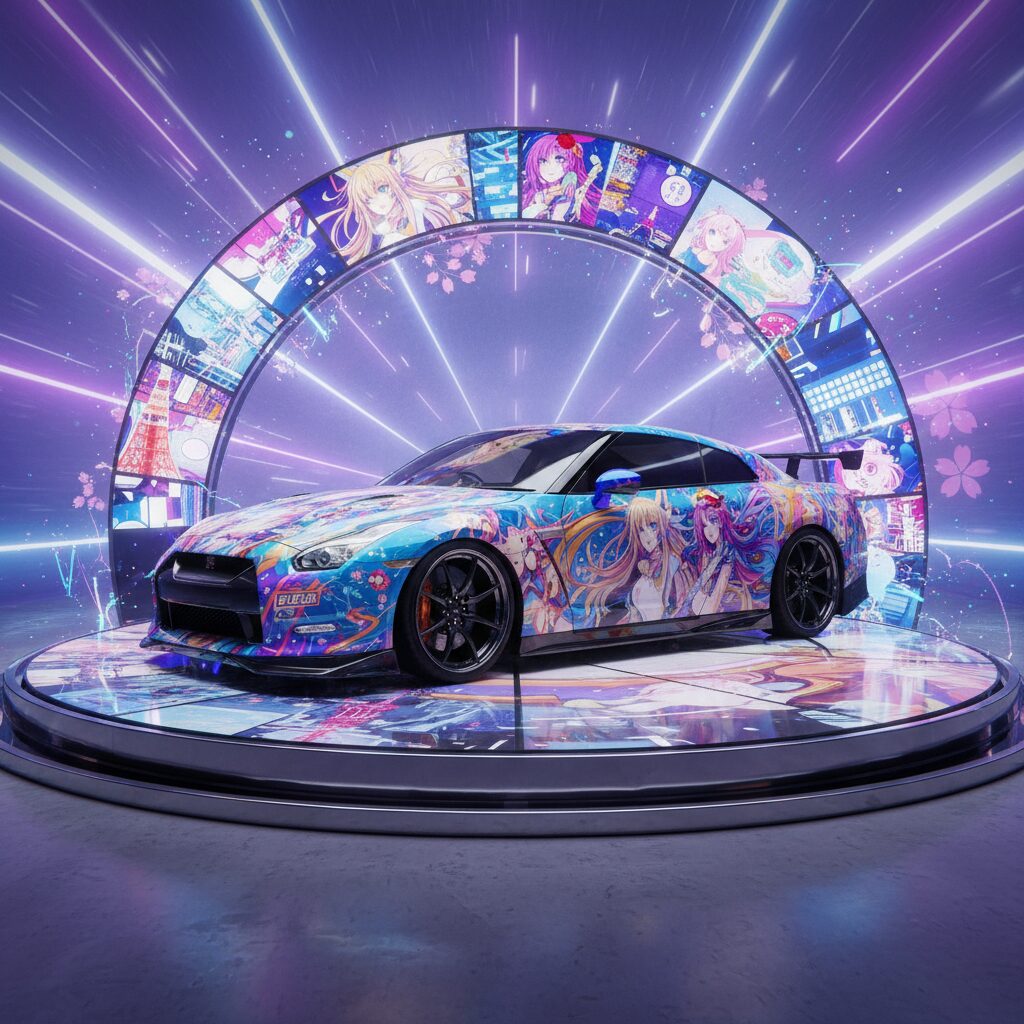
You’re driving down a street in a quiet Tokyo suburb, or maybe navigating the neon-canyon expressways of Osaka at night. Everything is as you’d expect: taxis, delivery vans, sensible family sedans. Then you see it. A flash of electric pink and cyan, a blur of impossibly large eyes and flowing hair. It’s a Toyota Supra, a machine built for performance, but its entire body is a canvas. Plastered across the hood and doors is a life-sized, beautifully rendered illustration of a magical girl from a popular anime. The car doesn’t just have a sticker on it; it is the sticker. You’ve just had your first encounter with an itasha.
This isn’t a corporate promotion or a one-off joke. It’s a deep, complex, and surprisingly expensive subculture at the intersection of Japan’s fervent love for cars and its globally influential otaku (geek) culture. The word itself is a perfect piece of Japanese wordplay, a self-aware joke that tells you everything you need to know. Itasha (痛車) combines itai (痛い), meaning “painful,” and sha (車), meaning “car.” A “painful car.” Painful, the owners will tell you, for two reasons: it’s painfully embarrassing for mainstream society to look at, and it’s painfully expensive to create. This isn’t just about slapping some decals on a bumper. Itasha is a public declaration of devotion, a mobile shrine to a fictional character, and a membership card to one of Japan’s most visually arresting subcultures. To understand itasha is to understand a core aspect of modern otaku identity: the transformation of a private passion into a very, very public spectacle.
For those eager to uncover more insights into these boldly customized rides, our guide to itasha car culture offers a fascinating look into the art and passion behind these transformative vehicles.
The Anatomy of an Itasha: More Than Just Stickers

The first mistake people often make is dismissing an itasha as merely a simple DIY project. From afar, it may appear as a chaotic jumble of stickers. But up close, it becomes clear that it’s a carefully planned and professionally crafted work of art. Creating a true itasha involves design, skill, and a substantial financial investment. It’s a comprehensive transformation of the vehicle, inside and out.
The Canvas: Choosing the Right Car
There isn’t a single “itasha car.” The choice of vehicle is as personal as selecting an anime character. The full range of Japanese automotive culture is represented. On one side, there are the modest kei cars—small, efficient city vehicles like the Suzuki Wagon R or Daihatsu Move. Decorating such a modest car sends a message of pure fandom; the passion isn’t about flaunting wealth or power, but about love for the character. It’s a grassroots expression.
At the other end of the spectrum are the high-performance icons of Japanese Domestic Market (JDM) culture. Nissan Skylines, Toyota Supras, Mazda RX-7s, and Subaru WRXs serve as popular platforms. For these owners, itasha represents a blending of two distinct passions: car tuning and anime. They may have already invested in performance upgrades—engine tuning, suspension modifications, and custom body kits—and the itasha wrap is the final, ultimate aesthetic touch. It’s a statement of, “Yes, this is a serious performance machine, and it’s also a tribute to Hatsune Miku.” This juxtaposition is central to the itasha’s allure. It challenges expectations and merges worlds that might seem entirely incompatible to outsiders.
The Art: From Design to Application
Designing an itasha’s visuals is a professional pursuit. Owners don’t simply download a JPEG and send it to print. They work with specialized graphic designers who understand both automotive form and otaku culture. The designer’s role is to craft a layout that complements the car’s complex curves, vents, and body lines. A character’s hair might flow along a fender, their eyes positioned perfectly on a door panel, while background graphics enhance the car’s aggressive stance. Every detail matters. The final design is a large, high-resolution digital file customized for that specific car model.
Once approved, the design is printed onto large sheets of premium automotive vinyl. This is no ordinary craft-store material. It’s durable, weather-resistant, and made to be applied on vehicles without damaging the paint underneath. The application is the most critical and painstaking phase. Experienced wrappers apply the vinyl in a clean, controlled environment. They carefully stretch and fit the vinyl over every curve and crevice using heat guns. Removing air bubbles and ensuring flawless alignment demands great skill and patience. A full-body wrap may take several days and is usually the priciest part of the project, often costing several thousand dollars, sometimes surpassing ten thousand for complex designs on larger vehicles.
The Interior: A Private Shrine
The passion of an itasha owner rarely ends with the exterior. The interior often continues the theme, creating a private space where the owner’s fandom can truly thrive. Opening the door feels like entering a character’s personal shrine.
Inside, you might find custom seat covers printed with the character’s image or plush toys and cushions filling the passenger and rear seats. Figurines are often displayed carefully on the dashboard, sometimes in custom-lit cases. The steering wheel might have a themed cover, the shift knob customized, and even the floor mats decorated with logos or symbols from the character’s anime series. This interior space isn’t designed for public display like the exterior; it’s for the owner. It reinforces the car as a personal sanctuary—a place where they can be fully surrounded by the character they adore—their oshi.
The Cultural Roots: Why Does This Exist?
Itasha is a distinctly Japanese phenomenon that arose from a specific cultural context. It reflects a fascinating development in how otaku express their identity, merging a traditionally private hobby with the bold, public display of car culture.
Otaku Identity and Public Expression
For many years, being an otaku in Japan was largely a solitary and somewhat embarrassing identity. Interests like collecting manga, assembling model kits, or being deeply invested in anime were generally kept private within one’s own space. Media representations often depicted otaku negatively, portraying them as socially awkward and disconnected from mainstream society. There was considerable pressure to conceal these passions from coworkers, classmates, and even family members.
Itasha appeared in the early 2000s as a rebellious counter to this norm. It transforms the most private devotion—the admiration for a fictional character—into a highly visible form of expression through automobiles. Driving an itasha is a bold act of honesty. It serves as an unavoidable, moving statement of one’s interests and identity. This transition from private shame to public pride (or at least defiant acceptance) marks a significant evolution in contemporary otaku culture. The car becomes the ultimate fan merchandise, a statement declaring, “This is who I am, this is what I love, and I’m not afraid to show it to the world.”
The “Painful” Humor and Self-Awareness
The term “itasha” is pivotal. The community’s embrace of the label “painful car” is a clever form of self-mockery. They are well aware of how their hobby is viewed by the broader public—often as odd, excessive, or cringe-worthy. By owning the “pain,” they neutralize criticism before it arises. They are part of the joke.
This shared, self-aware humor fosters a very strong group identity. It works as a social filter. If your initial reaction to seeing an itasha is to ridicule it, you are an outsider. But if you recognize the dedication, cost, passion, and subtle humor behind its “painful” nature, then you belong to the community. This self-awareness shields the hobby from outside judgment while reinforcing connections among its members. It’s a way to reclaim a potentially negative label and transform it into a mark of pride.
A Fusion of Two Subcultures: Cars and Anime
Itasha could only have originated in Japan, a country with two deeply passionate overlapping subcultures. On one side, there is the world of JDM car tuning. Since the 1980s, Japan has developed a vibrant culture around modifying and customizing cars, from mountain-pass drifters to the highway racers of the Wangan line. This culture elevated cars to a legitimate medium for extreme personal expression.
On the other side lies the otaku realm of anime, manga, and video games, filled with a limitless array of beloved characters and iconic art styles. Itasha represents the intersection of these two streams. The practice evolved from the existing car-tuning tradition of adorning vehicles with stickers and logos. Initially, enthusiasts might have placed a small character sticker on a window. Itasha is the natural, maximalist extension of that idea: if one small sticker is good, then covering the entire car is better. It is the ultimate modification, an aesthetic choice as intentional as installing a turbocharger or a custom exhaust.
The Itasha Community: Finding Your People
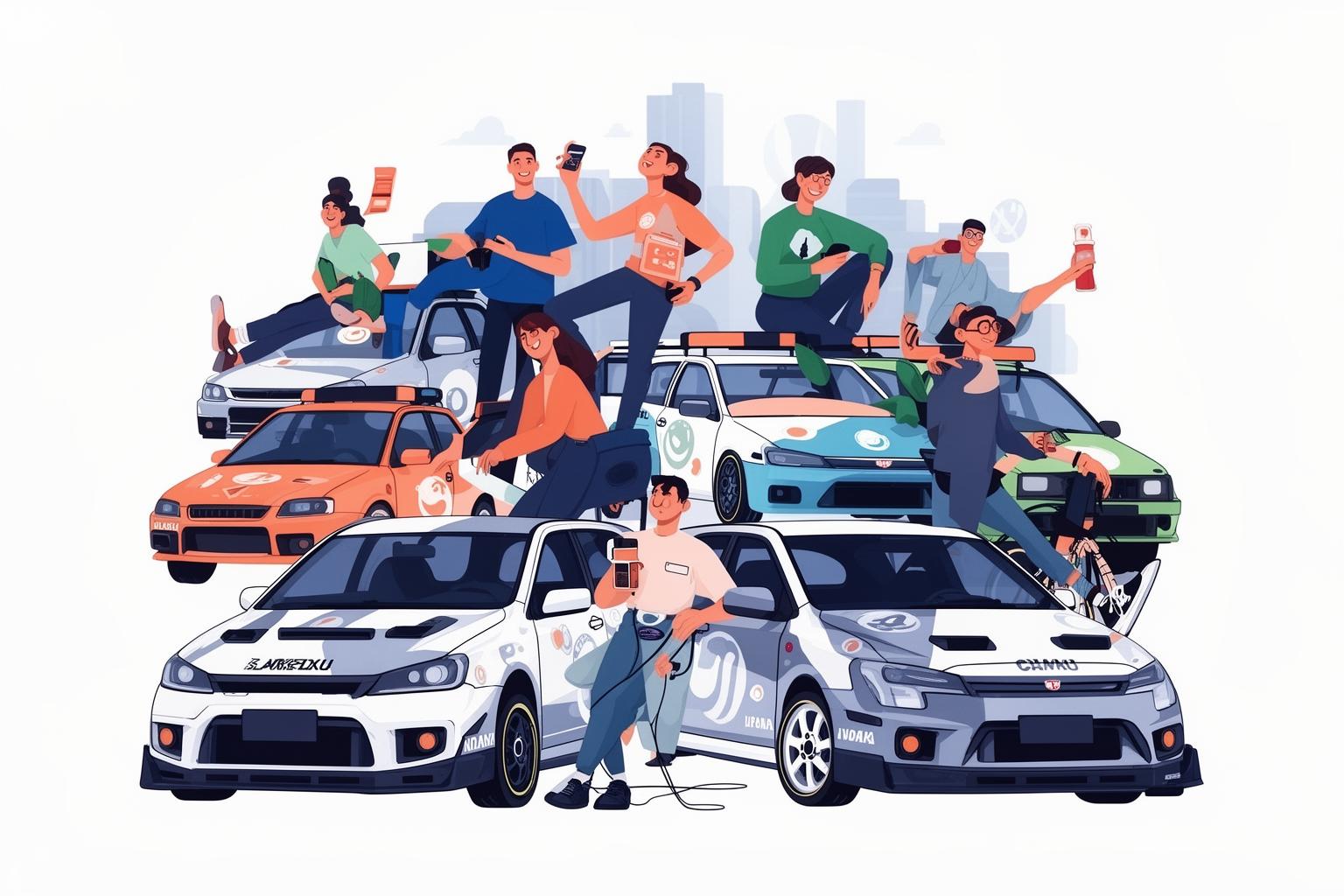
An itasha is meant to be seen, not hidden away in a garage. By nature, it is a social object designed to be viewed, photographed, and talked about. The community aspect is arguably just as important as the vehicle itself. For many owners, it provides a primary way to connect with others who share their unique blend of interests.
Car Meets and Events
Across Japan, dedicated itasha events and casual meet-ups happen regularly. One of the best-known spots, especially in the past, was the underground parking garage of the UDX building in Akihabara, Tokyo’s otaku hub. On weekends, the garage transformed into an impromptu gallery of rolling artwork. Owners would park, pop their hoods, and mingle with fellow fans and curious visitors.
Larger, more organized gatherings attract hundreds of itasha from around the country. These often take place alongside major otaku events like Comiket or at specialized venues such as Fuji Speedway. At these meets, owners showcase their creations, frequently with elaborate setups featuring sound systems playing anime music and interior lighting displays. It’s an opportunity to appreciate the craftsmanship of other vehicles, exchange details about designers and wrappers, and celebrate a shared, niche passion in a friendly atmosphere. Photography plays a huge role at these events; for every owner, there are numerous photographers eager to capture the art on display.
Itansha and Itachari: Beyond Four Wheels
The key idea of itasha—covering a personal vehicle in tribute to a favorite character—has naturally extended beyond cars. The same enthusiasm and creativity are applied to other modes of transportation, each with its own playful name.
Itansha (痛単車) are motorcycles fully wrapped in vinyl decals. The complex curves of a sport bike’s fairings pose a unique challenge for designers and wrappers, making a well-done itansha a genuine work of art. Itachari (痛チャリ), derived from charinko (a slang word for bicycle), are bikes—often high-end road or mountain bicycles—decorated with character art. Frames, wheels, and even handlebars become canvases. This shows that the subculture centers on public devotion itself, not just the car.
The Outsider’s Gaze: How Japan Sees Itasha
Despite its visibility, itasha remains a niche subculture. The typical reaction from the average Japanese person is a blend of curiosity, bemusement, and quiet indifference. While it’s not something encountered every day, in a country known for its eccentric subcultures, it isn’t entirely surprising either.
Mainstream Perception: Curiosity and Confusion
For most, an itasha is simply another element of the unusual and vibrant urban landscape. In cities like Tokyo or Osaka, people are accustomed to seeing unconventional fashion, quirky advertising, and odd public behavior. An anime-decorated car fits right into this scene. The response is seldom openly hostile. Japanese social norms emphasize harmony and avoiding confrontation, so direct criticism is rare. Instead, one might witness a double-take, a pointed finger along with a whispered comment to a friend, or someone discreetly snapping a photo on their phone. It is recognized as something that exists—a hobby for a particular type of person—and then life continues. It hasn’t become mainstream, but it has established a permanent, acknowledged place on the cultural fringe.
The Corporate Embrace
Perhaps the clearest sign of itasha’s cultural relevance is its adoption by the industries it celebrates. Anime studios, game developers, and merchandise companies have acknowledged the subculture’s promotional power. Nowadays, officially licensed itasha are often created to promote new anime series, movies, or video games. These professionally crafted cars appear at press events, tour through cities, and serve as highlights of marketing campaigns. Essentially, they are official counterparts to fan-made creations.
Even more notable is itasha’s presence in professional motorsport. The most famous example is Good Smile Racing, a team competing in Japan’s prestigious Super GT series. For over a decade, their cars have featured striking liveries of the virtual idol Hatsune Miku, with designs changing annually. They are a competitive and popular team, introducing the itasha style to a huge audience of racing fans. This corporate and professional endorsement has given the subculture a degree of legitimacy, demonstrating it’s more than simply an amateur pastime.
Ultimately, itasha perfectly encapsulates modern Japanese subculture. It is deeply personal yet highly public, born from the fusion of distinct cultural passions. It’s a hobby demanding immense dedication, significant financial investment, and a strong sense of self-aware humor. More than just a “painful car,” an itasha is a canvas for identity—a declaration of love rolling on four wheels. It embodies the confidence of a once-hidden community stepping out from private spaces into the daylight, unapologetically showcasing what they love, one beautifully decorated car at a time.