It tends to happen late at night. You’re deep down a YouTube rabbit hole, clicking from one obscure live performance to the next, when the algorithm serves up something different. The thumbnail is a grainy, candid photograph of a Japanese woman with a warm, slightly mischievous smile. The title is in a language you don’t understand, next to a date from the 1980s. You click, mostly out of curiosity. And then, the sound hits you. A shimmering keyboard chord, a crisp drum machine beat, a bassline so smooth it feels like it’s being poured into your ears, and a voice that is somehow both joyful and profoundly melancholic. For millions of people around the world, this was their first encounter with Mariya Takeuchi’s “Plastic Love,” and their unwitting entry point into the world of City Pop.
It’s one of the strangest, most organic cultural resurgences of the digital age. How did a genre of Japanese popular music, so deeply tied to the economic bubble of the 1980s that it was largely forgotten even in Japan, suddenly find a passionate global audience four decades later? This wasn’t a calculated marketing push or a nostalgia-baiting movie soundtrack. It was a genuine, grassroots phenomenon, propelled by a mysterious algorithm and embraced by listeners who weren’t even alive when the music was made. The story of City Pop’s second life isn’t just about catchy tunes; it’s about economics, technology, and a very modern form of nostalgia for a past that most of its new fans never experienced.
This unexpected journey through past and present also reflects Japan’s evolving spirit of individuality, as seen in the quiet solo katsu revolution, which adds another layer to its rich cultural tapestry.
What Exactly Is City Pop?
Ask ten fans to define City Pop, and you’ll likely get ten slightly different descriptions. It’s less a strict genre with clear-cut rules and more an aesthetic, a mood, a distinct slice of sonic history. At its heart, City Pop is a refined fusion of American and Japanese musical influences that thrived from the late 1970s through the 1980s. It was the predominant sound of urban Japan during its economic boom.
Picture blending the smooth, polished production of American AOR (Adult-Oriented Rock) bands like Steely Dan and Toto with the grooves of funk and soul, the laid-back sophistication of quiet storm, and the danceable pulse of disco. Then, layer in uniquely Japanese melodic patterns and lyrics centered on modern city life themes: romance, solitude, cruising neon-lit streets, cocktails on skyscraper balconies, and seaside getaways. The outcome is music that is lavish, impeccably produced, and steeped in a vibe of aspirational cool.
Key artists form the genre’s core pantheon. Tatsuro Yamashita, often hailed as the “king” of City Pop, is recognized for his complex, multi-layered vocal harmonies and tight, funky arrangements. His wife, Mariya Takeuchi, contributed a sharp pop sensibility and emotionally rich songwriting to the scene. Anri’s songs like “Last Summer Whisper” and “Remember Summer Days” serve as the ultimate soundtrack to a chic summer, while Toshiki Kadomatsu offered slick, dance-floor-ready funk. Artists like Taeko Onuki and Tomoko Aran ventured into more experimental, atmospheric territories, expanding the genre’s boundaries.
What connects them all is a dedication to craftsmanship. This music was produced with generous budgets, featuring top session musicians from both Japan and the US. The sound is pristine, dynamic, and packed with intricate nuances—a testament to the golden age of analog studio recording. It’s music crafted to sound luxurious, aimed at a sophisticated urban audience equipped with high-end stereos and the disposable income to appreciate them.
The Soundtrack to an Economic Miracle
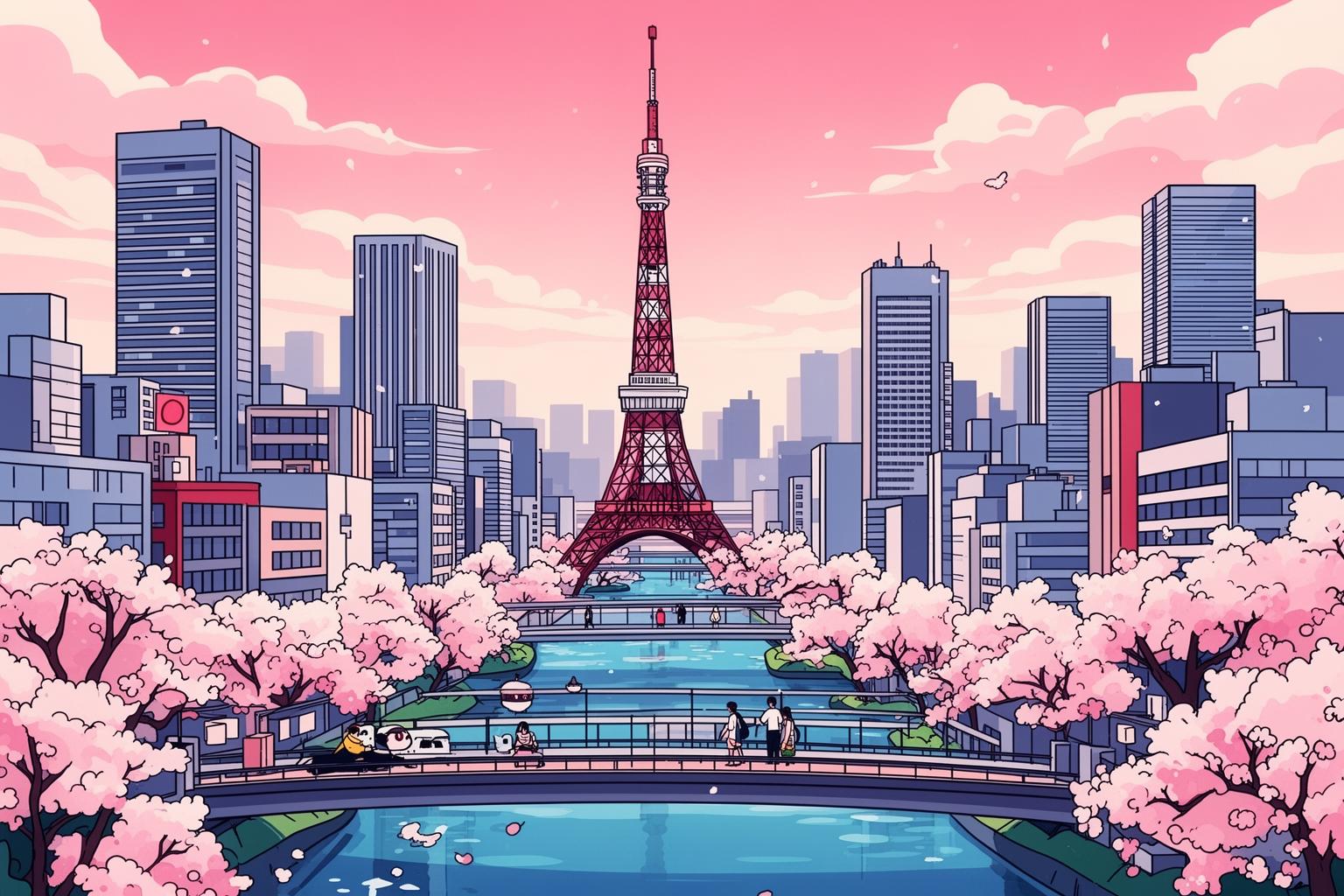
To truly grasp City Pop, you need to understand the world from which it emerged. The Japan of the 1980s was at the peak of its post-war economic power. This era, known as the “Bubble Economy,” was marked by seemingly endless growth and technological supremacy. Japanese companies were acquiring international real estate, the Sony Walkman had transformed personal audio, and Tokyo shone as a futuristic city radiating confidence and wealth.
This unrestrained optimism was the fertile ground in which City Pop flourished. The music was a sonic reflection of the era’s prosperity. Record labels, flush with cash, poured resources into production. They could afford entire brass and string sections, invite renowned American musicians like session drummer Harvey Mason or bassist Abraham Laboriel, and spend countless hours in cutting-edge studios perfecting every track to a gleaming finish. This wasn’t indie music born from hardship; it was a polished, aspirational product of a society that believed it had arrived on the global stage.
The themes of the music mirrored this modern urban lifestyle. The lyrics depicted a world that was contemporary, mobile, and cosmopolitan. Cars, beaches, swimming pools, and cocktails appeared frequently. It served as the soundtrack for a generation transitioning from rural life to the city, embracing newfound consumer freedom. City Pop was background music for the good life, enjoyed in stylish cafes, trendy boutiques, and through car stereos of coupes cruising the Shuto Expressway at night.
However, just as swiftly as it rose, the bubble burst. The Tokyo stock market collapsed in the early 1990s, plunging Japan into a prolonged economic stagnation called the “Lost Decade.” The national mood shifted sharply from limitless optimism to anxiety and reflection. The slick, carefree sound of City Pop, so closely tied to the bubble years’ extravagance, suddenly seemed outdated and disconnected. It became a reminder that the party was over. The genre faded from mainstream media, replaced by the rawer, more energetic J-Pop of the ’90s. For decades, City Pop remained a relic, treasured by a few collectors but largely absent from cultural discourse.
The Ghost in the Machine: How an Algorithm Resurrected a Genre

The revival of City Pop didn’t start in a Tokyo record store but rather in the digital realm. The tale has since become legendary among fans. Around 2017, a fan-uploaded bootleg of Mariya Takeuchi’s 1984 track “Plastic Love” began appearing in the “Recommended for you” feeds of millions of YouTube users. It wasn’t the official music video—just the audio paired with an unrelated, striking photo of a young Takeuchi. No one knows exactly why the algorithm latched onto this particular eight-minute upload, but numerous theories exist.
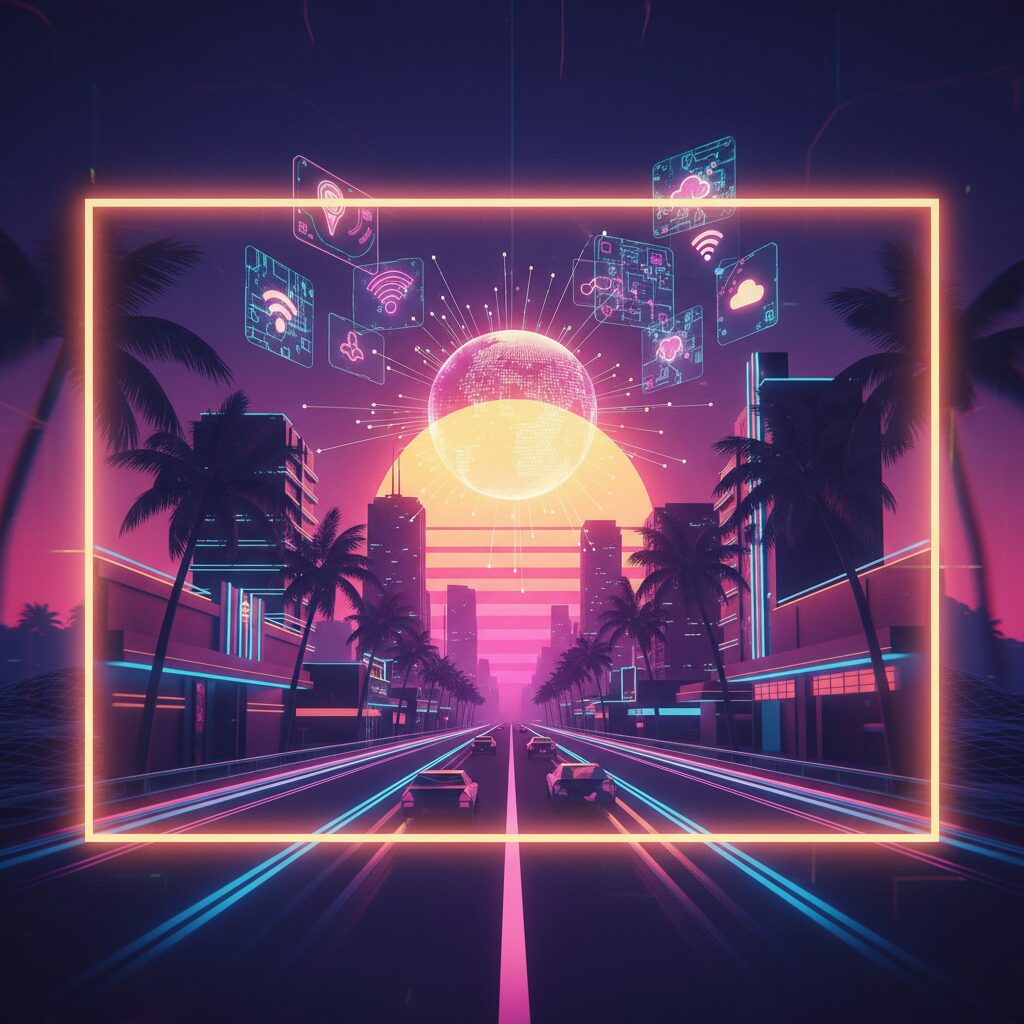
YouTube’s recommendation algorithm is designed to maximize watch time. “Plastic Love” is a lengthy, captivating track that’s easy to play on repeat. More importantly, it shared a sonic affinity with emerging internet-native genres like vaporwave and future funk. These genres, popular on platforms such as SoundCloud and Bandcamp, were based on sampling and reimagining the smooth, commercial sounds of the ’80s and ’90s. For years, online producers had been exploring a similar aesthetic, building a listener base already primed for the authentic source. When the algorithm introduced them to City Pop, it was as if they had found the pure, unfiltered source code for the music they loved.
The algorithm acted as a digital archaeologist. After recommending “Plastic Love,” it would suggest Tatsuro Yamashita’s “Ride on Time,” then perhaps Anri’s “Shyness Boy.” It created an automated breadcrumb trail, leading listeners deeper and deeper into a forgotten realm of Japanese music. For a generation raised on streaming, this felt like a genuine discovery—a secret musical history hidden in plain sight. This wasn’t a genre promoted by record labels; it was a universe unveiled by cold lines of code, which paradoxically made the experience feel deeply personal and authentic.
Nostalgia for a Place You’ve Never Been
The algorithm describes how City Pop spread, but it doesn’t entirely explain why it resonated so profoundly with a global audience in the 21st century. Its appeal stems from a powerful psychological phenomenon: nostalgia for a time and place you’ve never experienced. For a listener in Chicago, São Paulo, or Sydney, the music of 1980s Tokyo is not a memory; it’s an imagined reality. It evokes a romanticized vision of a futuristic yet analog past—a world of shining cityscapes, effortless style, and hopeful possibility.
This sensation has a name: anemoia. It refers to a wistful longing for a past that isn’t your own. City Pop acts as an anemoic trigger, providing a gateway to a hyper-specific but universally appealing fantasy: a version of the 1980s stripped of its political tensions and social issues, leaving only the aesthetic gloss. In a time marked by digital anxiety, economic instability, and an uncertain future, the simple optimism of City Pop becomes a powerful form of escapism.
For non-Japanese speakers, the language barrier adds to this charm. Unable to grasp the literal meaning of the lyrics, listeners are free to project their own emotions onto the songs. The Japanese language itself becomes part of the texture, another instrument in the composition. Vocals by Mariya Takeuchi or Taeko Onuki express a mood—often a sweet, elusive melancholy—that goes beyond words. This enables the music to serve as a perfect, customizable soundtrack for one’s own life, shaped by personal feelings rather than lyrical content.
Beyond the Algorithm: Why the Music Endures
Although the algorithm sparked interest, City Pop’s enduring appeal stems from a more fundamental reality: the music is exceptionally well-crafted. This is far from merely a meme or a passing internet trend. The revived enthusiasm has highlighted a period marked by remarkable musical creativity and technical mastery. The arrangements are intricate and layered, the musicianship is virtuosic, and the production quality often surpasses much of today’s pop music. It’s a genre that rewards attentive listening, especially through quality headphones, where one can discern the complex basslines, sharp horn stabs, and shimmering synthesizer layers.
The emotional essence of the music also lends it a timeless quality. Beneath the glossy, upbeat facade of many City Pop tracks lies a distinct sense of bittersweetness, a uniquely Japanese aesthetic called setsunasa (切なさ). This is a gentle, poignant sadness that often accompanies moments of joy—the melancholy of a beautiful summer day ending, the loneliness felt within a busy city crowd, or the sweet ache of a fleeting romance. This emotional depth elevates City Pop beyond simple feel-good music into something more profound and lasting. It captures the universal paradox of modern urban life: the simultaneous feelings of excitement and isolation, connection and anonymity.
City Pop is a perfect convergence. It is a forgotten genre of meticulously crafted music, born from a unique economic era, rediscovered by a powerful digital curator, and embraced by a worldwide audience seeking beauty, optimism, and escape from today’s complexities. It acts as a time capsule that feels both nostalgic and futuristic—a sound from a very specific past that has become the perfect soundtrack for our globalized, internet-connected future. It shows that a great melody and a perfect groove don’t require a marketing campaign—sometimes, all it takes is a little algorithmic magic to guide them home to listeners everywhere.