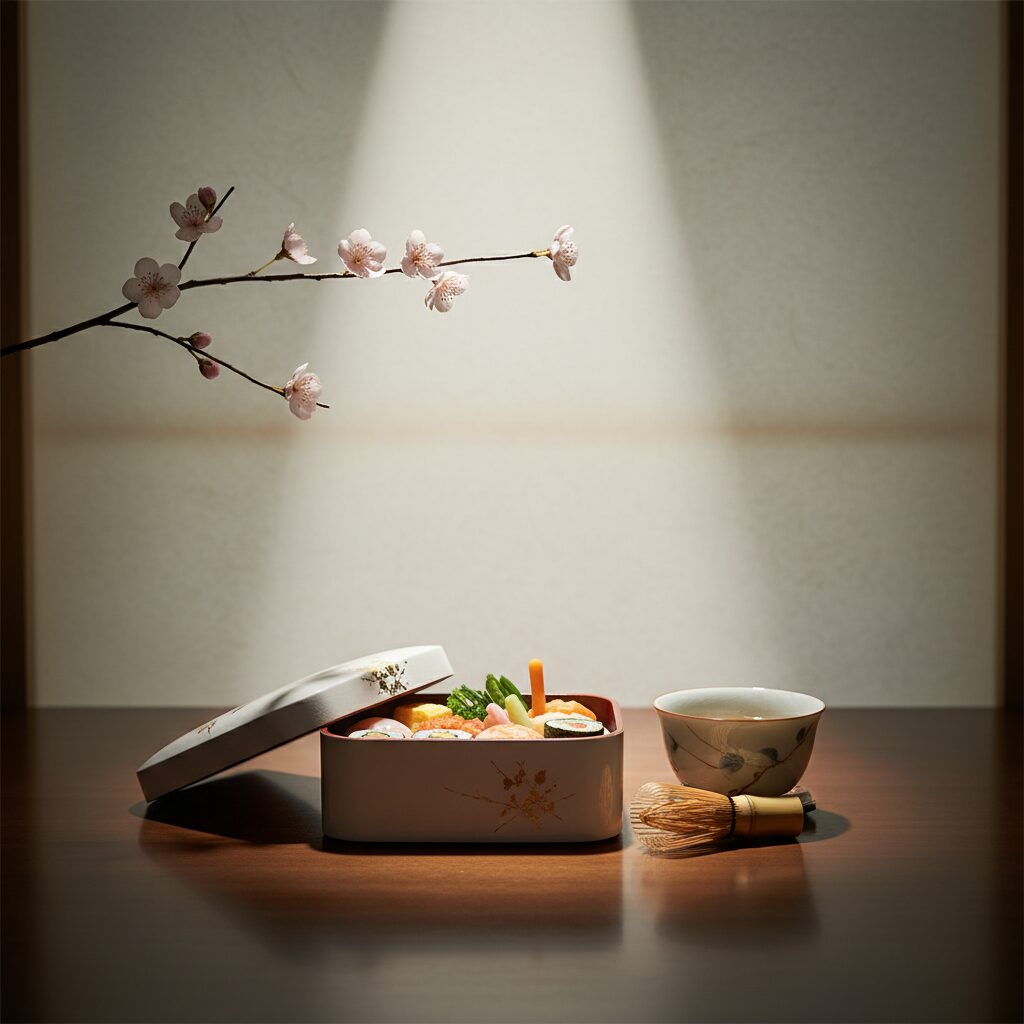
Walk into a restaurant in Tokyo, and you might see something that feels slightly out of place. Amid the lively groups of salarymen and laughing friends, you’ll spot a woman dining alone, meticulously grilling her own slivers of premium wagyu. A few blocks away, a man steps into a soundproofed booth, not much bigger than a closet, to sing his heart out at karaoke for one. A university student sits in a cafe, not scrolling on their phone, but carefully arranging a tiny, perfect meal for their Instagram photo, a party of one. This isn’t a picture of loneliness; it’s a snapshot of a profound cultural shift. This is solo katsu (ソロ活), or “solo activity,” and its rise reveals more about modern Japan than a thousand cherry blossom photos ever could.
For anyone with a passing familiarity with Japan, this might seem like a contradiction. Isn’t this the land of wa (和), the cherished cultural value of group harmony? A place where the nail that sticks up gets hammered down? The stereotype of Japan is one of unwavering collectivism, where the needs of the group—the company, the family, the team—are paramount. The idea of deliberately seeking out solitude for leisure seems to run counter to the very fabric of society. And yet, the ohitorisama (お一人様), or “party of one,” is no longer a rare sight but a catered-to, celebrated consumer demographic. The quiet embrace of doing things alone is not just a trend; it’s a necessary adaptation, a silent rebellion against social fatigue, and a powerful reclamation of the self in a society that has long prioritized the collective. To understand solo katsu is to understand the subtle, powerful currents of change flowing beneath the surface of contemporary Japan.
The quiet revolution of solitary indulgence finds its parallel in the passionate precision of garage kit crafters, reflecting Japan’s broader embrace of individual creativity.
The Unspoken Weight of ‘Wa’
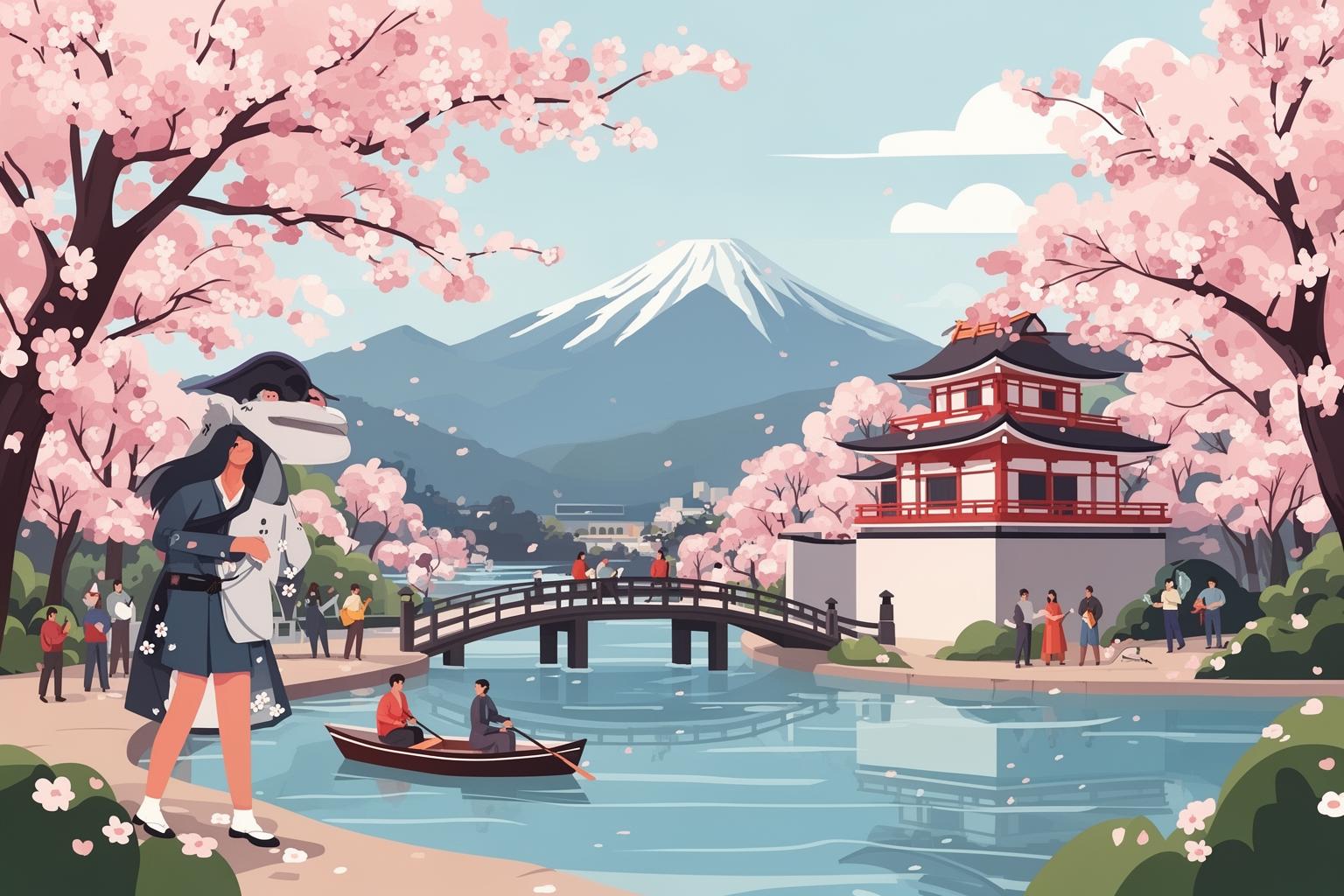
To understand why solo katsu feels so freeing, you first need to grasp what it offers release from. The concept of group harmony, wa, forms the foundation of Japanese social interaction. It’s a beautiful ideal in many respects, fostering cooperation, politeness, and a society with minimal friction. However, maintaining that harmony requires constant and often exhausting effort. It calls for a keen awareness of others, a skill known as kūki o yomu (空気を読む), or “reading the air.” You are expected to anticipate needs, interpret unspoken signals, and adjust your behavior and opinions to keep the group’s smooth flow.
This social adjustment is called awaseru (合わせる), meaning to match or align with others. When you’re with colleagues, you awaseru by agreeing to the restaurant the boss prefers, pouring drinks for your superiors, and laughing at the right moments. Among friends, you awaseru by reaching consensus on which movie to watch or which café to go to, even if it’s not your top choice. It’s a continuous, low-key performance of agreeableness. For generations, this has been the unspoken cost of maintaining a stable social and professional life.
Yet, this endless accommodation carries a price. It can be emotionally taxing. It may require suppressing your own wants, opinions, and even moods for the collective’s sake. This isn’t about being insincere; it’s about being considerate. Still, the pressure to be considerate all the time can feel like a heavy burden. Solo katsu is the act of shedding that burden. It’s the freedom to eat exactly what you want, whenever you want, without any committee discussions. It’s the joy of singing that obscure B-side from your favorite band on repeat at karaoke without worrying about monopolizing the microphone. It’s the simple, profound relief of not having to read the air, because the only air that counts is your own.
From Economic Necessity to Lifestyle Choice
The foundation for solo katsu was established not by a philosophical movement, but by cold, hard data. Japan’s demographic and economic landscape has been evolving for decades, shaping a society where living alone is increasingly the default. The number of single-person households has surged, now making up over a third of all households nationwide. This shift is driven by various factors: young people are marrying later or not at all, divorce rates have climbed from their post-war lows, and an aging population means more elderly individuals live alone after a spouse’s death.
As living alone becomes a statistical norm, doing things solo naturally follows. The stigma once associated with single diners in the 1980s has largely faded, replaced by practical acceptance. The prolonged economic stagnation after the bubble economy of the late 1980s, often referred to as the “Lost Decades,” also played a crucial role. Lifetime employment at major corporations, once a given, became less secure. Incomes stagnated. The extravagant company-sponsored drinking parties and golf outings that once reinforced group bonds grew rarer and less affordable for both businesses and employees.
People started managing their social and financial resources more prudently. Instead of spending heavily on group dinners that required complex social navigation, individuals might opt to spend less on a genuinely satisfying solo meal. This wasn’t about being antisocial but reflected a new social and economic calculation. It was about prioritizing high-quality personal experiences over obligatory group ones. What began as a reaction to demographic and economic pressures gradually evolved into a deliberate lifestyle choice—a way to discover personal fulfillment in a world with fewer guarantees.
The Solo Economy: A Market Finds Its Niche
Japanese businesses, ever sharp in detecting market trends, quickly recognized the potential of the ohitorisama. Rather than viewing solo customers as a hassle, they saw them as a profitable and underserved market, sparking a boom in products and services aimed specifically at individuals, giving rise to a vibrant “solo economy.”
This extends well beyond adding a few counter seats at a ramen shop. The innovations have been impressive.
Redesigning the Dining Experience
Restaurants like Ichiran Ramen gained fame for their “flavor concentration booths,” private cubicles where diners can focus solely on their noodles without social distractions. Hitori-yakiniku (solo grilled meat) restaurants have emerged, providing small personal grills so individuals can enjoy the traditionally communal dining experience independently. Hot pot, or nabe, another meal typically shared, is now commonly available in single-serving portions at supermarkets and specialized eateries. These businesses grasped a critical insight: solo customers aren’t seeking a diminished experience; they want the same quality experience, personalized for one.
Entertainment for One
The solo trend has transformed the entertainment industry. Karaoke, once the quintessential Japanese group pastime, has spawned hito-kara (solo karaoke)専門店 (specialty shops) featuring small, private booths made for one person to practice songs, unwind after work, or simply sing freely without judgment. Cinemas have introduced premium seats with more privacy and partitions, catering to solo moviegoers. Even theme parks, once dominated by families and couples, now attract many solo visitors who prefer to enjoy attractions at their own pace without coordinating with others.
The Rise of Solo Travel
The travel industry has likewise embraced the trend. Hotels offer solo plans, often at slight discounts, and some traditional inns, or ryokan, provide packages that make solo travelers feel welcomed rather than isolated. Tour operators design trips specifically for individuals, sometimes centered around hobbies like photography, temple visits, or culinary exploration. For many, solo travel represents the ultimate freedom—the ability to be completely self-directed with one’s itinerary, spending hours in a museum or skipping famous landmarks altogether, all without needing group consensus.
This commercial acceptance has a strong normalizing effect. When society’s infrastructure adapts to and supports a behavior, it stops being seen as odd or pitiful. It simply becomes another way of living.
The Psychology of Solitude: It’s Not Loneliness
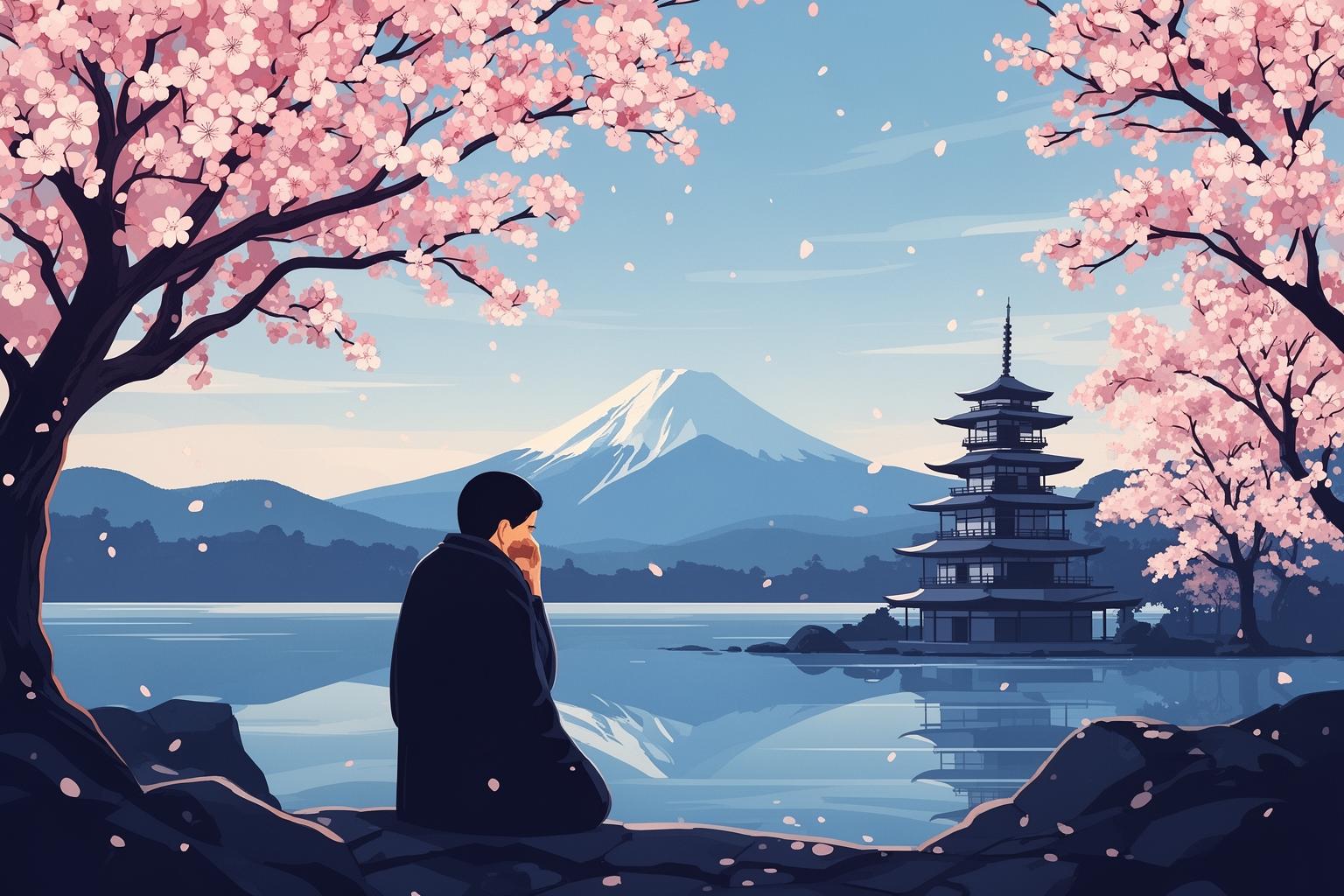
It is important to differentiate between being alone and feeling lonely. In Japanese, the word for lonely is sabishii (寂しい), which carries a heavy, melancholic nuance, suggesting an involuntary and painful isolation. Solo katsu, however, does not relate to sabishii. It refers to hitori de iru (一人でいる)—the neutral, factual condition of being by oneself. The cultural shift has been to reframe this condition from a negative to a positive—or at least neutral—perspective.
Solo activities are acts of intentional solitude, about choosing to turn your focus inward. In a hyper-connected world where social media requires constant performance and engagement, being truly alone with your thoughts can be a rare luxury. It is a form of mindfulness, a way to reconnect with your own preferences and desires. What do I really want to eat? What movie do I want to watch? What music do I want to listen to? For many, answering these simple questions without external influence becomes a powerful act of self-discovery.
This is especially empowering for Japanese women. Traditionally, women in public were expected to be accompanied by family, a husband, or a group of female friends. A woman dining or drinking alone was often met with suspicion or pity. The rise of solo katsu has challenged much of this outdated judgment. It has created a social space where women can confidently claim their right to public leisure on their own terms. It is a quiet but firm declaration of autonomy and independence, signaling that a woman’s time and enjoyment belong to herself, not dependent on others.
Furthermore, the rise of social media has paradoxically made being alone easier. A person dining solo can share a photo of their meal on Instagram, connecting with a digital community and sharing the experience without the need for real-time conversation. You can be physically alone but digitally connected, creating a comfortable hybrid state of “alone together.” This softens the sting of potential isolation and transforms a personal moment into one shared on your own terms.
A New Balance
It would be incorrect to interpret the rise of solo katsu as the demise of group culture in Japan. That perspective is far too simplistic. The significance of the team, company, and social circle remains deeply rooted in the culture. People continue to value group activities and the sense of belonging they foster. Solo katsu is not a substitute for group life but rather a complement to it. It serves as a new means to achieve balance in contemporary life.
Consider it an expansion of the social repertoire. It recognizes that humans require both connection and solitude to flourish. Historically, Japanese society predominantly emphasized the former. Now, it is making room for the latter. The ohitorisama is establishing a space for the individual within the collective, demonstrating that the two can coexist.
This trend exemplifies Japan’s remarkable ability for subtle adaptation. It is a society that evolves not through loud, dramatic revolutions but through gradual, quiet changes in behavior that eventually reshape the social contract. Solo katsu is one of these changes. It represents a quiet, personal, and distinctly modern revolution, unfolding one solo dinner, one solo karaoke session, and one solo journey at a time.