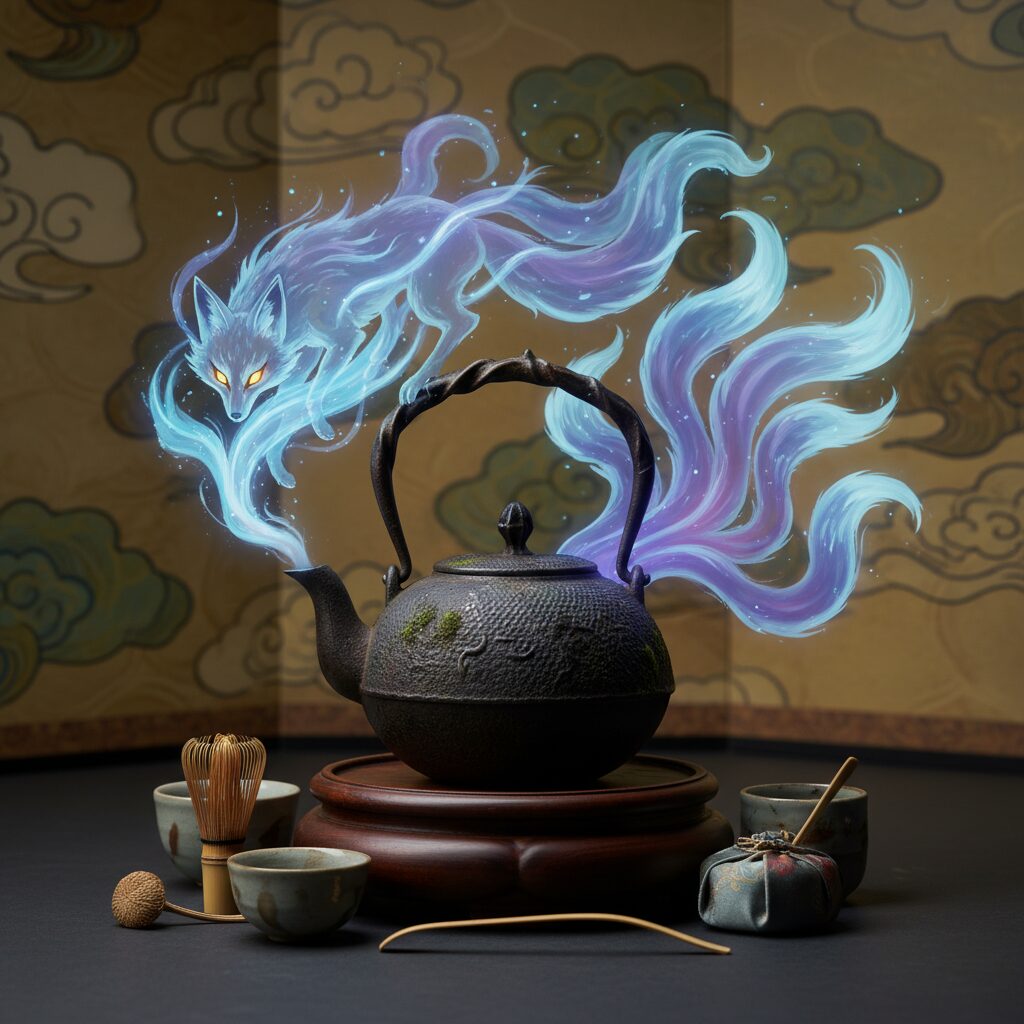
There’s a feeling many of us know but can’t quite name. It’s the quiet pang of guilt you feel when throwing away a pair of shoes that have carried you for miles, even when they’re worn beyond repair. It’s the strange reluctance to discard a chipped mug that warmed your hands through countless mornings. We might call it sentimentality, this attachment to the inanimate. We might tell ourselves we’re just anthropomorphizing, projecting human feelings onto lifeless things. But in Japan, this deep, intuitive connection to the objects in our lives has a name, a history, and a life of its own. It’s called Tsukumogami (付喪神).
At its simplest, Tsukumogami is the belief that a tool or object, upon reaching its one-hundredth birthday, can awaken. It can acquire a spirit, a consciousness, a soul. Suddenly, that forgotten umbrella in the back of your closet isn’t just an object; it’s a potential being, observing, waiting. This is the folklore that feels so deeply Ghibli-esque, the magic that breathes life into soot sprites and gives the Radish Spirit a place in the celestial bathhouse. It’s a whimsical, enchanting idea. Yet, the story of Tsukumogami is far more than a charming fairy tale. It’s a profound cultural lens through which to understand the Japanese relationship with possessions, waste, and the invisible spiritual world. It’s a philosophy of mindfulness embedded in a ghost story, a cautionary tale about gratitude wrapped in the body of a mischievous, one-legged sandal. To understand Tsukumogami is to look at the material world not as a collection of disposable things, but as a silent chorus of potential spirits, their nature—benevolent or vengeful—hanging entirely on how we choose to treat them.
The reverence for objects imbued with unseen spirits mirrors the wider cultural sentiment, as reflected in nostalgic reflections on Japan’s lost golden age, where the allure of bygone eras continues to inspire a profound connection to the past.
The 100-Year Itch: What Exactly is a Tsukumogami?
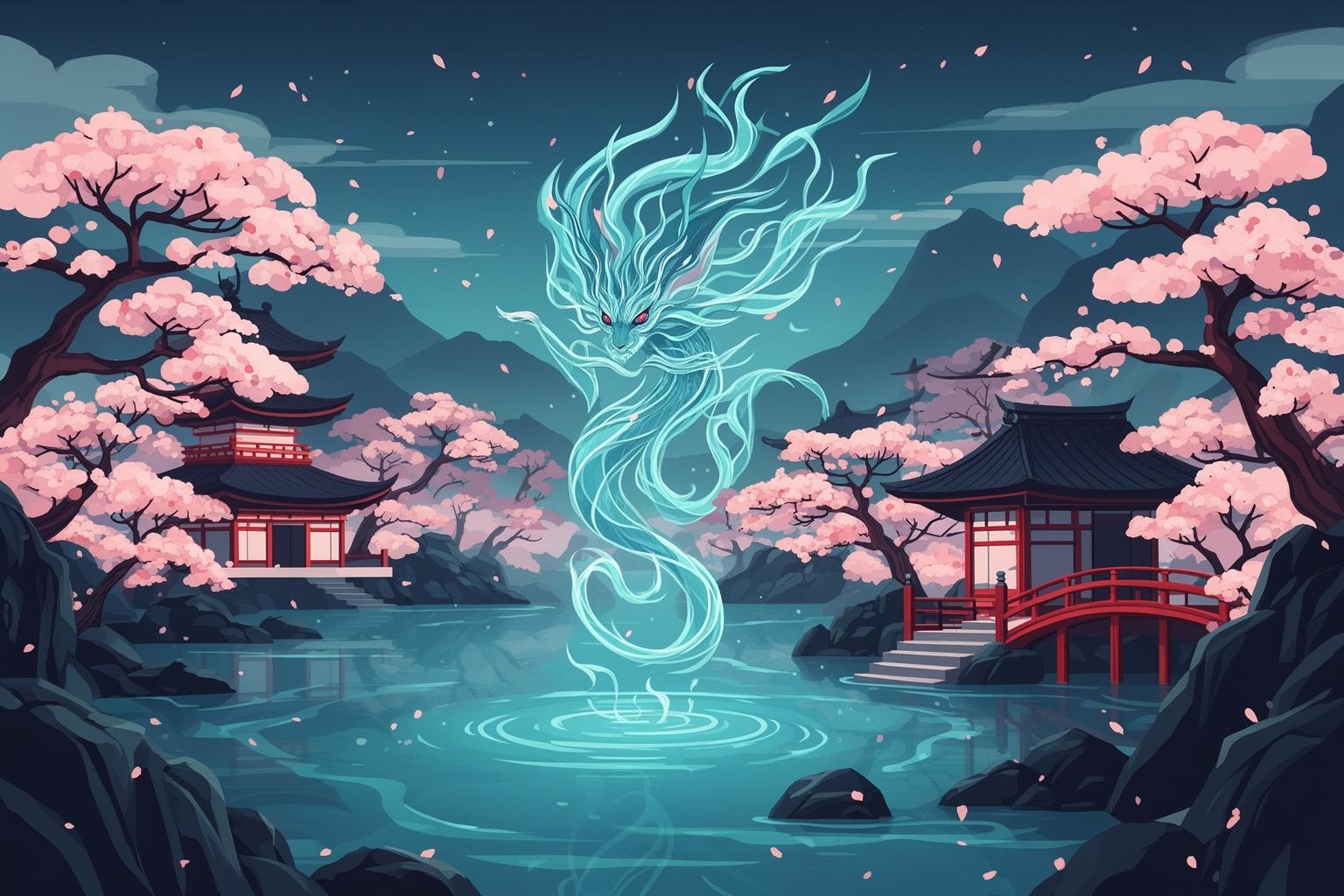
The transformation of an ordinary object into a Tsukumogami is a captivating example of spiritual arithmetic. For ninety-nine years, the object remains simply that—an object. It serves its function, ages, and collects dust. However, upon reaching the hundred-year mark, a metaphysical shift takes place. The accumulated years, its usage history, and the energy of those who interacted with it all merge, causing the object to awaken. This is not a random haunting; it represents a form of apotheosis, a graduation to a new state of existence.
From Tool to Spirit
The term itself provides insight. ‘Tsukumo’ (九十九) means ‘ninety-nine,’ referring to the final year before transformation, while ‘gami’ (神) means ‘god’ or ‘spirit.’ The idea implies that longevity itself embodies a form of power. An object that endures a century has proven its value and earned the right to possess a soul. Over a hundred years, it absorbs human life, witnessing generations, conversations, joys, and sorrows from its quiet corner in a room. This prolonged immersion in human experience is what grants it the spark of life.
The process is inclusive. Anything can become a Tsukumogami. It’s not limited to sacred relics or priceless antiques. A modest cooking pot, a commonly used broom, a tatami mat, or a musical instrument—all are potential candidates for spiritual awakening. Their value lies not in money, but in experience. Their worth is measured by years of use, not in yen.
Kami or Yōkai? A Question of Treatment
At the heart of the Tsukumogami belief is this moral question: when an object awakens, what kind of spirit does it become? The answer depends entirely on its past life and, critically, on how it was treated by its human owners. This is where the story diverges into two distinct paths.
If an object was cared for, respected, and used with gratitude until its functional life ended, it is likely to become a benevolent spirit, a form of kami. It may remain a protective presence in the home, embodying a gentle and kind entity. Having fulfilled its purpose and been honored for it, its transformation is peaceful.
Conversely, if an object was neglected, abused, or discarded without ceremony before its time, it awakens with resentment. It transforms into a yōkai—a monster, demon, or trickster. Driven by bitterness over its mistreatment, this type of Tsukumogami often seeks revenge. It targets the humans who discarded it thoughtlessly. This is more than fantasy; it serves as a potent allegory about the consequences of a disposable mindset. The trash you create might literally come back to haunt you.
The Classic Lineup
Over the centuries, a recurring cast of Tsukumogami characters has appeared in Japanese folklore and art, each with a distinctive personality and form. They are often depicted in surreal styles, maintaining elements of their original shape while taking on monstrous, living appearances.
Kasa-obake
Perhaps the best-known Tsukumogami is the Kasa-obake (傘おばけ), the haunted umbrella. Usually shown as a traditional paper umbrella (wagasa), it sports a single leg where the handle would be, enabling it to hop around. It often features one large, cyclopean eye and a long, lolling tongue. Though it looks intimidating, the Kasa-obake is largely a mischievous prankster rather than a genuinely dangerous yōkai, content to startle and scare unsuspecting humans.
Chōchin-obake
Closely related to the umbrella ghost, the Chōchin-obake (提灯おばけ) is a haunted paper lantern. The lantern’s paper body splits open to reveal a gaping mouth filled with sharp teeth, and a single eye emerges on its surface. Like the Kasa-obake, it enjoys frightening people, its eerie, disembodied face drifting through the darkness.
Bakezōri
The Bakezōri (化け草履) is a simple straw sandal (zōri) brought to life. It grows two arms, two legs, and a single eye in its center. Its purpose is straightforward: to run wild. Bakezōri are often depicted chanting “Kararin, kororin, kankororin!”—an onomatopoeic phrase mimicking the sound of wooden clogs—as they scurry about causing mischief. Their grudge stems from being worn out and then discarded carelessly.
Other Notable Spirits
The roster expands to nearly every facet of a traditional Japanese home. The Biwa-bokuboku is a haunted biwa (a type of lute), its wooden body sprouting a human-like face. The Koto-furunushi is an old koto (a stringed instrument) that continues to play hauntingly beautiful music on its own. A Furu-utsubo, an ancient quiver, may become a creature sprouting the furry heads of the animals whose hides crafted it. Each one illustrates the belief that nothing is truly inanimate when given enough time.
Roots of Respect: Where Did This Idea Come From?
The concept of Tsukumogami did not emerge out of nowhere. It developed from the rich soil of Japan’s two primary spiritual traditions, Shinto and Buddhism, which together foster a worldview where the boundary between the physical and spiritual realms is beautifully, and at times unsettlingly, thin.
Shinto Animism: The World is Alive
At the core of Shinto, Japan’s native religion, lies a form of animism—the belief that kami—deities, spirits, or sacred essences—exist in all things. These spirits dwell not only within grand shrines but also in mountains, rivers, ancient trees, and oddly shaped stones. There is no strict division between humanity and nature, or between the sacred and the profane. The world is alive with a divine presence. From this viewpoint, it is a natural extension to believe that man-made items, especially those that have served people for a long time, might also absorb or develop a spiritual essence.
Tsukumogami can be viewed as the urban, domestic counterpart to this rural, nature-based animism. If a thousand-year-old camphor tree can be regarded as a kami, then why not a hundred-year-old teapot that has been used by a family for generations? This perspective nurtures a fundamental respect for the material world quite distinct from the Western tradition, which has historically placed humanity above an inanimate, soulless nature.
A Heian Period Ghost Story
The closest literary and artistic precursor to the Tsukumogami is the Tsukumogami Emaki (付喪神絵巻), a picture scroll from the Muromachi period (1336–1573) believed to draw upon older stories. This scroll offers a vivid narrative that defines the vengeful nature of these spirits.
The tale unfolds during a susuharai, a traditional year-end house cleaning in Heian-kyō (modern-day Kyoto). During this ritual, the household discards a vast number of old, unwanted items—bamboo steamers, pots, musical instruments, religious scrolls. Feeling abandoned and insulted after years of loyal service, these objects awaken. Growing limbs and faces, they transform into a grotesque parade of monsters and march through the streets in the Hyakki Yagyō (百鬼夜行), the Night Parade of One Hundred Demons. They vow revenge on the humans who discarded them, causing chaos and even consuming people and livestock. The story delivers a clear caution: be careful what you throw away, for your discarded belongings may harbor resentment.
The Buddhist Influence: Mottainai and the Cycle of Things
While Shinto established the animistic foundation, Buddhist philosophy imbued the Tsukumogami concept with a strong ethical layer. Central to this is the idea of mottainai (勿体無い). This term is notoriously difficult to translate precisely into English but expresses a profound sense of regret regarding waste. It goes beyond simply “wasteful”; it suggests a disruption of the natural order, a failure to honor the inherent value and interconnectedness of all things. To throw away food is mottainai. To leave a light on in an empty room is mottainai. And to dispose of a usable object before its time is deeply mottainai.
This Buddhist-inspired mindset promotes a culture of repairing, reusing, and appreciating longevity. It frames consumption as a responsibility rather than a right. The fear of creating vengeful Tsukumogami serves as the folkloric embodiment of the genuine cultural guilt attached to mottainai. By treating objects with care and maximizing their use, one avoids waste and sustains spiritual harmony. As someone familiar with broader East Asian thought, I find this especially meaningful. While stories of spirits inhabiting objects appear throughout the region, Japan’s Tsukumogami stand out for their distinct origin: born not from divine will or magical curses but directly from human neglect and thoughtlessness.
The Tsukumogami Mindset in Modern Japan

It might be easy to dismiss Tsukumogami as a quaint superstition, a vestige of a bygone era. However, the mindset it embodies—a profound respect for objects and a reluctance to waste—remains very much present in contemporary Japan, often expressed in surprising and beautiful ways. While the spirits may no longer roam the streets of Kyoto, their legacy persists in modern rituals, aesthetics, and even entertainment.
Not Just Folklore: Rituals of Release
One of the most tangible manifestations of the Tsukumogami spirit today is the practice of kuyō (供養), or memorial services for inanimate objects. These are not mere symbolic acts; they are formal Buddhist or Shinto ceremonies conducted to express gratitude to tools and objects for their service before disposal.
Perhaps the most well-known is Hari-kuyō (針供養), the Festival of Broken Needles. Held annually in February at temples across Japan, this ceremony honors seamstresses, tailors, and kimono makers who pay respects to the needles that broke during their work over the past year. The old, worn needles are brought to the temple and gently inserted into a large, soft block of tofu or konjac jelly, providing them a final, gentle resting place. It is a beautiful, poignant ritual recognizing the sacrifice of a simple tool.
Similarly, Ningyō-kuyō (人形供養) is dedicated to dolls. Because dolls possess a human-like form, the belief that they may harbor a spirit is especially strong. Many people feel uneasy simply discarding an old doll. Instead, they bring them to shrines or temples that specialize in doll memorials. The dolls are lined up, prayers are chanted for them, and they are ritually purified before being cremated. There are also kuyō for everything from eyeglasses and knives to calligraphy brushes and even old electronics—a modern adaptation of an ancient sensibility.
The Art of Kintsugi: Celebrating the Scars
The philosophy of cherishing an object’s history is most beautifully expressed in the art of kintsugi (金継ぎ), or ‘golden joinery.’ This Japanese craft repairs broken pottery by mending the cracks with lacquer dusted or mixed with powdered gold, silver, or platinum. Rather than concealing the damage, kintsugi emphasizes the cracks and scars, making them a celebrated part of the object’s history. The breakage and repair are not viewed as flaws but as events that add beauty and value to the piece.
This concept resonates deeply with the Tsukumogami mindset. Both practices reject the notion that an object loses worth when it becomes old or damaged. Instead, they suggest that age, use, and even trauma enrich its story, character—its soul. A kintsugi bowl physically embodies an object that has lived, been broken, and reborn, not merely restored but transformed into something new and unique.
From Vengeful Ghosts to Cute Mascots
In the modern era, the fearsome yōkai of the past have often been tamed and softened, transformed into characters for anime, manga, and video games. Tsukumogami are no exception. They frequently appear in popular culture, but their image has mellowed significantly. They are often depicted as quirky, loyal companions or mischievous yet harmless sidekicks.
This shift reflects Japan’s evolving relationship with consumption. In a pre-industrial society where every object was handmade and precious, the warning against waste was a serious moral imperative. In today’s hyper-consumerist, mass-produced world, the threat of an angry sandal army feels less immediate. Tsukumogami have become less a cautionary tale and more a source of nostalgic charm—a connection to a more mindful past. Yet, even in their cute, commercialized forms, they keep the core idea alive in cultural consciousness.
A World of Difference: Why This Isn’t Just ‘Toy Story’
When introducing Tsukumogami to a Western audience, the most frequent comparison is the movie Toy Story. It appears to be an ideal parallel: toys that come to life when humans aren’t watching. However, equating the two overlooks the profound philosophical differences that illuminate their distinct cultural origins.
The Lack of a Central “Owner”
In Toy Story, the objects’ entire existence, identity, and purpose are defined by their bond with a single human: Andy. Their greatest joy is to be played with by him; their deepest fear is to be abandoned by him. Their world centers around the human owner. They are, in a way, extensions of his will and imagination.
Tsukumogami are fundamentally different. They do not awaken to serve a human master. They awaken for themselves. Their new life is their own. They gain agency, form their own communities (as depicted in the Hyakki Yagyō), and pursue their own goals, whether peaceful coexistence or violent revenge. Their identity is not tied to their former owner but is forged through their own centuries of existence. They transcend their original function as tools to become independent beings.
A Range of Morality
The moral framework of Western animated objects tends to be relatively black and white. Woody and Buzz are heroes; Lotso the bear is the villain. Their morality is an inherent part of their character.
The morality of a Tsukumogami, as observed, is fluid. It is entirely conditional, directly influenced by human behavior. They act as mirrors reflecting our own actions. An object becomes ‘good’ because it was treated well. It becomes ‘evil’ because it was neglected or disrespected. This places moral responsibility squarely on human shoulders, suggesting that we are not just users of objects but creators of spirits, accountable for the nature of the spirits we bring forth.
The Subtle Warning
Ultimately, Toy Story is a heartwarming story about loyalty, friendship, and the bittersweet passage of time. It’s a tale meant for us. The Tsukumogami narrative, despite its whimsical aspects, carries a much darker undercurrent. At its core, it serves as a cautionary tale. It functions as a belief system that enforces a code of conduct through fear of supernatural consequence. The Ghibli-like charm sweetens the message of mindfulness. The essential message isn’t merely ‘love your toys’; it’s ‘respect your possessions, or they may rise against you.’ This underlying warning makes the concept of Tsukumogami a far more complex and socially significant idea.
Living with Ghosts in Your Closet
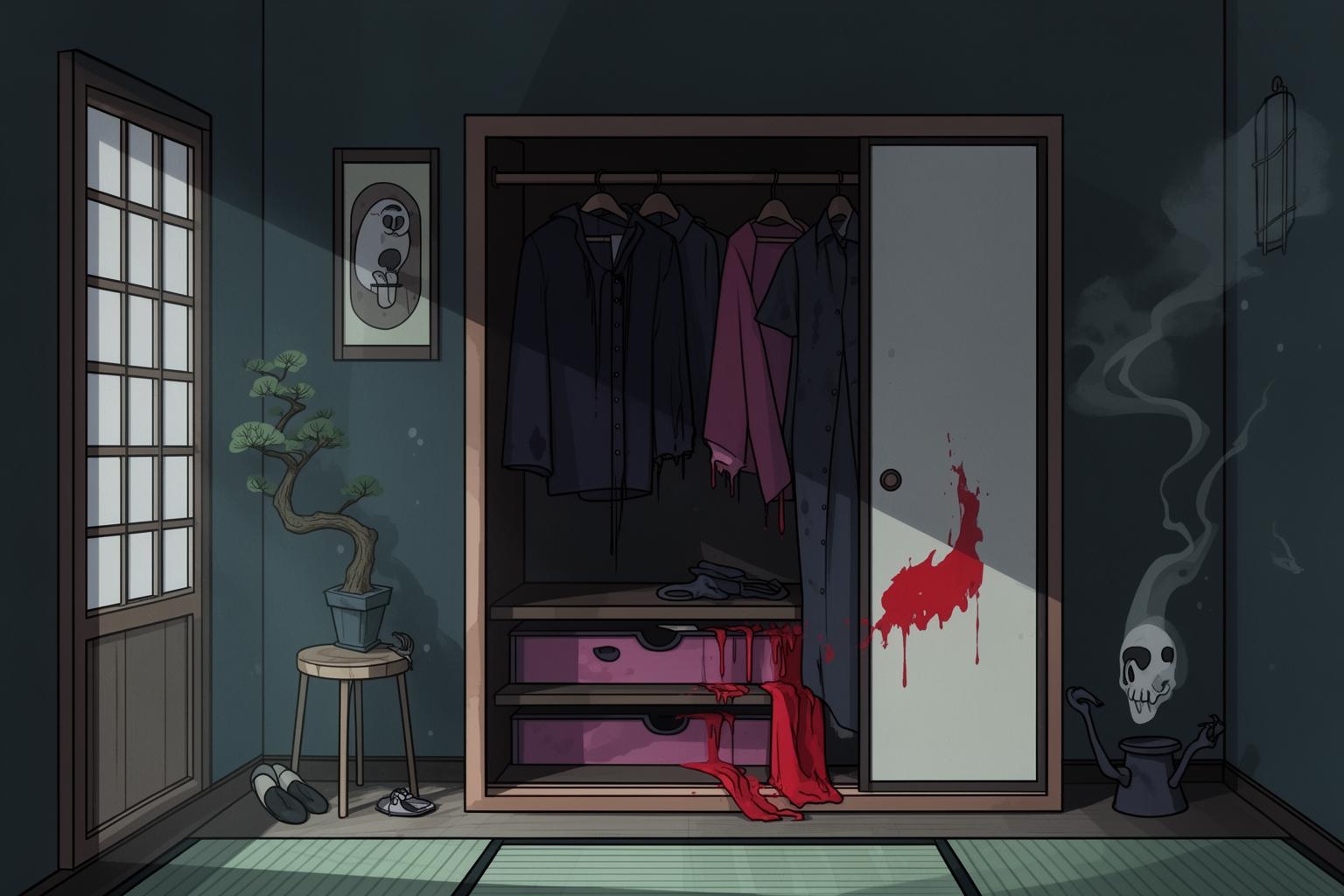
Living in Japan means being surrounded by the quiet echoes of these beliefs. It doesn’t imply that people genuinely think their toaster is seeking revenge. Rather, it nurtures a different kind of relationship with the material world—one based on gratitude and responsibility instead of the never-ending cycle of acquisition and disposal.
This mindset encourages you to patch the hole in your sock, reattach the handle on a mug, and oil a stiff hinge. It prompts you to pause before discarding something and reflect on its journey and service. It is the spirit of mottainai brought to life through folklore.
In a world increasingly overwhelmed by its own waste, where products are designed to become obsolete and consumption drives the economy, the old tales of Tsukumogami feel less like mere fairy tales and more like urgent, vital wisdom. They remind us that the things we own are not merely passive resources to be used up; they are silent partners in our life stories. They bear our history in their scratches, stains, and faded colors. And perhaps, after a hundred years of loyal service, they have earned more than just a spot in a landfill. Perhaps they have earned a soul.