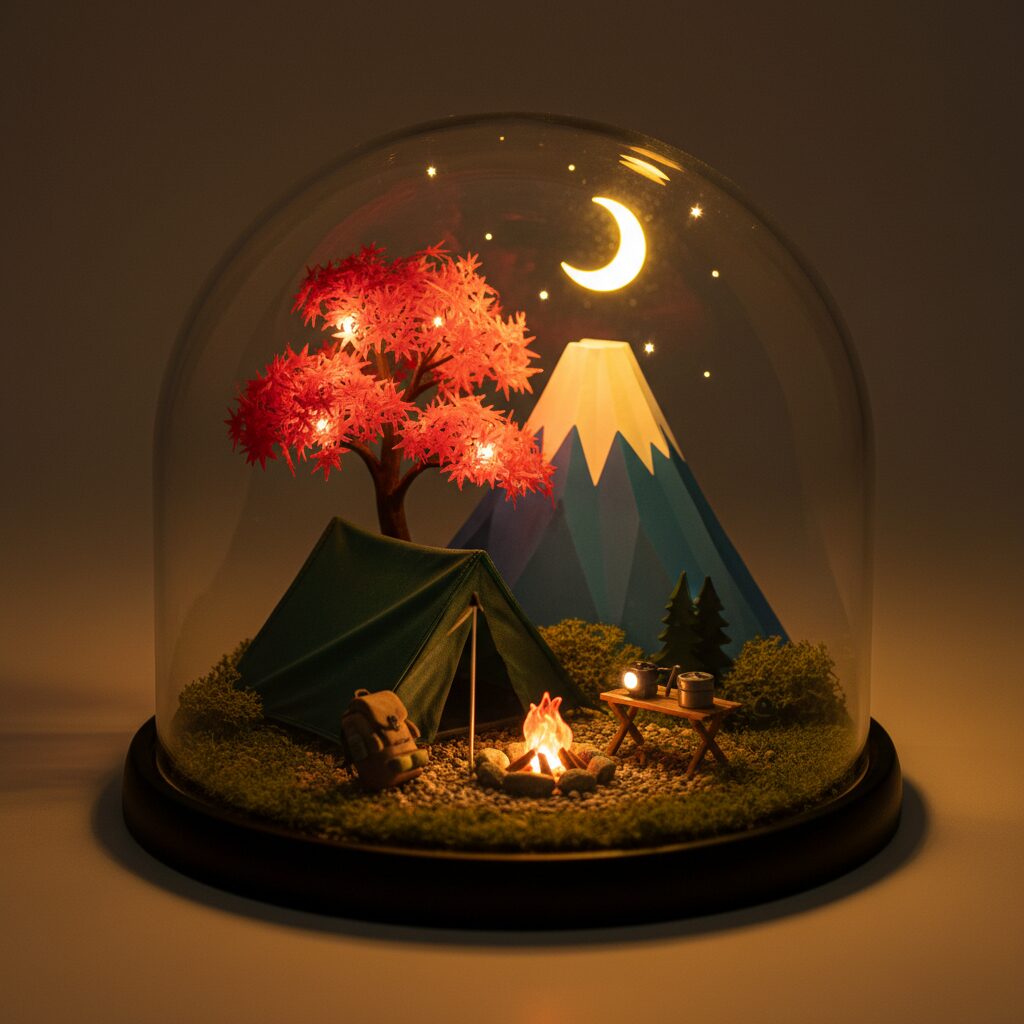
Picture Japan. Your mind probably floods with images of organized chaos: the Shibuya Scramble, a human river flowing under a neon sky; a packed train during morning rush, a study in silent, communal endurance; a bustling ramen shop, shoulder-to-shoulder with strangers united in their pursuit of the perfect bowl. Japan, we are often told, is a culture of the collective, a society built on the intricate art of group harmony. So, it can be a little jarring to learn that one of the country’s most explosive recent trends involves getting as far away from that collective as humanly possible. It’s called soro kyanpu (ソロキャンプ), or solo camping, and it has quietly redefined what it means to seek peace in modern Japan.
This isn’t just a niche hobby for a few rugged outliers. It’s a full-blown phenomenon. Campsites that were once the domain of families and boisterous university clubs are now dotted with single-person tents, each a silent, self-contained world. Gear shops have dedicated entire floors to ultra-light, ingeniously designed solo equipment. An anime about high school girls camping became a cultural touchstone, launching thousands of real-world pilgrimages to its scenic locations. The question is, why? In a nation so attuned to the presence of others, what is the magnetic pull of being utterly, intentionally alone in the wild? It’s a movement that reveals far more about the pressures and pleasures of Japanese society than you might expect. It’s not about rejecting society, but about finding a more sustainable way to exist within it.
This surge in solo camping echoes a broader cultural shift in Japan, much like the refreshing insights found in its evolving kawaii culture that continue to redefine traditional norms.
A Counterpoint to the Collective
To grasp the appeal of solo camping, you first need to understand the daily atmosphere in Japan. It’s an environment dense with unspoken rules, social obligations, and the constant, subtle effort of managing relationships. This represents the world of wa (和), or group harmony, a core cultural principle that values the smooth operation of the collective over individual wants. It explains why meetings often run long in a quest for consensus and why refusing directly is often a skillful exercise in subtlety.
Living within this context requires a great deal of social energy. You’re constantly aware of your standing relative to others—your boss, a junior colleague, your neighbor, or your mother-in-law. A complex web of respectful language (keigo), gift-giving customs, and unspoken expectations shapes nearly every interaction. This is not inherently negative; it’s what enables a society of 125 million people to function with remarkable grace and efficiency. Yet, it is undeniably draining.
Solo camping serves as the ultimate pressure release. In the mountains, beneath a canopy of stars, there are no hierarchies. No one to please, no hidden meanings to interpret, and no need to adjust your behavior for the group’s comfort. The only relationship to manage is between you, your gear, and the natural world. For the first time, perhaps all week, you are not a manager, employee, son, or daughter—you are simply yourself. You eat when hungry, sleep when tired, and can sit in complete silence for hours without it being seen as a social insult. This isn’t loneliness; it’s a deep and restorative kind of freedom. It’s the cleansing breath you didn’t realize you’d been holding.
The Rise of the Self-Reliant Individual: Ohitorisama Culture
Solo camping didn’t arise out of nowhere. It’s the rugged, outdoorsy counterpart to a broader social trend: the rise of ohitorisama (お一人様), or the “party of one.” For decades in Japan, doing things alone was often tinged with pity, implying a lack of friends or a partner. However, over the past fifteen years, that view has been completely transformed. Today, ohitorisama is a badge of honor, celebrating self-reliance and the freedom to follow your own interests without compromise.
This cultural shift is now supported by an entire industry. You can find hitori-yakiniku (solo barbecue) restaurants with grills for one, hitori-karaoke booths made for solo singers, and even ramen shops with partitioned seating to reduce interaction. The reasoning is simple: why miss out on an experience just because you don’t have company? Why should your desires depend on someone else’s schedule or preferences?
Solo camping is the natural, and perhaps ultimate, embodiment of the ohitorisama spirit. It takes the idea of self-reliance from the controlled setting of a city restaurant and applies it to the wild beauty of nature. Camping alone successfully requires skill and preparation. You need to know how to pitch a tent, operate a stove, read a map, and adapt to changing weather. This mastery of skills for your own benefit, without relying on anyone else, is deeply empowering. It’s a quiet declaration of independence, proving to yourself that you are enough. The satisfaction comes not just from the stunning view, but from knowing you got there on your own terms.
The Unlikely Catalyst: An Anime Called Yuru Camp
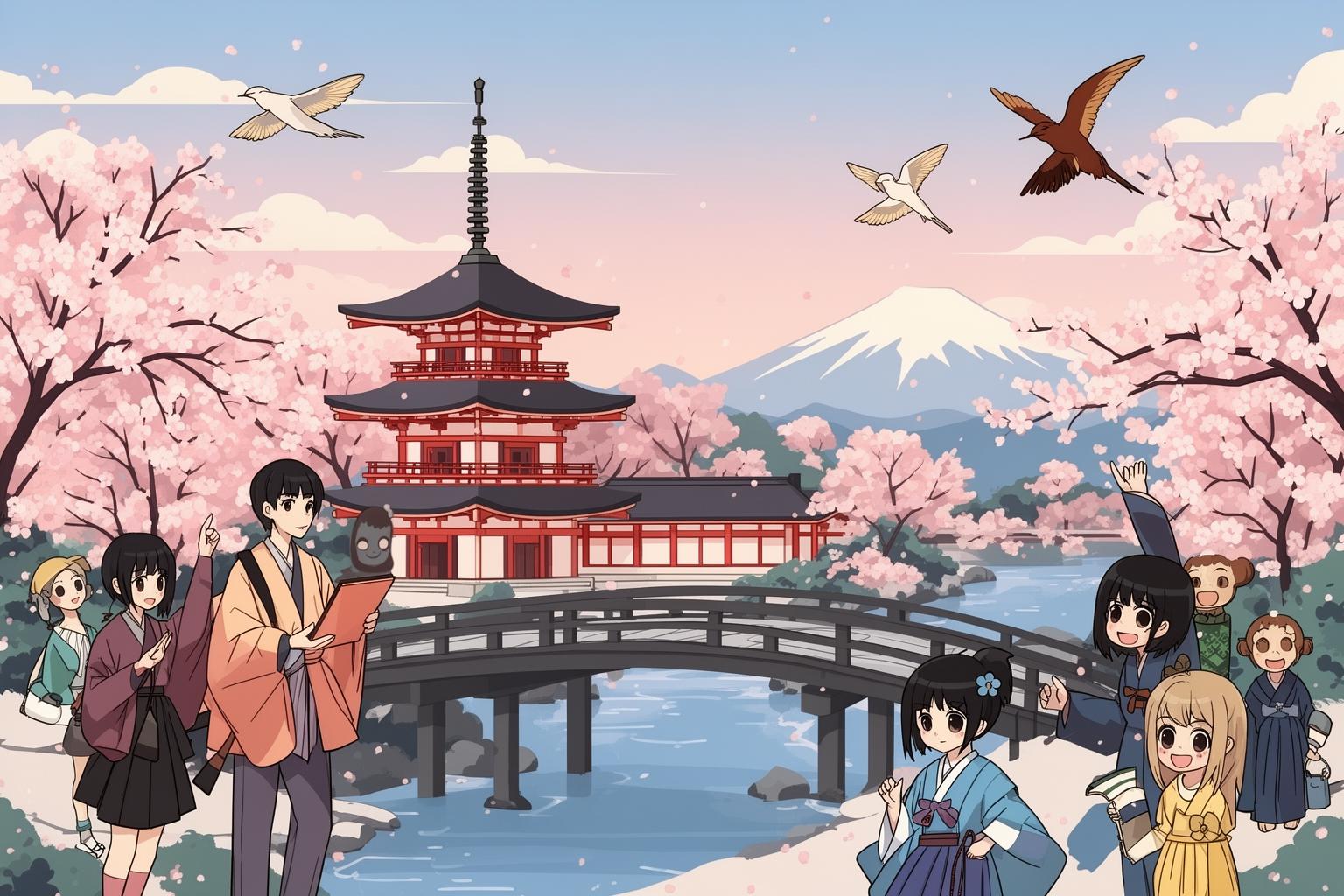
If you ask a Japanese solo camper what inspired them to start, don’t be surprised if they respond with two words: Yuru Camp. Known in English as Laid-Back Camp, this slice-of-life anime and manga series, which debuted in 2018, did for solo camping what The Queen’s Gambit did for chess. It transformed a niche pastime into a mainstream dream and achieved this by completely reshaping its image.
Before Yuru Camp, camping in popular imagination was often viewed as either a strenuous, hyper-masculine challenge against nature or a somewhat chaotic family outing. Yuru Camp offered a third perspective. The show follows a group of high school girls in Yamanashi Prefecture as they explore the campgrounds around Mount Fuji. Its protagonist, Rin Shima, is a quiet yet skilled solo camper who enjoys the tranquility of the off-season. The show is remarkable for what it omits: no high-stakes drama, no interpersonal conflicts, no survival struggles.
Instead, it focuses on the simple, sensory joys of camping: the hiss of a gas lantern, the warmth of a bonfire on a cold night, the steam rising from a cup of instant ramen, the breathtaking view of Fuji-san at dawn. It’s a masterclass in what the Japanese call iyashi (癒し), or healing. The series carefully showcases the practical aspects of camping—selecting gear, finding campsites, cooking simple meals—making it feel accessible and doable. It portrayed solo camping not as enduring hardship, but as an act of gentle self-care. It made solitude appear cozy, not lonely. The series became a phenomenon, sparking a huge increase in gear sales and tourism to the real-life locations featured in the story. It provided a generation of aspiring campers with a cultural script, a vision of what this quiet joy could look like.
The Ritual of Gear: A Curated Micro-World
Step into any major outdoor retailer in Tokyo, such as Montbell or Snow Peak, and you’ll notice that Japanese camping culture is deeply intertwined with a strong appreciation for gear. This goes beyond merely collecting items; it’s about the thoughtful curation of a portable, personal world. For the solo camper, choosing and preparing equipment is a central part of the ritual, an extension of the camping experience itself.
The focus is often on gear that is lightweight, multifunctional, and elegantly designed. This reflects the Japanese principle of monozukuri, the art and science of making things. There is a deep respect for craftsmanship and smart engineering. You see it in the ultra-light titanium mugs that weigh almost nothing, the nested cooksets that fit together like a puzzle, and the compact wood-burning stoves that fold down to the size of a book. Brands like Snow Peak have earned a global reputation on this philosophy, producing items that are as visually appealing as they are practical.
Setting up camp turns into a meditative ritual. Every item has its place. The tent is pitched just right, the chair is positioned toward the best view, and the kitchen is arranged for optimal efficiency. Creating this small, orderly, and comfortable space in the wilderness is deeply rewarding. It reflects the Japanese gift for discovering beauty in compact spaces. Your tent is more than shelter; it is your temporary home, a refuge of personal comfort crafted with your own hands and carefully selected tools. This detailed engagement with objects—the feel of a well-made tool, the pleasure of smart design—is a vital part of the solo camping experience. It speaks to those who find as much joy in the process as in the result.
The Sound of Silence, The Shape of Solitude
What does solo camping in Japan truly feel like? It feels like quiet—a deep, enveloping quiet that stands in complete contrast to urban life. In the city, even late at night, there’s always some noise—the distant siren, the hum of a vending machine, the clatter of a closing train station gate. On a mountainside in Okutama or beside a lake in the Fuji Five Lakes region, these sounds give way to the rustling of leaves in the breeze, the crackle and pop of your campfire, and the distant call of a deer. It’s a silence that lets your own thoughts emerge naturally, unbidden and uninterrupted.
This isn’t about “conquering nature” in the Western sense of adventure. Instead, it’s a more subtle, observational communion. It aligns with the concept of shinrin-yoku (森林浴), or forest bathing—the practice of simply existing in nature and absorbing the atmosphere through the senses. The aim isn’t necessarily to hike twenty miles or summit a peak, though that’s certainly possible. Often, the goal is just to be: to watch the clouds drift, to see the light shift across a mountain’s face, to notice the small details on the forest floor. It is an exercise in mindfulness, a deliberate slowing down from the hectic pace of modern life.
This intentional search for solitude and quiet reflection has deep roots in Japanese culture, from Zen Buddhist meditation to the solitary journeys of poets like Basho. Solo camping serves as a modern, accessible expression of this age-old impulse: the quest for clarity by shedding the non-essential.
Alone, Together: The Unspoken Rules of the Campsite
Herein lies the central paradox: you go solo camping to be alone, yet often arrive at a campsite surrounded by other solo campers. However, this does not break the spell; rather, it highlights the unique nature of the subculture through a set of unspoken rules.
The etiquette of the Japanese solo campsite centers on mutual respect for solitude. Campers intentionally select spots that provide their neighbors with a comfortable buffer of space. There is no loud music, shouting, or raucous group laughter. Interaction is minimal and optional. A brief nod of acknowledgment upon arrival, a quiet “good morning” on the way to the washroom—that usually comprises the entire social contract.
Everyone comprehends the unspoken agreement: we are all here for the same reason—to be alone. This creates a fascinating dynamic of being simultaneously in solitude and in community. An ambient sense of safety arises from knowing others are nearby, but without any social obligations. It perfectly reflects a society that values both safety and personal space. You can retreat into your own world, secure in the knowledge that you’re part of a silent, temporary village of fellow introverts. It is a community of non-interaction, an archipelago of individuals coexisting in quiet harmony. This unique social fabric is what makes the experience feel not only safe but deeply, culturally Japanese.
Finding Your Own Peak
Ultimately, the solo camping boom is a strong reflection of a society undergoing change. It highlights a quiet resistance against the relentless demands of hyper-urban living and the pressures of collectivism. It reflects a growing yearning for self-reliance, personal space, and a direct, unfiltered connection with nature. This movement embraces technology and craftsmanship in its gear while pursuing an experience that is primal and elemental.
It’s not an escape from Japan, but an escape into another side of it. It’s a way to reclaim a sense of self in a world that often insists on group conformity. By pitching a small tent on a tranquil mountainside, the solo camper isn’t just creating a temporary shelter. They are shaping a space to think, to breathe, and to simply exist. They are discovering their own private peak in a country of 125 million, showing that sometimes the deepest harmony is the one found when you are completely alone.