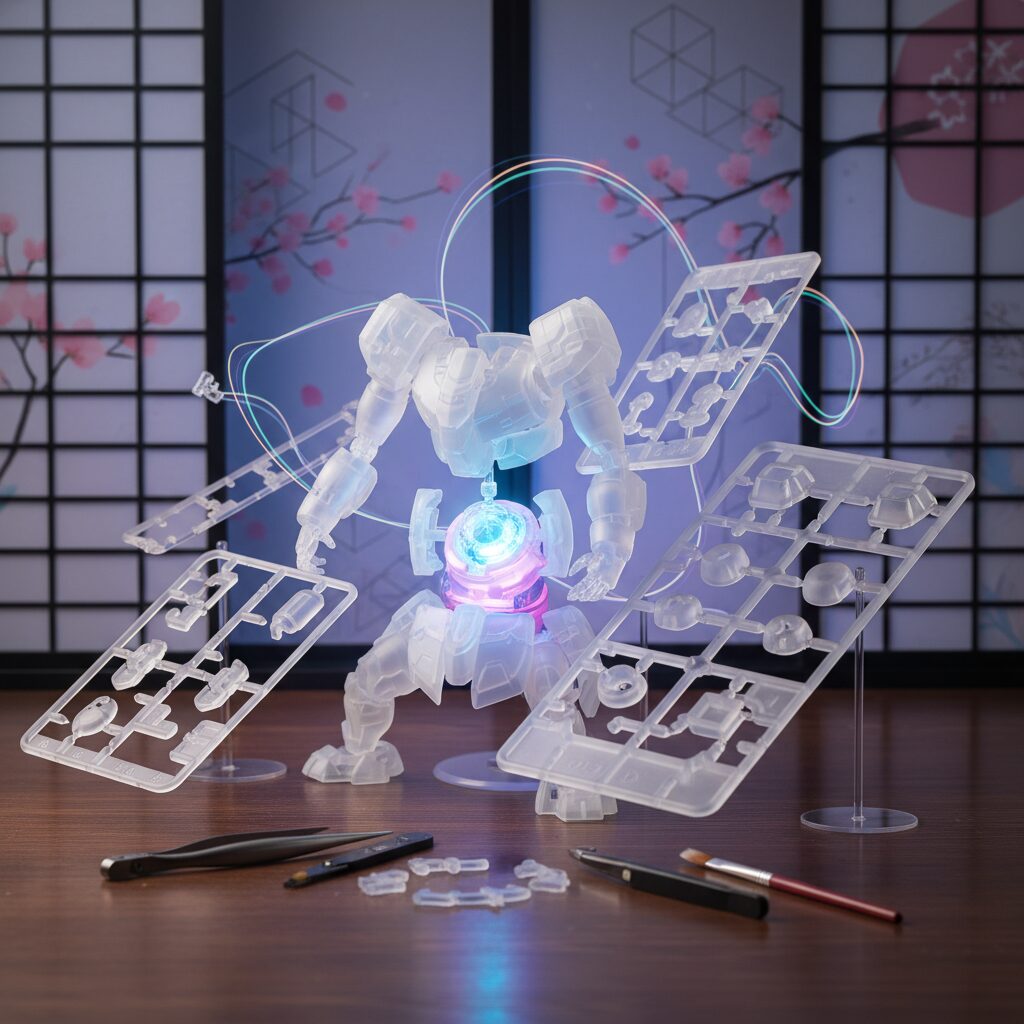
You’ve probably seen them online, even if you didn’t know what you were looking at. A flawless, impossibly detailed figure of an anime character, posed with a dynamism that seems to defy gravity. The paint job is immaculate, with subtle shading that makes the muscles look taut and the fabric seem to ripple. It looks like a premium, top-of-the-line collectible. But it’s not. It didn’t come out of a box from a major manufacturer like Bandai or Good Smile Company, shrink-wrapped and ready for the display case. It arrived as a box of plain, beige-colored resin parts—misshapen lumps, really—that someone spent dozens, if not hundreds, of hours sanding, drilling, gluing, and painting to bring to life. This is the world of the garage kit.
For the uninitiated, a garage kit, or gareki in Japanese, is an unassembled and unpainted model kit. Unlike the snap-together plastic models (plamo) from the Gundam universe, these are typically cast in polyurethane resin by individuals or small, independent groups known as “circles.” They are produced in extremely limited quantities and sold at niche conventions or online. The process of building one is notoriously difficult, requiring specialized tools, a painter’s touch, and the patience of a saint to fix the inevitable imperfections of small-batch production.
This immediately raises a question for any logical person: Why on earth would anyone choose this path? In an era where you can pre-order a perfect, professionally painted PVC figure of nearly any popular character, why would you willingly subject yourself to the fumes, the dust, and the frustration of building a garage kit? The answer goes far deeper than simply wanting a model. It’s a dive into a subculture built on artistic expression, obsessive craftsmanship, and a profound desire to connect with a character on a level that mass production can never offer. It’s about rejecting the role of a passive consumer and becoming a co-creator.
The cult of self-made artistry resonates beyond the garage kit scene, inviting readers to explore another facet of Japanese urban passion in the sidewalk cyclist phenomenon.
From Humble Origins to a Subculture Phenomenon

To truly grasp the garage kit mindset, you need to travel back to a time before anime and manga merchandise became a multi-billion dollar global industry. In the late 1970s and early 1980s, if you were a fan of shows like Mobile Suit Gundam or Urusei Yatsura, your chances of owning a piece of that world were extremely limited. You couldn’t simply walk into a store and buy a high-quality figure of Lum Invader. Such items just didn’t exist.
The Birth of the Garage Kit
Fans, motivated by a desire to hold a three-dimensional version of their favorite characters, took matters into their own hands. This movement ran alongside the dojinshi scene, where fans created and self-published their own manga. The garage kit was, essentially, a dojinshi in 3D form. Early pioneers, literally working out of their garages and small apartments, sculpted prototypes from clay, wood, or polyester putty. They were making the merchandise the market neglected to provide.
The real breakthrough came with the availability of silicone molds and polyurethane resin casting. This technology enabled amateur sculptors to produce a high-quality master prototype—the genkei—and then create a limited number of copies to sell or trade among fellow fans. Although these early kits were crude by today’s standards, they were revolutionary. They were items born purely from passion, not profit. They were for fans, by fans.
The Rise of Wonder Festival (WonFes)
This growing hobby needed a place to flourish, and it found one in Wonder Festival, or WonFes. What started in 1984 as a small gathering of model enthusiasts in a Tokyo convention hall has since grown into a massive, biannual pilgrimage for creators and collectors worldwide. Entering WonFes feels like stepping into another dimension of creativity. Although the main floor is dominated by major manufacturers showcasing upcoming products, the true heart of the event lies in the expansive areas devoted to independent dealers.
Here, hundreds of individual sculptors and small circles rent tables to display and sell their own works. You’ll find everything from hyper-accurate mecha recreations to surreal, artistic interpretations of beloved characters that no corporate entity would dare produce. The air is rich with the scent of resin and the hum of passionate conversation.
Importantly, WonFes operates under a unique “One-Day Copyright” system. The event organizers carefully negotiate with major intellectual property holders in Japan, allowing creators to legally produce and sell a limited number of kits based on copyrighted characters—but only for the duration of the event. This one-day license is the lifeblood of the fan-driven garage kit community. It creates a legitimate space for creative reinterpretations to thrive, fostering a vibrant ecosystem of fan art that exists in respectful harmony with the original creators. Without it, this hobby would be forced deep underground.
The Craftsman’s Journey: More Than Just Assembly
Understanding the origins explains the what, but it doesn’t fully reveal the why. The motivation to engage with garage kits in today’s world, where many alternatives exist, lies in the process itself. It’s a shared journey between the sculptor who designs the kit and the builder who brings it to life.
The Sculptor’s Vision: The Genkei-shi
The process starts with the sculptor, known as the genkei-shi. This artist’s role is not merely to replicate a 2D image in 3D form. It’s about interpretation. The genkei-shi makes countless artistic decisions: How does the character’s weight shift in this pose? What expression truly reflects their personality? How does their hair move? A remarkable garage kit captures the soul of a character, not just their appearance. It offers a unique artistic perspective that is often missing from the sterile, committee-designed poses of mass-produced figures.
Whether sculpting by hand with epoxy putty and wax or digitally using a program like ZBrush, the sculptor invests hundreds of hours perfecting the master prototype. Every clothing fold, strand of hair, and subtle muscle contour is a deliberate choice. This master is then used to produce the silicone molds from which the final resin parts are cast. The process is hands-on, intense, and deeply personal. When you purchase a garage kit, you are acquiring a piece of that artist’s vision.
The Builder’s Ordeal: The Modeler
Once the kit reaches the builder, or modeler, the second half of the creative journey begins—and it is, without question, an ordeal. A garage kit isn’t a convenient, ready-to-use product. It’s a challenge to be conquered.
The first step is preparation. The resin parts are coated with a greasy mold-release agent that must be carefully scrubbed off. Then the real work begins: identifying and repairing the flaws inherent in the low-pressure casting process. There are seam lines where the mold halves joined, tiny air bubbles (kihou) pockmarking the surface, and excess resin called “flash” that seeps from the mold. All of these must be carefully sanded, filled with putty, and smoothed until the surface is flawless. It’s tedious and messy work that can take hours or even days.
Assembly follows as the next challenge. The parts do not snap together; they require precise alignment and joining. Often, metal rods are drilled into the pieces—a technique called “pinning”—to add strength and ensure a perfect fit. Gaps inevitably appear and must be filled with putty and sculpted to blend seamlessly.
Only after this painstaking preparation can painting begin. This is where the builder truly becomes a co-creator. Using airbrushes and fine hand brushes, they apply primer, base coats, and then multiple layers of subtle shading and highlights to create depth and realism. The most demanding part is almost always the face, especially the eyes. Painting a pair of symmetrical, expressive eyes on a surface no larger than a fingernail is a monumental test of skill and often the make-or-break moment for the entire project.
This entire process is a dialogue between the original sculptor and the builder. The builder interprets the sculptor’s 3D vision, bringing their own style and skill to complete the piece. The finished work is a unique collaboration—a one-of-a-kind artifact belonging entirely to the person who built it.
Beyond the Resin: The Mindset of the Hobbyist

The immense effort required to create a garage kit narrows the community to only the most dedicated enthusiasts. This shared experience cultivates a distinctive mindset, centered around a love of the craft, the excitement of the chase, and a deeper sense of ownership.
The Pursuit of the Unobtainable
A major appeal of garage kits lies in their rarity. These kits are typically produced in limited runs of 50, 20, or sometimes as few as 10. This exclusivity makes them highly coveted. Additionally, since they are passion projects, garage kits often showcase characters or designs too niche for major companies to justify large-scale production. Want a figure of a minor character from an obscure 80s OVA? Or a bold, avant-garde reinterpretation of a famous hero? The garage kit scene is likely the only place you’ll find it.
This fuels a “thrill of the hunt” dynamic. Obtaining a highly sought-after kit, whether by queuing for hours at WonFes or winning a bidding war on a Japanese auction site, feels like a victory in itself. It’s a collector’s mindset, but with the crucial difference that the prize isn’t a finished product, but the potential for one hidden inside a box of resin parts.
The Dialogue Between Creator and Fan
Unlike the impersonal, corporate nature of mass-market products, the garage kit community thrives on direct human connection. At events like Wonder Festival, you can approach the sculptor’s table, speak with the person who physically crafted the kit you admire, and purchase it straight from them. You can inquire about their creative process, the choice of pose, or simply bond over a shared love of the character.
This direct interaction creates a strong sense of community and mutual respect. The fan is not just a consumer but a patron supporting an independent artist. Meanwhile, the sculptor experiences the passion for their work firsthand. When builders share photos of their completed kits online, they often tag the original sculptor, who gets to see their vision interpreted in countless ways. It’s a richly symbiotic and creative ecosystem.
Ownership Through Creation
This is the philosophical core of the hobby. When you buy a pre-painted figure, you own an object. When you build a garage kit, you own the product of your own effort. The finished figure carries with it hours of focus, the frustration of errors, and the triumph of overcoming them. Every flawlessly smooth surface exists because you sanded it. Every subtle color gradient is there because you applied it.
The emotional investment is immense. The completed kit is no longer just a representation of a character; it stands as a testament to your skill, patience, and dedication. It is a tangible expression of your passion. This deep sense of ownership is something no mass-produced item, regardless of quality, can ever replicate. You didn’t just buy it; you made it.
The Evolving Garage
Even a niche hobby like this is not exempt from the advance of technology. The tools and techniques continually evolve, transforming how kits are created and distributed, yet the community’s core spirit remains steadfast.
Digital Sculpting and 3D Printing’s Impact
In the past, sculpting a prototype was entirely a physical process. Nowadays, many—if not most—genkei-shi have switched to digital sculpting programs. This shift has, in some respects, democratized creation, enabling artists to design incredibly intricate and precise models without the need for a physical workshop. The advent of high-resolution 3D printing has further revolutionized the field. Sculptors can now print their digital designs as master prototypes for traditional resin casting. Some even sell the 3D-printed parts directly as kits, or skip physical products altogether, offering STL files for fans to print at home. This new frontier introduces exciting opportunities along with challenges such as quality control and the persistent threat of digital piracy.
A Niche in a World of Perfect Figures
It’s impossible to overlook that the quality of mass-produced, pre-painted figures has reached astonishing levels in recent years. So why does the garage kit scene continue to exist and even flourish? Because it’s not competing by the same standards. It’s not about convenience or accessibility. It addresses a different set of desires.
People seek out garage kits for the same reasons they did forty years ago: to find unique artistic interpretations, to own figures of niche characters unlikely to receive mainstream releases, and to experience the profound, meditative satisfaction of the creative process. It is a deliberate choice to embrace a more challenging path because the journey itself holds greater value than the destination.
The Soul in the Resin

Ultimately, a garage kit is much more than just a collection of resin parts in a box. It serves as a canvas for the builder and a vessel for the sculptor’s vision. It is a challenge to overcome and a testament to personal dedication in a world obsessed with instant gratification.
Why do hobbyists invest their time, money, and sanity into these demanding projects? Because the struggle is the whole point. The act of creation—the hours spent sanding, filling, and painting—is a transformative ritual. It elevates a simple object into a personal icon, an artifact imbued with the builder’s own effort and passion. It represents the height of fandom: not merely to consume and admire a piece of art, but to actively participate in its creation, to infuse it with a part of yourself, and in doing so, to make it distinctly your own.