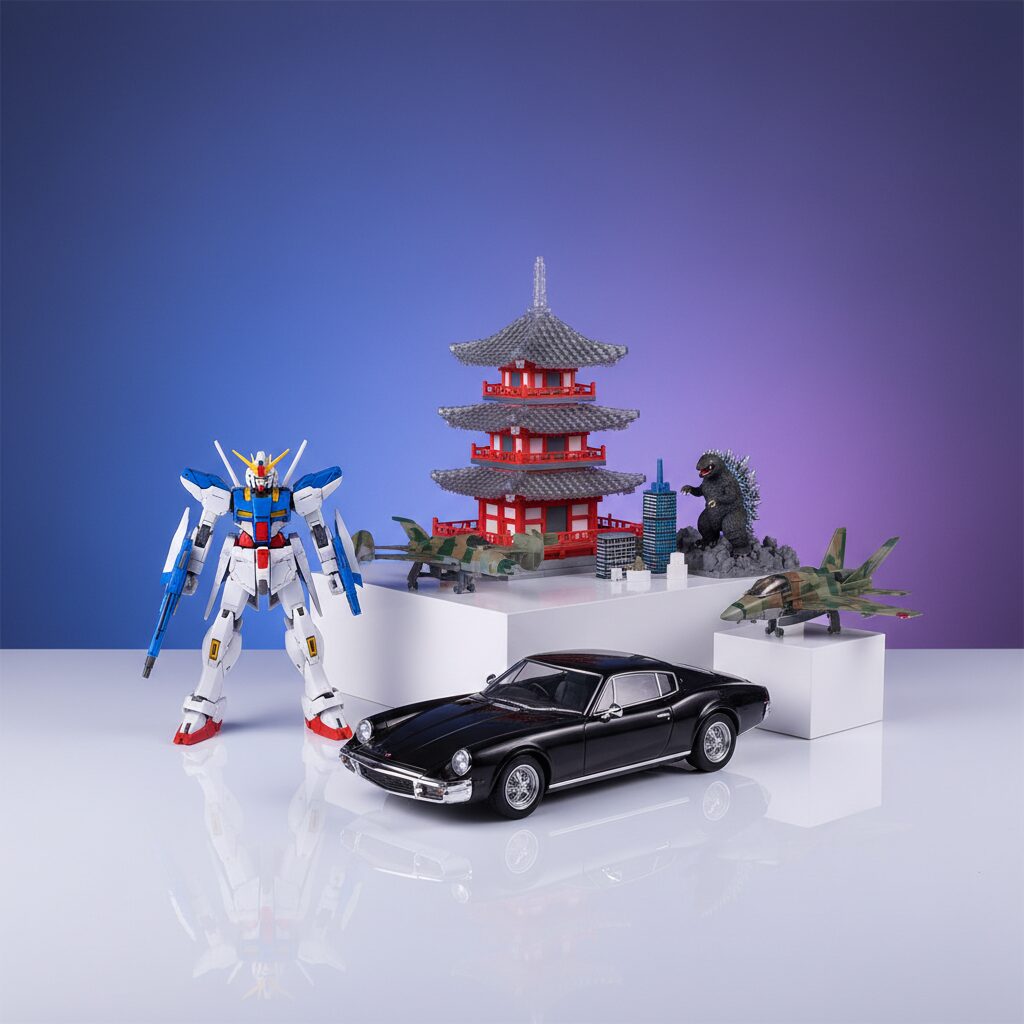
You asked me what I thought was one of the most revealing, yet overlooked, windows into postwar Japanese culture. It’s not a film or a book. It’s a box. A flat, rectangular cardboard box, maybe a little dusty, with a wildly dramatic painting on the front—a battleship cleaving through stormy seas, a futuristic car gleaming under city lights, or a giant robot striking a heroic pose. Inside, nestled in tissue paper, are plastic parts attached to runners, a small sheet of decals, and a set of instructions. This is a Japanese plastic model kit, or puramo as it’s known here, a portmanteau of “plastic model.” And to understand the puramo of the 1960s is to understand something essential about the country’s psyche during its most transformative decade.
This isn’t about the simple snap-together toys you might remember from childhood. This is about a subculture of intense focus, miniature engineering, and personal artistry that captivated a generation of boys and young men. It was a hobby that mirrored the trajectory of the nation itself: a story of learning from the West, rapidly innovating, and then creating something entirely new, something unmistakably Japanese. Peeling back the lid on a vintage puramo kit isn’t just about nostalgia; it’s about uncovering the DNA of modern Japanese pop culture and the quiet, obsessive craftsmanship that defines so much of life here. It’s a world built from plastic, cement, and incredible patience.
The precise craftsmanship of these plastic models echoes a broader cultural momentum, much like the creative surge represented by Japanese city pop, which captured the nation’s innovative spirit in an unexpected musical revolution.
From Postwar Scraps to Precision Art

To understand the explosion of puramo in the 1960s, you first need to imagine the landscape that preceded it. Postwar Japan was a land of scarcity, yet also brimming with immense energy. Toys were typically simple, crafted from tin, wood, or celluloid. The concept of a complex, multi-part kit for self-assembly was revolutionary. The technology behind it, plastic injection molding, was mainly imported from the United States and Europe during the 1950s. Early Japanese companies were, to say the least, learning the trade. Their initial kits were often direct copies, sometimes even reverse-engineered from American brands like Revell and Monogram.
The first subjects were foreign and aspirational: American fighter jets, British sports cars, German tanks. These were more than just models; they were artifacts from the world beyond Japan, tangible symbols of power and technological excellence that boys could hold in their hands. Companies such as Marusan Shoten, which released a model of the USS Nautilus submarine in 1958, are seen as pioneers. However, it was the 1960s when the industry really found its stride, evolving from imitation to innovation at an astonishing rate.
This is where a company like Tamiya comes into play. Today, Tamiya stands as a global standard for quality, but in the early 60s, it was a small wooden model company in Shizuoka that chose to shift to plastic. Their breakthrough came with a 1/35 scale Panther tank model. What set it apart was the obsessive attention to detail. Tamiya’s engineers didn’t just rely on photos; they visited museums, took exact measurements of real vehicles, and demanded a level of accuracy that was unprecedented at the time. This dedication to perfection became their hallmark. Building a Tamiya kit was not merely assembling a toy tank; it was a lesson in engineering and history. It embodied the emerging spirit of monozukuri—the heart of Japanese craftsmanship—a profound pride in making things well. For a nation rapidly ascending as an industrial powerhouse, this hobby was a perfect microcosm of the national mission: mastering technology and attaining world-class quality.
The Rise of the Character Model
While scale models of real-world machines provided the foundation, the truly distinctive Japanese contribution to the puramo world was the “character model.” This marked a seismic shift. Rather than recreating history, Japanese companies began designing models of heroes and monsters from television and manga. This transformation changed everything. The emotional bond a child has with a historical battleship is abstract; the connection to a giant robot they see on TV weekly is immediate and visceral.
The 1960s marked the dawn of Japanese science fiction on television. Series like Tetsujin 28-go (known as Gigantor in the West) and live-action special effects or tokusatsu shows such as Ultraman introduced a pantheon of new icons. Model companies quickly recognized the enormous potential. Now, a child could not only watch their hero save the world but also visit the local candy shop, buy a kit, and build that hero themselves.
One of the most defining examples wasn’t even Japanese in origin but was embraced with fervent enthusiasm: Gerry Anderson’s Thunderbirds). The British marionette series was a massive hit in Japan, perhaps even more so than in its homeland. The intricate, futuristic vehicles—Thunderbird 1, Thunderbird 2, the Mole—were ideal subjects for puramo. The company Imai Kagaku secured the license and produced a legendary line of kits that were remarkably creative. Many featured spring-loaded gimmicks and motorized parts, adding a layer of playability that scale models lacked. These kits were not merely static display pieces; they were interactive fragments of a beloved fictional universe.
This movement solidified the significance of “box art,” or hako-e. The illustration on the box was the chief marketing tool. It needed to be electrifying, capturing the imagination before the seal was even broken. Artists like Shigeru Komatsuzaki and Yoshiyuki Takani became legends in their own right. Their paintings were dynamic, chaotic, and incredibly cool, often portraying scenes of dramatic action far beyond what the plastic parts inside could represent. The box art sold the dream. It was a promise of adventure, and the act of assembling the kit was the journey toward fulfilling that promise.
More Than a Toy: The Craftsmanship and the Community
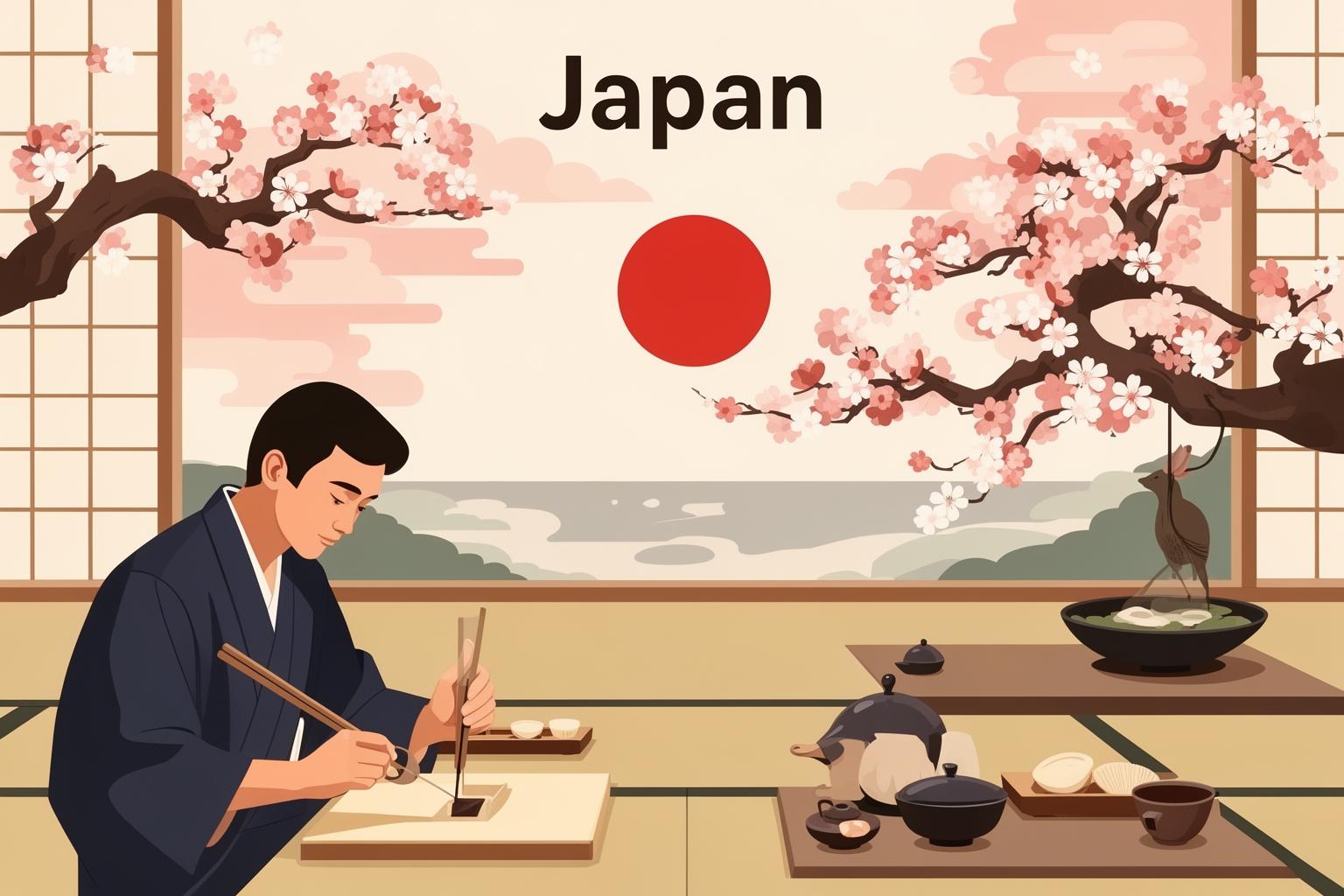
The true essence of the puramo subculture lies not in the final model, but in the journey of its creation. This is where the fascination truly begins. For a dedicated builder in the 1960s, opening the box was merely the start of a careful, detailed ritual. The tools were basic but indispensable: a pair of nippers to precisely cut parts from the runner, hobby knives to trim away excess plastic, and files and sandpaper to smooth every surface until flawless.
And then there was the glue. The plastic cement, typically contained in a small glass bottle with a brush attached to the cap, had a sharp, distinctive chemical odor that came to define the hobby’s scent. It was the smell of creation itself. Mastering the application of just the right amount to join two fuselage halves without leaving messy residue was a skill developed through trial and error. The aim was to make the seam lines—the visible joints between parts—vanish entirely. This demanded putty, sanding, and endless patience in pursuit of seamless, manufactured perfection.
Painting required another level of commitment. Though the plastic might be molded in simple colors, bringing a model to life called for an artist’s precision. This involved tiny brushes, steady hands, and knowledge of how to apply thin, even coats of enamel paint. Next came the decals—extremely thin sheets of markings that had to be soaked in water and carefully positioned. Sliding the roundel onto a plane’s wing or the insignia onto a soldier’s helmet without tearing it was a moment of intense focus and pride.
For the most dedicated, the last step was weathering—the technique of making something new appear worn and used. It was a form of storytelling. A tank model wasn’t complete until it bore mud splatters on its treads and scorch marks near its cannon. A spaceship wasn’t truly convincing until it showed blaster burns and chipped paint on its hull. This process transformed a mass-produced kit into a one-of-a-kind work of art. It was a solitary, almost meditative practice. For hours, the outside world faded away, leaving only the builder, their workbench, and the miniature universe forming under their careful attention.
Though primarily a solitary pursuit, a sense of community gradually formed. Kids would gather to showcase their finished models. Local hobby shops became essential gathering places, staffed by knowledgeable owners who offered advice. Magazines like “Model Art” began publication, featuring professional builds, teaching new techniques, and fostering a shared culture around this meticulous craft.
The Cultural Echo: Why Puramo Mattered
So why did this seemingly simple hobby become such a cultural phenomenon in 1960s Japan? Because it connected with deeply rooted cultural values and met the specific needs of the era. It was an ideal pastime for a country that was small, densely populated, and detail-oriented. You didn’t require much space to build a model; a small corner of a desk was sufficient.
The hobby offered a direct, hands-on expression of the monozukuri spirit. During a period of rapid industrialization, when most fathers worked in factories or large corporations, building puramo gave boys a personal link to the process of creation. It taught them to respect tools, follow detailed instructions, and take pride in a finely crafted final product. In essence, it was miniature industrial training disguised as play.
Moreover, it tapped into Japan’s long-standing aesthetic admiration for miniaturization. From the intricate netsuke carvings to the artfully arranged worlds of bonsai and garden design, Japanese art often celebrated the small and intricate. Puramo represented the modern, popular expression of this sensibility. It enabled ordinary people to build their own impeccably rendered miniature worlds, providing a sense of control and order amid a rapidly changing society.
Finally, for a generation growing up in the shadow of World War II—a war their parents had lost—puramo offered a way to interact with the machinery of conflict and modernity on their own terms. Constructing a model of a Zero fighter or the battleship Yamato wasn’t necessarily an act of nationalism; it was an act of understanding, deconstructing powerful symbols, and rebuilding them in a safe, controlled space. It was about mastering technology rather than being controlled by it.
The legacy of 1960s puramo is vast. It nurtured a generation of enthusiasts and builders whose skills and standards pushed the industry toward ever greater realism and complexity. It established the commercial and cultural foundation for the giant that emerged in the late 1970s and early 1980s: Mobile Suit Gundam and the Gunpla phenomenon, turning character modeling into a multi-billion-dollar industry that still thrives worldwide.
But it all began with those small, cluttered boxes from the 60s. It began with the scent of plastic cement, the excitement of spotting a striking illustration on a store shelf, and the quiet joy of creating something with your own hands. It was a subculture born from a unique moment in history, perfectly reflecting a nation’s ambition, artistry, and a quiet obsession with perfecting the smallest details.