Someone asks you to picture Japan, and your mind likely conjures up a familiar highlight reel: the electric scramble of Shibuya Crossing, the serene bamboo groves of Arashiyama, the neon-drenched alleys of Shinjuku. It’s a vision of intense urban energy or meticulously curated natural beauty. But there’s another Japan, one that exists in the spaces between the big cities, a place of quiet coastlines, sun-bleached fishing villages, and a slower, more profound rhythm. This is the Japan of the Seto Inland Sea, and the single best way to experience it is on two wheels, pedaling your way across the Shimanami Kaido.
Forget what you think you know about cycling trips. The Shimanami Kaido isn’t a grueling Tour de France stage or a rugged mountain bike trail. It is, quite simply, one of the most beautiful and thoughtfully designed cycling routes in the world. Imagine a 70-kilometer path that floats across the sea, hopping from island to island over a series of six spectacular bridges, connecting Japan’s main island of Honshu with the smaller island of Shikoku. This isn’t just infrastructure; it’s a pilgrimage for the modern traveler, a moving meditation set to the sounds of lapping waves and the scent of citrus blossoms. It’s a journey designed to be savored, not conquered, and it is accessible to almost anyone, regardless of their cycling prowess. This is your guide to doing it right.
Cycling along the Shimanami Kaido offers a refreshing escape that stands in stark contrast to the relentless work pressures fueling karōshi challenges, reminding travelers of Japan’s multi-layered character.
What Exactly Is the Shimanami Kaido?
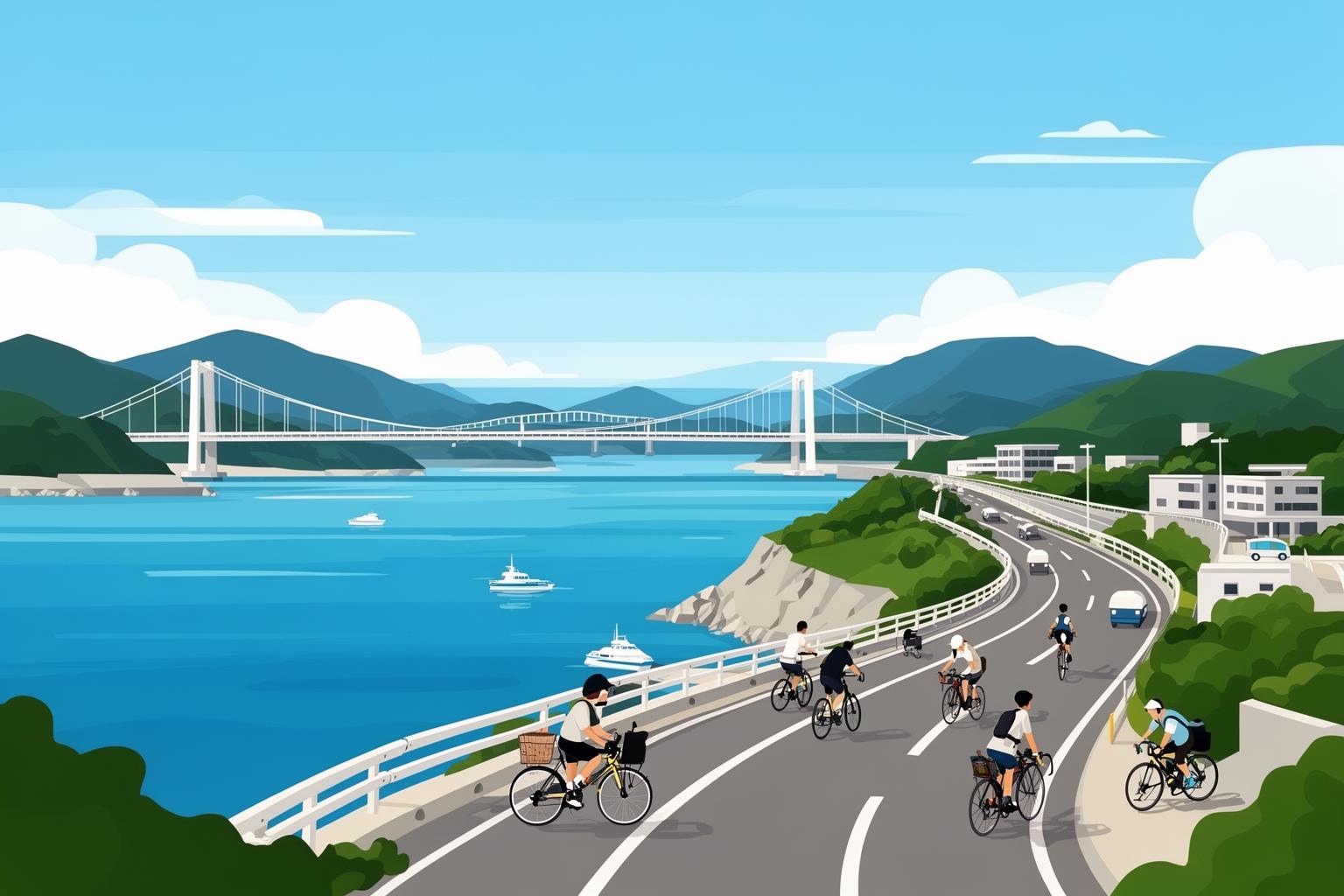
At its essence, the Shimanami Kaido is the nickname for the Nishiseto Expressway, a toll road that opened in 1999. What truly sets it apart, however, is that alongside the lanes for cars, engineers thoughtfully designed and built dedicated ramps and paths for cyclists and pedestrians. This was never an afterthought but rather a fundamental part of the vision. The outcome is a seamless, safe, and breathtaking route that feels as if it was made just for you.
The journey begins in the charming port town of Onomichi in Hiroshima Prefecture and concludes in the city of Imabari in Ehime Prefecture, or vice versa. Between these points lie six islands, each with its own unique character: Mukaishima, Innoshima, Ikuchijima, Omishima, Hakatajima, and Oshima. You don’t merely see these islands from afar; you glide right into their harbors, pedal through their quiet towns, and ascend their gentle hills.
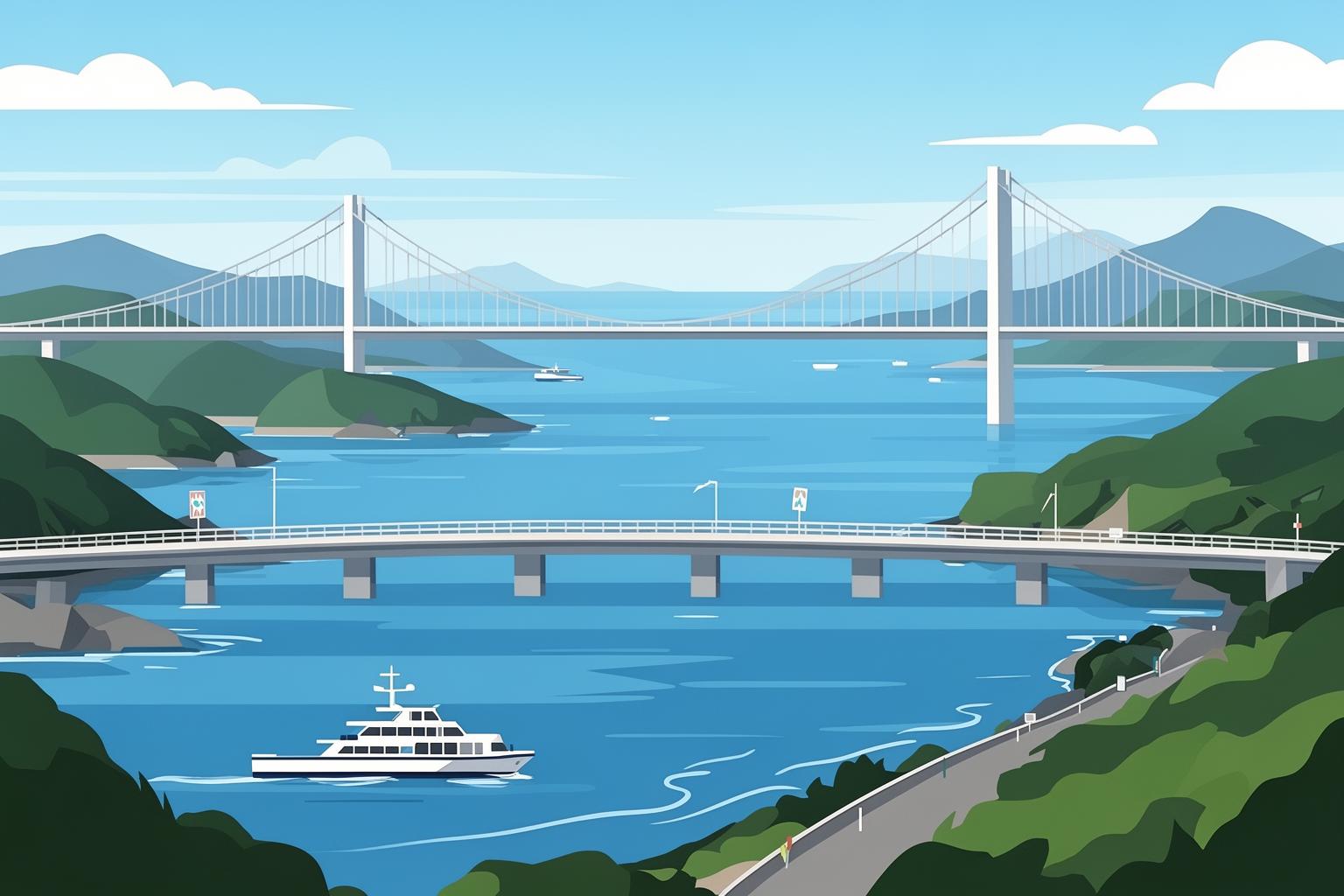
The true highlights, however, are the bridges. They aren’t a uniform set of structures but a stunning showcase of modern bridge design. You’ll cross the Kurushima-Kaikyo Bridge, the world’s first triple suspension bridge, and the elegant Tatara Bridge, one of the longest cable-stayed bridges on earth. Each crossing is a dramatic experience, lifting you high above the turquoise water and offering panoramic views of the hundreds of smaller islands scattered across the Inland Sea. The vast scale and beauty of the engineering, set against the timeless natural landscape, is truly humbling.
Importantly, the route is marked with a clear blue line painted directly on the pavement. For the entire 70 kilometers, this line serves as your reliable guide. It removes the need for maps or GPS, freeing you from the mental effort of navigation. All you have to do is follow the line and pedal. This simple design choice is brilliant; it allows you to be fully present, losing yourself in the rhythm of the ride and the ever-changing scenery.
The Philosophy of the Ride: It’s Not a Race
If you’re a dedicated cyclist fixated on speed and stats, you can definitely attempt to conquer the Shimanami Kaido in a single, intense day. Many people do. However, doing so misses the entire point. The true essence of this journey is about slowing down, embracing the detours, and letting the landscape dictate your pace.
This is a sensory adventure. It’s the salty tang of the sea air mingled with the sweet aroma of the ever-present citrus groves. It’s watching fishermen repair their nets in a tranquil harbor, a timeless scene repeated for centuries. It’s savoring a freshly made sea bream rice bowl at a modest island diner or enjoying the simple pleasure of a lemon-flavored gelato from a roadside stand. It’s hearing the wind whistle through the bridge cables high above and the soft hum of your tires on the pavement.
The Blue Line isn’t merely a navigational aid; it’s an invitation to unwind. Without worrying about your destination, your mind can drift freely. You can focus on the warmth of the sun on your skin, the burn in your legs on a gentle uphill, and the pure thrill of coasting downhill toward the next island. The route encourages discovery. You’ll spot signs for small shrines, quirky museums, scenic overlooks, and inviting cafes. The best way to ride the Shimanami Kaido is to give in to temptation and follow those signs. The journey isn’t just the 70 kilometers from start to finish; it’s the collection of all the small moments of wonder you encounter along the way.
Planning Your Journey: The Practicalities
While the ride itself offers a meditative experience, a bit of practical planning can make a significant difference. The beauty of the Shimanami Kaido lies in its flexibility, allowing you to customize the trip according to your fitness level, interests, and schedule.
Choosing Your Direction: Onomichi or Imabari?
This is the first important decision. There’s no right or wrong choice, but each starting point provides a slightly different experience.
Starting from Onomichi (Hiroshima) is the more popular option. The town itself is a wonderful destination, featuring steep hills, ancient temples, and trendy cafes overlooking the port. It’s also more accessible, as it is a stop on the main Sanyo Shinkansen line. The route from Onomichi begins gently, letting you warm up before facing the bigger bridges and climbs toward the end. One unique aspect is that the first bridge out of Onomichi lacks a bike path, so you start with a short and charming ferry ride across the channel to the first island, Mukaishima. This adds a proper, ceremonial feel to the start of the adventure.
Starting from Imabari (Shikoku) is less common but equally appealing. Its main advantage is beginning with the most spectacular and challenging part of the route: the stunning Kurushima-Kaikyo Bridge. This breathtaking, four-kilometer-long series of bridges serves as a grand introduction to your journey. The rest of the ride then feels like a gentle coast toward the finish line in Onomichi. While Imabari is somewhat more industrial than Onomichi, it acts as the gateway to the rest of Shikoku, an island renowned for its natural beauty and the 88-temple pilgrimage route.
How Long Does It Take? One Day or Two?
Technically, a fit cyclist could complete the 70 km route in four to six hours of actual riding time. However, as mentioned, this isn’t a race. To fully appreciate the Shimanami Kaido, it’s best to allocate at least two days.
Splitting the journey over two days lets you pause halfway and spend the night on one of the central islands like Ikuchijima or Omishima. This transforms the ride from a long bike trip into a mini-vacation. You’ll have time to explore the islands more thoroughly, enjoy a leisurely dinner featuring local seafood, and wake up refreshed to views of the sea. Covering 35-40 kilometers a day is very manageable for most people, allowing for plenty of sightseeing, long lunches, and photo stops. Some even extend the trip to three days to include more side adventures and relaxation.
The All-Important Bike Rental
Unless you’re bringing your own bicycle to Japan, renting one is necessary. Fortunately, the system here is very well-organized, with two main options.
The most popular choice is the public Shimanami Rental Cycle system. It features more than a dozen terminals spread along the route, including the starting and ending points and every island in between. This setup offers excellent flexibility—you can rent a bike in Onomichi and drop it off in Imabari, or even rent a bike for crossing just a single island if you prefer. They have a variety of bikes available, including standard hybrid bikes (“cross bikes” in Japan), tandems, and a limited number of electric-assist bikes. While the bikes are basic, they’re reliable. If you want an e-bike, it’s important to reserve well in advance since they’re very popular and make hill climbs feel almost effortless.
The other option is to rent from a private shop. The best-known is the Giant Store, situated in the stylish Onomichi U2 complex. Here you can rent high-performance road bikes, which will make your ride faster and smoother. This option is excellent for more experienced cyclists who value quality equipment. Several other local shops also provide good-quality rentals, often with more personalized service. The main drawback is that you usually have to return the bike to the same shop where you rented it.
Island by Island: A Journey in Six Parts
The Shimanami Kaido offers a series of experiences, with each island and bridge presenting a fresh perspective. Here’s what you can expect as you travel from north (Onomichi) to south (Imabari).
The Prologue: Mukaishima
A three-minute ferry ride from Onomichi brings you to Mukaishima, which serves as a gentle introduction. The Blue Line leads you away from the main road onto quiet coastal paths and through tranquil residential neighborhoods. It’s a flat, easy warm-up—an opportunity to get comfortable on your bike and settle into the rhythm of island life before your first major bridge comes into view.
Innoshima and the Taste of Piracy
Crossing the simple yet elegant Innoshima Bridge brings you to the next island, historically known for the Innoshima Suigun, a powerful naval clan—or pirates, depending on how you see it—who once ruled these waters. A reconstruction of their castle is even open for visits. The ride here features a few gentle climbs and delivers your first real taste of the sweeping views that will characterize the rest of your journey.
Ikuchijima: Island of Art and Lemons
Ikuchijima, the third island, is a highlight for many and a great place to stay overnight. As you cross the stunning, swan-shaped Tatara Bridge, the air grows heavy with the scent of citrus. This is at the heart of Japan’s lemon-growing region. The route along the island’s western coast is dotted with more than a dozen modern art installations, transforming the seaside path into an open-air sculpture museum.
Setoda, the main town, is a must-visit. It houses the remarkable Kosanji Temple, an expansive complex built by a wealthy industrialist in honor of his mother. It’s an eclectic and flamboyant mix of replicas of famous temple structures from throughout Japan, painted in vibrant, almost psychedelic colors. Nearby is the Hirayama Ikuo Museum of Art, dedicated to one of Japan’s most renowned modern painters. Ikuchijima strikes a perfect balance between natural beauty and cultural richness.
Omishima: The Shrine of the Gods
Connected by a grand arch bridge, Omishima is the largest island and has a more remote, spiritual atmosphere. It is home to Oyamazumi Shrine, one of western Japan’s most important Shinto shrines. For centuries, warriors and samurai have prayed here for victory, leaving swords and armor as offerings. Today, the shrine’s treasure house holds the largest collection of historical samurai armor and weaponry in Japan, a stunning display of craftsmanship and history recognized as a National Treasure. The ancient camphor trees on the shrine grounds, some thousands of years old, enhance the deep sense of reverence and timelessness.
Hakatajima and Oshima: The Final Stretch
The last two islands lead you to the grand finale. Hakatajima is a small, pleasant island famous for its salt production—don’t miss the local salt-flavored ice cream. After crossing the Hakata-Oshima Bridge, you reach Oshima, where you face the route’s most challenging climb—a steady, winding ascent to the island’s southern end that tests your endurance. Your effort is rewarded at the starting point of the most awe-inspiring structure of the journey: the Kurushima-Kaikyo Bridge.
This final crossing is actually three consecutive suspension bridges stretching four kilometers, gracefully spanning the channel’s fast-moving currents below. The bike path runs alongside the expressway, offering unobstructed and breathtaking views. You can see whirlpools swirling far below and the city of Imabari steadily approaching. It’s a triumphant, exhilarating conclusion to the island-hopping portion of your ride.
What to Pack, What to Eat, and Where to Sleep
Gear and Attire: Keep it Simple
You don’t need specialized cycling gear. Comfortable, athletic clothes will do. Padded cycling shorts are strongly advised for a two-day trip to prevent saddle soreness. Since the weather can be unpredictable, dressing in layers is wise. Sunscreen is essential, even on overcast days, as the water’s reflection is intense. Be sure to bring sunglasses and a small towel or two. Most importantly, carry cash. Although Japan is modernizing, many small island shops and restaurants still accept cash only.
Fueling the Ride: Seafood and Citrus
One of the true delights of the Shimanami Kaido is the food. The Seto Inland Sea is famous for its seafood. Seek out restaurants serving kaisendon (sashimi over rice) or grilled local fish. Octopus is a local specialty as well. And naturally, there’s citrus. You’ll find stalls offering freshly squeezed juices, lemon-flavored sweets, and daifuku (soft mochi) filled with a whole mikan orange. These make the perfect fuel to keep you cycling.
Island Lodging: From Ryokan to Guesthouses
For overnight stays, there are plenty of options. In towns like Setoda, you can find traditional Japanese inns (ryokan) where you can enjoy a multi-course dinner and a hot bath. Many family-run guesthouses (minshuku) offer a more rustic and intimate experience. For a modern touch, the Onomichi U2 complex, home to the Giant Store, is a beautifully converted warehouse featuring a boutique hotel, shops, and restaurants, all designed with cyclists in mind. Booking accommodations ahead is highly recommended, especially during peak seasons in spring and autumn.
The Final Word: More Than Just a Bike Path
The Shimanami Kaido is much more than just the sum of its parts. It stands as a masterpiece of public works that emphasizes human experience rather than mere transportation. It connects you physically and spiritually to a region of Japan that most tourists either fly over or quickly pass by on a bullet train. This journey compels you to slow down, breathe, and notice the small details that give a place its unique character.
As you pedal across those magnificent bridges, suspended between sea and sky, you experience a sense of freedom and perspective that is difficult to put into words. You are not merely a passive observer watching the world through a window; you are an active participant, moving through the landscape powered by your own effort. It reminds you that sometimes the most meaningful journeys are less about reaching the destination and more about the path you take. And there is no path quite like this one.