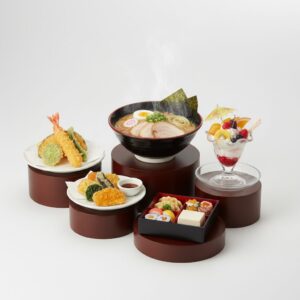
Walk down almost any bustling street in Japan, from a high-end Tokyo department store to a sleepy neighbourhood shopping arcade, and you’ll eventually be stopped in your tracks by a window display of food so perfect, so vibrant, it looks like an edible still-life painting. A bowl of ramen with steam seemingly frozen in time, glistening pork slices nestled in a rich broth. A plate of spaghetti bolognese, each strand of pasta coated in a sauce that looks wet to the touch. A cutlet of tonkatsu with a crumb so crisp you can almost hear the crunch. For a moment, your brain tells your stomach to pay attention. Then, the logic kicks in. This food is under glass, sitting in the sun, and it’s flawless. It can’t be real. And you’re right, it isn’t. You’ve just had your first proper encounter with shokuhin sampuru—the captivating world of Japanese fake food models.
For the uninitiated, it’s easy to dismiss these as kitschy plastic novelties. But that would be like calling a masterfully crafted watch a simple time-teller. These models are far more than just menu props. They are a unique art form, a powerful marketing tool, a solution to a cultural problem, and a fascinating window into the Japanese psyche. They represent a cultural intersection where meticulous craftsmanship meets commercial pragmatism. To understand shokuhin sampuru is to understand something essential about Japan’s approach to service, presentation, and the quiet promise of a good meal. It’s a story that begins not with plastic, but with a humble wax omelet and a flash of accidental genius.
Japanese culinary innovation is evident not only in meticulously crafted shokuhin sampuru but also in the transformation of everyday snacks into gourmet pastry masterpieces, underscoring a broader dedication to edible artistry.
A Feast for the Eyes, Not the Stomach

My first genuine ‘sampuru’ experience took place in Kichijoji, a bustling neighborhood in western Tokyo. We were strolling around with the kids, searching for a lunch spot. The vast array of options was overwhelming. Then, we spotted it: a glass display case showcasing what seemed like the restaurant’s entire menu, presented in three vivid dimensions. There was no need to decode a complicated menu or estimate portion sizes. My son could simply point to the kid’s meal with its small flag stuck in the rice, and my daughter could clearly see what the strawberry parfait looked like. The choice was made for us, effortlessly.
This is the everyday magic of shokuhin sampuru. These replicas are everywhere, standing as silent, appetizing guardians outside ramen shops, family restaurants, traditional eateries, and coffee houses. In the sparkling basements of department stores, known as depachika, they create flawless mosaics of the culinary delights available inside. This sharply contrasts with the often disappointing food photography on menus found in many other parts of the world—a somewhat lackluster burger that never matches its shiny image. A sampuru feels different. It’s not a photograph; it’s a tangible model. It’s a promise, crafted from vinyl chloride, of exactly what will be served at your table. The shape, the size, the ingredients, the arrangement—it’s all there. This isn’t mere advertising; it’s a declaration of intent.
The Accidental Genius of a Wax Omelet
The story of shokuhin sampuru, like many great Japanese innovations, is rooted in a time of significant societal change. It is a tale of adaptation and creativity, born from the need to bridge a cultural divide. Its origins date back to the early 20th century, when Japan was enthusiastically embracing Western culture, including its cuisine.
From Candle Wax to Culinary Replica
During the late Taisho and early Showa periods, cities were thriving along with the growth of grand department stores. These establishments were more than just shopping venues; they featured rooftop amusement parks and elegant restaurants offering exotic Western dishes like omurice (omelet rice), curries, and croquettes. However, the average Japanese diner had little idea what these dishes were. Written menus were an abstract concept; people needed to see the food to understand it.
At first, restaurants displayed actual plates of food, but this approach was wasteful, unhygienic, and temporary. The breakthrough came from Takizo Iwasaki, a tinkerer and inventor from Gujo Hachiman, a small town in Gifu Prefecture. According to the now-legendary story from 1932, he was experimenting with wax when his wife made him omurice for dinner. Later, he noticed the realistic texture of a drop of candle wax that had fallen on the tatami mat. Inspired, he created a prototype of the omelet his wife cooked. It is said that he showed his creation to his wife, who was briefly fooled into thinking it was real. From that moment of surprise, a billion-dollar industry was born.
From Department Stores to the Global Stage
Iwasaki quickly recognized the commercial potential. His first major clients were restaurants in department stores, which desperately needed a way to present unfamiliar dishes to a curious yet cautious public. His wax models provided the perfect solution: durable, realistic, and continually appetizing. They offered a visual language for an emerging culinary world. Customers no longer had to order blindly; they could see exactly what they were going to receive.
Iwasaki’s company, now known as Iwasaki Co., Ltd., became the industry pioneer and remains its giant. The craft soon spread, with Gujo Hachiman established as the undisputed center of shokuhin sampuru production, responsible for a large share of Japan’s fake food. What began as a clever fix for urban department stores evolved into a nationwide standard for the food and beverage industry.
The Unspoken Language of the Restaurant Window
While the historical background is intriguing, the lasting success of shokuhin sampuru stems from its deep insight into human psychology and the dynamics of commerce. It is more than a tradition; it is a highly effective business strategy functioning on multiple levels.
The Ultimate Marketing Tool
In the competitive realm of Japanese dining, where numerous restaurants can be packed into a single city block, capturing a potential customer’s attention is crucial. It is said that a restaurant has about three seconds to make an impression on a passerby. A written sign can be easily overlooked, but a vibrant, three-dimensional display of appetizing food serves as a strong magnet for both the eyes and the appetite.
Sampuru models excel at removing what marketers call ‘friction’ in the customer journey. They eliminate uncertainty and anxiety from the ordering process. You don’t have to wonder about portion sizes. You don’t have to guess the contents of a dish you can’t pronounce. You simply see, desire, and enter. This ‘what you see is what you get’ approach is especially reassuring for less adventurous eaters or families with picky children.
For international visitors, the utility is even clearer. Shokuhin sampuru acts as a universal language, transcending any language barrier. Before the era of translation apps and QR code menus, these displays served as a lifeline for tourists, helping them navigate the culinary scene with confidence. The simple act of photographing a model and showing it to the staff is a ritual performed countless times daily across Japan. It’s a beautifully simple, analog solution in an increasingly digital world.
A Promise Cast in Plastic
Beyond marketing practicality, the sampuru fulfills a deeper cultural role. It serves as a covenant between the establishment and the customer. In Japanese culture, presentation (moritsuke) is no trivial matter; it is an essential part of the dining experience. The food model represents the idealized version of the dish, the standard to which the chef aspires. It is a tangible promise of quality and consistency.
Displaying a beautiful model but serving a sloppy, inferior version of the dish would be a serious breach of trust. It would imply a lack of pride and sincerity, qualities highly esteemed in Japanese service culture. The sampuru, therefore, is not merely a sales pitch; it is a declaration of a restaurant’s dedication to its craft. It communicates to the customer, “This is our standard. This is the care we invest in every plate.” It holds the kitchen publicly accountable in the most direct way possible.
The Anatomy of a Perfect Fake
The creation of shokuhin sampuru is not an automated, mass-produced process; it is a meticulous craft passed down through apprenticeships and refined over decades. The incredible level of detail and artistry involved is truly astonishing, combining scientific accuracy with an artist’s finesse.
From Kitchen to Laboratory
The process starts with the real dish. A restaurant commissions a model by sending a perfectly prepared meal directly to the sampuru workshop. The artisans don’t merely glance at it; they study it thoroughly. They photograph it from every angle, measure its dimensions, and deconstruct it to understand its makeup. Their aim is not just to create a likeness, but an exact replica.
Next comes the molding stage. Using silicone, the craftsmen create highly detailed molds of each individual component of the dish. For a bowl of ramen, this means separate molds for the noodles, slices of chashu pork, bamboo shoots, green onions, nori seaweed, and the soft-boiled egg. Nothing is missed. The unique texture of every ingredient must be captured in the mold.
The Magic of Polyvinyl Chloride
While the tradition began with wax, modern sampuru are almost exclusively made from polyvinyl chloride (PVC), a durable and versatile liquid plastic. Wax tended to melt in summer heat and fade under bright lighting. PVC, by contrast, is practically indestructible, ensuring the models stay vivid and lifelike for years, even decades.
Liquid PVC is carefully mixed with pigments to match the base color of each ingredient and then poured into the silicone molds. These are then placed in a special oven to cure and harden. When removed from the molds, the components are essentially blank, monochrome plastic forms—a pale yellow block for tempura, a white half-sphere for a scoop of rice. The real magic has yet to begin.
The Soul is in the Brushstroke
The final stage is where craftsmanship becomes artistry. Highly skilled artisans take the plain plastic components and bring them to life with paint. Using airbrushes for wide color gradients and fine-tipped brushes for intricate details, they painstakingly recreate the look of cooked food.
They paint subtle grill marks on fish, delicate browning on the edges of gyoza dumplings, and the translucent pink of raw tuna slices. They apply glazes to give teriyaki chicken its signature shine, and use special techniques to mimic condensation on a frosty mug of beer. The lacy, crystalline texture of tempura batter is a particularly prized skill, often made by dripping tinted vinyl into warm water, where it solidifies into a realistic, web-like pattern. Another famous technique involves crafting a head of lettuce by layering colored vinyl sheets in water and shaping them by hand. It takes years—often a decade or more—of dedicated practice to become a master artisan able to fool the human eye with such consistent perfection.
The Sampuru in the 21st Century
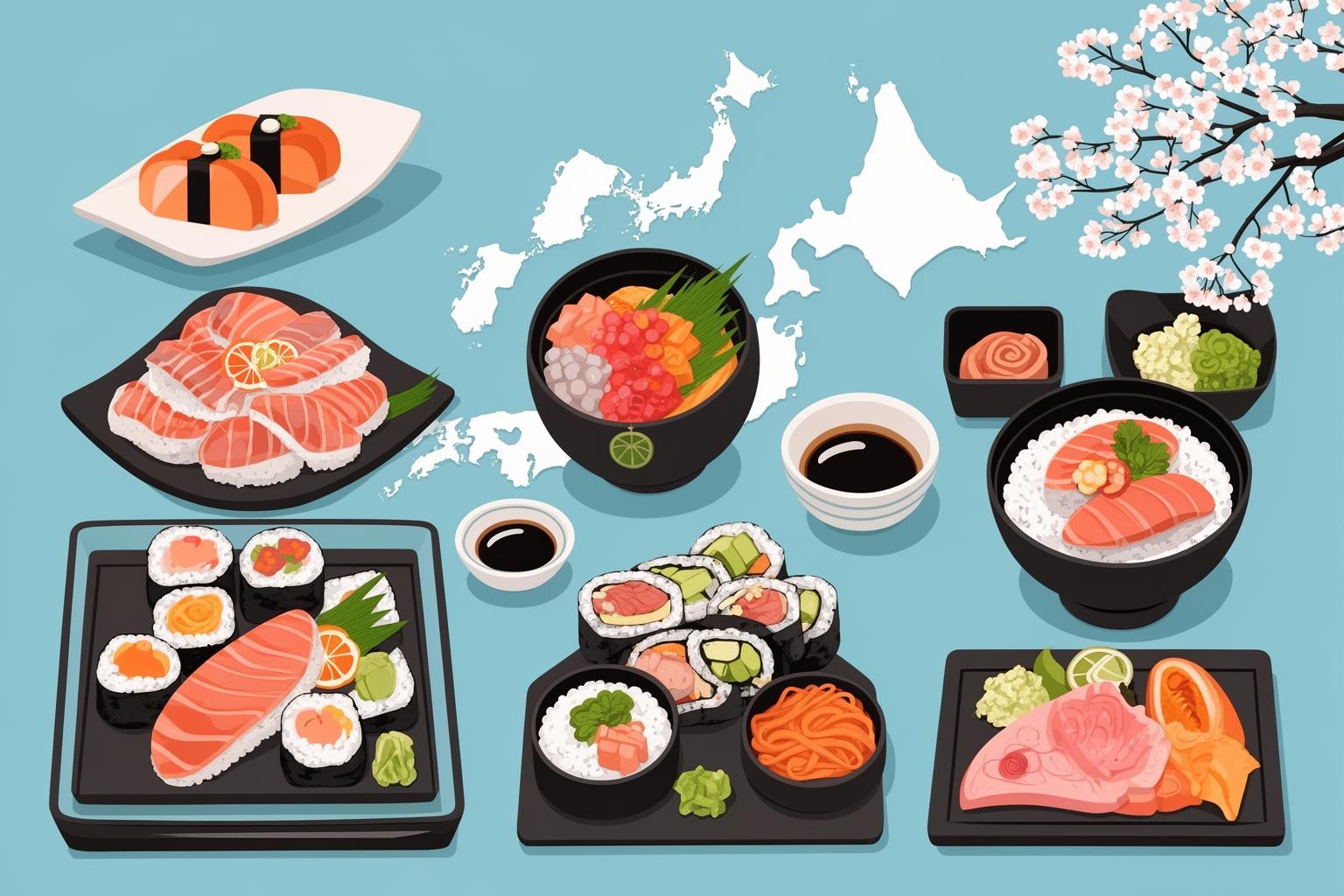
In an era dominated by digital menus and online reviews, one might assume this analog craft would disappear. However, shokuhin sampuru has adapted, gaining new significance not only as a practical business tool but also as a beloved aspect of Japanese pop culture and an interactive tourist attraction.
From Display Case to Keychain
Step into any major souvenir shop or electronics store in Japan, and you’ll see the impact of sampuru culture firsthand. This craft has moved beyond restaurant display cases, being miniaturized and transformed into an extensive variety of quirky, charming merchandise. You’ll find keychains shaped like perfectly crafted sushi, phone cases decorated with a slice of pizza, USB drives disguised as shrimp tempura, and magnets resembling tiny bowls of ramen.
These products reflect the public’s fondness for this distinctive art form. They attract tourists seeking a uniquely Japanese keepsake, while also being cherished by locals who admire the craftsmanship and wit behind them. Capsule toy machines, or gachapon, frequently offer exquisitely detailed miniature food models, turning the craft into a collectible pastime.
Your Turn to Be the Chef
With growing interest in their craft, many sampuru workshops have started welcoming visitors to try their hand at making models. In places like Tokyo’s Kappabashi Kitchen Town or the industry’s hub in Gujo Hachiman, you can enroll in classes to create your own pieces.
Usually, you work with warm, colored wax—a tribute to the craft’s origins—to shape traditional items such as lettuce or shrimp tempura. Guided by a skilled instructor, you learn the precise flick of the wrist needed to trail the yellow wax into warm water, forming the tempura’s delicate lacy batter. The experience is fun, immersive, and often humbling, allowing you to truly appreciate the masters’ expertise. As a parent, I can say it’s one of the best family activities we’ve enjoyed in Japan. It’s creative, delightfully messy in a controlled way, and you get to leave with a genuinely unique, handmade souvenir.
More Than Just Plastic
It’s easy to regard shokuhin sampuru as a charming novelty, one of the many small details that make Japan so unique and captivating. However, stopping there overlooks its deeper significance. What starts as a clever business answer to an information challenge transforms into a highly esteemed craft, a tangible art form that reveals much about the culture from which it arose.
These models serve as a perfect microcosm of several fundamental Japanese cultural values. They embody kodawari, the unwavering dedication to perfection in one’s chosen craft. They symbolize the harmonious blend of aesthetics and commerce, where beauty is not superficial but an essential element of successful business. Moreover, they stand as a tribute to the quiet honor of lifelong mastery, a commitment that elevates a simple piece of plastic into a masterpiece.
The next time you find yourself in front of a restaurant window in Japan, captivated by a display of flawlessly crafted food, look a bit closer. Don’t just see a menu. See the history, the craftsmanship, and the subtle cultural promise embedded in each gleaming, inedible bite. You’re not simply viewing fake food; you’re witnessing a sidewalk gallery, a silent narrative of culinary devotion, and one of the most delightfully and profoundly Japanese experiences you can encounter.