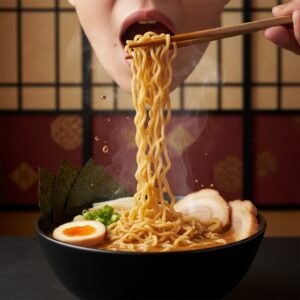
I see the question in your eyes every time we talk about me ducking into a tiny ramen joint in some Tokyo back alley. You’re picturing it: the steam, the cramped counter, the chef with his arms folded, looking serious. And you’re hearing it: a chorus of enthusiastic, unabashed slurping. To a Western ear, it’s the sound of bad table manners, a noise we were taught to suppress from childhood. You’re wondering, “How can a country so focused on politeness and refined etiquette embrace such a loud, seemingly messy way of eating?”
It’s a great question, because the answer gets to the heart of something I love about Japan. Things are rarely just what they seem on the surface. That sound isn’t noise; it’s a language. The Japanese ramen slurp is a complex, multi-layered act that is simultaneously a tool for tasting, a gesture of respect, and a sign of deep, focused enjoyment. It’s a piece of cultural shorthand that communicates everything from “This is delicious!” to “I respect the craft that went into this bowl.” Far from being rude, it’s a fundamental part of the ritual. To eat ramen quietly is to miss the point entirely. It’s like listening to a concert with earplugs in. You might get the basic melody, but you’re missing the resonance, the texture, the very soul of the performance. So let’s break down the beautiful logic behind Japan’s most notorious dining custom.
This celebration of authentic culinary expression finds a natural parallel in the delicate bitterness of mountain vegetables, illustrating how every nuance in Japanese cuisine contributes to a rich cultural narrative.
The Symphony of the Senses: More Than Just Taste
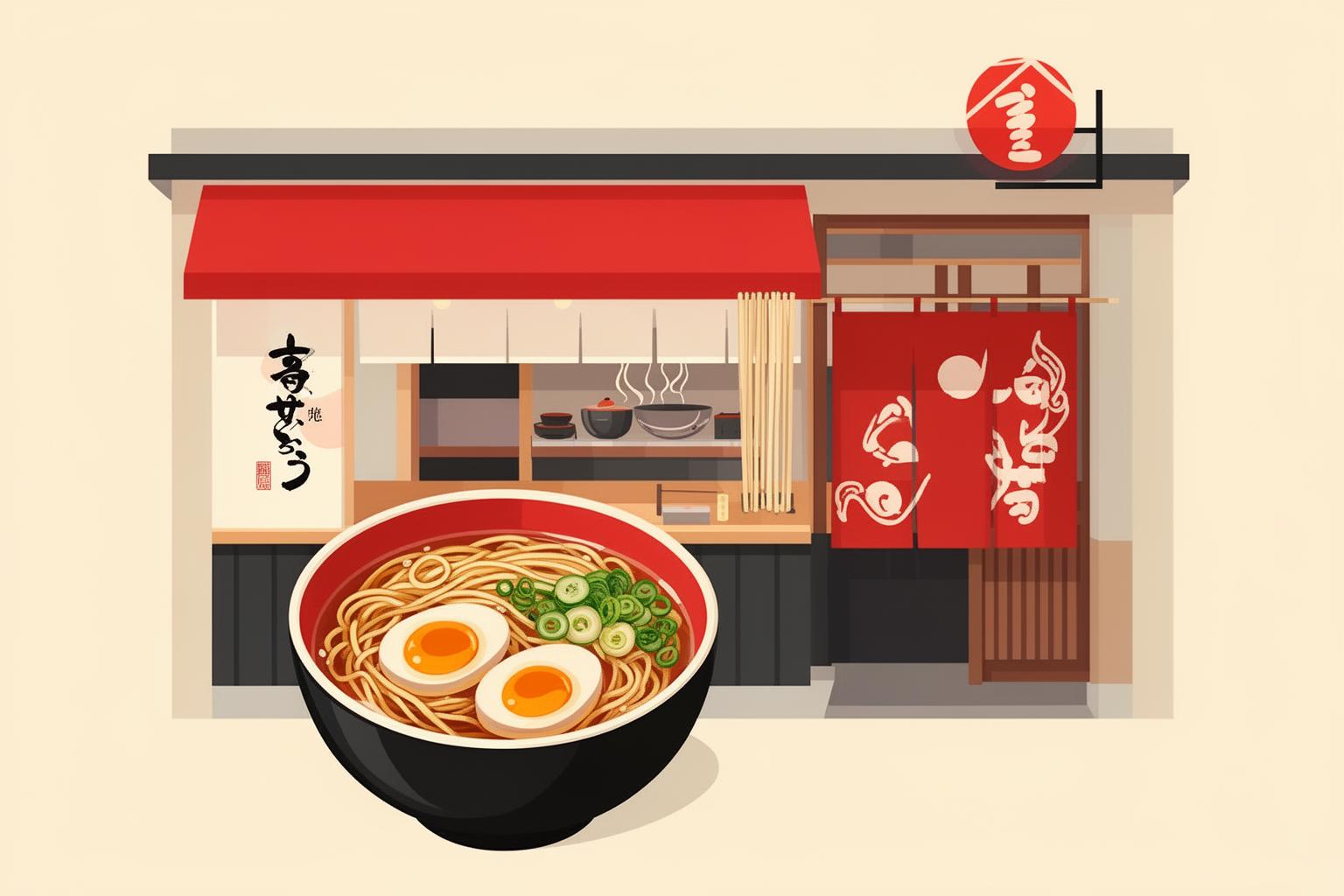
The first thing to grasp is that slurping serves a purpose—it’s not merely for show. Japanese cuisine, especially noodle culture, is rooted in a profound appreciation for subtlety, and slurping is a deliberate technique designed to unlock the full potential of the food. This method consciously engages more than just your taste buds; it creates a full-sensory experience where aroma, temperature, and flavor merge into one satisfying moment.
Flavor, Aroma, and Air
Consider how a wine expert tastes wine. They don’t just swallow it quickly. They swirl the glass to release the bouquet, take a small sip, and then draw air through it, aerating the wine to reveal its complex notes. The Japanese ramen slurp follows this same principle. When you slurp noodles, you’re not only drawing noodles and broth into your mouth but also pulling in a stream of air alongside them.
This aeration is essential. It atomizes the broth, turning it into a fine mist that coats your entire palate and, crucially, reaches your nasal passages. A significant portion of what we perceive as “taste” actually comes from smell. The rich aroma of a pork-based tonkotsu, the smoky depth of fish-based dashi, or the fermented funk of miso—all are vital elements of the flavor profile. Slurping ensures these aromatic compounds are fully experienced. A quiet, polite bite with a fork and spoon delivers the noodles and broth to your tongue but misses this important aromatic layer. Slurping is the difference between viewing a forest’s image and walking through it, inhaling the scent of pine and damp earth. It transforms a flat taste into a vibrant, multidimensional flavor experience.
Cooling the Coils
There’s also a practical reason for slurping: temperature control. A perfect bowl of ramen is served piping hot. It must be. The heat keeps the fats and collagens in the broth properly emulsified, producing that silky, mouth-coating texture. It also ensures the noodles remain at their peak chewiness, or koshi. If the bowl cools down, the broth may separate, and the noodles absorb too much liquid, becoming soft and mushy. The window for perfect ramen is brief.
So how do you enjoy something at its ideal, scorching temperature without burning your mouth? The answer, once again, is slurping. The same air that enhances aroma acts as a cooling agent. As you inhale the noodles and broth, the influx of cooler, ambient air mixes with them, lowering their temperature just enough to be comfortable without losing the broth’s essential heat. This is a clever, built-in cooling mechanism that lets you consume the ramen quickly and efficiently while it’s at its absolute best. Waiting for your ramen to cool is, from a chef’s perspective, a culinary mistake—you’re allowing perfection to degrade into mediocrity. Slurping is your way of honoring the ramen by eating it exactly as the chef intended.
A Conversation Without Words: The Etiquette of Appreciation
Beyond the practical science of taste and temperature, the slurp serves as a powerful form of non-verbal communication. In the unique social theater of a ramen shop, your actions become part of the performance. These are often small, intimate spaces, where you sit at a counter just feet away from the person who prepared your meal. There’s a direct and immediate connection between creator and consumer, and the slurp becomes your primary way of providing feedback.
Speaking to the Chef
Imagine a ramen master who has been simmering a pot of tonkotsu broth for eighteen hours, carefully skimming and tasting, balancing the delicate interplay of pork bones, vegetables, and secret ingredients. He assembles your bowl with precision: perfectly cooked noodles, tender chashu pork, and a glistening soft-boiled egg. He slides it across the counter to you. This is his art. Your response matters.
In this context, silence can feel ambiguous, even unsettling. A quiet diner might signal dissatisfaction. But a hearty, audible slurp? That is an unmistakable compliment. It is the sound of pure, unfiltered enjoyment. It says, without words, “Thank you for your hard work. This is incredible.” It recognizes the craft and effort poured into the bowl. The chef isn’t just listening for orders; he’s listening for the joyful sounds of his customers. Your enthusiastic slurp is his validation, the applause for his culinary performance. It’s a sign of respect for both the food and its maker, a way to engage in the culture of appreciation surrounding the ramen craft.
The Sound of Focus
Step into a classic ramen-ya during a bustling lunch hour, and you’ll notice it’s not a place for idle chatter. People aren’t there for long, leisurely conversations. Their purpose is clear: to eat ramen. The atmosphere is one of intense, almost meditative focus. Each person is absorbed in the world within their bowl. The collective slurping isn’t a chaotic noise; it’s the ambient sound of shared concentration. It’s a rhythmic hum that says, “We are all here, together, to truly enjoy this food.”
This focused approach is itself a form of respect. In Japan, there is a deep cultural value placed on dedicating your full attention to the task at hand, including eating. By slurping your noodles and concentrating on your meal, you honor the ingredients and the chef. You are not distracted by your phone or drawn into lengthy discussions. You are fully present. In this setting, the slurping sound signals your participation in an unspoken agreement. It’s a communal act that unites diners in a shared, though temporary, state of culinary devotion. It forms the soundtrack to a ritual of deep, personal, and delicious focus.
The Exceptions to the Rule: When Not to Slurp

Naturally, like any cultural norm, context is crucial. Having persuaded you of the merits of slurping, it’s equally important to recognize its limits. The advice to “slurp your noodles” is not a universal license to make noise with all your food in Japan. Misusing this guideline is just as much a social misstep as being overly quiet in a ramen shop. A savvy traveler understands not only the ‘what’ but also the ‘when’ and ‘where.’
Context is King
Primarily, the slurping custom is almost exclusively tied to noodles—especially ramen, soba, and udon—where the harmony of broth, noodles, and aroma is essential. You don’t slurp soup from a spoon, nor do you slurp miso soup when drinking it straight from the bowl (though a gentle sip is acceptable). You certainly don’t slurp rice, curry, or any other non-noodle dish. Making slurping sounds while eating these would be considered just as impolite in Japan as anywhere else.
This distinction also extends to other noodles. Slurping soba is expected, but slurping spaghetti bolognese is generally viewed as poor manners. Pasta is European, and the Japanese custom doesn’t apply. Slurping foreign dishes is seen as unsophisticated, a misunderstanding of their cultural context. So, the simple rule is: if it’s a Japanese noodle soup, feel free to slurp. If it’s anything else, stick to your usual quiet table manners.
Reading the Room
Even within Japanese noodles, slurping varies in degree. The loud, enthusiastic slurp common among salarymen in a bustling ramen stall in Shimbashi may feel out of place in a tranquil, upscale soba restaurant in Kyoto serving noodles as part of a refined, multi-course kaiseki meal. The principle of aeration and enjoyment still holds, but the intensity and volume should adapt to the setting.
The best approach is to read the room. Observe those around you. What’s the general noise level? How are others eating? While slurping is typical, not everyone slurps with the same vigor, and some barely slurp at all. It remains a personal expression of enjoyment. There’s no need to compete in slurping volume. The goal is to show appreciation and enhance your own experience, not to be the loudest. Find a comfortable, natural level for yourself. It’s a gesture, not a performance.
Embracing the Slurp
That satisfying sound you hear in a ramen shop is far from bad manners. It’s a refined tool, a mode of communication, and a cultural symbol all at once. It signals the full enjoyment of flavor, a thank you to the chef, and a dish being savored with the focused attention it merits. It turns eating from a polite, restrained act into an expressive, joyful, and immersive experience.
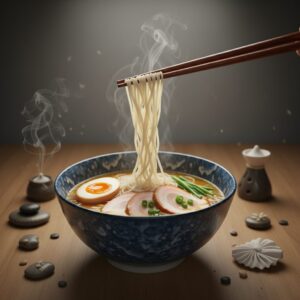
So next time you’re faced with a perfect bowl of ramen, I encourage you to give it a try. It may feel unusual at first, like breaking a deeply ingrained childhood rule. But grasp a cluster of noodles with your chopsticks, bring them to your lips, and draw them in with a confident slurp. Don’t hesitate. You’re not being impolite. You are speaking the local language. You are connecting more deeply with the food, the chef, and the culture. You are finally experiencing the ramen as it was always meant to be enjoyed: with all your senses and with complete, unapologetic pleasure.