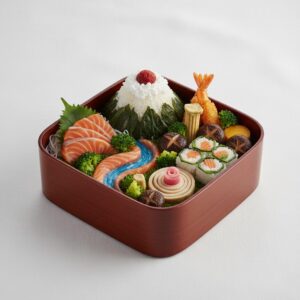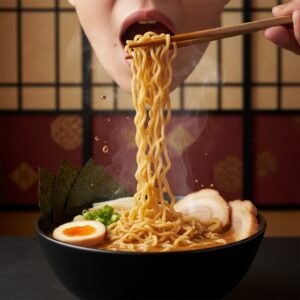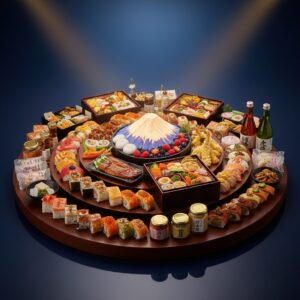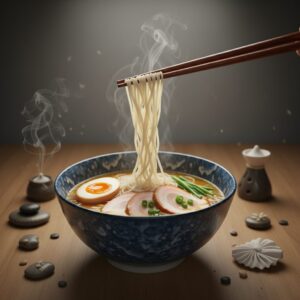
You’ve seen them. Of course you have. Stroll down any bustling commercial street in Japan, from a major Tokyo artery to a sleepy suburban shotengai, and you’ll find them gleaming under glass. An impossibly perfect bowl of ramen, noodles suspended mid-lift by floating chopsticks. A glistening plate of sushi, each piece a jewel of color and texture. A slab of steak, frozen at the exact moment of juicy perfection, a pat of butter beginning its eternal, un-moving melt. This is the world of shokuhin sanpuru, or “food samples,” a universe of hyper-realistic plastic replicas that serve as three-dimensional menus in restaurant windows across the nation. At first glance, it’s a charming, perhaps slightly kitschy, quirk. But the longer you stay in Japan, the more you realize these silent, inedible sentinels are not just a novelty. They are a fundamental part of the country’s culinary landscape, a deeply ingrained system of communication that is as practical as it is profound. They are often more beautiful, more idealized, than the food that eventually arrives at your table. And that’s entirely the point. So, why does a country so obsessed with the freshness and seasonality of its cuisine rely so heavily on a legion of fakes? The answer is a fascinating story of ingenuity, artistry, and the unspoken rules of Japanese society.
These meticulously crafted displays not only captivate the eye but also echo the lively contrasts of Japan’s cuisine, a nuance brought to life by the subtle art of ramen slurping that transforms every meal into a multisensory experience.
A Solution Born from Wax and Modernity

To understand the reason behind this, you need to return to a period of significant transformation in Japan. During the early Showa Period, around the 1920s, Japan was rapidly modernizing. Cities were thriving, and Western culture was pouring in, bringing new ideas, fashions, and importantly, new foods. The grand department stores, towering emblems of this new era, opened refined dining halls to serve a curious and increasingly cosmopolitan public. The issue was that many Japanese people had no familiarity with these new dishes. Menus featuring unfamiliar terms like kare raisu (curry rice) or omuraisu (omelet rice) were just a confusing array of characters. How could you entice customers to order something they couldn’t even visualize? This challenge sparked the birth of an entire industry. The story often begins with a man named Takizo Iwasaki. In the early 1930s, while working in Osaka, Iwasaki recognized the potential of creating realistic models to bridge this gap. Inspired by the wax anatomical models used in medical education, he reportedly had his eureka moment after watching candle wax drip into water and form patterns. His first masterpiece, according to legend, was a perfectly fluffy omelet rice with ketchup that was so lifelike his wife couldn’t distinguish it from the real dish. He founded a company in 1932, and the idea quickly gained momentum. Restaurants in department stores and growing urban areas discovered these wax models were revolutionary sales tools. They served as a visual language that transcended literacy and culinary knowledge, instantly conveying portion size, ingredients, and the overall appeal of a dish. The early models were crafted from paraffin wax, a delicate and labor-intensive process. Artisans made molds from real food, poured in colored wax, and painstakingly added details by hand. However, wax had its disadvantages; it was fragile, faded in sunlight, and could even melt during the summer. The real breakthrough came after World War II with the introduction of plastics. Durable, colorfast polyvinyl chloride (PVC) replaced wax, enabling more intricate, lasting, and mass-produced creations. This technological advancement transformed shokuhin sanpuru from a clever novelty into an essential industry, securing their place in the windows of nearly every restaurant across the country.
The Unspoken Contract: Managing Expectations in a High-Context Culture
While the practical origins of sanpuru are evident, their enduring presence and widespread use reveal something deeper within Japanese culture. At its essence, the food sample embodies omotenashi, the renowned Japanese concept of hospitality centered on anticipating and fulfilling a guest’s needs before they are even spoken. A traditional text-only menu poses several unknowns: How large is the portion? What exactly is included? Will it look as I imagine? This uncertainty can cause a subtle but noticeable anxiety for customers. The sanpuru display removes all of that. It offers a powerful, unspoken guarantee: what you see is exactly what you will get. In a high-context society that values harmony and avoids confrontation or disappointment, this visual agreement is crucial. It sets expectations with absolute clarity. The number of shrimp in the tempura, the arrangement of pickles on the side, the precise portion of rice—it’s all presented for inspection. There will be no surprises or feelings of being misled. This builds a strong sense of trust between restaurant and customer even before they enter. It’s a gesture of transparency and respect for the diner’s choice. And this benefit is not limited to bewildered foreigners, though it undoubtedly serves as a lifeline for them. Japanese people rely on sanpuru just as much. A salaryman on a tight lunch break can decide what to order right from the sidewalk, saving valuable time. Parents let their children point out exactly what they want, avoiding mealtime battles. Even experienced diners appreciate the samples, which offer an instant, at-a-glance comparison of a restaurant’s menu, enabling a quick evaluation of its specialty, price point, and style. The display functions as a silent, efficient, and deeply reassuring concierge, operating 24/7.
The Allure of Idealized Realism
There is an important aspect to grasp about sanpuru: they are not intended to be strictly realistic. Instead, they are crafted to be idealistic. The artisans who make them do more than simply replicate food; they aim to capture the food at its absolute peak moment. The beer boasts a perfect, dense head of foam that will never dissipate. The spaghetti always gleams with sauce, never drying out. The cross-section of a pork cutlet reveals a juicy, succulent interior that will never cool. This is food photography manifested in three dimensions. The intention is to present the dish in its most appealing, mouth-watering form—an idealized version that the real dish can only strive to match. This is not viewed as deception but as an honest reflection of the chef’s vision. This is what the dish should be. The actual plate that arrives at your table will contend with the realities of gravity, temperature, and time. It may be slightly less flawless, but the sanpuru has already conveyed the spirit and composition of the meal. It stimulates appetite and sets a benchmark, embodying the Platonic ideal of that bowl of katsudon or plate of gyoza. This quest for perfection is a defining feature of Japanese craftsmanship, or shokunin culture, where artisans dedicate their lives to mastering a single craft. The creation of food samples is no exception.
The Artisans Behind the Illusion

To truly appreciate shokuhin sanpuru, one must look beyond the restaurant window and step into the workshops where these creations come to life. Gujo Hachiman, a town in Gifu Prefecture, is famously recognized as the hub of this craft, producing a significant portion of Japan’s fake food. Here, and in smaller studios scattered across the country, generations of artisans dedicate themselves to a craft that uniquely blends sculpture, painting, and culinary science. The process is astonishingly meticulous and almost entirely handmade. It usually starts when a restaurant sends the actual dish to the workshop. The artisans do not rely on photos; they work directly from the real food. First, a mold is crafted by carefully suspending pieces of the dish—a slice of fish, a stalk of broccoli, or a piece of fried chicken—in liquid silicone. Once the silicone hardens, the real food is removed, leaving a perfectly detailed negative impression. Next, liquid plastic resin, tinted with secret-formula pigments, is poured into the molds. This is where the true artistry begins. A single dish can consist of dozens of individual plastic parts, each hand-painted to achieve a lifelike appearance. Airbrushes create subtle gradients on grilled fish skin, while fine-tipped brushes paint tiny seeds on strawberries or delicate marbling in beef slices. The techniques are often closely guarded trade secrets, passed down from master to apprentice. The artisans have developed specialized methods to replicate every texture imaginable: the glossy sheen of sauce, the crumbly surface of a croquette, or the frosty chill on a glass of iced tea. Assembling the final piece is the last step, where all the individual parts are carefully arranged, glued, and lacquered to form a stunningly realistic display. This slow, labor-intensive art can command prices ranging from hundreds to thousands of dollars. It represents an investment and stands as proof that in Japan, even the presentation of the food is approached with the same dedication to quality as the food itself.
More Than Just a Menu: The Evolving Role of Sanpuru
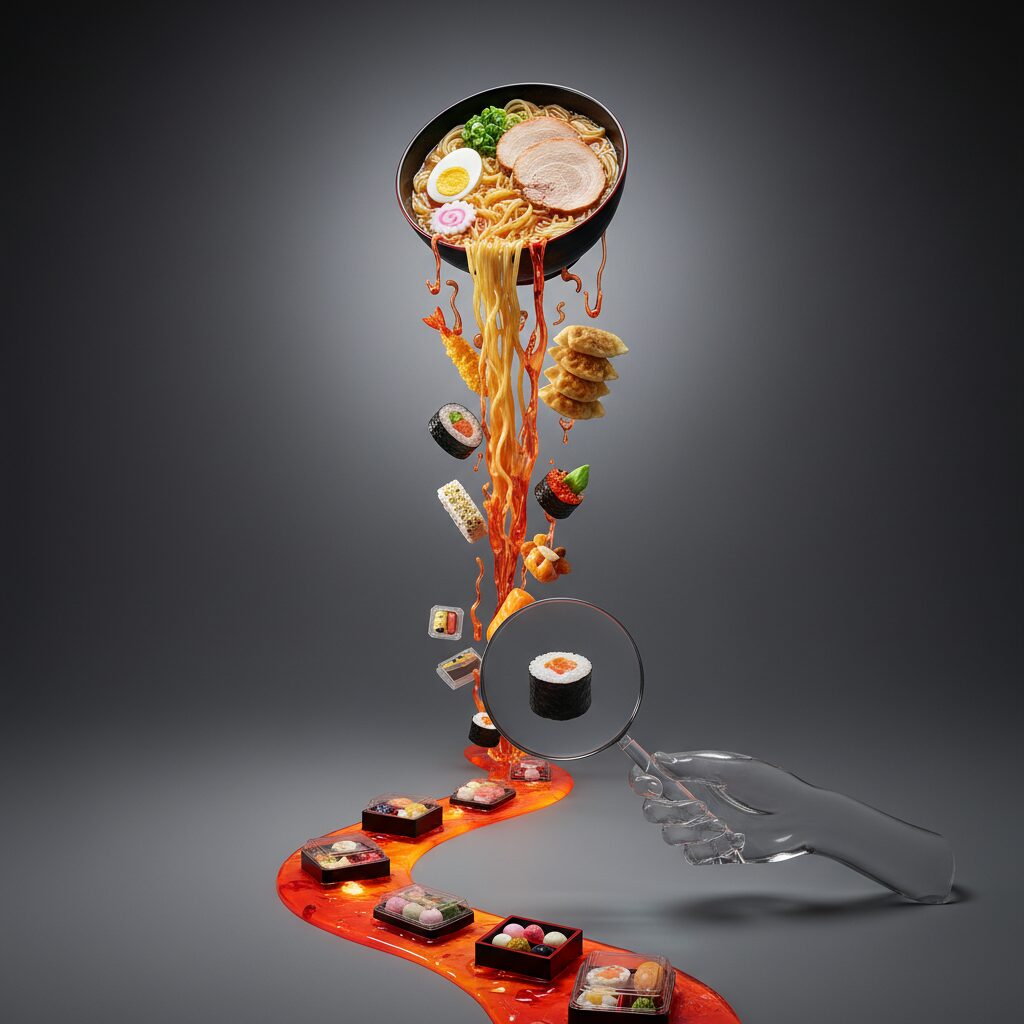
In recent years, the world of shokuhin sanpuru has expanded beyond its traditional function. As its craftsmanship gains international acclaim, it has become an iconic aspect of Japanese pop culture. Both tourists and locals now purchase sanpuru-themed souvenirs. You can find keychains shaped like tiny gyoza, phone cases resembling a plate of curry, and magnets that perfectly replicate a piece of tamago sushi. These items celebrate the artistry and playful nature of the craft, transforming it from a practical tool into a coveted cultural export. In a more serious context, food models are increasingly employed as educational tools. Nutritionists and dietitians use them to visually instruct children and adults about portion control and balanced meals. Seeing a three-dimensional representation of 100 grams of rice or the sugar content in a soda makes a much greater impact than merely reading numbers on a chart. Perhaps the most fascinating evolution is the rise of sanpuru as a recognized art form. Some artisans push the limits of realism to create surreal and thought-provoking pieces. Imagine a bowl of ramen where the noodles morph into a dragon, or a pizza that seems to melt and drip off the table like a Salvador Dalí clock. These creations playfully subvert the original purpose of the samples, using hyper-realistic techniques to craft fantasy. Despite the increase of digital menus on tablets and QR codes that display photos on phones, shokuhin sanpuru persists. There is something inherently more satisfying and trustworthy about a physical, three-dimensional object. It occupies space, has texture and weight, and offers a solid, tangible promise that a fleeting image on a screen cannot provide. The fake food in the window is a quiet, constant, and delicious lie that reveals a deeper truth. It reflects a culture that values clarity, trust, and profound hospitality. It honors the artisans who can conjure the perfect meal from plastic and paint. And it serves as a silent invitation, a promise that what awaits inside is just as thoughtful and, hopefully, just as beautiful as the illusion in the window.