You see it everywhere in Japan, once you know what to look for. At a stylish cafe in Omotesando, a woman carefully poses a small, cartoonish plush doll next to her latte, snapping a photo before taking a sip. In a packed train car, another woman scrolls through her phone, her tote bag covered in dozens of identical keychains featuring the face of a handsome anime character. On a Saturday in Ikebukuro, groups of friends gather in a rented party room, a meticulously arranged shrine of merchandise shimmering in one corner as they light the candles on a custom-made birthday cake. This isn’t just being a fan. This is a lifestyle. This is oshi-katsu.
The term itself is a neat package of modern Japanese slang. ‘Oshi’ (推し) comes from the verb ‘osu’, meaning to push or support. It’s your chosen one, the person or character you throw your entire weight behind. ‘Katsu’ (活) is short for ‘katsudō’ (活動), meaning activities. So, oshi-katsu literally translates to “activities to support your favorite.” But this simple translation barely scratches the surface. It fails to capture the quasi-religious fervor, the intricate social rituals, and the profound sense of purpose that defines this subculture. Forget the Western idea of a passive consumer or a casual fan. Oshi-katsu is an active, all-encompassing pursuit that structures social lives, dictates spending habits, and provides a powerful sense of identity. It’s a modern-day pilgrimage, where devotion is expressed not through prayer, but through participation and consumption.
This fervent lifestyle is mirrored in Japan’s innovative approach to everyday experiences, as exemplified by the 24-hour konbini phenomenon, where even a quick stop for essentials transforms into an immersive, role-playing adventure.
Who, or What, is an ‘Oshi’?
First, let’s define what qualifies as an ‘oshi’. The object of this devotion can be nearly anything, which highlights the concept’s charm and versatility. The most common subjects naturally come from the broad realm of Japanese pop culture.
These include idols, both male and female, from J-pop groups like Snow Man or Nogizaka46, as well as the widely popular K-pop acts with huge fanbases in Japan. There are also anime and manga characters, brought to life by beloved voice actors (seiyū), who often become oshi themselves, commanding devoted fan communities that follow their careers across various media. Stage actors, particularly those from the all-female Takarazuka Revue or the popular ‘2.5D’ musicals that adapt anime and games for the stage, are likewise significant figures.
However, the phenomenon extends well beyond human performers. Characters from mobile games, virtual YouTubers (VTubers), and even non-human entities can be someone’s oshi. Some people have oshi in historical figures, specific airplanes, or even famous castles. The essential point isn’t what the oshi is, but the emotional connection the supporter feels towards it. An oshi is a source of kirameki (sparkle) and iyashi (healing) amid the often monotonous routine of everyday life. They provide a burst of energy, a reason to persevere, and a focal point for positive emotions. Supporting them isn’t a burden; it’s a life-affirming act that brings joy and vitality. It offers a reason to get out of bed, a goal to save for, and a community to share it all with.
The Sacred Rites of Fandom
The ‘katsu’ aspect of oshi-katsu is where the pilgrimage analogy truly comes alive. These are not mere random acts of fandom but a series of established rituals that structure a devotee’s year. Attending concerts and purchasing merchandise form the foundation, the daily prayers of this belief system. However, the true devotion is expressed through more elaborate practices.
One of the most significant is the seitansai (生誕祭), or birthday festival. When an oshi’s birthday approaches, fans might reserve a private room at a karaoke box or hotel, set up a saidan (祭壇)—literally, an altar—decorated with photos, acrylic stands, and other memorabilia, and order a custom cake adorned in the oshi’s official ‘member color’. It’s a gathering of the faithful to honor the existence of their beloved, creating a shared experience that strengthens bonds within the fandom.
Next is the seichi junrei (聖地巡礼), the “pilgrimage to sacred sites.” This entails traveling to real-world locations that have appeared in an anime, film, or music video associated with one’s oshi. A particular train station in Shinjuku, a scenic lookout in a rural town, or a historic shrine in Kyoto—these places gain special significance. Visiting them is a way to connect with the oshi’s world, to metaphorically walk where they have walked. Entire towns have experienced tourism booms due to being featured in popular series, with local businesses supporting this by offering special goods and maps to visiting pilgrims.
Limited-time collaboration cafes, or collabo cafes, are another key ritual. These pop-up restaurants, usually in major areas like Ikebukuro or Akihabara, are themed around a particular anime or game. The menu includes cleverly named dishes and drinks inspired by characters, and each order comes with a randomized, collectible coaster or placemat. Securing a reservation often requires winning a digital lottery, adding exclusivity and excitement. The aim is not just to dine but to immerse oneself in the story’s world and, importantly, to collect the merchandise.
The Economics and Aesthetics of Devotion
Make no mistake, oshi-katsu is a formidable economic force. The entire industry is grounded in a sophisticated understanding of what drives these fans. Much of the merchandise is sold through a system called ‘random,’ where you purchase a product without knowing which character or group member you’ll receive. This encourages trading among fans or, more commonly, buying multiple items in the hope of getting your oshi. It’s a model that cleverly combines collectibility with the excitement of a treasure hunt.
This dedication is also highly visible and visually striking, perfectly fitting for the social media era. Two key visual elements define the subculture: the ita-bag and the nui.
An ita-bag (痛バッグ), or “painful bag,” is a tote or backpack, usually with a clear vinyl window on the front. This window is used to display a dense, carefully arranged collection of pins, keychains, and other charms featuring a single oshi. It’s called ‘painful’ because it can be painfully embarrassing to outsiders, painfully costly to assemble, and painfully heavy to carry. But for those familiar with the culture, it’s a public declaration of love, a mobile shrine showcasing one’s dedication and organization. It’s a badge of honor.
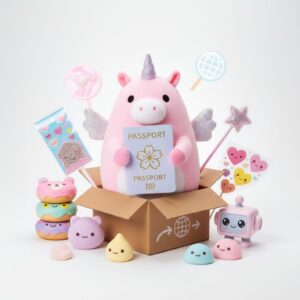
More recently, nui-katsu (ぬい活), or “plush doll activities,” has surged in popularity. This practice involves carrying a small, palm-sized plush doll (nui) of your oshi with you everywhere. These dolls become travel companions and photographic subjects. Fans take their nui to cafes, posing them with miniature props, and to scenic locations, creating beautifully composed photos in an activity called nui-dori (plush doll photography). It’s a way of sharing your daily life with your oshi, integrating them into your world in a tangible and highly photogenic manner. Instagram is filled with these charming, artfully staged photos, turning every outing into potential fan content.
A Framework for Life
So why does oshi-katsu strike such a chord in modern Japan? It’s more than just escapism. It offers a comprehensive framework for social connection and personal fulfillment that can be difficult to find elsewhere. In a society that values harmony and indirect communication, oshi-katsu provides a pre-vetted, low-pressure way to forge intense friendships. Sharing a passionate common interest makes conversations flow naturally. Attending events and exchanging merchandise form the foundation of a lively social life.
It also gives a clear sense of purpose. The rhythm of the fandom—with new music releases, concert tour announcements, merchandise drops, and birthdays—structures the year. It sets tangible goals: saving up for a limited-edition Blu-ray, winning the ticket lottery for an anniversary live show, collecting all the collaboration cafe coasters. These goals, perhaps trivial to outsiders, offer a sense of achievement and forward momentum. You actively contribute to your oshi’s success; your support genuinely matters. When their album tops the charts, it feels like a personal triumph.
For many, especially young women who form the core of numerous fandoms, it’s also a space uniquely their own. It’s an ecosystem where their interests are acknowledged, their purchasing power respected, and their passion the main currency. Outsiders often mischaracterize it as a substitute for real-life romance, but that’s a simplistic and frequently patronizing view. For many participants, the relationship with an oshi isn’t a replacement for human connection but a different, parallel kind of bond—one that is consistently positive, emotionally enriching, and free from the complications and demands of a traditional partnership.
Ultimately, oshi-katsu is a powerful expression of a universal human need: the desire to find something worth believing in. It channels passion into a structured, communal, and profoundly rewarding system of rituals. It’s a subculture centered on the radical act of celebrating something or someone wholeheartedly. The pilgrimage isn’t to a distant mountain temple, but to a concert hall, a themed cafe, or simply a beautifully curated Instagram feed. The object of devotion may be a pop star or a cartoon character, but the commitment, the community, and the life-changing joy it brings are genuinely real.