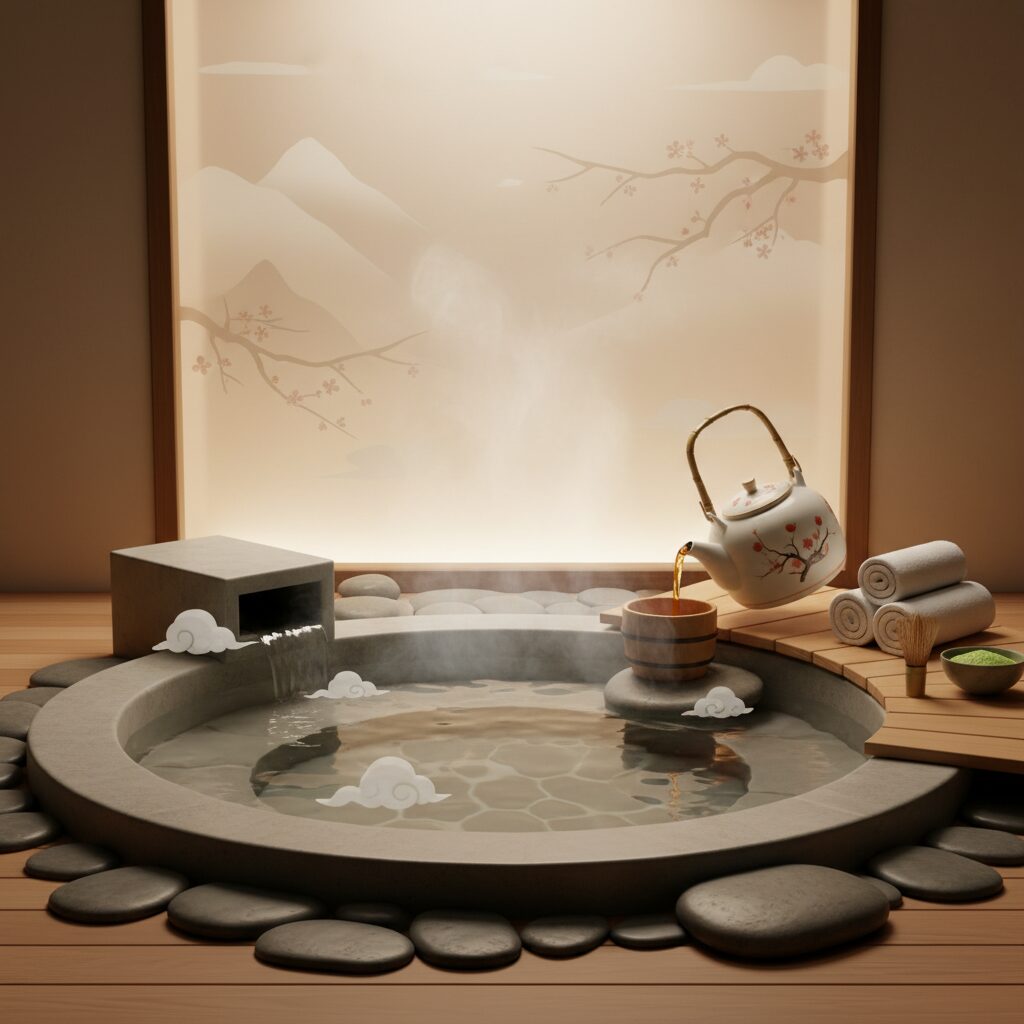
Let’s get one thing out of the way first: the nakedness. For many people visiting Japan, the onsen, or natural hot spring, presents a significant cultural hurdle. The idea of getting completely, unabashedly naked with strangers—and sometimes colleagues—can feel anywhere from mildly awkward to profoundly terrifying. It seems to clash with the image of Japan as a reserved, formal, and private society. And yet, this single act, this communal vulnerability, is the very key to understanding one of the most cherished and deeply ingrained rituals in Japanese culture. It’s where the country’s spiritual beliefs, social structures, and relationship with nature all converge in a cloud of healing steam. To dismiss the onsen as just a public bath is to miss the point entirely. It’s not about hygiene, not really. It’s about purification, connection, and a radical act of temporary equality. It’s a place where you shed far more than just your clothes.
This intimate act of vulnerability finds a broader cultural echo in Japan’s sacred public baths, where communal connection and timeless rituals converge.
A Baptism of Fire and Water: The Spiritual Roots of Bathing
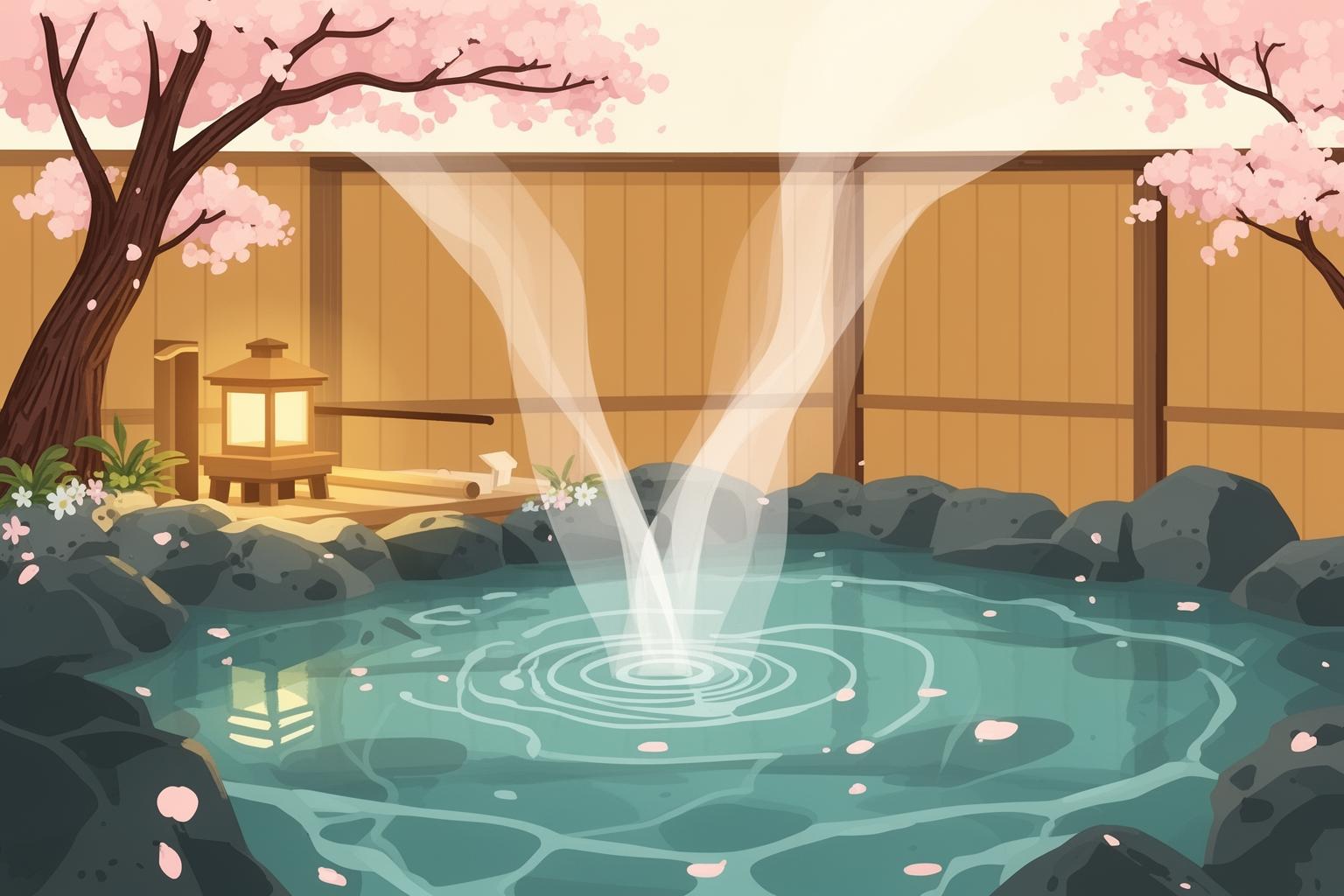
To understand the onsen, one must look back to Japan’s original connection with nature, a bond formalized in Shinto, the country’s indigenous religion. Shintoism is animistic, proposing that gods, or kami, inhabit natural objects—from majestic mountains and ancient trees to the very water that rises from deep within the earth. Japan, being volcanically active, is blessed with thousands of these geothermal springs, which were naturally regarded as sacred gifts, sites of immense power and purity. Thus, entering an onsen has never been a purely secular activity. It serves as a form of communion with nature and, by extension, with the divine.
At the heart of Shinto belief is the idea of kegare, a state of impurity or defilement caused by contact with death, disease, or even the everyday stresses and grievances of life. The remedy for kegare is misogi, the practice of ritual purification, nearly always involving water. This is evident at every Shinto shrine, where visitors cleanse their hands and mouths at a basin before approaching the main hall. The onsen represents the ultimate form of misogi. Immersing the entire body in geothermally heated, mineral-rich water is viewed as a way to cleanse the spiritual grime of the world and reset the soul. It acts as a full-body baptism, leaving one feeling not only physically clean but also spiritually refreshed and mentally lighter. This belief is so fundamental that it has permeated daily life; the Japanese custom of taking a deep, hot bath at home every night is a contemporary reflection of this ancient purification ritual.
Buddhism, introduced in the 6th century, further reinforced the importance of bathing. Buddhist teachings praise cleanliness and hygiene as virtuous, and many temples established bathhouses for monks and made them available to the local community as an act of charity. Bathing thus became associated not only with spiritual purity but also with communal wellbeing. This historical layering—Shinto reverence for nature’s power coupled with Buddhist emphasis on communal piety—formed the cultural foundation upon which the modern onsen experience is based.
The Social Contract of Nakedness: ‘Hadaka no Tsukiai’
If the spiritual aspect explains the why of bathing, the social dimension clarifies the why of doing it together. The key concept to understand here is hadaka no tsukiai, which literally means “naked communion” or “naked relationship.” This phrase captures the core social function of the onsen. In a society as distinctly hierarchical as Japan’s, where roles—company employee, boss, teacher, student—strongly influence interactions, the onsen offers a unique and essential release valve.
When you remove your clothes, you shed your social uniform as well. The CEO in his tailored suit and the new hire in his ill-fitting one become simply two naked men in a hot pool of water. The visible signs of status, wealth, and profession vanish. This temporary breakdown of social barriers permits a different form of communication—more relaxed, more open, more human. It doesn’t mean all formality disappears, but the strict walls of seniority (senpai-kohai) and social distance (uchi-soto) become more permeable. Conversations that might seem awkward or impossible in the boardroom can flow more naturally when both are shoulder-deep in steaming water, gazing at a tranquil rock garden.
This is why company trips and group outings often end with a shared onsen visit. It acts as a bonding ritual. It nurtures a sense of unity and shared experience that is hard to recreate elsewhere. Hadaka no tsukiai isn’t about becoming best friends; it’s about recognizing a shared humanity that transcends the roles you have outside the bathhouse. It’s a powerful social lubricant, a reminder that beneath all layers of societal expectation, everyone is fundamentally the same. For a culture that highly values group harmony, this ritual is not a luxury; it’s a necessity.
Reading the Air: The Unspoken Etiquette of the Onsen
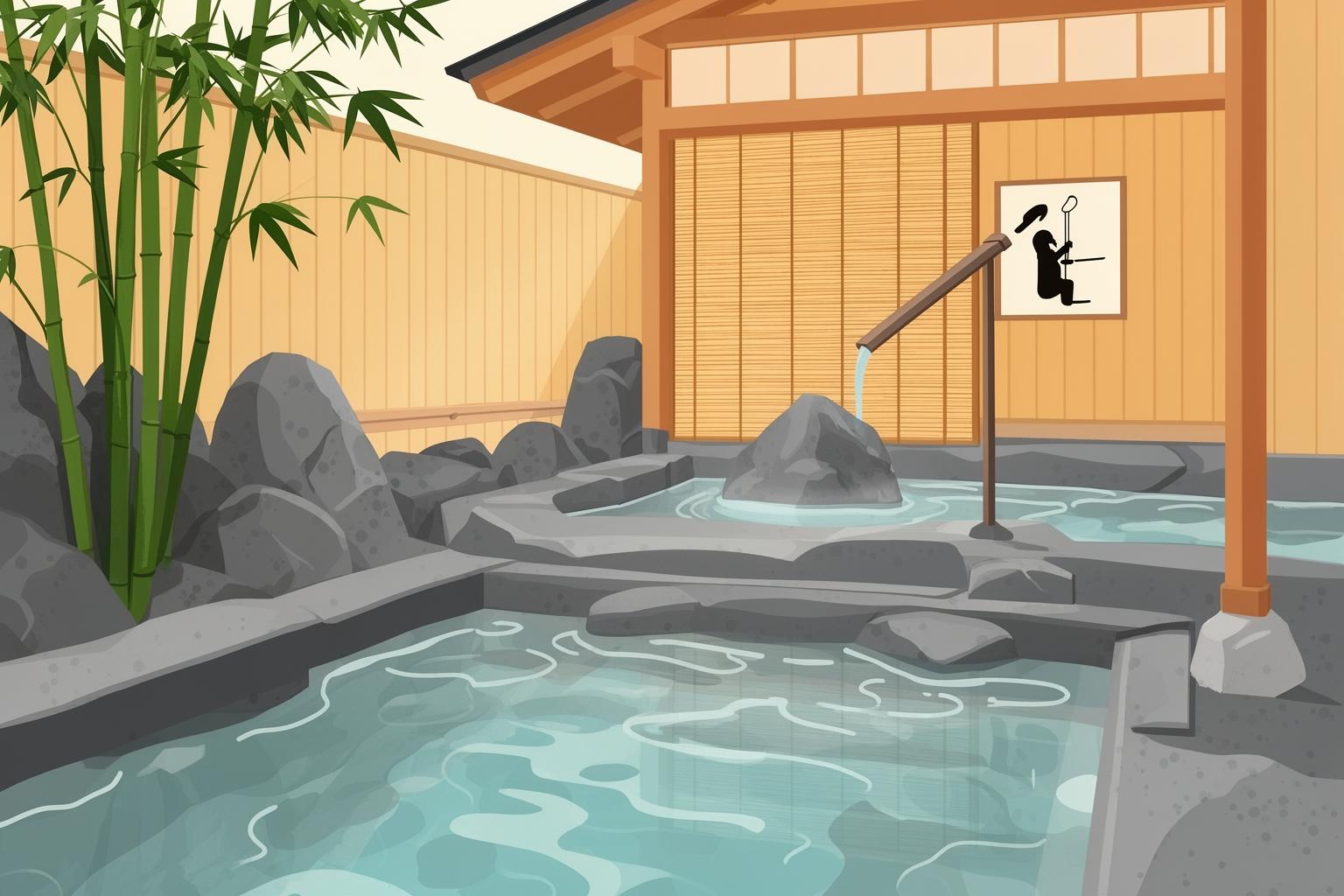
Like many things in Japan, the onsen follows a set of unspoken rules that everyone acknowledges. These guidelines aren’t arbitrary; each one supports the onsen’s fundamental purpose as a communal space for clean, quiet relaxation.
Above all is the act of washing. Before you even think about entering the main bath, you must thoroughly cleanse yourself at the rows of washing stations. These stations come with a stool, a handheld shower, a faucet, and a bucket. This is not optional; it is an absolute requirement. The reason is straightforward: the onsen bath is meant for soaking, healing, and contemplation. It is not a place for cleaning your body. Entering the pure water with soap or dirt on your skin is the greatest breach of etiquette, showing disrespect to the water, the space, and everyone sharing it. You enter the onsen clean, ready to be refreshed.
Next is the small towel, often called the “modesty towel.” This name is somewhat misleading. While you can use it to cover yourself while walking between the washing area and the bath, its main purpose is for washing your body. Once you’re about to enter the onsen, this towel must never be dipped into the water. It is regarded as unclean. People usually place it on the side of the bath or more commonly fold it neatly and balance it on their head. This small practice highlights the collective effort to preserve the purity of the shared water.
Lastly, the mood is one of calm. While quiet conversation is allowed, onsen are not places for loud talking, splashing, or swimming. It’s a meditative environment. The aim is to soak, relax, and let the mineral water and serene surroundings soothe you. It’s about being present with yourself while sharing a moment of collective tranquility with others. Interaction is not necessary, but everyone participates in a silent agreement to maintain the peace.
The Body Unsexualized: A Different Perspective on Nudity
Perhaps the most significant mental adjustment for an outsider is understanding the Japanese perspective on public nudity in this particular context. In many Western cultures, the naked body is inherently charged—either sexualized or a source of shame and vulnerability. However, in the onsen, it is neither. The body is viewed in a completely neutral, non-sexual manner. It is simply the human form, bare and unadorned.
This is enabled by another vital piece of unspoken etiquette: you don’t stare. Naturally, you see others. But there is a profound difference between seeing and looking. Glancing is acceptable; gawking is a serious breach of the social contract. This collective understanding to respect everyone’s privacy, even in a public space, allows people of all ages and body types to relax without feeling self-conscious or judged. It fosters an atmosphere of mutual respect and acceptance of the body that can be deeply liberating.
That said, this neutrality does have its limits, with the most well-known example being tattoos. Historically in Japan, elaborate tattoos were linked to the yakuza, or organized crime groups. To exclude gang members, onsen and public bathhouses implemented strict “no tattoo” policies. Although attitudes are gradually shifting, especially due to the rise of tattooed foreign tourists, the ban remains in place at many traditional venues. This serves as a stark reminder that while the onsen dissolves social hierarchies, it can still uphold other cultural boundaries. It also underscores the onsen’s role as a guardian of a certain kind of public order and traditional values.
From Village Well to Luxury Retreat: A Ritual Through Time
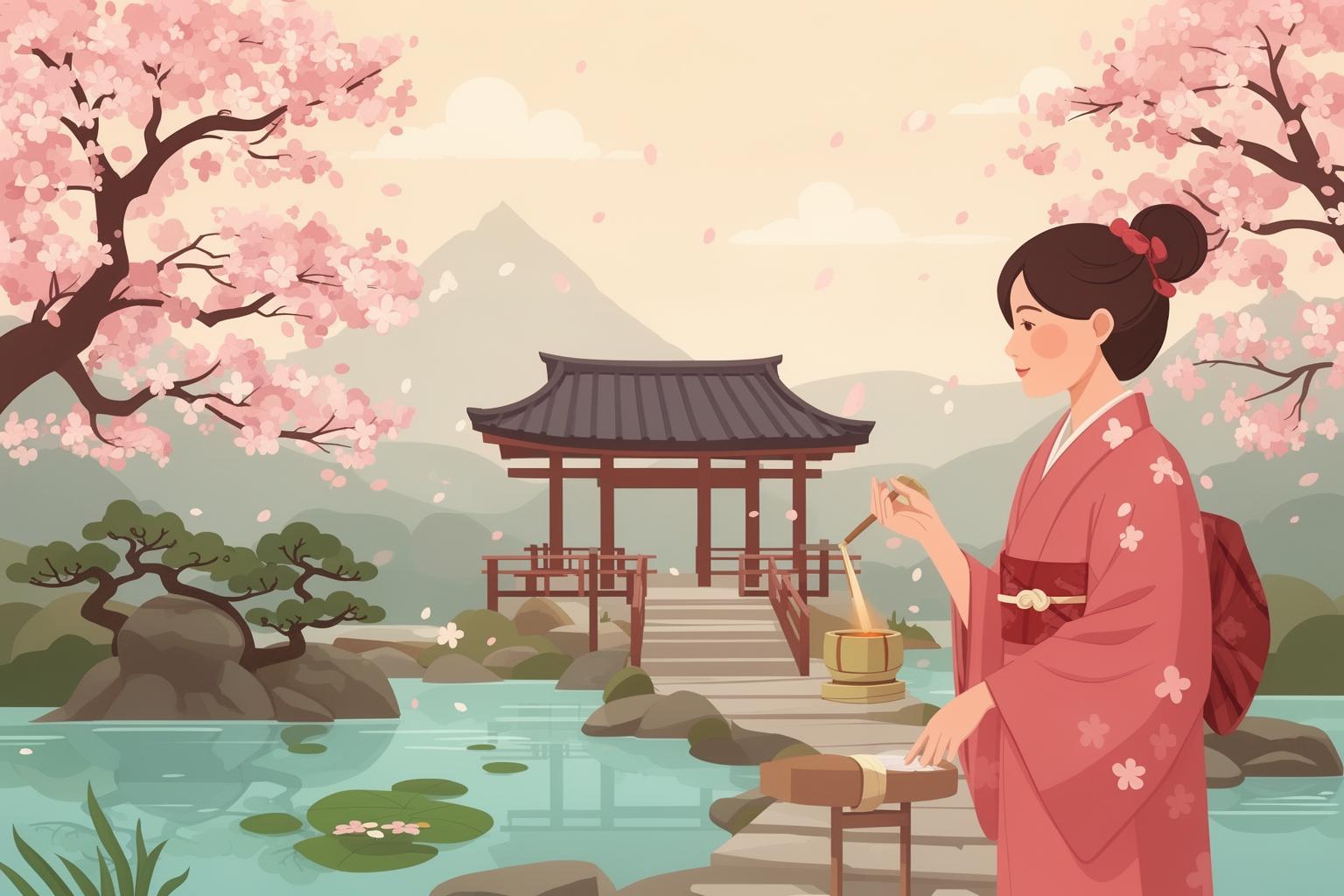
The onsen experience has developed over the centuries, yet its essence has remained constant. In ancient times, springs were discovered by chance, often observed by hunters as wounded animals immersed themselves in the water to heal. These sites, called toji (hot water healing), became destinations for those seeking remedies for various ailments, from skin disorders to joint pain. They were the original health spas, simple and focused on the therapeutic qualities of the water itself. Villages and towns emerged around these springs, which functioned as the communal heart of the community.
Today, the onsen is most famously institutionalized in the ryokan, the traditional Japanese inn. Here, bathing is elevated to an art form, the centerpiece of a carefully choreographed hospitality experience. A stay at a ryokan is an escape from the hectic pace of modern life. It involves changing out of your street clothes into a simple yukata (cotton robe), savoring an elaborate multi-course kaiseki meal, and, naturally, soaking in the onsen, perhaps an outdoor one (rotenburo) overlooking a moss-covered garden or a misty mountain. The ryokan distills the onsen’s restorative power into a complete ritual of relaxation and renewal.
Yet, the modest public bathhouse, or sento (which typically uses heated tap water rather than natural spring water), still thrives in neighborhoods across Japan, continuing the onsen’s original role as a community gathering spot. For many, especially older people living in apartments without modern baths, it remains an essential part of daily life. Whether in a luxurious mountain ryokan or a simple neighborhood sento, the basic act remains unchanged: undressing, washing, and soaking together.
Ultimately, the onsen represents a tangible expression of fundamental Japanese cultural values. It embodies respect for nature, the deep-rooted need for purification, the importance of communal harmony, and the ingenuity of creating a space where social conventions can be temporarily set aside. It teaches that there is strength in shared vulnerability and a unique intimacy found only when social facades are washed away. It’s a ritual that cleanses the body, soothes the mind, and, in its own quiet way, repairs the social fabric. To step into an onsen is to enter one of the most authentic expressions of the Japanese spirit.