Walk into any Japanese neighborhood, especially in the older, more settled parts of a city, and you might see it: a building with a tall, slender chimney, a distinctive split curtain (noren) at the entrance, and the gentle sound of clattering wooden lockers from within. This is the local sentō, or public bathhouse. To an outsider, it might seem like a simple, functional relic—a place for people without a proper bath at home to get clean. And on one level, that’s true. But to think of a sentō as merely a human car wash is to miss the point entirely. It’s like calling a British pub just a place to buy drinks, or an Italian piazza just a patch of open pavement.
The sentō is a deeply ingrained social institution, governed by a set of unwritten rules so precise they can feel like a sacred rite. You don’t just hop in. You prepare, you cleanse, you enter the water with a certain decorum, and you commune. This isn’t about scrubbing dirt off your skin; it’s about a ritual of purification that serves a much higher purpose: knitting a community together. The strictness isn’t about hygiene alone; it’s about maintaining a delicate social harmony in a shared, vulnerable space. Understanding the logic of the sentō is understanding a core piece of the Japanese mindset, where the group’s comfort and order often precede individual impulse. It’s a place where the lines between public and private, and between the sacred and the mundane, blur into steam.
These communal rituals of the sentō are part of a wider cultural narrative, as evidenced by the living legacy of goshuincho, which further illustrates Japan’s deep-seated appreciation for its traditional practices.
The Foundation of Cleanliness: From Ritual to Routine
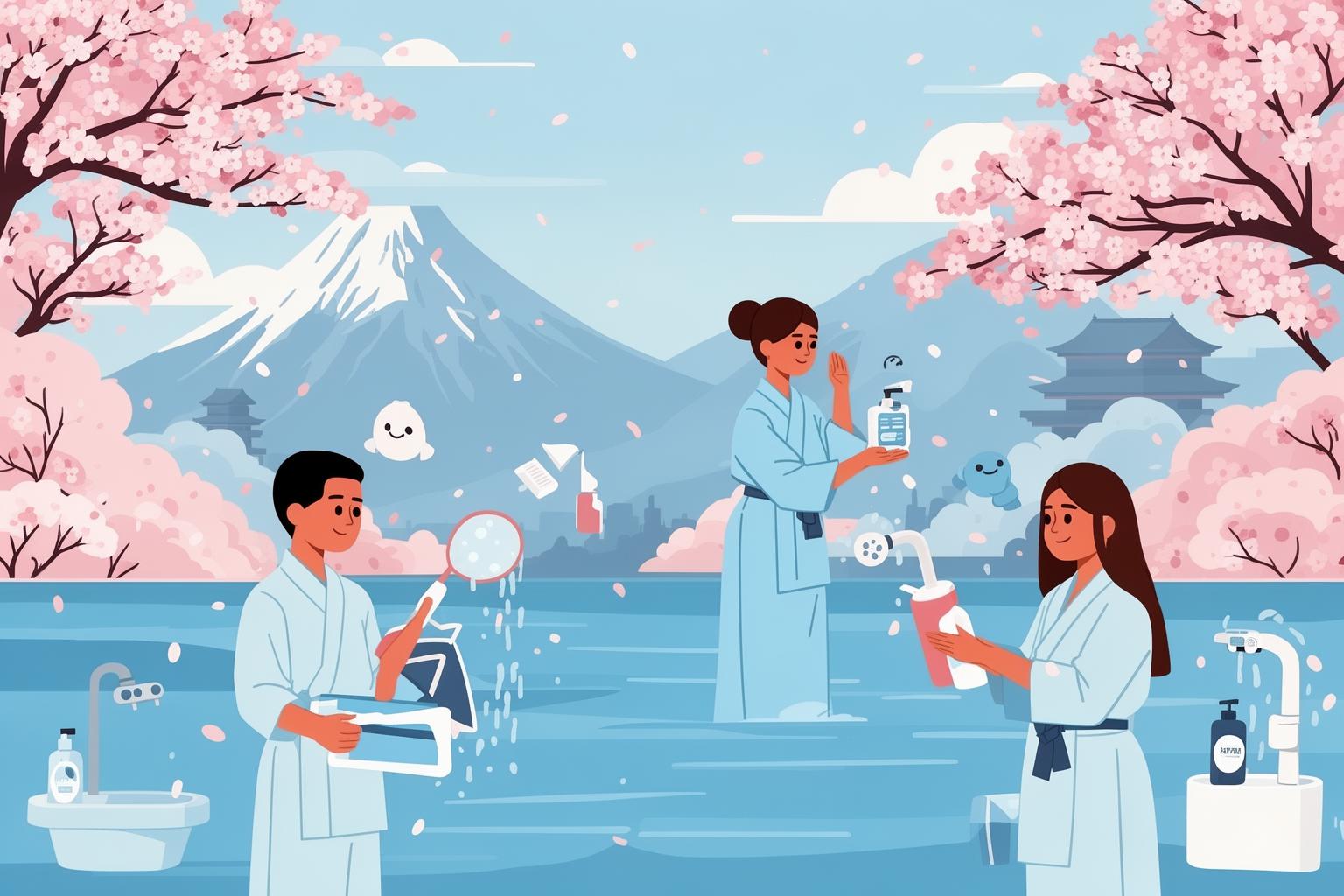
To understand why the pre-bathing scrub is absolutely essential, you need to look further back than the invention of modern plumbing. Japan’s deep-rooted obsession with cleanliness stems from the native Shinto religion. Shintoism centers around the concepts of purity (kiyome) and impurity (kegare). Impurity is not necessarily a moral failing; rather, it is a spiritual stain that accumulates through contact with things like illness, death, or even the everyday grime of life. Cleansing oneself of kegare restores spiritual balance.
The most fundamental way to do this is with water. This practice is evident at every Shinto shrine, where visitors perform a ritual hand-washing and mouth-rinsing called temizu before approaching the main hall. This act of purification, known as misogi, is a foundational concept. Thus, the bath has always been more than just a bath—it is a form of daily misogi.
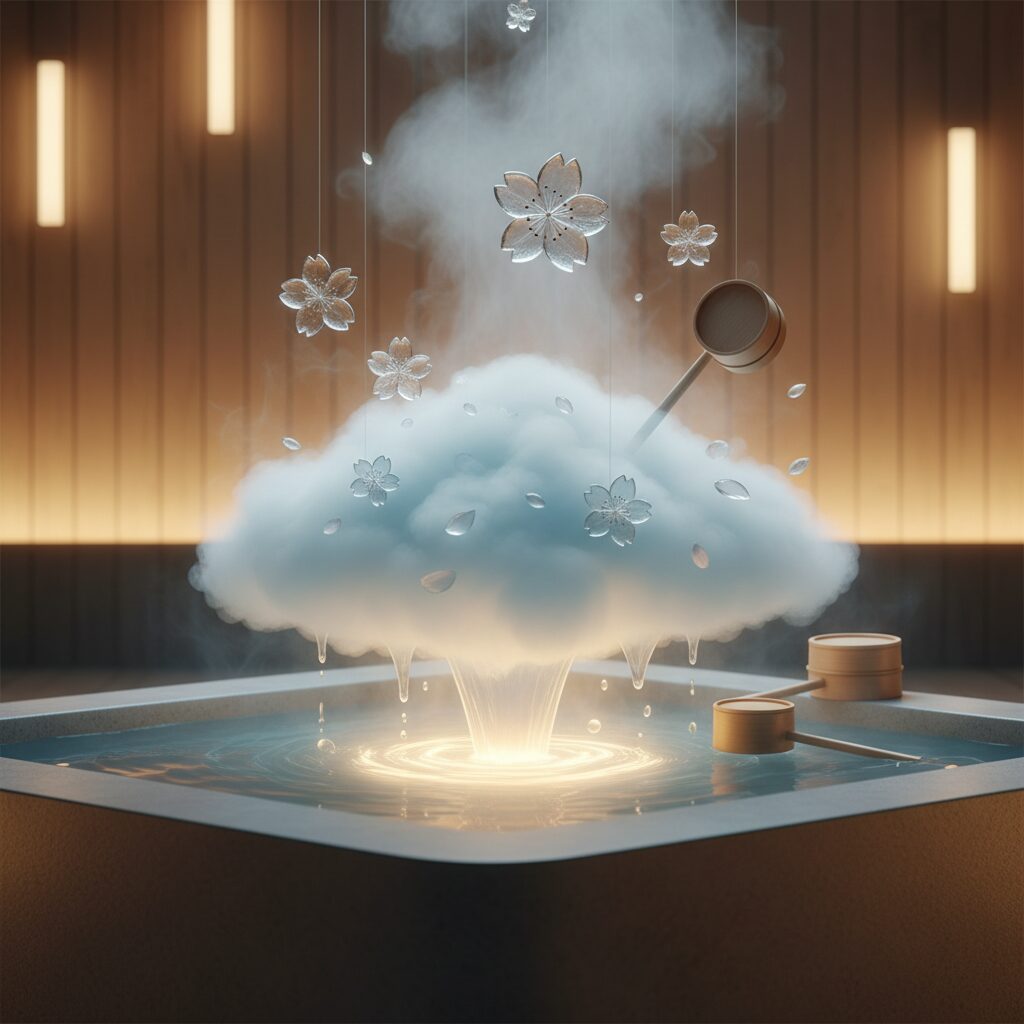
When you enter a sentō, the main tub—the deep, hot, steaming vessel of bliss—is regarded as a pure space. It is meant for soaking, healing, contemplation, and connecting with others. It is absolutely not meant for washing. Bringing the dirt and sweat of the outside world into that communal water would be a serious violation, both hygienically and, on a deeper cultural level, spiritually. It’s akin to entering a church with muddy boots and tracking filth all the way to the altar.
This is why the washing area, with its rows of low stools, faucets, and handheld showers, is the crucial first stop. Here, you are expected to meticulously scrub every inch of your body. This is not a quick rinse; it is a thorough, sudsy process. Only after you are completely clean, with every trace of soap washed away, are you deemed worthy of entering the main bath. This ritual keeps the water pristine for everyone. It is an act of consideration that sustains the entire experience. You are not just cleaning yourself for your own benefit; you are preparing to be a welcome member of a temporary, shared sanctuary.
This spiritual necessity was strengthened by centuries of practical need. Until well into the post-war era, most Japanese homes did not have private bathrooms. The sentō was not a luxury or a mere choice; it was an essential part of daily life. It was the place you went every evening to wash away the day. This transformed the bathhouse from a site of occasional ritual into the neighborhood’s communal bathroom, making the rules of shared use all the more important.
Hadaka no Tsukiai: The Great Social Equalizer
Here we reach the core of the sentō’s role within the community. Japan is a society governed by fairly rigid social hierarchies. Language, gestures, and behavior all change depending on who you are speaking to—your boss, a junior colleague, or an elder. These social codes are intricate and deeply ingrained. Yet, in the sentō, something extraordinary occurs: everyone becomes naked.
This idea is embodied in the phrase hadaka no tsukiai, which roughly means “naked communion” or “naked friendship.” When you remove your clothes, you also remove the outward symbols of your status. The CEO’s expensive suit, the laborer’s work attire, the student’s uniform—all go into the same wicker basket in the changing room. Inside the bathing area, everyone stands equal. A corporate executive and a local shopkeeper are simply two naked men, sharing the same hot water, their bodies exposed to the same aches and pains.
This imposed equality fosters a distinctive social environment. The usual rules of interaction are loosened. Conversations can flow more openly and honestly than they might in a fully clothed, socially stratified setting. People who might only nod politely on the street can find themselves discussing everything from the day’s baseball game to local politics or personal concerns. It’s a space of disarming vulnerability. You cannot hide behind a title or uniform when sitting on a small plastic stool, scrubbing your back.
This dynamic is vital in a culture where expressing one’s true feelings (honne) is often secondary to preserving social harmony (tatemae). The sentō offers a rare outlet, a sanctioned space where people can lower their guards. It acts as a form of social therapy, where the warmth of the water seems to dissolve some of the daily social armor, enabling a more direct and human connection.
The Choreography of the Bath
Watching the flow of a busy sentō is like observing a silent, well-practiced dance. Everyone knows the steps, and each movement is governed by a shared understanding of respect for the space and others.
First comes the kakeyu. Before even sitting down to wash, you take a small bucket and scoop hot water from a basin or the main tub, splashing it over your torso, legs, and feet. This partly helps your body adjust to the bath’s temperature, but it’s also an additional layer of rinsing, a final gesture of purification before the main washing.
Next is the main wash at the shower stations. You sit on the low stool—standing and showering is considered rude, as you may splash your neighbors. You use the provided soap or your own and scrub thoroughly. Afterward, you carefully rinse off not only yourself but also your stool and the patch of floor around you, leaving it clean for the next person. This exemplifies the Japanese consideration for others, a principle evident everywhere, from public toilets to restaurant tables.
The small towel you bring or receive serves multiple purposes and follows its own set of rules. You can use it to wash your body or to maintain modesty while moving around. However, one thing you must never do is place it in the bathwater, as it is considered unclean. Most people either fold it neatly and place it on their head or leave it on the side of the tub. Similarly, wringing it out into the bathwater is a major faux pas; the bathwater is strictly for soaking.
A Living Room for the Neighborhood
The social role of the sentō goes well beyond the steamy bathing area. Equally important is the datsuijo, or changing room. This space serves as the threshold between the outside world and the inner sanctuary of the bath. It’s lined with old wooden lockers, decades-old weighing scales, and often features a large clock on the wall. After bathing, people don’t simply dress and leave—they stay a while.
This is where the second part of the sentō experience unfolds. People sit on benches, toweling off leisurely and rehydrating. A classic post-bath ritual involves drinking a cold bottle of milk—often coffee-flavored—or a beer from one of the vintage vending machines. An old television might be quietly playing in the corner, showing a baseball game or a variety show that serves as a focal point for communal conversation. News is shared, gossip exchanged, and friendships nurtured.
The sentō attendant, traditionally seated on a high platform called a bandai with a vantage point over both men’s and women’s changing rooms, often serves as the unofficial gatekeeper and nerve center of the neighborhood. From this elevated position, the attendant collects money, sells soap and towels, and observes everything. They know the regulars by name, are aware of who’s been ill, and notice when someone hasn’t appeared for a few days. The bandai itself functions as a social hub, a central point of contact within the community.
In this way, the sentō acts as a “third place”—a term for a space that is neither home (first place) nor work (second place). It is a public living room and an informal community center where relationships are formed and sustained in a relaxed, low-pressure environment. For elderly residents living alone, the daily visit to the sentō offers a crucial social lifeline and a moment of human connection that breaks the day’s isolation.
The Sentō’s Modern Chapter
It’s no secret that the traditional sentō is becoming a rare sight. In the 1960s, there were tens of thousands across Japan, but today, only a few thousand remain. The rise of private bathrooms in modern homes has made sentō functionally obsolete for many. The old buildings are costly to maintain, and their owners are often aging with no successors to carry on the family business.
However, the story is far from over. Recently, there has been a significant cultural reevaluation of the sentō. A new generation of Japanese people, along with curious foreign visitors, is rediscovering what their grandparents always knew: the sentō offers something a private bath never can. It provides community, history, and a unique form of wellness.
This has ignited a revival movement. Some old sentō have been refurbished by young, design-savvy owners, transforming them into “designer sentō” featuring modern aesthetics, craft beer on tap, and even co-working spaces. They have become trendy, retro-chic destinations. Running clubs have adopted them as clubhouses, enjoying a group run followed by a communal soak and a beer. Artists have transformed them into galleries, celebrating the iconic Mount Fuji murals that often decorate the walls above the baths.
This contemporary revival recognizes that the core value of the sentō was never solely about cleanliness. It was about shared experience. In an increasingly digital and isolated world, the forced intimacy and simple, analog pleasures of the sentō feel more relevant than ever. It’s a place to disconnect from screens and reconnect with your own body and those around you.
The strict rituals remain, but their meaning has evolved subtly. For an older generation, they were second nature, the unquestioned grammar of daily life. For a younger generation, they are a deliberate choice—a way to participate in a tradition and preserve a unique cultural space. The rules now go beyond practical hygiene; they form the very essence of what makes the sentō special, a code that unites a community of strangers in a shared moment of warmth and tranquility.