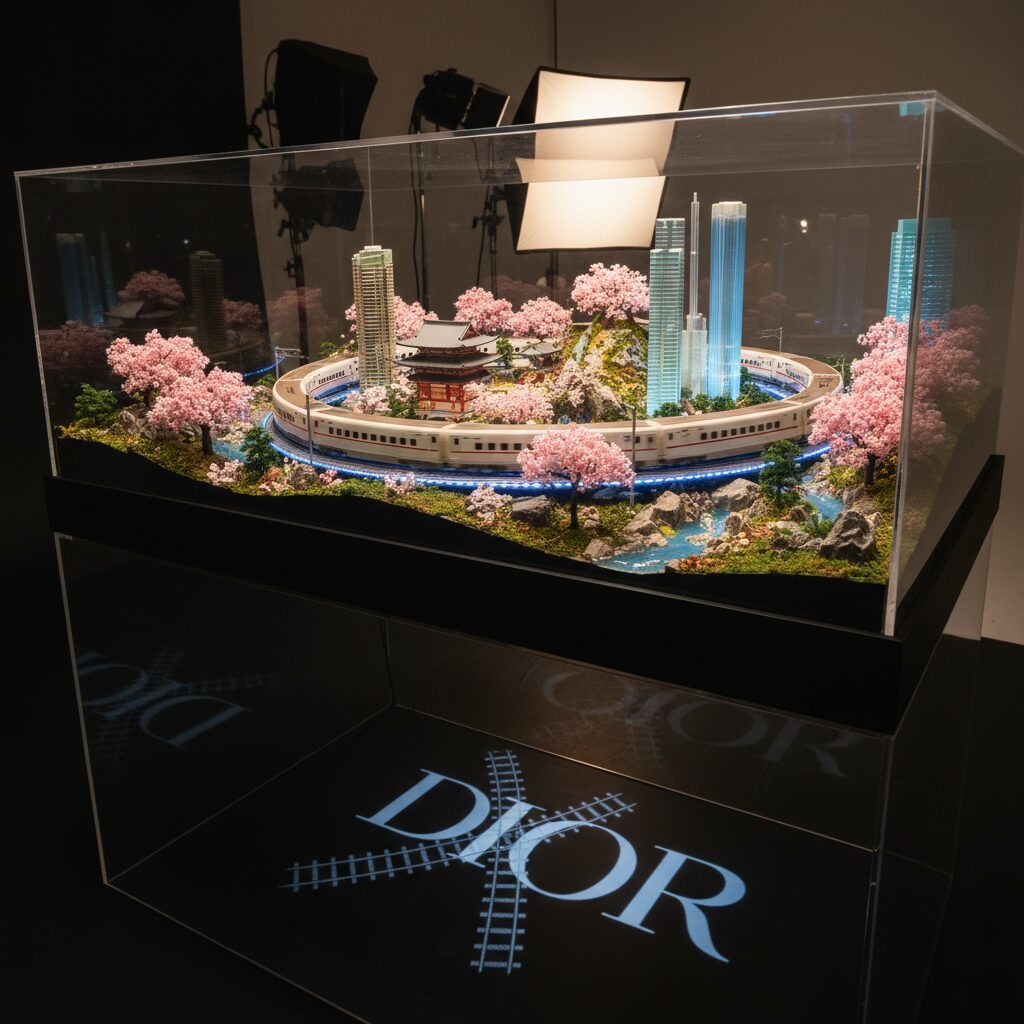
Walk into any major electronics store in Japan—a Yodobashi Camera or a Bic Camera—and push past the floors of gleaming rice cookers and the latest smartphones. Head up. Keep going until you find the hobby section. Tucked away somewhere between the Gundam models and the plastic tanks, you’ll find it: an entire universe dedicated to tetsudō mokei, or model railroading. At first glance, it seems familiar. You see meticulously detailed trains, from the iconic bullet-nosed Shinkansen to humble local lines, resting in clear plastic cases. But then you look closer, past the locomotives, and you see what the real obsession is about. It’s not just the trains. It’s the tiny, perfectly weathered Showa-era ramen shop. It’s the miniature figures of high school students waiting on a rural platform, their backpacks slouched just so. It’s the sagging electrical wires, the faded advertisements on the side of a building, the almost imperceptible rust stains on a guardrail. You realize you’re not looking at a collection of toy trains. You’re looking at a collection of captured moments. You’re looking at a world.
For most people outside Japan, the idea of a model railroad conjures a specific image: a powerful locomotive, often a steam engine, chugging through an idealized, vaguely European or American landscape. The train is the hero of the story. But in Japan, that logic is often flipped. The train is simply the vehicle that moves you through the actual subject: the scenery, the atmosphere, the social landscape. The hobby isn’t merely about recreating a machine; it’s about recreating a society in miniature. It’s an act of curating memory, nostalgia, and a profound appreciation for the mundane beauty of everyday life. To understand tetsudō mokei is to understand that the diorama is the true destination, and the tracks are just the path to get there.
This dedication to capturing the essence of everyday life mirrors how Japanese yankii culture boldly redefines societal norms in unexpected yet resonant ways.
Beyond the Bullet Train
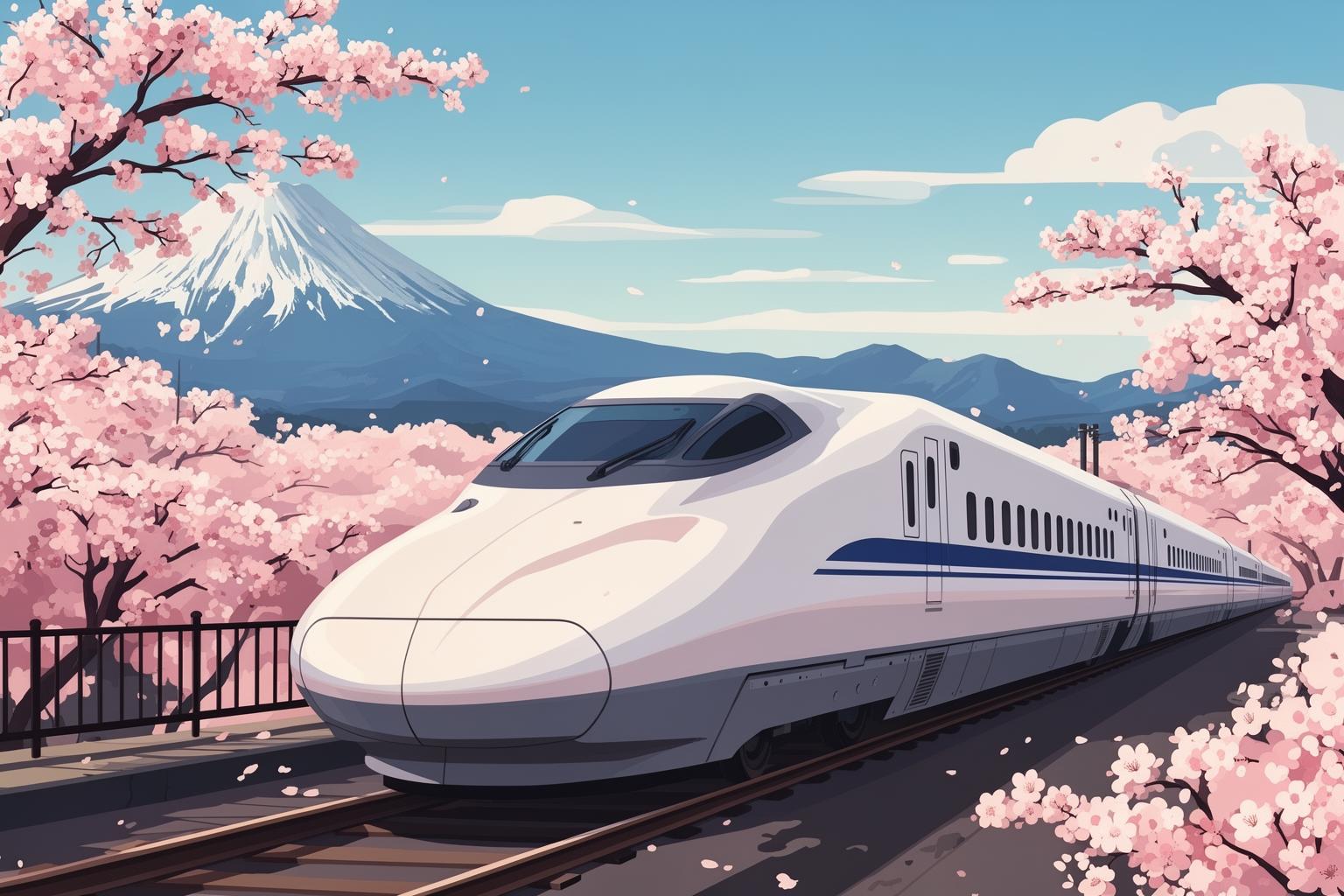
First, we need to discuss scale. In a country where personal living space is notoriously limited, the expansive O-gauge or HO-gauge layouts common in the West are an unattainable luxury for most. The vast majority of Japanese modelers work with the much smaller N-gauge (approximately 1:150 scale). This is not merely a practical choice; it fundamentally influences the entire philosophy of the hobby.
When your trains are small, your attention naturally shifts. You can’t depend on the sheer, imposing presence of a large locomotive to be the centerpiece. Instead, the train becomes part of a wider composition. Its small size allows for—and indeed requires—a more expansive and detailed environment to provide context. The “wow” factor comes not from the train itself but from the believable world it occupies. A tiny two-car local train slowly passing a meticulously detailed fishing village, complete with nets, boats, and a small shrine on a hill, is far more captivating than the same train running on a bare oval of track.
This is why Japanese manufacturers like Kato and Tomix excel at representing the ordinary. Yes, they produce flawless models of every train that has ever operated on Japan Railways tracks. But their true brilliance lies in their extensive catalogs of structures and accessories. They sell the ecosystem of Japanese life. You can purchase a multi-story danchi (public housing complex) with tiny laundry lines hanging on the balconies. You can buy a 7-Eleven, a FamilyMart, or a Lawson, complete with accurate logos and interior details visible through the windows. You can find gravestones for temple cemeteries, signal boxes, telephone poles, and even tiny bicycles to lean against fences. These companies aren’t just selling model parts; they’re offering prefabricated nostalgia—the building blocks of a shared memory.
The Scenery Is the Story
The essence of Japanese model railroading resides in the reiauto (layout) or diorama. This is where craftsmanship goes beyond simple construction and evolves into storytelling. Many enthusiasts aim to capture a particular time, place, and mood—a concept the Japanese refer to as fūkei. It represents more than just scenery; it embodies the entire atmosphere and the spirit of a location.
Many layouts serve as exercises in historical preservation. They meticulously recreate Japan during the Shōwa period (1926-1989), especially the years marked by rapid post-war economic growth. This was a period of profound change, when wooden buildings still stood alongside new concrete structures, city streets were filled with tangled wires and neon lights, and the countryside was just beginning to face the advance of modernity. For those who experienced this transformation, as well as for younger generations who know it only through films and photographs, recreating it in miniature is a way to connect with the past.
The magic lies in the details. A modeler might spend weeks perfecting the rust on a corrugated iron roof, using specialized powders and washes to achieve the exact hue of decay. They’ll debate the correct shade of asphalt on a road from 1975 versus one from 1985. They’ll hand-paint the faded lettering on a movie theater marquee advertising a film that was popular during their youth. This isn’t merely modeling; it’s a forensic reconstruction of a lost world. The train running through the scene is almost incidental—it serves as a time machine, the catalyst that animates the static diorama, creating a four-dimensional experience.
The stories depicted are often deeply personal and subtle. A frequent theme is the satoyama, the transitional zone between mountains and arable land. These layouts showcase peaceful rice paddies, small farming villages, and a single-track line winding through the hills. This symbolizes a simpler, more natural way of life many feel has been lost. Here, the train is not a symbol of industrial strength but one of gentle connection, linking the small community to the wider world without overwhelming it.
The Philosophy of a Miniature World
To truly understand the appeal, it helps to view tetsudō mokei as a contemporary reflection of several enduring Japanese cultural and aesthetic values. The process of constructing these detailed worlds engages a much deeper mindset.
First is the profound admiration for miniaturization. From the art of bonsai, which encapsulates the essence of a towering tree in a small container, to the delicate carvings of netsuke, there is a cultural tradition of perceiving the vast within the small. A carefully made diorama is not a mere simplification of reality but its essence distilled. By reducing the world in scale, the modeler can concentrate on its fundamental elements and present them with a clarity often impossible to achieve at full size. Each component is selected and positioned with purpose.
Second is the aesthetic of mono no aware, often described as “the pathos of things.” It’s a soft, wistful recognition of life’s fleeting nature and the beauty in its impermanence. This sentiment deeply infuses the world of tetsudō mokei. The fixation on weathering, aging, and scenes from a lost era directly expresses this. The modeler isn’t simply constructing an immaculate, idealized town; they are creating one that has lived. The faded paint, cracked pavement, and overgrown weeds—these are not imperfections. They tell a story. They honor the beauty of things that once were and will never return.
Lastly, there is the element of control and creation. In a society that can often feel rigid and demanding, and in urban spaces where personal room is limited, this hobby offers a refuge. Within the boundaries of their layout, the modeler acts as a god. They are the urban planner, architect, landscape designer, and historian. They can craft a world that is orderly, beautiful, and meaningful—a perfect bubble of reality shaped exactly to their vision. This act of world-building is a potent form of creative expression and a source of profound personal fulfillment.
The Faces Behind the Layouts
So, who exactly is the typical tetsudō mokei enthusiast? The common stereotype is a middle-aged man, and while they do represent a core group, the community is much more varied. People from all backgrounds are attracted to different aspects of the hobby.
There’s the Shūshū-ha, the collector. For these individuals, the main pleasure lies in acquiring the models themselves. They often possess encyclopedic knowledge of train liveries, production runs, and limited editions. Their layouts tend to be simple, primarily designed to display their extensive collection of rolling stock.
Next is the Unten-ha, the operator. These hobbyists enjoy the technical side of running trains. They create intricate track systems with complex wiring, functioning signals, and computer-controlled schedules that replicate real railway operations. For them, the realism comes from the movement and logistics. The scenery serves as the backdrop, but the performance is the focus.
At the heart of our discussion is the Jiorama-ha, the scenery modeler. These are the artists. They may own only a few trains but dedicate hundreds of hours to crafting a small, hyper-realistic scene. They are experts in various materials, using everything from sculpted foam and static grass to crushed leaves and custom decals to bring their vision to life. They often visit specialty shops in Akihabara or Nippombashi, searching for the perfect miniature figure to complete a scene envisioned in their minds.
Of course, many hobbyists blend these types. A collector might be motivated to create a diorama to showcase their favorite train in its natural setting. An operator might find that realistic scenery makes running their trains a more immersive experience. The community flourishes in hobby shops, clubs, and large conventions held at venues like Tokyo Big Sight, where thousands gather to share their work, exchange techniques, and admire the worlds their peers have constructed.
A Social Landscape in Miniature
Ultimately, dismissing tetsudō mokei as merely a hobby about trains completely misses the point. It is a profound act of cultural preservation, personal expression, and social critique. These dioramas are not simply static models; they are arguments. They advocate for the beauty of the everyday, the significance of memory, and the stories woven into the spaces we occupy.
A layout showing a struggling shōtengai (traditional shopping street) with a handful of elderly residents going about their day comments on the decline of small local businesses amid giant malls and online shopping. A diorama of a pristine, beautiful coastline with a train running beside it celebrates Japan’s natural beauty, perhaps tinged with a hint of melancholy for its fragility.
When you watch a model train glide quietly through one of these meticulously crafted settings, you’re not simply observing a piece of machinery moving along a track. You’re invited to look more closely at the world around it. You notice the salaryman waiting for his ride home after a long day. You see the graffiti on a concrete wall. You spot the cat sleeping on a warm tiled roof. You are witnessing a scale model not just of a railroad but of life itself.
It’s a quiet, deeply focused passion, one that exchanges adrenaline for atmosphere and speed for subtlety. It is the art of noticing, and in a world that rushes faster each day, slowing down to perfectly recreate a single, meaningful moment becomes a radical act of love. You came to see the trains, but you stay for the world they reveal. That’s the secret. That’s when you truly understand.