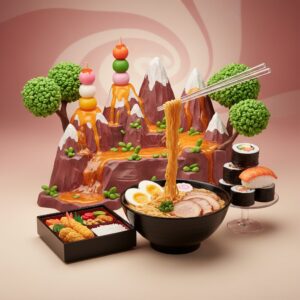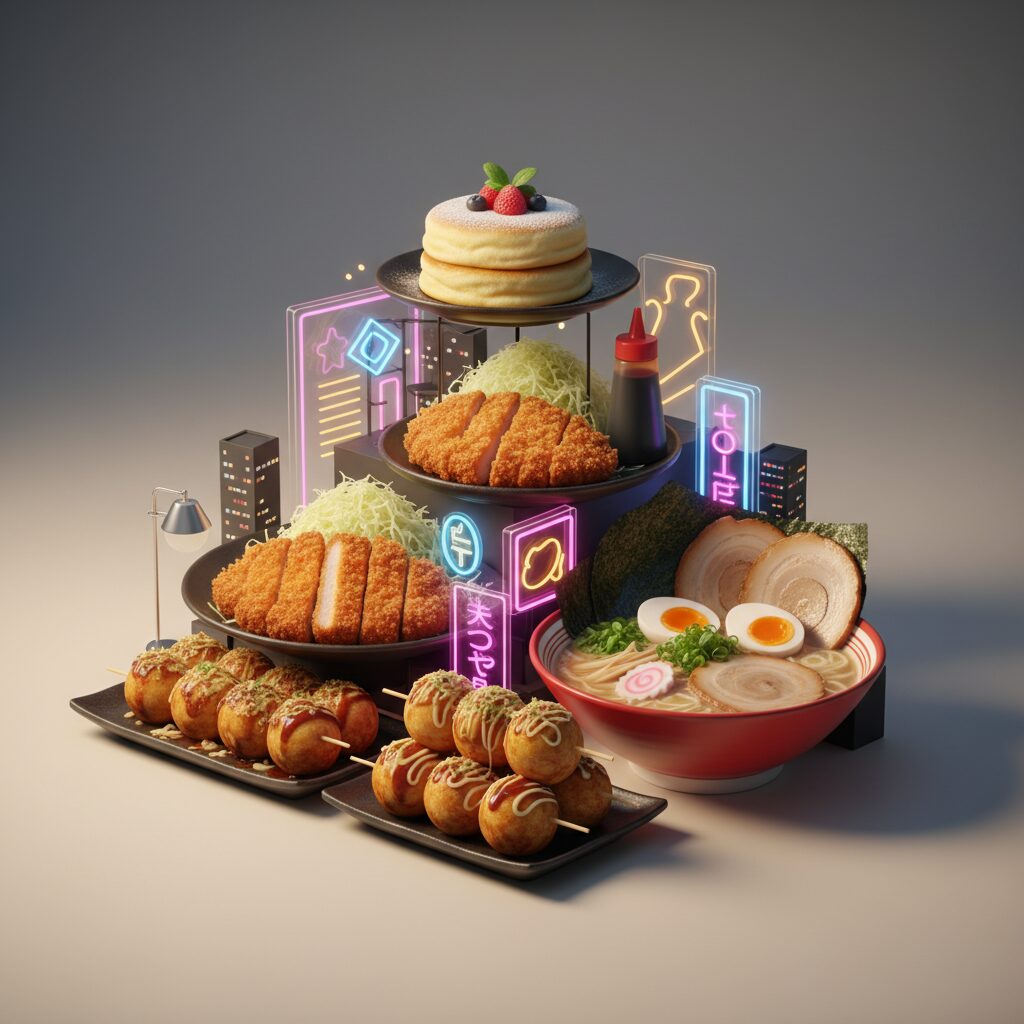
Ask anyone about Japanese food, and the conversation inevitably drifts to the titans: the exquisite art of sushi, the multi-course ballet of a kaiseki dinner, the marbled perfection of Kobe beef. This is what we see in glossy travel magazines and Michelin guides. It’s Japan’s “A-list” cuisine, the food of ceremony, precision, and often, intimidating price tags. But to focus only on this is to read the first and last chapters of a novel while skipping the entire story in between. The real, everyday culinary soul of Japan, the food that fuels its cities and comforts its people, belongs to another category entirely. It’s called B-kyu Gurume (B級グルメ), or “B-grade Gourmet,” and it is, without a doubt, one of the most misunderstood and essential parts of Japanese culture. Forget everything the name implies. This isn’t about second-rate ingredients or sloppy preparation. B-kyu isn’t a grade of quality; it’s a statement of philosophy. It represents a world of food that is delicious, affordable, unpretentious, and deeply connected to the rhythm of daily life. It’s the steaming bowl of ramen a salaryman slurps down at a cramped counter after a long day, the sizzling okonomiyaki shared with friends at a neighborhood joint, the warm takoyaki bought from a street stall during a summer festival. This is Japan’s comfort food, its soul food, and understanding it means understanding a much more honest and accessible version of the country itself.
For readers curious about how Japan’s everyday cuisine transcends its humble origins, B-Grade food as a first-class experience offers a deeper dive into its unique charm.
What B-kyu Is Not: Deconstructing the “B”
Let’s address the most important point first. In the West, labeling something as “B-grade” is considered an insult. It evokes images of B-movies with flimsy sets and questionable acting—cheap, cheerful, but ultimately inferior. However, this is not the meaning of B-kyu in Japan. The “B” here does not judge quality but rather classifies style and purpose. It directly contrasts with A-kyu (A級), the realm of high-end dining.
A-kyu cuisine focuses on refinement, formality, and expensive, rare ingredients. It is an experience often set aside for special occasions, business dinners, or serious culinary pilgrimages. The atmosphere is quiet, service is carefully orchestrated, and the aim is to elevate food to an art form. It’s beautiful and often unforgettable, but it is not the food for everyday people.
B-kyu is the opposite of all that. It’s food that emphasizes satisfaction over sophistication. The ingredients are ordinary, the recipes hearty, and the price always reasonable. It’s fast, filling, and flavorful. The “B” marks a shift away from formality, leaning toward the casual and communal. It’s a culinary world where you don’t need reservations, a dress code, or deep knowledge of seasonal fish—you just need to be hungry.
Think of it like this: A-kyu is a symphony orchestra performing in a grand concert hall. B-kyu is the street musician playing a lively tune with infectious energy in a bustling subway station. Both create music, but they serve different purposes and connect with their audiences in fundamentally different ways. One is admired from a distance; the other is felt up close, becoming part of the city’s soundtrack. B-kyu Gurume is indeed the soundtrack of Japan’s stomach.
The Historical Roots of a Modern Obsession
The rise of B-kyu Gurume is no coincidence; it directly reflects Japan’s modern history. Its origins trace back to the chaos and scarcity of the post-World War II period. As the nation began to rebuild, there was an urgent need for inexpensive, high-calorie food to nourish a hungry, hardworking population. From black markets and makeshift stalls, simple, hearty dishes started to emerge. Ingredients like flour and cabbage were abundant and affordable, leading to creations such as okonomiyaki, a savory pancake that could be stretched to feed an entire family.
During Japan’s rapid economic growth in the 1960s and 70s, the B-kyu landscape evolved. The emphasis shifted from survival to fueling the countless “salarymen” who drove the economic miracle. Cities expanded, creating a demand for quick, satisfying meals to be eaten during short lunch breaks or commutes after long days of overtime. This era established the salaryman’s dietary trinity: ramen, curry rice, and gyudon (beef bowl).
Ramen-ya, small noodle shops often containing only a dozen seats around a counter, became secular sanctuaries for urban workers. Here, a man could sit shoulder-to-shoulder with strangers, united in the solitary, slurping ritual of consuming a steaming bowl of savory noodles. Speed and efficiency were key. You purchased a ticket from a vending machine, handed it to the chef, and within minutes, a piping-hot bowl appeared before you. No small talk, no fuss—just a perfect, self-contained meal.
This history is ingrained in the very heart of B-kyu food. It was born out of necessity and shaped by industrialization’s fires. It carries a cultural memory of shared struggle and collective ambition. That’s why it resonates so profoundly; it’s not just food, but a taste of the nation’s journey.
The Holy Trinity of B-kyu Gurume
While the universe of B-kyu cuisine is vast and ever-growing, its stars can be grouped into a few key constellations. These aren’t merely lists of dishes; they embody fundamental approaches to quickly, affordably, and fully satisfying the Japanese palate.
Noodle Nirvana: Ramen, Yakisoba, and Udon
Noodles form the undisputed backbone of B-kyu cuisine. They are versatile, comforting, and serve as the ideal base for an endless variety of broths and toppings. Ramen is, naturally, the king. Far from the instant packets found overseas, ramen in Japan represents a world of meticulous craftsmanship. Every detail, from the alkalinity of the noodles to the rich complexity of the broth (which can simmer for days), reflects intense pride from the chef. Each region has its own signature style: the thick, miso-based broth of Sapporo; the cloudy, pork-bone tonkotsu of Fukuoka; the clear, soy-sauce shoyu of Tokyo. A bowl of ramen offers a complete, soul-warming meal, and its ubiquity makes it the quintessential B-kyu experience.
Yakisoba, by contrast, is the noodle of celebration and community. These fried noodles, cooked on a huge teppan griddle with pork, cabbage, and a sweet-savory sauce, evoke the signature aroma of any Japanese festival or outdoor event. The clanging of metal spatulas on the hot iron and the rising fragrant steam create a pure sensory spectacle. Yakisoba is meant to be eaten on the go, from a simple plastic tray, and shared among friends. It’s simple, messy, and utterly joyous.
Then there is udon — thick, chewy wheat noodles that provide a gentler, more soothing experience. Whether served hot in a delicate dashi broth or cold with a dipping sauce, udon is comfort in its purest form. Standing-only udon shops at train stations are a classic B-kyu institution, offering travelers and commuters a chance to quickly refuel with a delicious, nourishing meal in under five minutes.
The Griddle and the Fryer: Okonomiyaki, Takoyaki, and Karaage
This category highlights the fun, often communal aspect of B-kyu. These are foods designed for sharing and enjoying in a lively atmosphere. Okonomiyaki, meaning “grilled as you like it,” is a savory pancake made from flour and egg batter filled with cabbage and a variety of ingredients, from pork belly to squid to cheese. Many restaurants feature a large teppan built right into the table, allowing diners to cook it themselves—an entertaining, interactive ritual that makes it a favorite for group outings. The two main styles, Osaka-style (ingredients mixed into the batter) and Hiroshima-style (ingredients layered), inspire passionate regional loyalty.
Takoyaki, or grilled octopus balls, are another Osaka specialty that has spread nationwide. Watching a skilled vendor expertly flip dozens of these batter-filled spheres in a special cast-iron mold is captivating. Served piping hot, drizzled with tangy sauce and Japanese mayonnaise, and sprinkled with bonito flakes that “dance” from the heat, takoyaki make a perfect, shareable snack. Like yakisoba, they are an essential part of the festival experience.
Karaage, Japanese-style fried chicken, is perhaps the most universally loved B-kyu item. Marinated in soy sauce, ginger, and garlic, then coated in potato starch and double-fried to crispy perfection, karaage is juicy, flavorful, and highly addictive. It’s found everywhere: in bento boxes, on izakaya menus, and sold by weight in supermarket delis and convenience stores. It’s the go-to comfort food for any occasion, from family picnics to late-night beer companions.
The Bowl and the Skewer: Donburi, Curry Rice, and Yakitori
This group emphasizes efficiency and straightforward satisfaction. Donburi refers to any dish served in a bowl over rice. Variations are endless, but the most iconic B-kyu examples are gyudon (thinly sliced beef and onion simmered in a sweet-savory sauce) and katsudon (deep-fried pork cutlet simmered with egg and onions). These staples of Japanese fast food are served within seconds at massive chain restaurants, providing a hearty, balanced meal for just a few coins.
Japanese curry rice, or karē raisu, is another national favorite. It’s a thick, mild, and slightly sweet curry stew, quite different from Indian or Thai varieties. With naval origins adapted from the British, it is now considered a quintessential taste of home for most Japanese. It’s a standard meal in school cafeterias and company canteens, associated with warmth, family, and complete lack of pretension.
Lastly, there is yakitori—grilled chicken skewers. A night at a yakitori-ya is a fundamental Japanese ritual. Diners sit at the counter, watching the master grill various skewers over hot charcoal. Every part of the chicken is used, from thigh (momo) and breast (mune) to heart (hatsu) and skin (kawa). Skewers are ordered a couple at a time, seasoned with either salt (shio) or a sweet soy glaze (tare), and paired with a cold beer or sake. It’s a slow, relaxed way to eat, the perfect way to unwind and socialize after work.
Beyond the Plate: The Culture of B-kyu
To truly grasp B-kyu Gurume, you need to look beyond the food itself and take into account the context in which it’s enjoyed. The atmosphere, social customs, and local pride are just as significant as the recipe.
The Power of Place: Yokocho, Shotengai, and Michi-no-Eki
B-kyu cuisine flourishes within particular environments. Yokocho, the narrow, lantern-lit alleys packed with tiny eateries and bars, serve as living museums of post-war Japan. Spots like Shinjuku’s Omoide Yokocho (“Memory Lane”) are smoky, noisy, and wonderfully intimate. You perch on a stool, elbows nearly touching your neighbor’s, becoming part of a fleeting, anonymous community.
Shotengai, traditional covered shopping arcades, represent the commercial and social hubs of many neighborhoods. These are home to family-run shops that have mastered one or two B-kyu dishes over generations—a famous croquette stand, a local takoyaki vendor, a beloved ramen shop. Dining in a shotengai feels like you’re directly connecting with the local spirit.
In rural areas, michi-no-eki, or roadside stations, have become vital centers for B-kyu culture. Far more than mere rest stops, they showcase local produce and regional specialties. You might discover a unique soft-serve ice cream made with local wasabi, a burger featuring regional brand beef, or a special type of fried noodle exclusive to that prefecture.
Gotōchi Gurume: Food as Local Pride
This brings us to an essential sub-genre of B-kyu: Gotōchi Gurume (ご当地グルメ), or local gourmet. In a culturally homogenous country like Japan, food serves as a key way for towns and prefectures to express their unique identity and draw tourists. Entire towns are renowned for a single B-kyu dish. Fujinomiya, for instance, is synonymous with its distinctively chewy yakisoba. Hamamatsu is known for its gyoza, often served atop a mound of bean sprouts. Hiroshima boasts a layered, noodle-filled style of okonomiyaki that fuels a rivalry with Osaka as intense as any sports feud.
This trend has been boosted by events such as the B-1 Grand Prix, a huge annual festival and contest where towns nationwide compete to claim the title of best local B-kyu dish. It’s a celebration of regional identity and culinary innovation, turning obscure local favorites into nationwide sensations almost overnight. Gotōchi Gurume demonstrates that B-kyu is not a uniform category, but a vibrant mosaic of local traditions.
The Anti-Restaurant Experience
The ritual of eating B-kyu food is marked by its informality. At a ramen shop, slurping is not only accepted but encouraged, as it helps cool the noodles and enhances the flavor. At a gyudon chain, you’re in and out within fifteen minutes. At a yakitori-ya, you watch and smell your food being grilled right before you. There is no barrier between the kitchen and the customer.
This relaxed atmosphere functions as a social equalizer. At a crowded counter, a construction worker, a student, and a high-level executive might sit side-by-side, their attention solely on the food before them. Typical Japanese social hierarchies seem to dissolve in the steam rising from a bowl of noodles or the smoke of a charcoal grill. The experience is straightforward, genuine, and refreshingly simple.
The Modern Evolution of B-kyu
Although its origins lie in the past, B-kyu Gurume is not a fixed tradition; it is continually evolving. Convenience stores (konbini) have become key players, offering an impressively high-quality selection of B-kyu classics like karaage, oden, and onigiri. They have made this cuisine more accessible than ever, available around the clock.
Meanwhile, some B-kyu chefs have reached rock-star status, with ramen shops so renowned that queues form for hours. These venues, such as the Michelin-starred Tsuta or Nakiryu in Tokyo, blur the distinction between B-kyu and A-kyu by applying fine-dining standards of ingredient sourcing and technique to a simple bowl of noodles. This results in a compelling hybrid: the heart of B-kyu combined with the precision of A-kyu.
Social media has also been instrumental, enabling tiny, obscure shops in remote areas to become viral sensations overnight. Food bloggers and Instagrammers undertake pilgrimages to capture the most obscure regional specialties, sustaining the spirit of discovery that has always defined the B-kyu experience.
Why It Matters
Ultimately, B-kyu Gurume is important because it tells a more authentic story of Japan than a thousand-dollar sushi dinner ever could. It’s a narrative of resilience, innovation, and regional pride. It captures the essence of a typical Tuesday lunch, a joyful weekend festival, and a comforting late-night meal after missing the last train home.
This food is deeply intertwined with the fabric of society, not separated from it. It’s democratic, accessible, and endlessly inventive. It represents a living culinary tradition that honors the country’s past while continuing to influence its present. So, by all means, enjoy that life-changing sushi experience. But don’t forget to pull up a stool at a modest noodle stand, order a dish you can’t quite pronounce, and savor a taste of Japan’s true soul. It’s usually served hot, quickly, and for under ten dollars.