When people imagine dining in Japan, their minds often conjure up a very specific, almost sacred image. Perhaps it’s a silent, reverent sushi counter where a master with decades of training places a single, perfect piece of nigiri before you. Or maybe it’s an elaborate, multi-course kaiseki meal in Kyoto, where every dish is a work of art reflecting the passing season. This is the Japan of glossy travel magazines and hushed documentaries—a world of A-grade perfection, and it is absolutely real. But it is only one, very small part of the story. The true culinary pulse of Japan, the food that fuels its cities and defines its regions, is found somewhere else entirely. It’s found in the steam-filled ramen shops, the smoky yakitori stalls tucked under train tracks, and the bustling neighborhood diners with plastic food models in the window. This is the world of B-kyu Gourmet.
Now, the term ‘B-grade’ might sound like a slight, a consolation prize for food that couldn’t make the A-list. In the West, it suggests second-rate quality, something to be avoided. But in Japan, B-kyu Gourmet (B級グルメ) is a badge of honor. The ‘B’ doesn’t stand for ‘bad,’ but rather for things like ‘basic,’ ‘beloved,’ and ‘boisterous.’ It’s a universe of food that is cheap, unpretentious, and deeply, satisfyingly delicious. It’s a culinary movement that champions local pride over global prestige and hearty flavor over delicate presentation. To understand B-kyu Gourmet is to understand how Japan really eats—not for a special occasion, but for the everyday ritual of living. It’s an invitation to pull up a stool, get your hands dirty, and taste the genuine, beating heart of Japanese culture.
The everyday culinary adventure extends to the konbini, a true culinary mecca that captures the essence of Japan’s vibrant, unpretentious food culture.
What ‘B-Grade’ Really Means

The term ‘B-kyu Gourmet’ did not originate in a chef’s kitchen but emerged from the pages of a magazine in the mid-1980s. It was a deliberate response to the extravagances of Japan’s Bubble Economy, a period when status was often gauged by one’s ability to secure a reservation at an upscale French restaurant or knowledge of imported wines. B-kyu Gourmet represented a grassroots pushback against this culinary elitism. It conveyed the message that exceptional food didn’t have to come with a white tablecloth and a months-long waiting list. Instead, it could be found in a simple bowl of noodles that costs less than a cup of coffee at a luxury hotel.
This movement was not about celebrating mediocrity; it aimed to redefine value. It introduced an alternative set of criteria for what constitutes a ‘gourmet’ meal. Rather than rarity and sophistication, it celebrated accessibility and authenticity. Over the years, this concept has evolved into a philosophy grounded in several core principles.
The Pillars of B-kyu
Above all, B-kyu Gourmet must be affordable. This is food for the masses, meant to be enjoyed regularly without worrying about the cost. It’s the salaryman’s quick lunch, the student’s after-school snack, and the family’s weekend indulgence. Its price point is integral to its identity, fostering an inclusive and egalitarian dining experience where everyone feels welcome.
Second, it must be accessible. You won’t find B-kyu meals in quiet temples of gastronomy. Instead, you’ll encounter them in bustling locations without pretense: train stations, shopping arcades, festival grounds, and neighborhood streets. The environment is often noisy, cramped, and practical. The priority is clear: serve delicious food quickly to hungry customers. The casual atmosphere is not a flaw; it’s a defining feature.
Lastly, and perhaps most critically, B-kyu Gourmet is deeply local. This is its essence. While a high-end sushi restaurant in Tokyo might offer the same premium bluefin tuna as one in Osaka, a B-kyu dish is typically inseparable from its place of origin. It incorporates local ingredients, reflects regional history, and stands as a potent symbol of civic pride. A bowl of Fujinomiya yakisoba carries the taste of Shizuoka, just as a plate of Hachinohe senbei-jiru embodies Aomori. It’s edible identity.
The Rituals of the Everyday Table
High-end Japanese dining is deeply rooted in ancient, formal rituals. There is a proper way to hold your chopsticks, receive a sake cup, and appreciate the ceramic ware. B-kyu Gourmet has its own rituals, but they are modern, practical, and focused on community and efficiency rather than quiet reverence. These are the unwritten rules of the common table.
The Counter and the Community
Many B-kyu establishments are very small, often consisting only of a counter with a few stools. This is not simply about saving space; it fosters a unique social dynamic. You sit shoulder-to-shoulder with strangers, all focused on the same purpose. You watch the master at work—the rhythmic flick of the wrist as they drain noodles, the intense concentration as they flip okonomiyaki, the skillful hand that garnishes a bowl of rice. There’s a theatrical element to it, a shared performance between cook and customer. The etiquette is straightforward: eat enthusiastically, don’t linger when others are waiting, and a simple ‘gochisousama’ (‘thank you for the meal’) on your way out is the only formality required. This is not a setting for long conversations; it’s a place for a brief moment of shared, focused enjoyment.
The Art of the Ticket Machine
When you approach many ramen, soba, or donburi shops, the first ‘person’ you encounter is a machine: the kenbaiki (券売機), or ticket vendor. You insert your cash, press a button corresponding to your chosen dish (often with a helpful photo), and receive a small plastic ticket. You give this ticket to the staff, and your order is set in motion. This system may seem impersonal, but it’s a ritual of efficient simplicity. It removes the need to handle cash at the counter, speeds up ordering, and ensures fairness—first come, first served. There’s no confusion, no special requests to delay service. It’s a perfectly democratic system designed to get good food to customers as quickly as possible.
From Salaryman Lunch to Festival Staple
The context of the meal shapes its ritual. During a weekday lunch rush, you’ll see office workers—’salarymen’—engaging in a time-honored practice: a quick, revitalizing solo meal. They find a spot at the counter, order, eat swiftly and quietly, and leave within fifteen minutes. This ritual is about refueling body and mind for the afternoon ahead. By contrast, consider B-kyu food at a local matsuri, or festival. Here, dishes like yakisoba (grilled noodles), takoyaki (octopus balls), and karaage (fried chicken) are part of a lively, communal celebration. The ritual centers on sharing, strolling, and soaking up the festive atmosphere. The food is not just nourishment; it’s an essential element in the theater of public celebration.
A Culinary Map of Japan
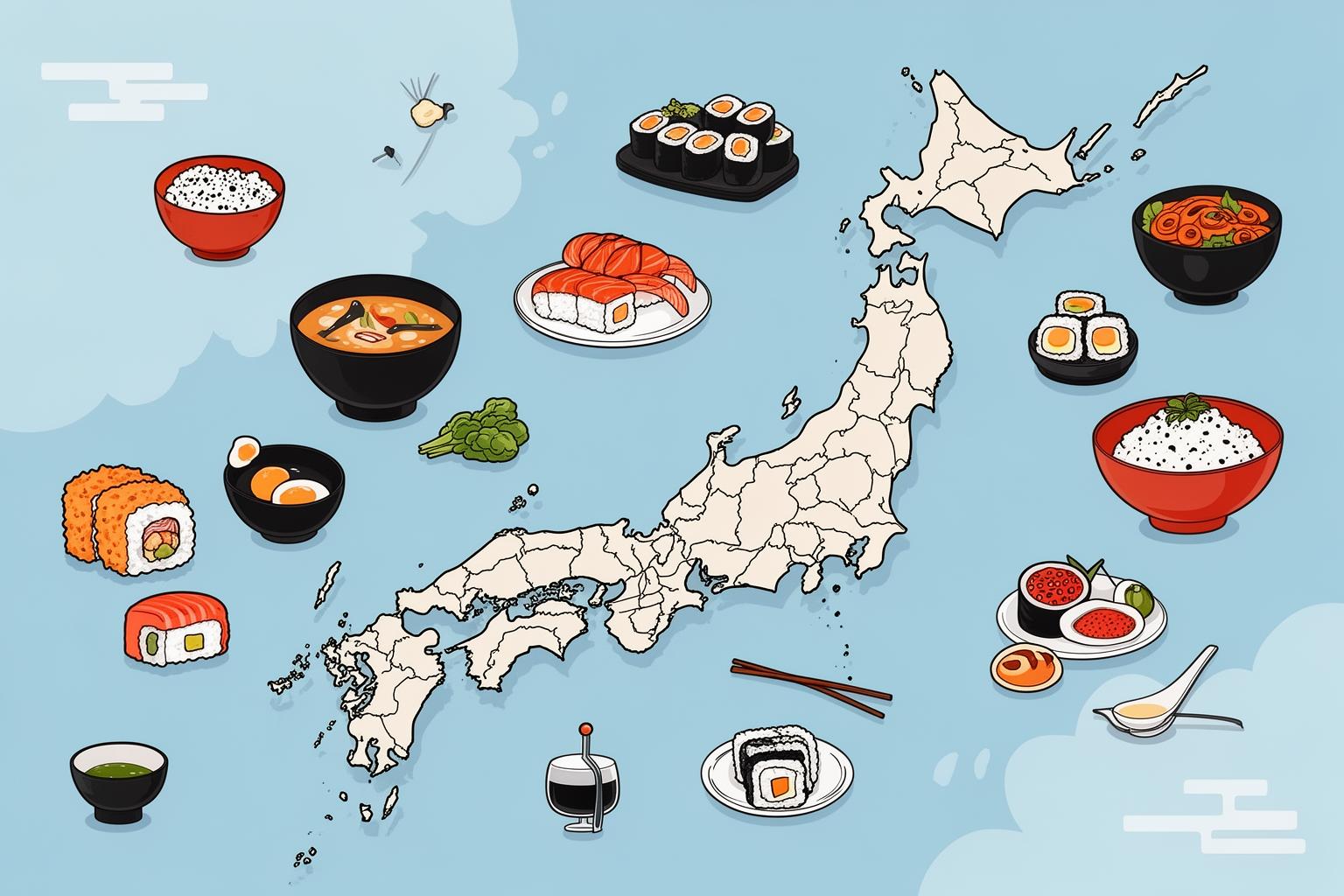
To truly understand B-kyu Gourmet, you need to experience it in its natural setting. This movement is a patchwork of thousands of regional specialties, each with its own unique story. Exploring these dishes is like embarking on a journey through Japan’s cultural and agricultural heritage.
Northern Soul: Hokkaido’s Hearty Fare
Hokkaido, Japan’s northernmost island, is known for its severe winters and abundant agricultural produce. Its B-kyu cuisine is, fittingly, hearty, robust, and warming. Sapporo’s Miso Ramen exemplifies this perfectly. Developed as a satisfying meal to fend off the cold, its rich pork-bone and miso broth, topped with sweet corn and a pat of butter, differs greatly from the lighter broths found in Tokyo. Traveling east to Obihiro, you’ll encounter Butadon, a deceptively simple dish of rice topped with grilled pork slices glazed in a sweet and savory soy-based sauce. It’s a straightforward celebration of the region’s quality pork farming—unpretentious, deeply gratifying, and truly local.
Kanto Classics: Tokyo’s Urban Bites
In the sprawling urban landscape of Tokyo, B-kyu Gourmet often takes on a more social and interactive form. In the Tsukishima neighborhood, streets are lined with eateries specializing in Monjayaki. A cousin to the better-known Okonomiyaki, monjayaki is a savory pancake made with a much runnier batter mixed with cabbage and other ingredients. The best part is the ritual: you cook it yourself on a griddle built into your table, using small spatulas to scrape the caramelized, slightly gooey delicacy directly onto your plate. It’s a messy, enjoyable, and communal meal—the perfect fuel for a night out with friends.
Kansai’s Kitchen: Osaka’s Famous Flavors
If Japan has a B-kyu Gourmet capital, it is undoubtedly Osaka. The city’s unofficial motto is kuidaore—to eat until you drop. Here, street food is more than just a snack; it’s a lifestyle. Takoyaki, crispy on the outside and molten on the inside with a tender octopus piece at its core, is a culinary icon. Watching vendors expertly flip dozens of these balls with a single pick is a mesmerizing spectacle. Then there’s Okonomiyaki, the savory pancake often likened to ‘Japanese pizza.’ The name means ‘grilled as you like it,’ reflecting Osaka’s generous and customizable food culture. Filled with cabbage and your choice of meat or seafood, slathered in sweet brown sauce and mayonnaise, and topped with dancing bonito flakes, it’s a maximalist triumph of flavor and texture.
Southern Comfort: Kyushu’s Rich Broths and Buns
On the southern island of Kyushu, flavors grow bolder and richer. Fukuoka is the spiritual home of Tonkotsu Ramen, known for its opaque, intensely porky broth created by boiling pork bones for hours until they dissolve into a creamy, collagen-rich soup. Paired with thin, straight noodles, it’s a bold and assertive ramen style that has earned global acclaim. In Nagasaki, a historic city as one of Japan’s few international ports, Chinese culinary influences appear in dishes like Kakuni Manju. These are fluffy steamed buns filled with tender braised pork belly simmered in soy sauce, mirin, and sugar until it melts in your mouth. It’s a perfect fusion—a taste of history you can hold in your hand.
More Than Just Food: B-kyu as Cultural Identity
What started as a casual magazine term has grown into a full-fledged cultural phenomenon. The clearest proof of this is the B-1 Grand Prix, an annual festival and competition where towns and cities compete to crown the nation’s favorite B-kyu dish. This isn’t a minor cook-off; it’s a huge event attracting hundreds of thousands of visitors. Communities rally together, create mascots, and campaign with tremendous enthusiasm. The aim goes beyond winning a trophy; it’s about machi-okoshi, or regional revitalization. For many smaller, post-industrial towns, their distinctive local dish has become a vital tool for drawing tourism and stimulating the local economy. The B-1 Grand Prix demonstrates that this ‘B-grade’ food is taken very seriously. It represents pride, resilience, and the driving force for a community’s future.
From my perspective, this celebration of humble, regional food resonates strongly throughout East Asia. Although the term ‘B-kyu Gourmet’ is uniquely Japanese, its spirit is universal. It’s the same affection and local pride behind Taipei’s night markets, filled with a variety of snacks from stinky tofu to oyster omelets. It’s the same devotion found in a Chengdu alley, where a vendor has perfected a specific spicy noodle recipe over generations. It’s a shared cultural understanding that the most memorable meals are often not the most expensive ones. Rather, they’re tied to a place, a community, and a history. They’re the people’s food.
So, when you visit Japan next, by all means, savor that unforgettable sushi dinner or experience the elegance of a formal kaiseki meal. But don’t mistake the peak for the entire range. The true, vast, and wonderfully diverse landscape of Japanese cuisine lies in the valleys. Follow the aroma of grilling pork, watch for the line of locals patiently waiting outside an unassuming shop, and listen to the joyful sounds of slurping noodles. Forget about grades. This isn’t about A or B. It’s about authenticity. And in that, B-kyu Gourmet offers nothing less than a first-class experience.