You’ve seen it in movies, in anime, and if you’ve spent any time in Japan, you’ve heard it before every single meal. A quiet moment of pause, hands sometimes pressed together, followed by a simple, unified phrase: “Itadakimasu.”
Ask for a translation, and you’ll get a handful of functional but incomplete answers. “Let’s eat.” “Bon appétit.” “Thanks for the food.” All of these capture a sliver of the truth, but they miss the universe contained within the word. They’re like describing a cathedral by saying it’s a building with a pointy roof. You get the form, but you miss the entire point.
Treating itadakimasu as a simple table manner is one of the biggest mistakes a curious outsider can make. It’s not just a polite signal to begin eating. It’s a quiet, powerful acknowledgment of everything that had to happen for the bowl of rice in front of you to exist. It’s a philosophy of gratitude, a spiritual check-in, and a compact lesson in Japanese cosmology, all packed into five syllables. This single word is a gateway to understanding Japan’s deep-seated connection to nature, its reverence for labor, and its belief in the interconnectedness of all life. It’s not about thanking the chef, though that’s part of it. It’s about thanking the sun, the soil, the fisherman, the farmer, the truck driver, and most profoundly, the very lives—plant and animal—that were sacrificed for your nourishment. To truly understand itadakimasu is to look at a simple meal and see the entire world.
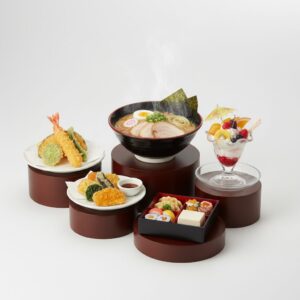
This deep appreciation for every element of a meal is paralleled by Japan’s innovative culinary scene, where even everyday outlets become hotspots for creative gourmet desserts.
Beyond the Dictionary: The Literal and Spiritual Meaning

To understand the essence of itadakimasu, we need to look beyond its dictionary meaning. The phrase does not simply mean “I eat” or “Let’s begin.” The verb it derives from, itadaku (頂く), is a humble and respectful way of saying “to receive” or “to get.” It’s a form of language used when accepting a gift from someone of much higher status, such as a boss, a respected elder, or even a deity.
From the Mountaintop: The Humble Verb ‘Itadaku’
The kanji character for itadaku, 頂, provides a beautiful visual metaphor. It signifies “crown of the head” or “mountain summit.” In ancient times, receiving something important from a superior involved raising it reverently above one’s head as a sign of profound respect and gratitude. The act of itadaku is therefore filled with humility. You are not taking something; you are being given it. You become the humble recipient of a gift from a higher authority.
This perspective transforms the act of eating. When you say itadakimasu, you are literally expressing, “I humbly receive.” But what — and from whom — are you receiving? Here the idea broadens from a simple gesture of politeness to a deep statement of awareness. You are receiving a gift not from a single individual but from the vast, interconnected network of life and labor behind the meal before you. It is a moment of recognition of the web of existence you are about to consume.
Acknowledging the Chain of Life
This “gift” is made up of countless elements, both human and natural. A simple bowl of ramen becomes a tapestry of sacrifice and effort. Saying itadakimasu quietly honors every thread in that tapestry.
First, there is the chain of people. You recognize the chef who skillfully prepared the ingredients. You also acknowledge the person who delivered those ingredients, the farmer who spent months cultivating the wheat for the noodles and the green onions for the garnish, the factory worker who made the ceramic bowl, the pig farmer who raised the animal for the chashu pork, and the fisherman who harvested the kelp for the broth. It is a moment of gratitude toward the unseen labor of hundreds of people, a reminder that your meal did not simply materialize but is the result of a long, complex supply chain built on human effort.
More deeply, however, itadakimasu goes beyond the human realm. You are honoring the lives that were sacrificed to nourish you. This is the core power of the phrase. You say thank you to the pig for its life, to the stalk of wheat for its life, to the fish that became the bonito flakes in the soup base. In Japanese culture, receiving another’s life force—its inochi (命)—is not viewed as an entitlement. It carries significant, almost solemn meaning. You are taking life to sustain your own. Itadakimasu is the humble acknowledgment of that sacrifice. It elevates eating from a simple biological act to a mindful one, weighted with the value and significance of the lives involved.
A Ritual Rooted in Buddhism and Shintoism
This holistic perspective on food did not arise in isolation. It is deeply connected to Japan’s two spiritual foundations: Buddhism and Shintoism. The principles of both traditions are embedded in itadakimasu, giving it a significance that goes beyond mere etiquette. In its own modest way, it serves as a daily spiritual practice.
The Buddhist Echo: Reverence for All Living Things
Buddhism, introduced to Japan in the 6th century, brought with it a profound respect for all sentient life. A fundamental belief is the interconnectedness of all existence—that every life is part of an unbroken cycle. Thus, taking life carries serious karmic consequences. Although Japanese cuisine is not strictly vegetarian, this Buddhist awareness cultivated a deep sensitivity to the sacrifices involved in consuming meat, fish, and even plants.
Itadakimasu is a mindful moment to acknowledge this. It offers a mental pause to honor the inochi, the life energy, you are about to receive. You are not merely ingesting nutrients; you are partaking in the life force of another being. The phrase expresses recognition of this exchange, gratitude for the sacrifice, and an unspoken vow to not waste it. It’s not about guilt over eating, but about fostering a profound sense of responsibility. You have received life’s gift from another; the least you can do is accept it with respect and intention.
This Buddhist influence raises the meal to a higher level. The kitchen becomes a kind of altar, and the dining table transforms into a space for a modest, daily rite of remembrance and gratitude for the cycle of life and death that sustains you.
The Shinto Resonance: Gratitude to Nature’s Spirits
While Buddhism offers a framework for honoring life, Japan’s native religion, Shintoism, provides a framework for revering nature itself. Shinto is an animistic faith, seeing divinity, or kami, in every part of the natural world. There are kami of mountains, rivers, trees, rocks, and rain. Thus, the food that comes from this world is not merely a resource but a sacred gift from the gods.
When you say itadakimasu, you are also expressing gratitude to these countless natural forces. You thank the kami of the sun and rain that nourished the rice fields, the kami of the sea that gave the fish, and the kami of the soil that grew the vegetables. This view dissolves the Western divide between secular and sacred. Foraging for mushrooms in the forest becomes a spiritual act. Planting rice is a collaboration with the gods. And eating a meal turns into a communion with the entire natural and divine world.
Itadakimasu verbalizes this Shinto vision. It is a small prayer that acknowledges your place within a living, breathing, divine ecosystem. You are not its master but a humble participant, thankful for the abundance it provides.
More Than a Phrase: How ‘Itadakimasu’ Shapes Behavior

The true significance of a cultural concept lies not only in its philosophical elegance but also in how it is expressed in everyday actions. Itadakimasu is more than just a phrase; it actively influences the way people engage with food, triggering a ripple effect of mindful practices.
The Act of Gassho: Body and Mind in Harmony
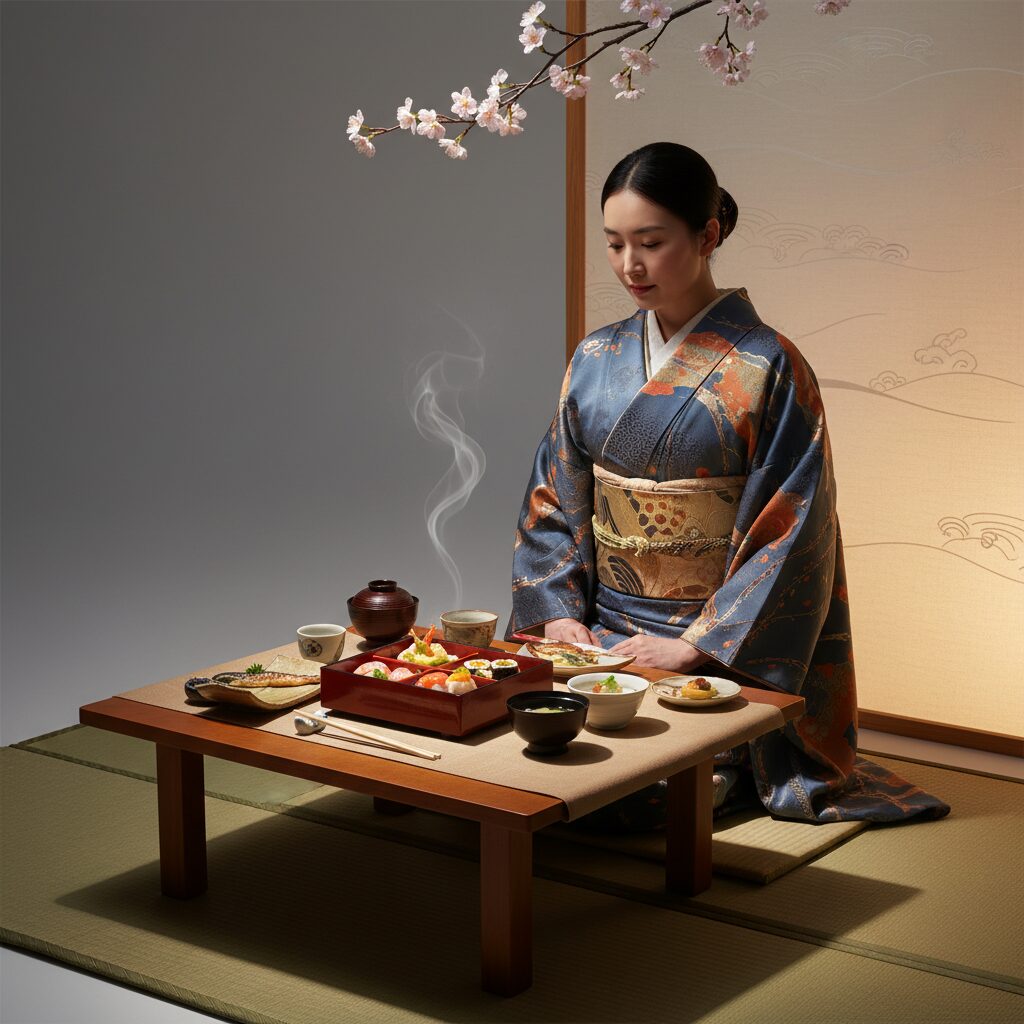
Frequently, the phrase itadakimasu is accompanied by the physical gesture called gassho, where the palms are pressed together in front of the chest, often accompanied by a slight bow of the head. This posture, rooted in Buddhism, serves as a universal symbol of respect, prayer, and gratitude throughout Asia. Combining the verbal expression of thanks with this physical action makes the ritual more purposeful.
It compels a pause. You cannot mindlessly slurp your noodles while your hands are clasped together. You must stop, center yourself, and be fully present before beginning the meal. The gassho gesture turns what might be a mumbled phrase into a conscious mini-ceremony. It unites body and mind in a single expression of gratitude, making the feeling more tangible and less automatic. Even when done briefly, it creates a moment of mindfulness amid a busy day.
The Philosophy of ‘Mottainai’: The Sin of Waste
The most profound behavioral outcome of the itadakimasu mindset is the strong cultural aversion to food waste, embodied in the term mottainai. Mottainai is a beautifully complex word expressing regret over waste. It goes beyond wasting money; it concerns the squandering of something’s intrinsic value.
Having consciously recognized the vast network of life and labor behind your meal, discarding any of it becomes a deep act of disrespect. It dishonors the farmer, rejects the sacrifice of the animal, and disregards the blessings of the kami. Wasting food is not merely inefficient; it is an ethical lapse. This reasoning underpins the common Japanese habit of finishing every single grain of rice in one’s bowl.
Parents teach this principle from an early age. A picky child might be gently reminded of the hard work the farmer invested in growing the carrots they refuse to eat. The message is clear: this food is a precious gift made through effort and sacrifice and deserves respect. The philosophy of itadakimasu offers the “why” behind the practice of mottainai, delivering a powerful and consistent cultural message about consumption and waste.
The Social Dimension: ‘Itadakimasu’ in Modern Japan
While its roots are deeply spiritual and personal, itadakimasu also serves as a powerful social bond, reinforcing communal values and guaranteeing its passage from one generation to the next.
A Shared Ritual in Schools and Homes
This is most clearly seen in the Japanese school lunch system. Every day, children nationwide take part in the ritual of serving and eating lunch together. Before the meal starts, the student on duty for the day (kyushoku toban) stands before the class and leads everyone in a loud, clear “Itadakimasu!” The entire class recites it in unison, transforming it from an individual prayer into a collective expression of gratitude.
This daily, shared practice is formative. It teaches children that food should not be taken for granted. It socializes them into a national culture of appreciation. It frames the meal as a communal event founded on cooperation and mutual respect—for the food, for those who prepared it, and for one another. This collective experience ensures that the spirit of itadakimasu is woven into society’s fabric from an early age.
Is the Meaning Fading? Habit vs. Heartfelt Gratitude
A natural question for any ancient tradition is whether it still holds meaning in a fast-paced, secular modern world. For many Japanese today, is itadakimasu merely a deeply ingrained habit—the cultural equivalent of saying “cheers” before drinking—lacking any conscious philosophical reflection?
To some extent, this is unavoidable. It’s unlikely that the average salaryman is pondering the spirit of the rice paddy kami before eating a convenience store bento during lunch. The phrase can, and often does, become automatic, part of daily life’s rhythm, said without a second thought.
Yet, to dismiss it as an empty habit overlooks the strength of cultural muscle memory. Even when uttered out of routine, the phrase functions as a steady, subtle presence in the culture. It maintains the pathway to gratitude. The profound significance doesn’t need to be consciously examined at every meal for the underlying value system to endure. The ritual itself sustains the idea. It guarantees that humility, respect for nature, and appreciation for labor remain embedded within the collective awareness. The habit is a vessel carrying the philosophy forward, even when its bearers are sometimes unaware. It ensures the foundation for deeper reflection is always present, ready to be awakened.
A Mirror to the Culture

Ultimately, itadakimasu is much more than just a phrase uttered before eating. It serves as a perfect microcosm of the Japanese worldview. It reflects a culture that finds deep significance in small, everyday rituals and prefers subtle, implicit recognition over loud proclamations.
It unveils a mindset of humility, where humans are not seen as conquerors of nature but as grateful recipients of its gifts. It emphasizes a profound respect for unseen effort and invisible connections, valuing both the farmer and the chef equally. It embodies a holistic outlook where spirituality is not confined to temples and shrines but is present in even the most ordinary actions—the simple act of eating.
To grasp itadakimasu is to begin to understand Japan. It shows that a bowl of rice is never merely a bowl of rice. It represents the culmination of sun, water, earth, life, and labor. It is a link to the entire universe. Saying itadakimasu is a quiet, graceful acknowledgment of that reality—a moment of pause to honor the life that preceded the meal.