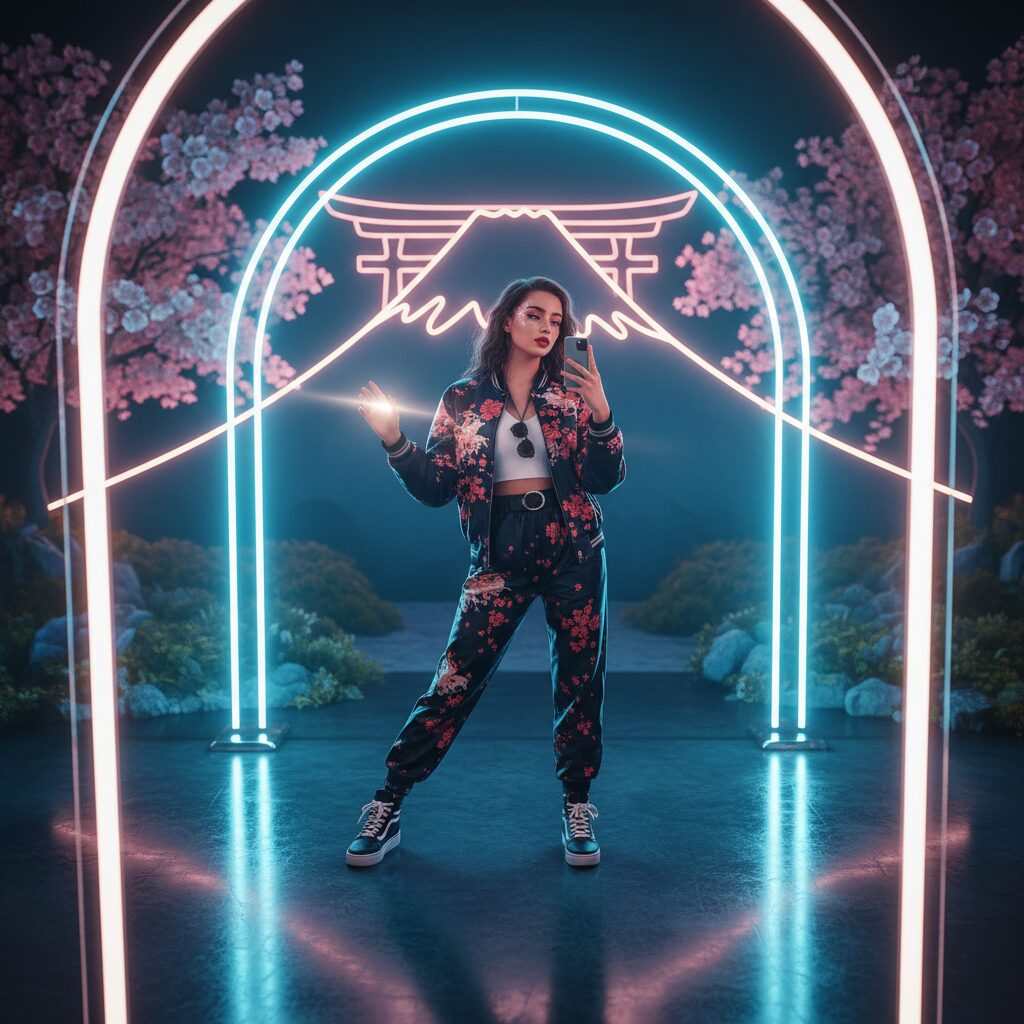
You’ve seen the photos. A perfectly symmetrical shot of a thousand vermilion shrine gates. A coffee cup from which a doe-eyed 3D foam creature peers up. A solitary figure silhouetted against a Shibuya crosswalk, the neon glow catching them just so. This isn’t just casual vacation snapping. This is the result of a hunt, a meticulously planned and executed expedition for a specific kind of photographic trophy: the Insta-bae (インスタ映え) shot.
The term itself is a clever portmanteau. It combines “Instagram” with the Japanese verb haeru (映える), which means “to shine,” “to stand out,” or “to look attractive.” But to translate it simply as “Instagrammable” is to miss the point entirely. Insta-bae isn’t just an adjective; it’s a noun, a goal, and for many, a full-blown subculture. It’s a deliberate aesthetic, a powerful commercial force, and a fascinating window into modern Japanese social dynamics. This isn’t about passively finding beauty and capturing it. It’s about actively pursuing a very specific, pre-visualized image, often traveling great distances and waiting in long lines, all to secure a photo that fits a precise, unspoken visual code. To understand Insta-bae is to understand a cultural ritual playing out in real-time, where the digital and the physical worlds have completely merged. It’s a quest for a fleeting moment of curated perfection, and it tells us a lot more about Japan than a simple pretty picture ever could.
Amid the fervor of chasing insta-bae moments, a deeper sense of cultural nostalgia emerges in Japan’s kissaten sanctuaries where quiet solitude offers a reflective counterbalance to the dazzling hustle of Tokyo.
The Anatomy of an Insta-bae Spot
Not every picturesque spot in Japan earns the title of bae. A serene, moss-covered temple might hold deep spiritual significance, but it likely lacks the striking visual impact needed. Insta-bae locations are concentrated bursts of visual appeal crafted to stand out on a small screen. They adhere to an unwritten yet surprisingly strict set of guidelines—a formula for digital allure.
The Currency of Color and Light
Color is crucial. Both the algorithm and the human eye scrolling through it crave saturation. This shows up in several distinct forms. There’s the pastel dream: cafes bathed in soft pinks and baby blues, offering multi-colored lattes and rainbow cheesecakes. These spots evoke a dreamy, almost otherworldly vibe. Then there’s the bold and graphic—vibrant primary-colored art installations at the teamLab Borderless digital art museum or the eye-catching pink storefronts in Harajuku. The aim is to create an instant, captivating visual impact. At night, this shifts to a fascination with neon. The dense, glowing signs of Shinjuku’s Omoide Yokocho or the moody lantern light of Kyoto’s Gion district aren’t merely atmospheric; they’re ready-made cinematic sets, providing flattering, colorful illumination that needs no filter.
The Power of Geometry and Pattern
Japanese aesthetics have long celebrated order, symmetry, and repetition—from kimono patterns to the raked gravel in zen gardens. Insta-bae taps directly into this tradition. The most sought-after shots often showcase strong leading lines and repeating patterns that impart a sense of depth and structure. Kyoto’s Fushimi Inari Shrine stands as the ultimate example, with its never-ending corridor of torii gates creating a mesmerizing, hypnotic effect. This principle extends to modern architecture, like the spiraling walkways of the Omotesando Hills shopping center or the circular skylight atop GINZA SIX. Such locations offer perfect framing, geometric forms that tame the city’s visual chaos and place the person in the photo at center stage.
The Non-Negotiable Kawaii Factor
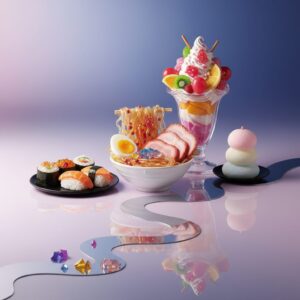
Cuteness, or kawaii, is a pervasive cultural force in Japan and a fundamental aspect of the Insta-bae universe, especially regarding food. A mere slice of cake won’t do. It must be a bear-shaped cake slice, garnished with an edible flower and a powdered sugar heart. Coffee isn’t just coffee; it becomes a canvas for elaborate latte art featuring Totoro or Hello Kitty. Parfaits rise like architectural wonders—towering combinations of ice cream, fruit, and wafers that defy gravity. These creations exist primarily to be photographed, not eaten. Ordering them is a tacit admission that the picture comes first. Taste is almost secondary to visual success.
The Urgency of the Ephemeral
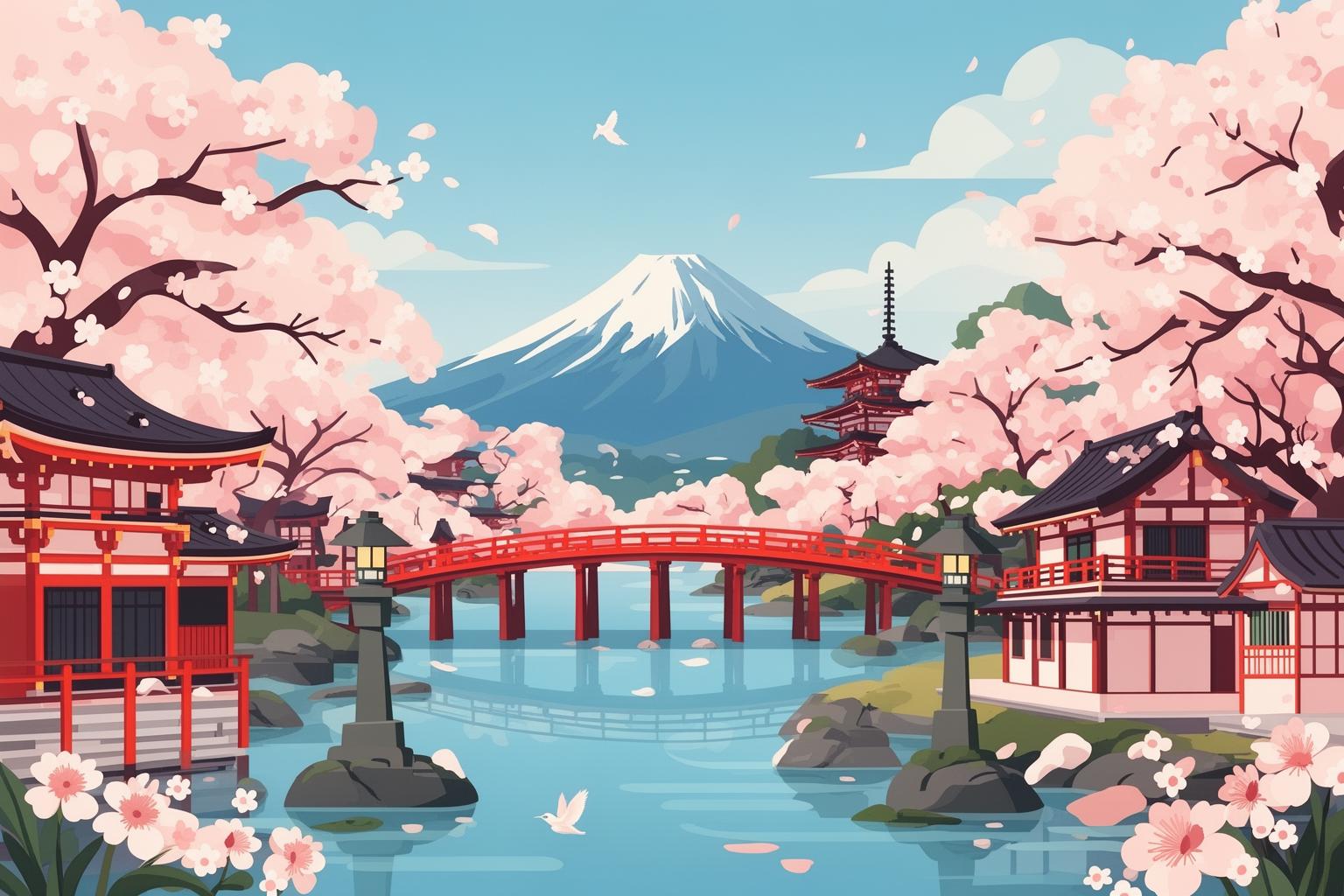
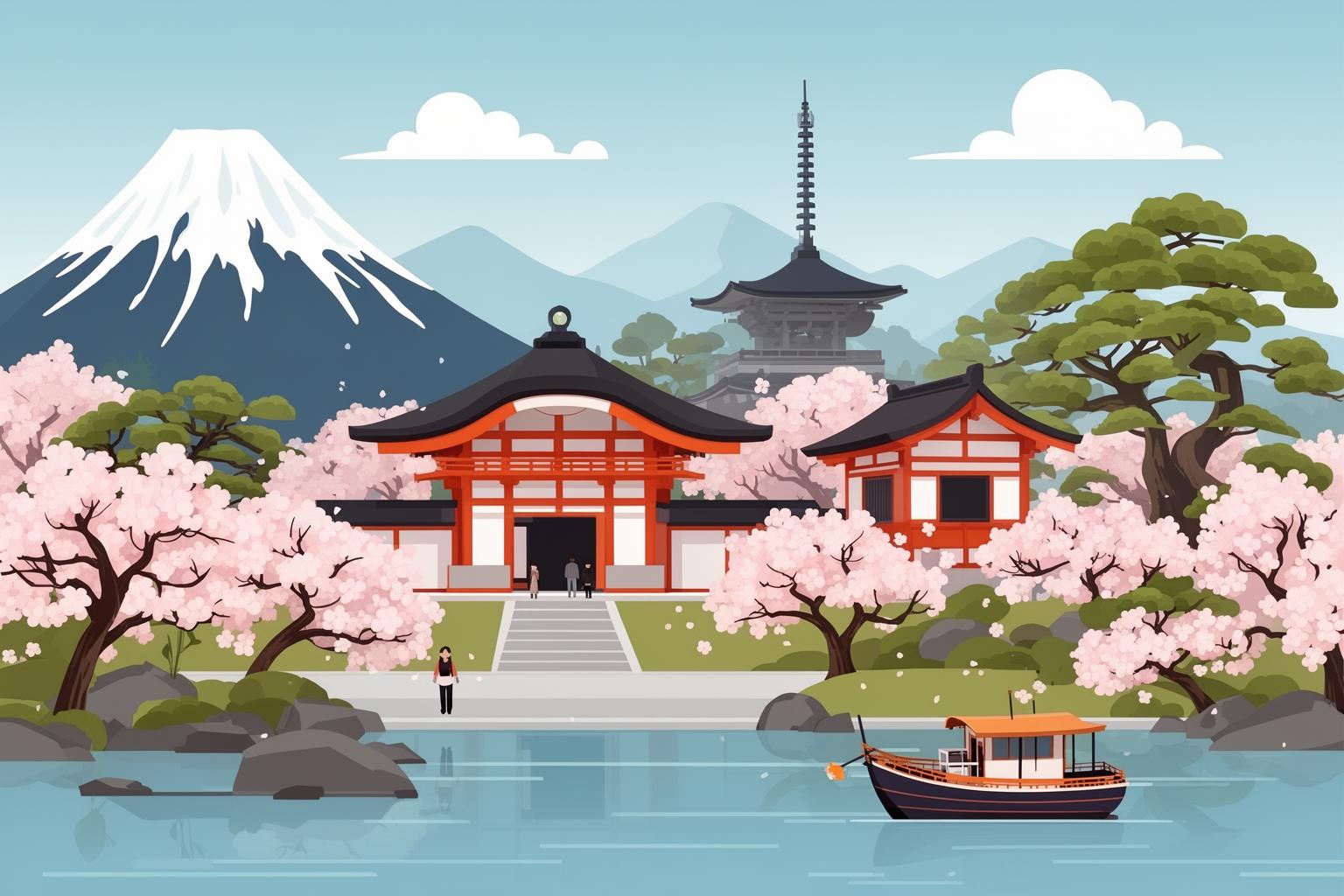
Perhaps the most distinctively Japanese aspect of Insta-bae is its profound link to the seasons. The culture’s ancient appreciation for nature’s fleeting beauty has seamlessly merged with social media trends. For a few weeks every spring, attention fixates on the sakura (cherry blossoms). This sparks a frenzy of limited-edition sakura-flavored and sakura-themed products: lattes, parfaits, mochi, even cocktails. Capturing a photo of a sakura parfait against a backdrop of blooming cherry trees is a top-tier Insta-bae triumph. The cycle repeats with the vivid autumn foliage (koyo), winter illuminations, and the hydrangeas of the rainy season. This scarcity creates urgency. That shot won’t be available next month. The ephemeral nature of these subjects heightens the value of the resulting photograph—a tribute to being in the right place at the right time.
The Hunter’s Playbook: A Ritual of Preparation
The perfect Insta-bae photo seldom comes about by chance. It is the result of a deliberate process, a contemporary pilgrimage that entails research, travel, and a precise on-location performance. This is more than just tourism; it’s a mission with a clear goal.
Phase One: The Reconnaissance
The search starts online. Aspiring hunters comb through Instagram, using a specific set of hashtags. #インスタ映え is the starting point, but the exploration soon becomes more detailed. #カフェ巡り (kafe meguri, cafe hopping) uncovers the trendiest coffee shops. #東京カフェ (Tokyo kafe) narrows the focus to the city. Location tags are carefully examined. Influencers are analyzed. Japanese lifestyle magazines like Hanako or Oz often publish curated lists of photogenic spots, which are then cross-checked online. This is the intelligence-gathering stage. Potential sites are assessed not only for their inherent beauty but also for their ‘photographability.’ Is the lighting ideal? Are there too many people? Does the aesthetic fit the hunter’s personal brand?
Phase Two: The Pilgrimage and The Wardrobe
Once a destination is decided, the journey becomes part of the ritual. It’s common for a group of friends to take a two-hour train ride to a distant seaside town just to visit one specific cafe known for its photogenic window seat. The destination is less about the town itself and more about the photo. Dressing accordingly is essential. The outfit is never an afterthought; it plays a crucial role in the final image. A visit to a minimalist art museum may call for a monochrome, architectural outfit. A trip to a flower-filled park demands a flowing, romantic dress. The clothing is selected to either complement or contrast the setting, turning the person into an intentional element of the composition. This level of coordination transforms a simple outing into a performance.
Phase Three: The On-Site Execution
Upon arrival, the final phase begins. In a popular spot, a line often attests to its bae status. Inside the cafe, the group invariably orders the most visually impressive item on the menu, clearly designed for this very purpose. Then the photoshoot gets underway. It’s not a quick, covert snap. It’s a focused, often prolonged process. Phones are set up. Angles are carefully tested. One friend takes dozens of shots of another, offering direction on posture and expression. Classic poses are employed: the candid glance away from the camera, hands elegantly holding the coffee cup, the full-body shot that makes the subject appear small against a grand architectural backdrop. Food is rearranged. Stray crumbs are removed. The aim is to capture a moment of effortless perfection—a process that, ironically, demands a great deal of effort.
The Cultural Logic Behind the Lens
So, why does this subculture flourish so intensely in Japan? The Insta-bae hunt isn’t merely about vanity; it is deeply embedded in and reflective of broader Japanese cultural tendencies. It serves as a modern manifestation of longstanding social dynamics.
Communication Through Curation
Japanese communication often emphasizes indirectness and subtlety. Openly expressing strong personal opinions or emotions can be seen as disruptive. Within this framework, a carefully curated social media feed becomes a powerful means of self-expression. It enables individuals to convey their taste, lifestyle, and values without uttering a single word. A feed filled with minimalist, art-gallery-style photos signals sophistication. Conversely, a feed showcasing cute cafes and colorful desserts conveys a fun, approachable personality. Each post contributes to a broader personal brand, acting as a visual resume of one’s aesthetic sensibilities. It’s a way of saying, “This is who I am,” in a culturally comfortable, non-confrontational manner.
The Reinforcement of Group Bonds
Although the photos often feature individuals, the Insta-bae hunt is primarily a group activity. It’s something friends do together, a collective project. Planning the trip, traveling as a group, and taking photos for one another strengthens social ties. When everyone posts similar photos from the same location, it becomes a public affirmation of a shared experience and collective identity. It declares, “We were here, together, and we belong to the same tribe.” This reflects other Japanese group activities—from school club trips to company outings—that aim to cultivate unity and belonging. The shared memory, digitally preserved, acts as social glue.
A Modern Take on Mono no Aware
The fixation on capturing fleeting, seasonal moments is closely linked to the traditional Japanese aesthetic of mono no aware (物の哀れ), meaning “the pathos of things” or “a sensitivity to ephemera.” It embodies an awareness of life’s transience and a gentle sorrow for its passing. The beauty of cherry blossoms is deepened by the fact they will vanish within a week. The Insta-bae hunt represents a contemporary effort to grapple with this transience. By seizing the perfect shot of a limited-edition sakura dessert or an ideal autumn day, the hunter transforms the ephemeral into something eternal. The photo becomes a crystallized memory, a way to preserve a beautiful yet fleeting moment. It stands as a digital defiance against the inevitability of change.
Sanctuaries of the Photogenic: A Few Archetypes
To truly understand the phenomenon, it helps to examine the types of places that have become shrines of the Insta-bae devotion. They fall into several distinct categories, each presenting a unique style of photogenic perfection.
The Total-Immersion Themed Cafe
These are environments where reality feels suspended. Every detail is fine-tuned for the camera. A prime example is a flower cafe like Aoyama Flower Market Tea House, where you are surrounded by a lush, jungle-like abundance of plants and blooms. The food is adorned with edible petals, the tea carries floral notes, and the lighting is soft and flattering. You’re not merely in a cafe; you’re inside a concept. The objective is to capture a photo that resembles a page from a fairytale, with the entire setting acting as the backdrop.
The Architectural Canvas
Some buildings become pilgrimage destinations not for their function but for their form. The National Art Center in Roppongi, with its vast, undulating glass facade designed by Kisho Kurokawa, draws photographers in. Its sunlit atrium, concrete cones, and dramatic escalators offer a playground of lines, shadows, and textures. Likewise, the 21st Century Museum of Contemporary Art in Kanazawa is world-famous for Leandro Erlich’s installation, “Swimming Pool,” which creates the illusion of people being underwater. These are not merely buildings; they serve as interactive stages for crafting striking, minimalist, and refined self-portraits.
Nature, Perfectly Framed
Even Japan’s natural beauty is often experienced through an Insta-bae perspective. It’s not about a rugged, untamed landscape. It’s about nature that has been curated, arranged, and presented for ideal viewing. Hitachi Seaside Park, with its rolling hills of meticulously planted, vibrantly colored flowers—blue nemophila in spring, red kochia in autumn—is a prime example. Photos from here look surreal, resembling a painted backdrop more than a natural site. The Arashiyama Bamboo Grove in Kyoto offers a similar atmosphere, with towering bamboo stalks forming a natural cathedral of green light and vertical lines. The aim is to capture a harmonious, almost hyper-real image of oneself within a flawless natural frame.
The Unseen Cost of a Perfect Shot
It would be misleading to describe the Insta-bae phenomenon as solely a positive cultural trend. The relentless pursuit of the perfect photo has its drawbacks, causing tension in real life and raising questions about authenticity.
One major concern is the impact on the locations themselves. A once-quiet temple or residential street can become overwhelmed by photo-seekers, leading to noise, litter, and frustration among locals. Numerous reports highlight people trespassing on private property, stepping onto active train tracks, or blocking traffic to capture a unique angle. This behavior, driven by digital desire, often shows a lack of respect for the local community.
Additionally, there is criticism of the experience. The focus often shifts so much toward documenting the moment that the moment gets lost. People might spend an hour photographing a beautiful parfait, only to take a few bites before leaving. The question then arises: was the goal to enjoy the dessert, or to prove that they were enjoying it? This performative aspect can create pressure to project an image of continuous, curated happiness, which can be exhausting and ultimately hollow.
Lastly, the strong pull of Insta-bae trends can lead to a homogenization of aesthetics. As everyone rushes to the same few photogenic spots, a visual consensus forms. Originality can be sidelined in favor of replicating a tried-and-true popular shot. The endless pursuit of the “perfect” image can, ironically, make many feeds look strikingly similar.
Despite these criticisms, the Insta-bae craze remains a powerful and revealing cultural phenomenon. It would be wrong to dismiss it as mere narcissism. It is a complex subculture intertwined with Japanese aesthetic history, social communication norms, and a universal human desire to capture and share beauty. It reflects a society that has long believed that appearances matter greatly. In the quest for the perfect picture, we see a modern expression of an old truth: in Japan, beauty is not accidental—it is intentional.