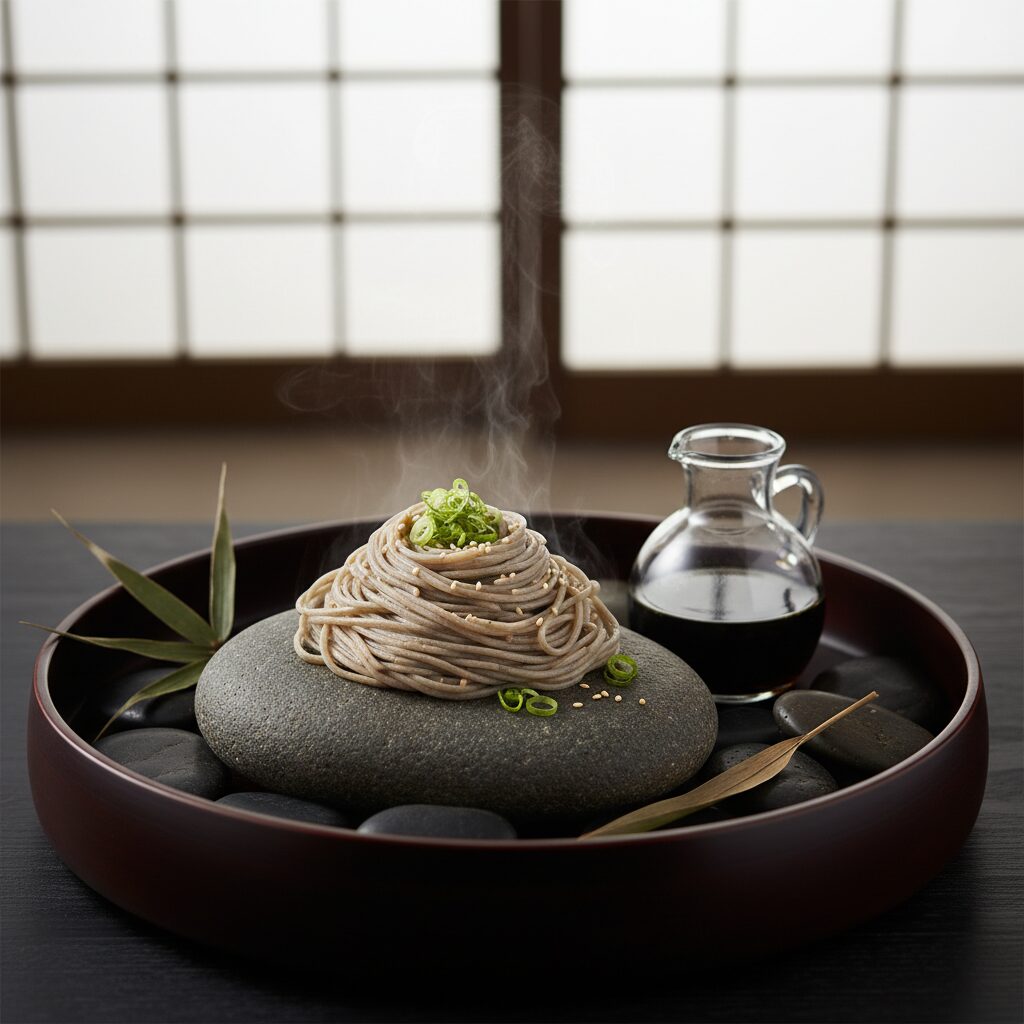
There’s a specific kind of satisfaction that comes from eating truly exceptional, handmade soba noodles. It’s a world away from the plastic-wrapped bundles you find in the supermarket, the ones that cook up into a slightly sad, uniform mush. Real soba is different. It has texture, a subtle resistance when you bite. It carries the faint, earthy perfume of the buckwheat from which it was made. Eaten cold, dipped in a sharp, clean `tsuyu` broth, it’s one of the most elegant and deceptively simple meals you can have in Japan. But the simplicity of the final dish masks a process of immense skill, patience, and dedication. That process is called `soba-uchi`, the traditional craft of making soba noodles by hand. What’s fascinating is that this demanding, almost monastic discipline has found a new, passionate following not among celebrity chefs or young foodies, but with Japan’s growing population of retirees. For a generation that spent decades in the structured, often abstract world of corporate Japan, the meticulous, hands-on craft of transforming flour and water into something beautiful and delicious has become a powerful form of self-expression and a meaningful second act. To understand `soba-uchi` is to understand a particular Japanese approach to mastery, mindfulness, and the quiet joy of creating something perfect with your own two hands.
Their heartfelt embrace of timeless craft finds a kindred spirit in Japan’s seasonal shun reverence, where each moment is cherished as a fleeting work of art.
The Soul of the Flour

Before a single drop of water is introduced, the journey of soba begins with the flour. Buckwheat, or `soba-ko`, forms the core of the noodle, and its quality determines everything that follows. Unlike wheat, buckwheat is a notoriously challenging grain to work with. It lacks gluten, the protein that gives wheat dough its elasticity and flexibility. This is exactly why `soba-uchi` is regarded as such a high-level skill. Without gluten to hold the dough together, it becomes fragile, prone to cracking and crumbling at the slightest error.
Skilled soba artisans know their flour intimately. They describe its character as if it were alive. They understand its origin—the mineral-rich volcanic soils of Hokkaido, the high-altitude fields of Nagano, and the traditional farms of Yamagata. Each region yields flour with a unique personality, color, and aroma. Some are light and delicate, while others are dark, robust, and nutty. The season also plays a role. Freshly harvested autumn buckwheat, known as `shin-soba`, is highly prized for its vibrant green color and unmatched fragrance. Experts can tell, simply by sifting the flour through their fingers, how much moisture it contains and how it will behave that day, adjusting their technique to the humidity in the air.
There are two primary types of soba, distinguished by the ratio of buckwheat to wheat flour. `Juwari` soba is the purist’s choice, made entirely from buckwheat. It is the most fragrant and flavorful, but also the most difficult to make, as the dough is extremely brittle. A more common and forgiving style is `ni-hachi` soba, which means “two-eight.” This type uses two parts wheat flour for every eight parts buckwheat. That small amount of wheat provides enough gluten to make the dough more pliable and resilient, making it a popular choice for apprentices and home cooks. Still, even with this assistance, the process demands a delicate balance of precision and intuition.
A Meditation in Four Acts
The actual process of `soba-uchi` is a quiet, focused ritual that unfolds in a series of distinct stages, each defined by its own name, tools, and techniques. Watching a master at work is like witnessing a form of physical meditation, where every movement is economical, deliberate, and refined through thousands of hours of practice. It is a dialogue between the artisan and the ingredients.
Mizu-mawashi: The Water Circle
It begins in a large, shallow wooden or lacquer bowl called a `konebachi`. The sieved flour is placed in the center, and water is added—not all at once, but in a slow, deliberate trickle. This initial stage is known as `mizu-mawashi`, or “water circle.” The artisan uses only their fingertips, held stiffly like claws, to quickly stir the water into the flour. The aim is to evenly and rapidly distribute moisture, coaxing the flour into small, uniform crumbs resembling wet sand. This is a critical moment. Too much water results in a sticky mess, too little and the dough won’t come together. Without measuring tools, this part relies entirely on tactile judgment—based on the weight of the crumbs and their feel against the skin. It is the first test of sensitivity, where the maker attunes to the dough’s needs.
Kuri: The Art of the Knead
Once the flour is thoroughly hydrated, the crumbs are gathered into a single mass and the kneading, or `kuri`, begins. This is not the forceful punching and stretching typical of bread making. Instead, soba kneading is gentle and methodical, involving folding, pressing, and turning. Using the heel of the palm, the artisan works the dough, compacting it, pushing out trapped air bubbles, and developing the minimal structure that buckwheat allows. The surface is meticulously smoothed until it takes on a glossy sheen, often likened to a chrysanthemum flower in its folded pattern. The final shape is a neat, flattened cone, ready for the next step. This phase demands physical strength, but it is controlled and focused, channeling power without damaging the dough’s fragile integrity.
Noshi: Stretching to the Horizon
Next is the most visually striking part of the process: `noshi`, or rolling. The cone of dough is transferred to a large, flat wooden board. Using a series of long, thin wooden rolling pins called `menbo`, the artisan begins to stretch the dough. This gradual, painstaking process involves rolling, turning, and dusting with a fine layer of `uchiko` (dusting flour) to prevent sticking. The objective is to create a perfectly uniform, paper-thin rectangular sheet. A skilled maker transforms a small, dense lump into a vast sheet over a meter long and just one or two millimeters thick. This requires exceptional control and an intuitive sense of pressure. Excessive force tears the delicate sheet; too little leads to uneven thickness. The rhythmic back-and-forth motion of the rolling pin is hypnotic, a testament to the maker’s patience and precision.
Kiri: The Rhythm of the Blade
The final step is `kiri`, or cutting. The thin dough sheet is lightly dusted with more `uchiko` and carefully folded like a precious bolt of silk into a neat rectangle. This folded block is placed on a special cutting board, alongside a straight-edged guide called a `koma-ita`. The most specialized tool used is the `soba-kiri bocho`, a heavy, single-beveled knife with a long, straight blade crafted specifically for this task. Holding the `koma-ita` with one hand and the knife in the other, the artisan begins to cut in a swift, metronomic rhythm. The knife drops, the `koma-ita` moves back by a millimeter, and the knife drops again. Ton, ton, ton, ton. The sound is as integral to the craft as the movement itself. The blade’s weight does most of the work, slicing cleanly through the dough layers without crushing them. The result is a pile of perfectly uniform, exquisitely thin soba strands—the culmination of all prior effort and focus.
The Salaryman’s Second Act
Why has this highly demanding craft attracted so many Japanese retirees? The answer lies in the pursuit of `ikigai`—a reason for being, a sense of purpose and fulfillment. After a 40-year career as a `salaryman`, typically characterized by long hours, abstract tasks, and dedication to a company, retirement can create a void. `Soba-uchi` fills that void with something tangible, sensory, and profoundly satisfying.
For those who spent decades working with spreadsheets, reports, and meetings, the act of crafting something real by hand becomes a powerful remedy. There is an unmistakable honesty in it. You start with flour and water, and through your direct effort and skill, you create food that can be shared and enjoyed. The feedback is immediate. You can see, feel, and taste the fruits of your labor. This direct link between effort and result is often missing in the modern corporate environment.
Moreover, `soba-uchi` offers a lifelong learning journey. It is a craft easy to start but impossible to completely master. There is always a new factor to consider, a new refinement to achieve. How does the summer humidity influence the dough? What is the subtle difference between flour from two different prefectures? Can I make my noodles just a fraction of a millimeter thinner and more uniform? This continual quest for perfection provides structure and a goal-driven challenge that is deeply satisfying. It’s a hobby that engages both the body and the mind, requiring physical skill and intellectual curiosity.
Many retirees join local `soba-uchi` clubs or attend classes, transforming a solitary activity into a social one. These clubs become communities of like-minded people who exchange tips, critique each other’s work, and bond over a shared passion. They gather not in bars or on golf courses, but in community centers and rented kitchens, their conversations marked by the rhythmic tap of the soba knife. It is a quiet, respectful fellowship built around a shared commitment to a demanding and beautiful craft.
Completing the Circle: The Ritual of Eating
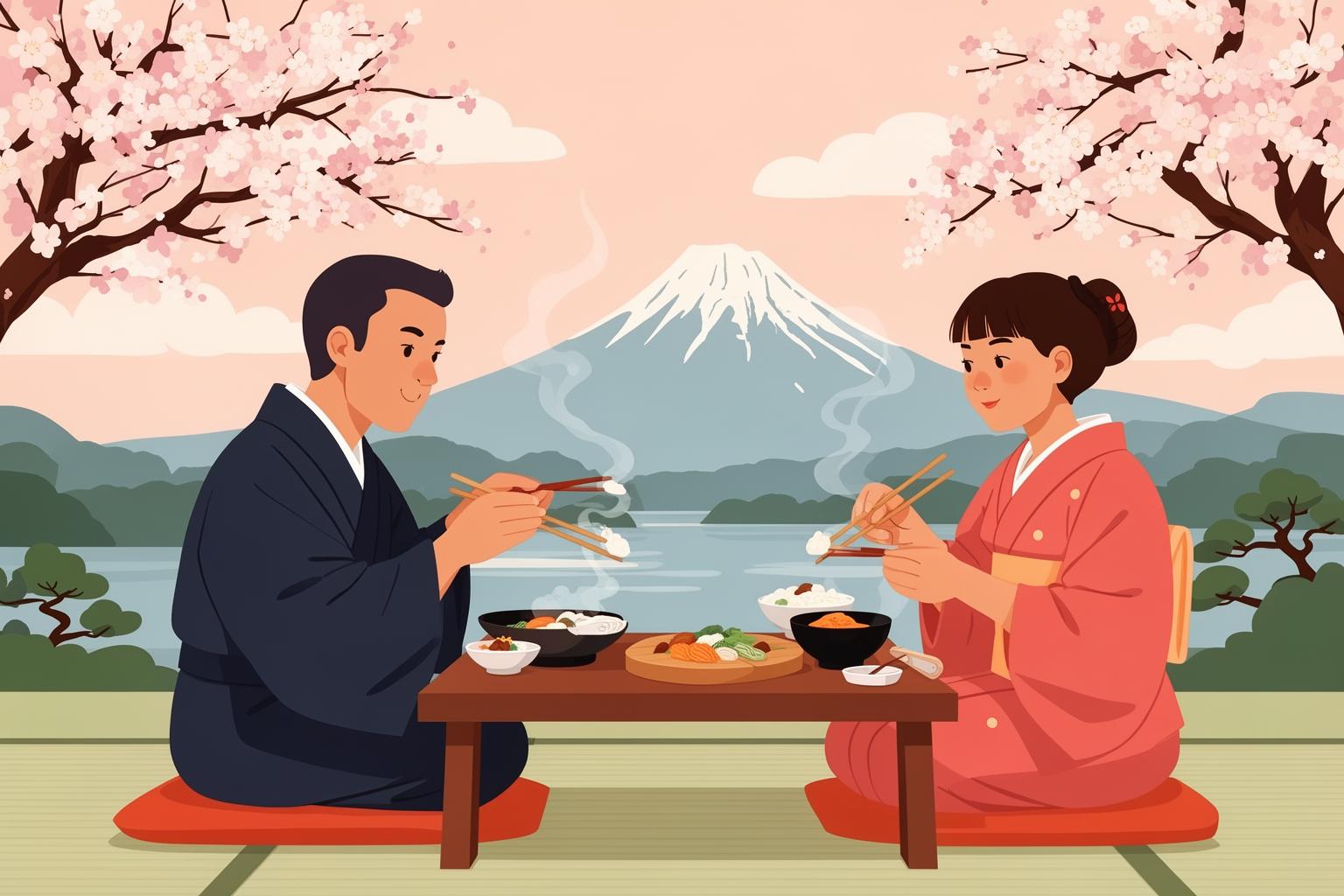
The ultimate reward for all this effort is, naturally, the meal itself. Handmade soba is cooked for an astonishingly short time—often less than a minute—in a large pot of boiling water before being immediately transferred to an ice bath to firm up. This step is essential for achieving the ideal `koshi`, or firm, chewy texture.
Traditionally, fresh soba is best enjoyed cold, as `zaru soba` or `mori soba`. The noodles are presented on a bamboo tray, accompanied by a small cup of `tsuyu`, a dipping sauce made from dashi, soy sauce, and mirin. Condiments like freshly grated wasabi and finely sliced scallions are served on the side, to be added to the sauce to taste. The etiquette is straightforward: pick up a small portion of noodles with your chopsticks, dip only the bottom third into the `tsuyu` to avoid overpowering the delicate buckwheat flavor, and then slurp them loudly. The slurp is not rude; it is essential, as it aerates the noodles and allows their aroma to fill your senses as you eat.
When the noodles are finished, the ritual continues. The host or restaurant will bring out a small pot of `soba-yu`, the cloudy, starchy water in which the noodles were boiled. This nutritious liquid, rich in B vitamins from the buckwheat, is poured into the remaining `tsuyu` in your cup and sipped like a savory, warming tea. It is an act of completion, using every part of the ingredient and showing respect for the food. This is the final, comforting note in a meal that is the direct result of patience and care.
Tasting handmade soba is to experience the quiet concentration of the maker. You are savoring the careful selection of the flour, the intuitive judgment of the water, the focused strength of the kneading, and the rhythmic precision of the cutting. It’s more than just a noodle; it’s a story of dedication, a physical expression of a philosophy that values process over product, finding profound meaning in the patient pursuit of a simple, perfect thing.