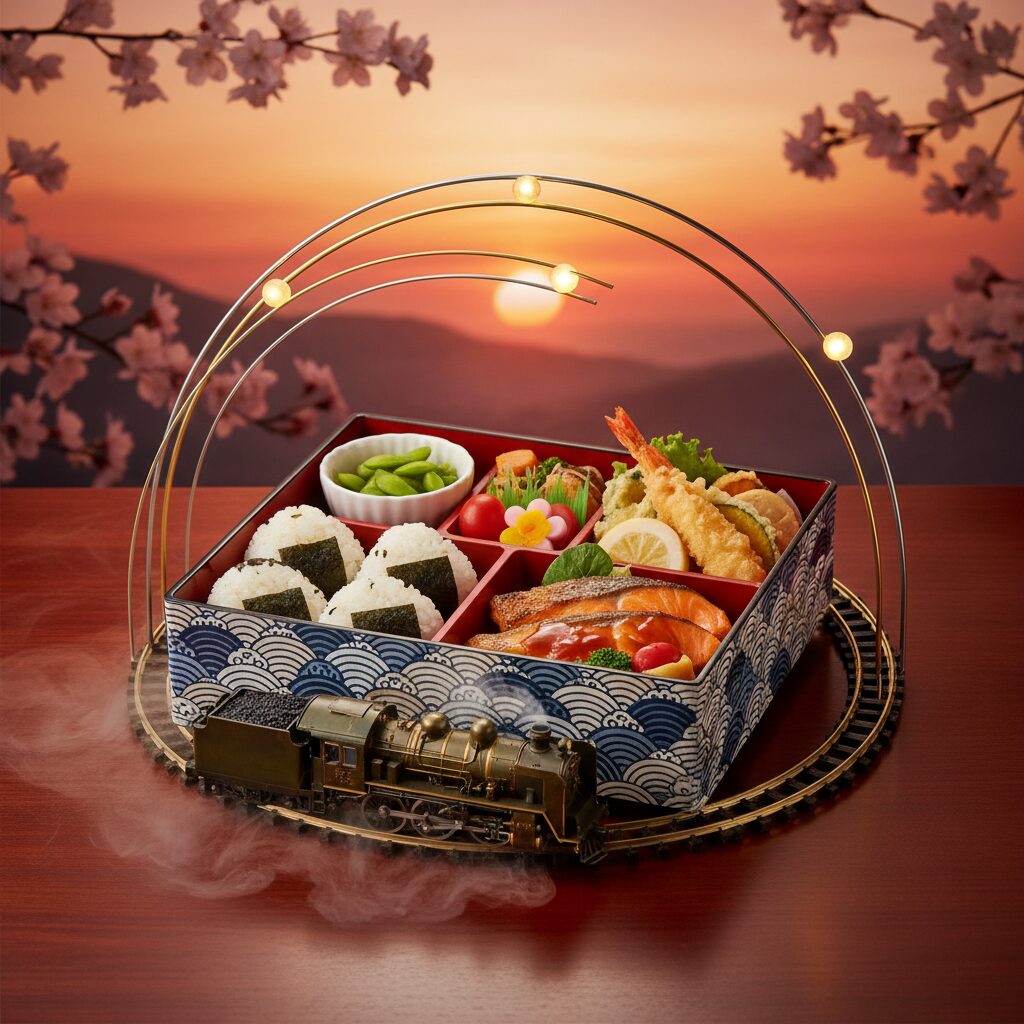
Step onto the platform of any major train station in Japan, and you’ll be met with a uniquely civilized symphony. There’s the crisp, almost melodic announcement of the arriving Shinkansen, the whisper-quiet glide of the train itself, the orderly lines of passengers waiting patiently behind painted lines. But listen closer, and you’ll notice another sound: the rustle of paper, the gentle click of a plastic lid, the anticipatory silence before a satisfying meal. Look around, and you’ll see the source: small, beautifully wrapped boxes, each a miniature world of food. This is the world of ekiben, and it’s one of the most brilliant and revealing corners of Japanese culinary culture.
On the surface, the concept is simple. The word itself is a straightforward portmanteau: eki (駅), meaning station, and ben, a shortened form of bento (弁当), the ubiquitous Japanese packed lunch. So, an ekiben is a station bento box. But this simple definition does a profound disservice to what’s really going on. This isn’t just about grabbing a pre-packaged sandwich to scarf down on your journey. An ekiben is a travel experience in a box, a curated taste of a specific place, and a fiercely proud declaration of regional identity. It’s a portable piece of terroir, a story about a town’s history, agriculture, and fishing industry, all artfully arranged to be enjoyed as the landscape scrolls past your window. Forget the sad, cellophane-wrapped fare you find in train stations elsewhere. In Japan, the journey itself is a destination for your palate.
This refined culinary journey resonates with the same cultural depth expressed in the grateful ritual of itadakimasu, inviting travelers to savor each moment of Japan’s vibrant travel experience.
A Tradition Born on the Rails
The story of ekiben is deeply intertwined with the history of Japan’s railways. Before trains began crisscrossing the country in the late 19th century, long-distance travel was a challenging journey undertaken on foot or by palanquin, with meals taken at inns along the way. The arrival of the railway during the Meiji Restoration was revolutionary, shrinking the nation and linking distant prefectures in ways never before imagined. However, these early trips were slow, often lasting a full day or more, and passengers needed to eat.
In the West, railway catering often featured luxurious dining cars, a privilege reserved for the wealthy. Japan, practical as ever, chose a different path. The honor of the very first ekiben is usually attributed to Utsunomiya Station in Tochigi Prefecture, dating back to 1885. An innkeeper began selling simple lunch boxes on the platform to hungry travelers. There was no fancy menu or elaborate packaging; it consisted of two onigiri (rice balls) seasoned with sesame and salt, and a few slices of bright yellow takuan (pickled daikon radish), all wrapped in a modest bamboo sheath. It was nourishment, plain and simple, but it planted the seed.
As the rail network grew, so did the concept. Stations throughout the country recognized the opportunity. Local inns, restaurants, and food producers began creating their own bentos, highlighting their region’s best offerings. The simple rice balls evolved into more elaborate meals. By the early 20th century, ekiben had become a standard part of train travel. The rivalry between stations became a matter of local pride. It was no longer just about feeding passengers; it was about offering them a memorable taste of the region they were passing through, a culinary souvenir marking their journey.
This transformation reflects a fundamental aspect of Japanese culture: the elevation of the ordinary to an art form. What started as a practical necessity was refined, embellished, and given meaning. The packaging grew more elaborate, the ingredients more ambitious, and the arrangements inside the box more exquisite. The humble ekiben became a showcase for craftsmanship and regional storytelling.
A Culinary Map of Japan
To truly understand ekiben is to recognize that Japan is far from a monolithic entity. It’s an archipelago made up of distinct regions, each boasting its own climate, geography, dialect, and, most importantly, unique food culture. Ekiben serves as the most accessible and delicious gateway to explore this diversity. Standing in front of an ekiben stall at a major hub like Tokyo Station feels like gazing upon a gastronomic map of the entire nation. You can journey from the snowy, seafood-rich expanses of Hokkaido to the subtropical warmth of Kyushu without ever stepping off the platform.
The Bounty of the North: Hokkaido
Hokkaido, Japan’s northernmost island, is a land of vast open spaces, harsh winters, and pristine cold waters. Its ekiben perfectly capture this environment, showcasing some of the finest seafood in the world. Perhaps the most iconic is Mori Station’s Ikameshi. This is not a mere assortment of items but a singular, flawless creation: whole squid simmered in a sweet and savory soy-based broth and stuffed with glutinous rice. It’s tender, richly flavorful, and utterly distinctive. Alternatively, head to Akkeshi Station for their Kakimeshi, a bento heaped with oysters, clams, and other shellfish atop seasoned rice. Further north, at Asahikawa, bento overflow with rich, fatty salmon and glistening salmon roe (ikura). These meals aren’t just food; they are direct expressions of the cold, nutrient-rich ocean currents enveloping the island.
Rice and Mountains: Tohoku and Chubu
Travel south into the Tohoku region, Japan’s rice basket, where the emphasis shifts. While seafood remains important, the quality of the rice and the mountain bounty take center stage. From Yonezawa Station in Yamagata Prefecture comes one of the most renowned meat-based ekiben: Gyuniku Domannaka. The name means “Beef Right in the Middle,” and it delivers exactly that. A bed of flawless local Domannaka rice is topped with a generous layer of thinly sliced beef simmered in a secret sweet-soy sauce. It’s a hearty, comforting dish that speaks to the region’s reputation for both its rice fields and prized Yonezawa beef.
In central Chubu, where the Japan Alps slice through the landscape, you’ll find creations like Toyama’s Masu no Sushi. This is a masterpiece in both form and function. It’s a pressed sushi, shaped like a round cake, topped with slices of cured trout on vinegared rice. What sets it apart is the packaging: tightly wrapped in fragrant bamboo leaves that impart a subtle aroma and naturally preserve the fish. Unwrapping it and slicing it with the provided plastic knife becomes a ritual. Another mountain favorite is Toge no Kamameshi from Yokokawa Station in Gunma. This “pot rice of the mountain pass” is served hot in a reusable, individual ceramic kama pot. Inside, you’ll find chicken, shiitake mushrooms, bamboo shoots, and a quail egg cooked with seasoned rice. It’s an experiential triumph, and travelers have cherished these little brown pots as keepsakes for decades.
Refined and Playful: Kansai and Beyond
Heading west to Kansai, home to cities like Osaka and Kyoto, ekiben often exhibit a more refined or sometimes playful character. At Nishi-Akashi Station near Kobe, you’ll discover the charming Hipparidako Meshi. The name means “octopus in high demand,” and it’s served in a reusable ceramic pot shaped like an octopus trap (takotsubo). Inside, tender octopus, conger eel, and seasonal vegetables rest over seasoned rice. While the taste is excellent, the container steals the show—a perfect example of how the ekiben experience transcends just the food.
Down south on the island of Kyushu, the flavors grow bold. From Orio Station in Fukuoka, you can enjoy Kashiwa Meshi. Kashiwa is the local word for chicken, and this bento features finely shredded chicken and thin omelet strips over rice cooked in a savory chicken broth. It’s a beloved local comfort food, packaged for travelers. It tastes like home, even if you’re thousands of miles away from it.
The Artistry of the Box
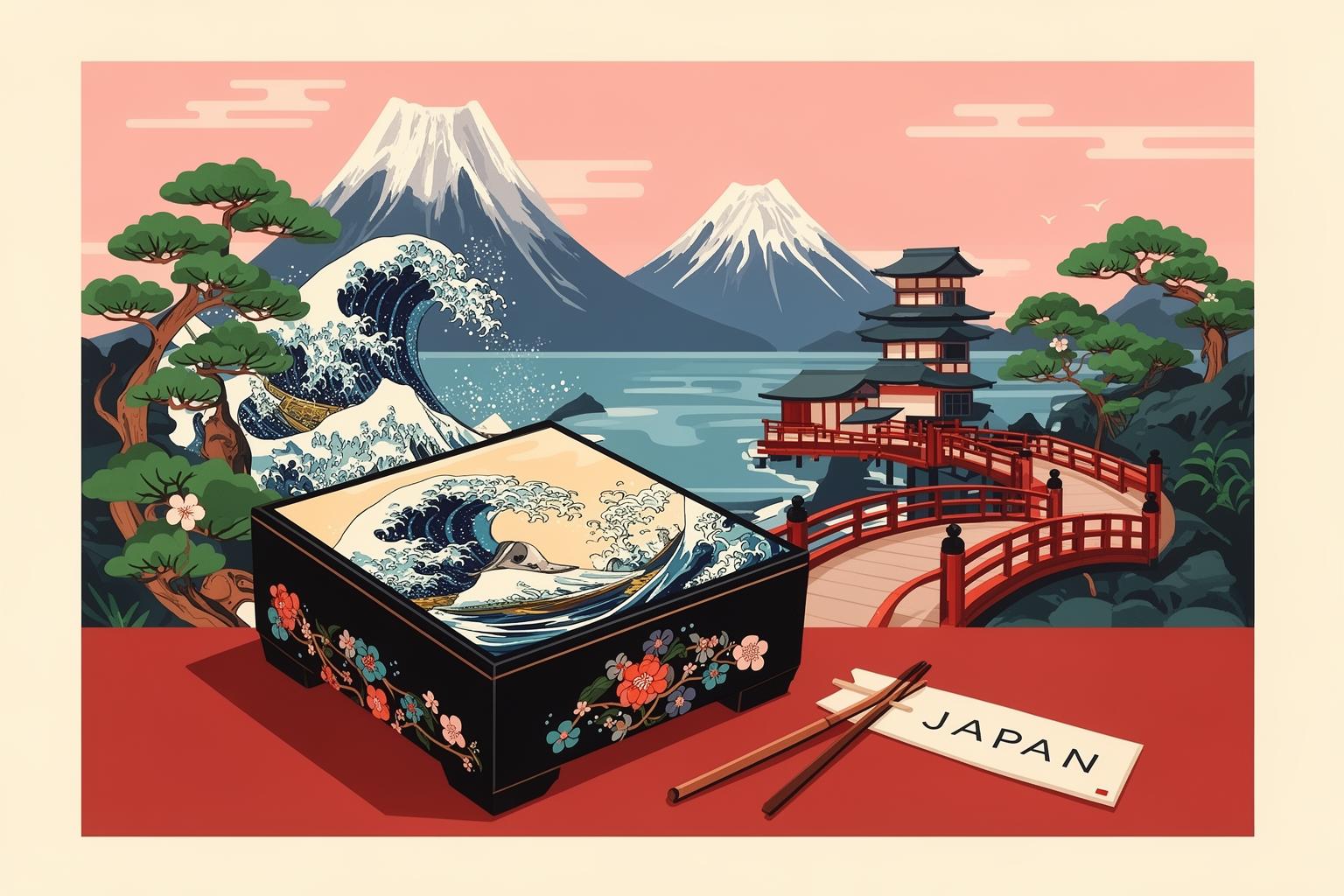
Focusing solely on the ingredients of an ekiben means missing half the story. The experience begins long before you take your first bite—it starts with the packaging. An ekiben is a feast for the eyes, wrapped in a narrative. The outer paper sleeve, known as a kakegami, is a miniature work of art. It may feature a famous ukiyo-e print, a beautiful landscape painting of a local scenic spot, or a calligraphic rendering of the bento’s name. This sleeve offers the first hint of the regional story enclosed within.
Then there is the box itself. While many are made of simple wood or high-quality plastic, the most memorable ekiben come in distinctive containers that become part of the experience. The ceramic pots of Toge no Kamameshi and Hipparidako Meshi are notable examples. Others are packed in boxes shaped like Daruma dolls, local castles, or even the sleek nose of a Shinkansen, a perennial favorite among children. These containers elevate a disposable meal into a cherished keepsake.
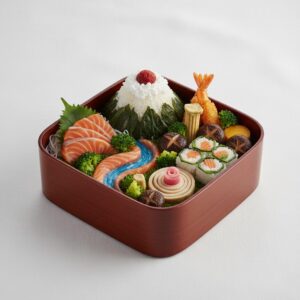
Once unwrapped, the artistry continues. The Japanese principle of moritsuke, the art of food presentation, is showcased in full. Inside the box, every ingredient has a designated place. There is a careful balance of color, shape, and texture. A bright yellow piece of tamagoyaki (rolled omelet) might be positioned next to a dark green simmered vegetable, with a spot of red pickle for contrast. The food is not simply thrown together; it is thoughtfully arranged. This visual harmony serves more than aesthetics—it is meant to stimulate the appetite and foster a sense of balance and well-being, transforming a simple meal into a moment of aesthetic appreciation.
The Ritual of the Ride
Beyond the food and the art lies the ritual of eating an ekiben. In a country where eating and drinking while walking on the street is generally discouraged, the train serves as an approved space for this unique culinary delight. Securing your chosen ekiben from the platform kiosk or the onboard trolley is the initial step. The selection process itself can be a delightful dilemma, with dozens of colorful boxes competing for your attention.
Once settled in your seat, the ritual begins. You pull out the tray table. You carefully untie the string and remove the paper sleeve, perhaps pausing to admire the design. You lift the lid, releasing the aroma of the meal, held until this moment. Equipped with a pair of disposable chopsticks, you start your journey through the various compartments, crafting each bite. A piece of grilled fish, a mouthful of rice, a bite of simmered shiitake mushroom, a refreshing slice of pickle. Meanwhile, fields, mountains, and coastlines blur past your window.
This act creates a personal, reflective space. It’s a moment of quiet enjoyment amid the gentle movement of the train. The meal connects you tangibly to the land you are traveling through. You might be eating beef from the very pastures you just passed or seafood from the shimmering coast now visible in the distance. It’s a multi-sensory experience that transforms train travel from mere transit into something more meaningful.
Tradition in a Changing World

Despite all its charm, the world of ekiben is not static. It faces contemporary pressures. The Shinkansen network has made train journeys faster than ever, shortening the time available for a leisurely meal. The widespread presence of convenience stores, or konbini, provides travelers with a cheaper, quicker, though less romantic, alternative. Many small, family-run businesses that have crafted ekiben for generations also confront challenges like an aging workforce and a shortage of successors.
However, ekiben remains a resilient tradition, continuously adapting. Producers are experimenting with new flavor combinations and luxury ingredients to cater to a more refined palate. Today, you can find ekiben featuring high-end wagyu steak or premium sea urchin. Collaborations with popular anime characters or local mascots introduce novelty and draw a younger audience. Packaging keeps evolving, becoming increasingly creative and collectible.
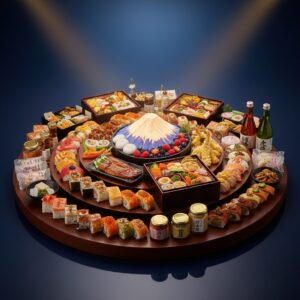
Moreover, the culture has extended beyond the station platform. Department stores frequently host large ekiben-ten, or ekiben fairs, where producers from across the country gather to sell their creations. These events are immensely popular, attracting huge crowds eager to experience Japan through their taste buds—no train ticket needed. They stand as a testament to the enduring allure of these boxed meals.
Ultimately, ekiben is far more than just lunch. It is a cultural institution. It celebrates locality in an ever-globalizing world. It reminds us that food is not simply fuel, but a story—of a place, a people, a journey. Each box is a carefully crafted narrative, a portable expression of pride that declares, “This is who we are. This is what our home tastes like.” Being able to experience that, to unwrap that story while speeding through the Japanese countryside, is one of the most civilized and fulfilling pleasures of modern travel.