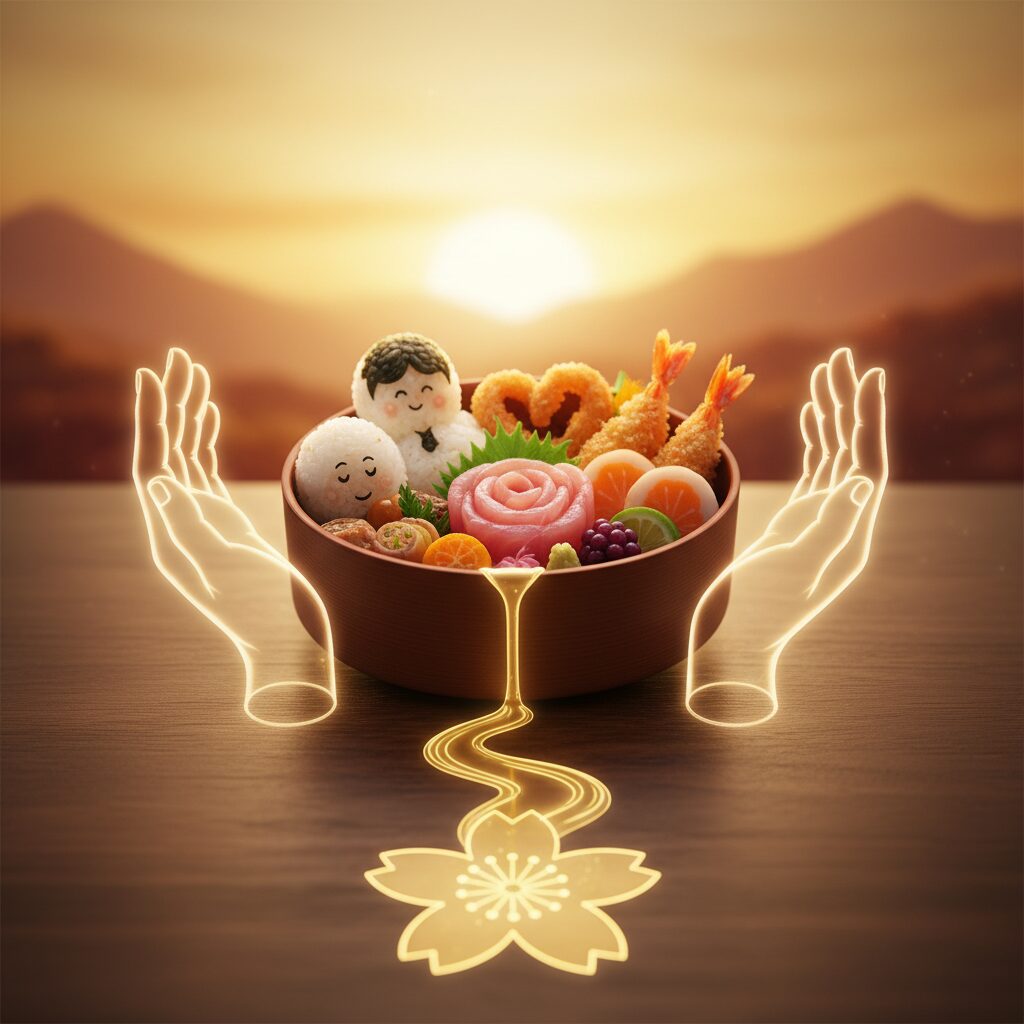
Almost anywhere you eat in Japan—from a Michelin-starred restaurant in Ginza to a noisy school cafeteria or the quiet solitude of your own kitchen—the meal begins the same way. Hands are clasped together, there’s a slight bow of the head, and a single word is spoken with quiet sincerity: itadakimasu. To the casual observer, it looks like a simple version of saying grace. Most guidebooks and beginner language classes offer a quick, functional translation: “Let’s eat,” or “Thanks for the food.” While not entirely wrong, these translations are profoundly incomplete. They skim the surface of a concept that is deeply woven into the Japanese psyche, capturing the mechanics but missing the soul entirely.
Saying itadakimasu is not just a polite preamble to consumption. It is a moment of profound recognition, a verbal bow to the vast, interconnected web of life, nature, and human labor that delivered the food to your plate. It’s a quiet, powerful acknowledgment that your meal did not simply appear out of thin air. It is the culmination of a long and often invisible journey. Embedded in this single word is a philosophy rooted in Buddhist reverence for life and a uniquely Japanese sense of gratitude that extends far beyond the person who cooked the food. It’s an expression of thanks to the farmer, the fisherman, the sun, the rain, the soil, and most importantly, to the life of the plant or animal itself. To truly understand Japan, you have to understand the universe contained within this humble, everyday phrase.
This profound culinary tradition is further illuminated in an in-depth exploration of itadakimasu’s deeper meaning, which reveals the cultural and spiritual bonds that transform a simple meal into a heartfelt ritual.
Unpacking the Word: A Gesture of Humble Reception

To fully understand the meaning of itadakimasu, we must begin with the word itself. It is the formal, humble form of the verb itadaku (頂く), which means “to receive” or “to accept.” Its original, more literal sense is “to place on top of one’s head.” While this may seem unusual, it relates to an ancient Japanese custom in which a person receiving a gift from someone of higher status—especially from a temple or noble—would lift it above their head. This physical gesture signified deep respect and humble gratitude, demonstrating that the receiver recognized the value and importance of the gift.
When you say itadakimasu before a meal, you are metaphorically enacting this same gesture. You humbly “receive” the food, elevating it as a precious offering. This origin distinctly separates it from typical Western pre-meal expressions. “Bon appétit” conveys a wish for the diner to enjoy their food, while “Let’s eat” is a straightforward statement signaling the start of a meal. Both focus on the eater and their forthcoming enjoyment. Itadakimasu, however, shifts attention away from the self, emphasizing the act of receiving and the gratitude embedded within it. It frames the meal not as something owed, but as a gift one is fortunate to accept through a convergence of greater forces.
This fundamental shift in perspective is crucial. The word carries a sense of humility, placing the eater at the conclusion of a long chain of circumstances—as a grateful recipient rather than an entitled consumer. This simple linguistic choice subtly transforms the act of eating into a mindful ritual of appreciation, turning it from a right into a privilege, and from a routine task into a meaningful experience.
The Circle of Thanks: Acknowledging Every Link in the Chain
So, if itadakimasu is an expression of receiving, who or what is being thanked? The gratitude is not directed at a single entity, such as a particular deity, but rather to a whole ecosystem comprising life, nature, and labor. This appreciation is multi-layered, radiating outward in concentric circles from the food on the plate.
Receiving the Gift of Life
At its core, itadakimasu acknowledges the life sacrificed for your nourishment. This idea is deeply influenced by Buddhist teachings, which emphasize a profound respect for all living beings. When you say itadakimasu, you are essentially expressing, “I humbly accept the life you have given me.”
This applies not only to meat and fish but to every ingredient. It recognizes the life force within the stalk of rice, the carrot pulled from the soil, and the tofu made from soybeans. Each part of the meal was once alive, and its journey to your bowl signifies the end of its life to sustain yours. This thought is not morbid or guilt-inducing, but rather profound. It imparts meaning and responsibility to the meal. By consciously acknowledging this sacrifice, you implicitly promise not to waste food. This is the philosophical foundation of the powerful Japanese concept of mottainai, a deep cultural regret regarding waste. Discarding food is not merely inefficient; it is a disrespectful disregard for the life given.
This perspective nurtures a deep appreciation for the ingredients themselves. Perfectly sliced sashimi is not just a delicious bite; it is a direct link to the life of a fish from the sea. The gleaming white rice represents the culmination of a plant’s life cycle. Itadakimasu serves as an ongoing daily reminder of this interconnectedness, ensuring that the act of eating remains connected to its origins.
Honoring the Unseen Human Effort
Beyond the lives of the ingredients, itadakimasu expresses gratitude toward the vast network of people whose labor made the meal possible. This chain of human effort is long and often unseen, yet honored in that brief moment before the first bite.
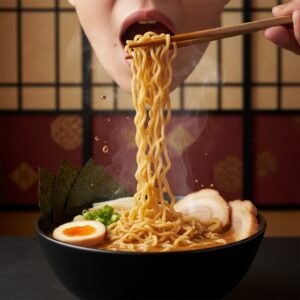
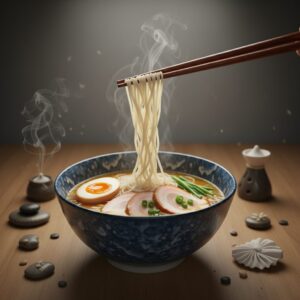
Consider a simple bowl of ramen. Thanks extend to the farmer who labored in the fields to grow the wheat for the noodles, facing unpredictable weather and pests. It reaches the fisherman who braved rough seas to catch the fish for the dashi broth. It includes the pig farmer who raised the animal for the chashu pork. Then there are those who milled the flour, the truck drivers who transported the ingredients nationwide, the factory workers who produced the soy sauce and miso, and the shop owner who selected the products on the shelf.
Most immediately, it is a gratitude extended to the person who prepared the meal. Whether a highly skilled chef in a restaurant or a family member at home, their time, effort, and care are recognized. Itadakimasu acknowledges their work—the chopping, simmering, seasoning, and artful presentation. It is a way of saying, “I see and appreciate the effort you put into this.” This is why Japanese diners often say it not only to themselves but also toward the kitchen or the person who served them, making it a direct expression of thanks.
Gratitude for Nature’s Bounty
The circle of gratitude extends even further, embracing the forces of nature itself. This aspect is closely linked to Japan’s indigenous Shinto beliefs, which hold that deities, or kami, inhabit all things, including natural elements and phenomena. A meal is thus a gift not only from the farmer, but also from the sun that ripened the tomatoes, the rain that nourished the rice paddies, the earth that sustained the roots of the vegetables, and the sea that provided the fish.
Itadakimasu is a moment to acknowledge your dependence on this vast, powerful ecosystem. It expresses humility before nature’s providence. In a world where food often appears magically in sterile supermarket packaging, this practice reaffirms a vital connection to the natural world. It reminds the eater that they are part of a larger system, reliant on forces far beyond their control. This worldview cultivates respect for the environment and an awareness that resources are finite and precious. The meal is a collaboration between humanity and nature, and itadakimasu honors both participants in that partnership.
The Ritual in Motion: More Than Just Words

Itadakimasu is not simply spoken; it is enacted. The accompanying gesture, called gassho (合掌), involves bringing the palms together in front of the chest or face. This gesture, also present in Buddhism, is widely recognized as a symbol of respect, prayer, and gratitude. When combined with a slight bow of the head, the physical action strengthens the mental and spiritual meaning behind the word.
This ritual is an everyday practice throughout Japan. It is not limited to special events or formal meals. It is performed before eating a convenience store onigiri on a park bench just as much as before a multi-course kaiseki dinner. Children are taught to say itadakimasu together at school before lunch, and the habit is reinforced at home from the time they first sit at the table. It is one of the essential aspects of Japanese etiquette and moral education (shitsuke).
Teaching a child to say itadakimasu goes beyond simply instructing good manners. It is about instilling fundamental values: gratitude, respect for life, an awareness of interdependence, and mindfulness about waste. It serves as cultural programming that influences a person’s relationship with food throughout their life. By making this ritual an indispensable part of every meal, the culture ensures these values are revisited and reaffirmed multiple times each day.
Closing the Loop: The Importance of ‘Gochisousama Deshita’
Just as every meal begins with a ritual of gratitude, it similarly ends with one. The phrase said after finishing a meal is gochisousama deshita (ご馳走様でした). Like itadakimasu, its usual translation—“That was a delicious meal”—is a functional but somewhat incomplete simplification.
To grasp its true meaning, we must once more consider the kanji. The word chisou (馳走) consists of characters for “to run” (馳) and “to gallop” (走). Historically, hosting a guest and providing a fine meal demanded significant effort—literally running around to gather the best ingredients from the fields, mountains, and sea, followed by hard work to prepare them. Thus, gochisousama deshita literally means something like, “Thank you for your running around.”
It is a direct and heartfelt expression of gratitude for the effort and hospitality behind the meal’s preparation. While itadakimasu broadly thanks the universe for the gift of food, gochisousama is a more specific thank you to the people who made it possible. It acknowledges the host’s, chef’s, or server’s hard work and generosity. Offering it directly to the chef or restaurant staff upon leaving is regarded as very good manners and deeply appreciated.
Together, itadakimasu and gochisousama deshita serve as perfect bookends to the dining experience. They form a framework of gratitude that honors every stage of the meal, from its origins in the earth to the effort involved in its preparation. The meal begins with a humble acceptance of life and concludes with an explicit thanks for human labor, completing the circle of appreciation.
A Cross-Cultural Reflection
Having grown up within a Chinese cultural context, the Japanese custom of itadakimasu feels both familiar and uniquely distinct. In China, we have our own food-related rituals and expressions of politeness. It is common for a host to invite guests to eat by saying “吃吧, 吃吧!” (Chī ba, chī ba! – Eat, eat!) or for everyone to wait until the eldest person lifts their chopsticks first. These practices are deeply rooted in communal values, hospitality, and respect for elders, with the emphasis primarily on the social relationships among those at the table.
What sets itadakimasu apart is its inward, philosophical aspect. It is a personal moment of reflection, even when eating alone. This practice connects the individual not only to those present but also to the food itself, to nature, and to an abstract continuum of existence. While Chinese culture certainly honors food and frowns upon waste, itadakimasu formalizes this respect into a clear, universal, and daily ritual. Adopting the practice, even as an outsider, produces a noticeable effect: it prompts a pause. In that brief moment before eating, you stop to consider the meal not merely as a product, but as a story—a story of sun, soil, life, and labor. It is an exceptionally powerful tool for mindfulness, transforming a routine act into a moment of meaningful connection.
Is It a Prayer?
Given the gesture and respectful tone, it’s natural to wonder if itadakimasu is a religious prayer. Although its origins are undeniably connected to Buddhist and Shinto worldviews, for most Japanese people today, it is a secular tradition. It is not usually directed toward a specific god or deity in the way a Christian grace might be, but rather serves as a cultural expression of a philosophical outlook.
Its strength lies precisely in this universality. One does not need to be a practicing Buddhist or Shintoist to value the principles it embodies: gratitude, humility, and respect for life. It has become a form of cultural muscle memory, a deeply rooted habit that carries its philosophical significance regardless of an individual’s personal beliefs. It acts as a shared social etiquette that simultaneously reinforces a profound ethical framework. In this respect, it is both a simple gesture and a complex worldview, seamlessly woven into the fabric of everyday life.
Itadakimasu, therefore, is one of the most elegant and insightful phrases in the Japanese language. It offers a glimpse into a culture that finds meaning in mindfulness and holds gratitude as a foundation of civilized living. It teaches that eating is not merely about satisfying hunger but about engaging in a cycle of life and recognizing our place within it. It’s a small word that conveys a very large idea: that every meal is a miracle, the result of countless seen and unseen efforts, and deserving of our deepest respect. It is not solely about the food; it encompasses everything that led up to it.