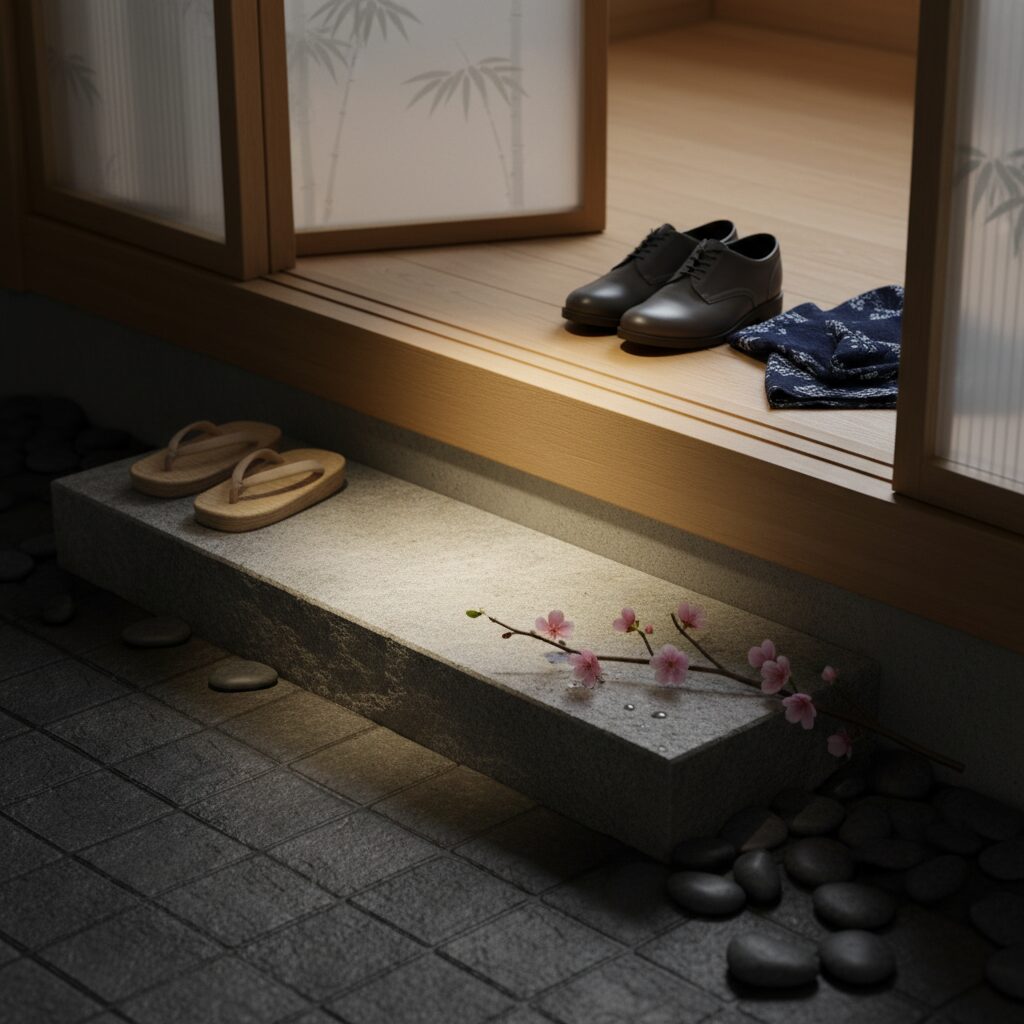
Walk into any home in the UK, and the first few moments are a study in casual entropy. A kick-off of shoes by the door, a dumping of keys on the nearest surface, a coat slung over a chair. The transition from outside to inside is a blurry, single-motion event. Now, step into a Japanese home. The world stops. There is a pause, a procedure, a clear and deliberate sequence of actions that must take place before you can truly be considered ‘inside’. This space, this ritual airlock between the public world and the private sanctuary of the home, is the genkan.
To a first-time visitor, it might just look like a sunken entryway or a glorified mudroom. But to dismiss it as such is to miss one of the most fundamental clues to understanding the Japanese psyche. The genkan is not merely an architectural feature; it’s a physical manifestation of a deeply ingrained cultural concept that governs social interaction, personal identity, and the very definition of space. It is the border control of the Japanese home, where you shed not just your shoes, but the dirt, the noise, and the public persona of the outside world. It is the place where soto (outside) officially ends and uchi (inside) begins. Understanding what happens in this small, unassuming space is to understand the invisible lines that shape life in Japan.
This cultural transition finds a parallel in traditional sento architecture, which similarly orchestrates spatial rituals to strengthen community bonds and preserve cultural identity.
Anatomy of a Threshold
Before exploring the philosophy, it’s essential to grasp the physical layout. A genkan isn’t just a random section of floor near the door; it has a defined and consistent structure that supports its function. The design is both elegantly simple and deeply effective.
The Doma: The Final Segment of the Outside World
The first area you enter is the doma (土間). This lower, sunken space is typically finished with durable, easy-to-clean materials like tile, stone, or polished concrete. Importantly, the doma is culturally viewed as still ‘outside.’ It represents the ritually unclean ground and serves as the designated space for shoes, wet umbrellas, and for delivery personnel to stand while signing for parcels. Though you have crossed the front door, you have yet to step fully inside the home. This is a transitional zone, a buffer between two distinct realms.
The Agarikamachi: The Threshold of No Return
The doma’s border is marked by a single raised step, usually wooden, known as the agarikamachi (上がり框). This step acts as both a literal and symbolic boundary. To ascend onto the polished wooden flooring of the main house signifies the actual act of entry. This elevation mirrors a spiritual and social transition. Importantly, one does not step on the agarikamachi itself. It functions as a line to be crossed, not a platform to stand upon. Stepping with shoes on this wooden ledge breaches etiquette, comparable to placing muddy boots on a pristine white sofa. Such an act blurs the very boundary the space is designed to preserve.
The Getabako: The Footwear Altar
Nearly every genkan features a getabako (下駄箱), a shoe cupboard. Its name originates from the era of wooden geta sandals, but today it stores all types of footwear. Having a dedicated, often sizable, piece of furniture for shoes highlights their significance—or more precisely, the importance of removing them. Order is critical. Shoes are never left in a disorderly heap but stored neatly, ready for the next venture outdoors. The getabako embodies the notion that everything belongs in its place, and the place for outside shoes is firmly within the genkan, never beyond it.
Uchi-Soto: The Inside/Outside Mindset Made Physical
So, why all the attention? Why such a detailed spatial division? The answer lies in one of the most essential concepts for understanding Japanese society: uchi-soto (内 Soto). This duality goes beyond a simple ‘inside’ and ‘outside’ in a physical sense; it is a core principle that structures social relationships, language, and behavior.
Uchi signifies the ‘inside’ group: your family, your workplace, your team. It represents a world of closeness, informality, and mutual understanding. Within the uchi group, you can be at ease, speak more frankly (tame-go), and show your true self. The home is the quintessential uchi space.
Soto refers to everyone and everything ‘outside’ that group. It is the public domain, characterized by greater formality, politeness, and a carefully maintained social facade (tatemae). In a soto setting, you represent not only yourself but also your uchi group.
The genkan is the architectural manifestation of this social code. Removing your shoes and stepping up from the doma is the physical ritual signaling your shift from the formal, demanding soto world to the safe, private uchi sanctuary of the home. You literally leave the outside world behind on the stone floor. Along with the dirt on your soles, you are encouraged to shed work stresses, social masks, and the strict expectations of public life. Crossing the agarikamachi is a psychological sigh of relief. You have arrived. You are safe. You are uchi.
This principle is so ingrained that even a delivery person or pollster who only needs a moment will conduct their business while remaining firmly on the doma. Being invited to step up into the house is a meaningful gesture of welcome, signaling that you are being brought into the inner circle.
The Rituals of Entry and Exit
Because the genkan serves as a transitional space, its use follows a set of unspoken rituals. These rituals are simple but consistently observed, transforming a basic action into a meaningful habit. Observing how people move through a genkan offers a lesson in mindfulness and consideration.
The Welcoming Flow: Arriving Home
When entering a Japanese home, the first thing you do is turn to face the door you just came through. You remove your shoes while standing on the doma. Importantly, you do this without letting your stockinged feet touch the ‘unclean’ lower level. This often requires a delicate balancing act, stepping out of your shoes and directly onto the raised floor in one smooth motion. It’s a small physical skill that everyone learns.
Once on the upper level, you turn around, then crouch down to arrange your shoes. They are placed neatly together with the toes pointing toward the door. This is not merely about tidiness; it is a gesture of foresight and respect. Your shoes are now ideally positioned for you to slip into when you next leave. This saves a moment of awkward shuffling later and shows consideration for the space and the process. After arranging the shoes, they are typically moved to the side of the doma or placed inside the getabako to keep the entryway clear.
The Departing Grace: Leaving the House
The process is reversed when leaving. You approach the genkan in your socks or house slippers and step down onto the doma. Many people sit on the agarikamachi to put on their shoes, again making sure their clean socks never touch the lower floor. Because you thoughtfully turned your shoes around when you arrived, you can now slip into them without turning your back to the house or anyone seeing you off. This creates a smooth, forward-facing exit.
This entire sequence is often framed by ritual greetings. Upon returning, you announce “Tadaima!” (I’m home!), and are met with “Okaeri!” (Welcome back!). When leaving, you say “Ittekimasu!” (I’m going and will come back!), and hear “Itterasshai!” (Please go and come back safely!). These phrases are as integral to the genkan ritual as removing your shoes. They serve as the sonic markers of crossing the threshold.
More Than a Mudroom: The Genkan Mindset in Society
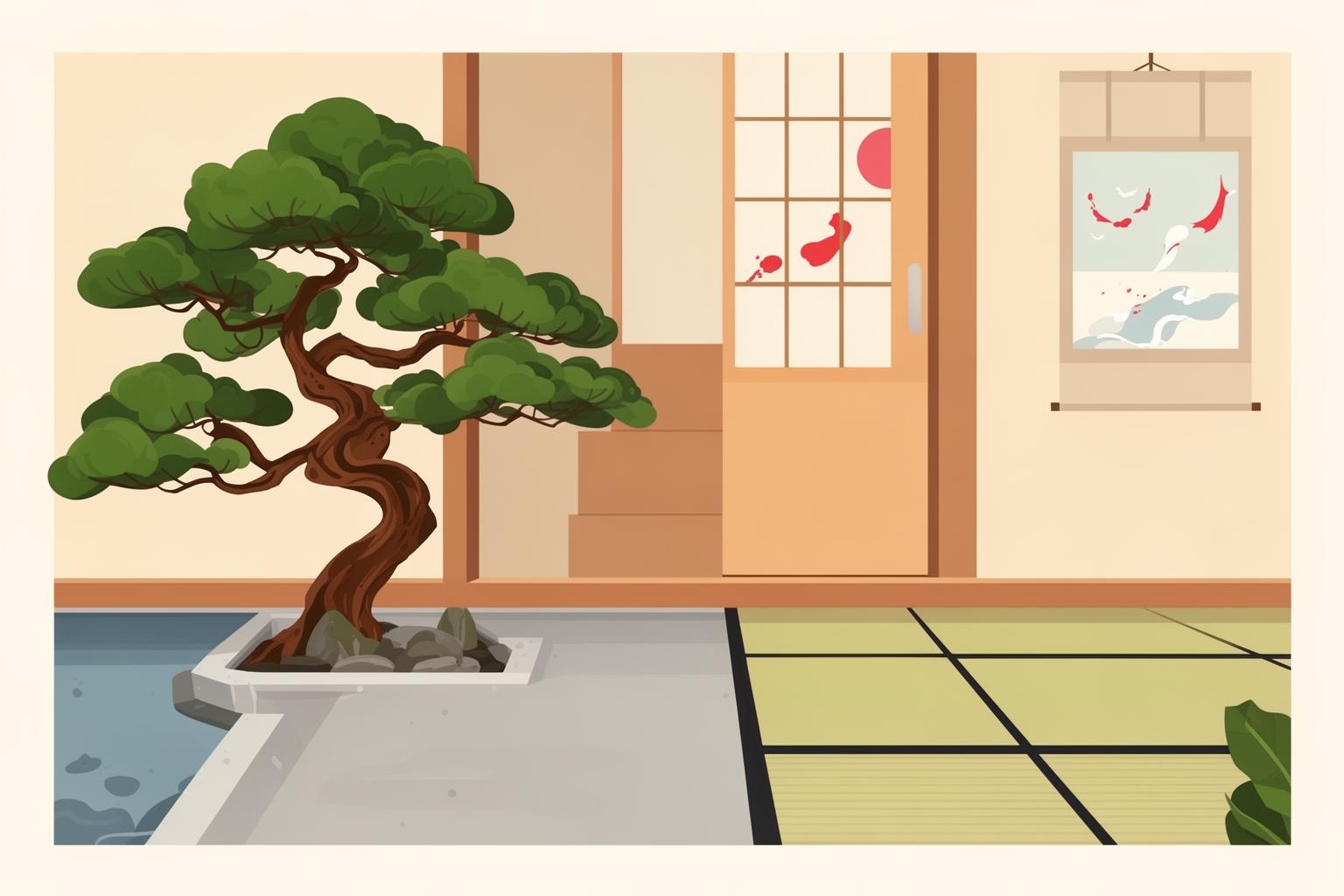
The influence of the genkan reaches well beyond the front entrance of a private home. The uchi-soto concept it represents is a flexible principle, reflected in numerous other aspects of Japanese life, reinforcing this boundary awareness from an early age.
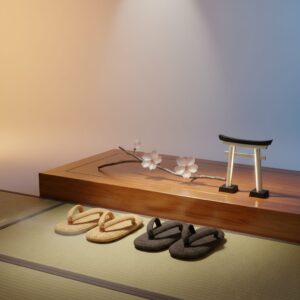
This is most evident in schools. Upon arrival, every student from kindergarten through high school heads to a wall of lockers or cubbies—essentially a large, institutional getabako. They take off their outdoor shoes and put on designated indoor shoes known as uwabaki. These are usually simple, soft-soled slip-ons, often color-coded by grade. This daily practice instills in every child the clear distinction between the outside world and the interior world of learning. The school is a separate space with its own rules and footwear. The same idea applies in many temples, traditional restaurants (ryotei), hot spring resorts (onsen), and even some doctors’ offices and community centers. You’ll often find a row of slippers neatly arranged, ready for you after removing your shoes. This indicates you are entering a different kind of environment, one that calls for a different way of being—and cleaner footwear.
The Practical and the Pure
Naturally, there are deeply practical reasons for the genkan’s existence that precede any intricate social theory. Japan experiences four distinct seasons, including one that is notoriously humid and rainy. The genkan serves as an excellent mudroom, containing the dirt, water, and grime that would otherwise be carried throughout the house. Additionally, traditional Japanese life involves living closer to the ground. People sleep on futons placed on tatami mat floors, sit on floor cushions (zabuton) to eat at low tables, and generally have much more contact with the floor compared to the West. Maintaining that surface immaculately clean is not merely a matter of aesthetics; it is a matter of basic hygiene. The genkan stands as the first and most crucial line of defense.
Beyond this practicality lies a spiritual dimension rooted in Shinto beliefs about purity and pollution. Shintoism places great importance on cleanliness and purification (oharai). The outside world can be a source of impurity or pollution (kegare), while the home is considered a sacred, purified space (hare). Thus, the genkan functions as a kind of decontamination chamber. Removing your shoes is a small purification ritual performed daily, cleansing yourself of the outside world’s influence before entering the home’s sanctity.
For anyone wishing to understand Japan, the genkan offers the perfect starting point. It is a space that beautifully demonstrates how a simple architectural feature can embody complex layers of meaning—merging practicality, social structure, and spiritual belief. It is a quiet yet powerful declaration that the home is not merely a building but a sanctuary. Entering that sanctuary requires a moment of pause, a gesture of respect, and the simple, profound act of leaving your shoes—and the world they carry—at the door.