If you spend any time traveling through the suburbs of a Japanese city, you’ll eventually see them. Rising from the landscape of tiled roofs and tangled telephone wires are clusters of uniform, concrete buildings, usually five stories high, arranged in neat, repeating patterns. They are often painted in muted shades of beige, grey, or white, their balconies forming a grid-like façade. A central playground, perhaps with a faded metal slide and a lonely sandbox, sits in a shared green space. These are the danchi, Japan’s public housing complexes. To a passing glance, they might seem unremarkable, even drab. But to understand the danchi is to understand the soul of post-war Japan. These are not just apartment blocks; they are the fossilized remains of a utopian dream, a grand social experiment that fundamentally reshaped the Japanese family, community, and the very idea of home.
Asking about danchi is like pulling a thread that unravels a much larger story. It’s a story about a nation scrambling from the ashes of total defeat, determined to build a new, modern, and equitable society for its people. The danchi were the blueprint for that future, meticulously planned environments designed to nurture the ideal modern family. For a generation, living in a danchi wasn’t just a practical housing solution; it was a status symbol, a tangible piece of Japan’s economic miracle. But dreams, especially those cast in concrete, have a way of aging. Today, these complexes tell a different, more complex story—one of demographic shifts, fading optimism, and the quiet challenges of communities growing old. To walk through a danchi is to walk through the past, present, and future of Japan all at once.
While the danchi embody a post-war vision cast in concrete, a contrasting elegance emerges in the subtle integration of natural elements through borrowed scenery, exemplifying another facet of Japan’s design legacy.
A Blueprint for a New Japan
To understand the revolutionary impact of the danchi, you need to imagine Japan immediately after World War II. The country was devastated. Major cities had been reduced to rubble by firebombing, leaving millions homeless. Japan faced a catastrophic housing crisis, with an estimated shortage exceeding four million homes. Traditional wooden houses, which had shaped the urban landscape for centuries, were not only destroyed but also regarded as part of the problem—they were flammable, cramped, and too inefficient to build on the scale required.
The Japanese government recognized that rebuilding the nation meant more than just clearing debris and restarting factories; it required providing people with a new way of life and a stable foundation for the future. From this need, the Japan Housing Corporation (JHC) was established in 1955. Its mission was clear and ambitious: to build large numbers of high-quality, affordable, modern rental homes for the growing urban workforce—the salarymen who would drive Japan’s economic recovery.
This was not simply about shelter. The JHC, staffed by some of the country’s top architects and urban planners, envisioned the danchi as tools of social transformation. They aimed to break with the past. The key innovation was the introduction and popularization of the “nLDK” layout: ‘n’ representing the number of bedrooms, followed by separate living (L), dining (D), and kitchen (K) rooms. While common today, this was a radical departure in the 1950s from traditional Japanese homes, where multi-purpose tatami rooms served as living, dining, and sleeping areas, often lacking privacy.
The nLDK design promoted a Westernized, modern family ideal by clearly separating public from private spaces within the home. The dining-kitchen (DK) was dedicated to family meals, establishing a new ritual. The living room (L) was meant for relaxation and guests, while bedrooms were strictly for sleeping. This layout was more than convenience; it physically embodied a new family structure centered on the nuclear unit of parents and children, distinct from the sprawling, multi-generational households of the past.
This new way of life was also closely tied to the rise of consumer culture. Danchi kitchens featured luxuries for the time: stainless steel sinks and dedicated spaces for refrigerators. Apartments were wired to accommodate the “Three Sacred Treasures” of modern life: television, washing machine, and refrigerator. Owning these appliances was a powerful symbol of middle-class aspiration, and the danchi became the stage for this new domestic narrative. Living in a danchi signaled that you had arrived and were part of Japan’s bright, technological future.
The Architecture of Equality
The utopian vision of the danchi was deeply ingrained in its very construction. The design philosophy embraced rationalism, efficiency, and democratic modernism. By employing pre-fabricated concrete panels and standardized floor plans, the JHC was able to erect entire towns with remarkable speed. This uniformity was deliberate, not accidental. It physically embodied post-war egalitarianism: every family, regardless of background, was entitled to the same clean, safe, and modern standard of living.
Stepping into a classic 1960s danchi unit is like entering a time capsule of this modernist ideal. The apartments were compact yet ingeniously designed for efficiency. The kitchen, though small, exemplified ergonomic planning. Separating the toilet from the bathroom—with its deep Japanese-style tub (ofuro)—marked a significant improvement in hygiene and convenience compared to older homes. Perhaps the most prized feature was the private balcony, a small outdoor space for drying laundry and tending plants, offering a personal yet secure connection to the outside world. For families who had previously lived in dark, crowded wooden tenements with shared facilities, this level of privacy and modern comfort felt like paradise.
However, the architectural vision extended well beyond the individual apartments. The complexes themselves were masterpieces of holistic urban planning. Unlike the chaotic, organic growth of older neighborhoods, danchi were designed as self-contained communities. Buildings were often arranged around expansive green spaces, intentionally designed to bring light, air, and nature into dense urban settings. These central commons were anchored by playgrounds, which served not only children but also as social hubs for mothers to connect.
Each large-scale danchi was a microcosm of a city. They included their own small shopping arcades (shotengai) featuring grocers, barbers, and clinics, ensuring that residents could meet daily needs without leaving the complex. Community centers, meeting halls, and sometimes even post offices and kindergartens were integrated into the design. The architects were not merely constructing housing; they were creating a new social fabric from the ground up. The layout of buildings, pathways, and shared spaces was meticulously planned to foster a new kind of community based on the shared identity of modern, middle-class residents of this new world.
This approach marked a profound break with the past. Traditional Japanese neighborhoods developed over centuries through layered relationships, family ties, and local obligations. The danchi community, by contrast, was deliberately formed. People were brought together not by lineage but by lottery, all young families beginning their new lives on equal footing. The architecture itself was the framework upon which this new, more modern form of neighborhood solidarity could be built.
Life in the Concrete Village
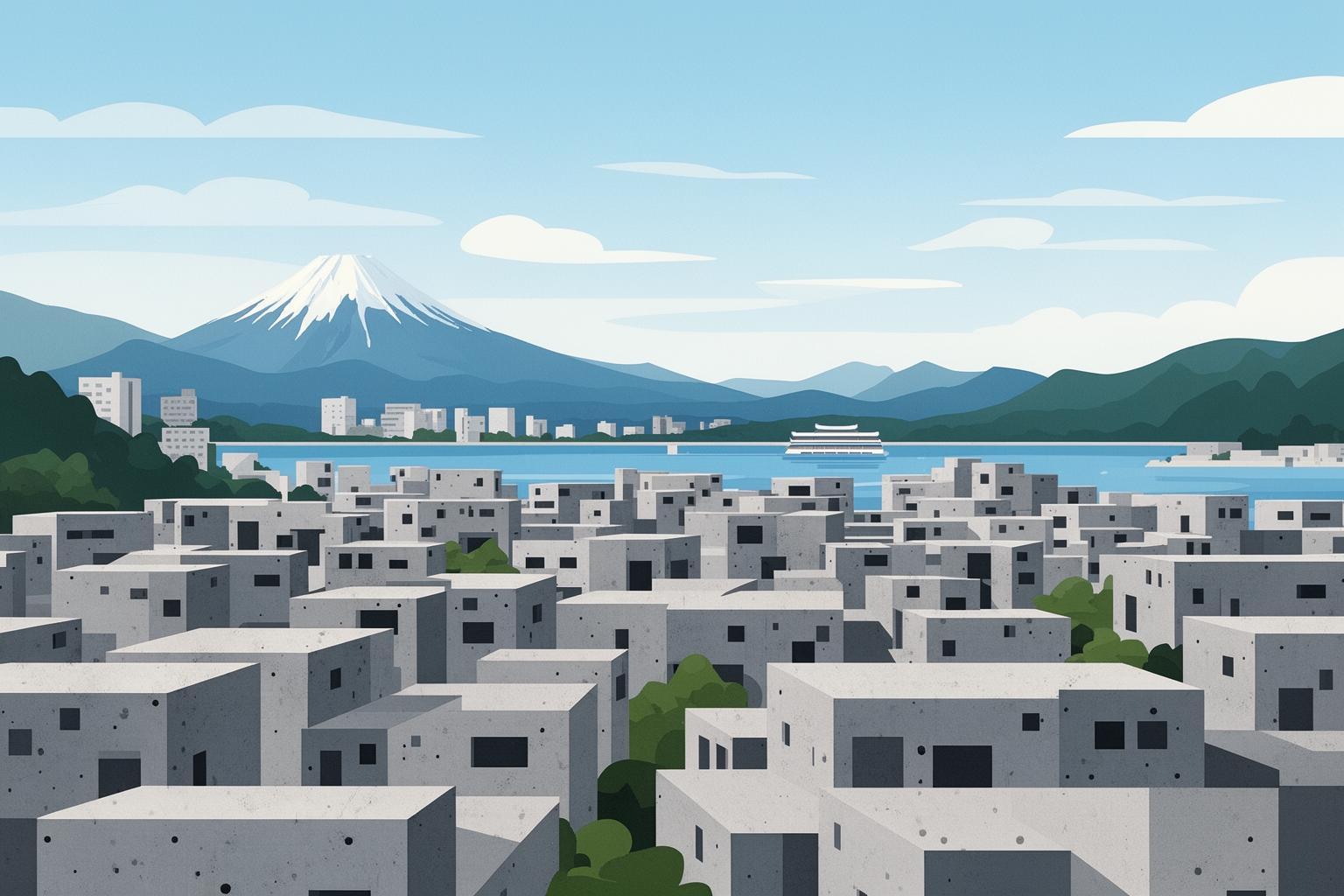
From the late 1950s through the early 1970s, the danchi were the heart of Japan’s emerging middle-class lifestyle. Competition to enter a popular complex was intense, with application rates sometimes reaching over a hundred to one. Being chosen by the JHC lottery was akin to hitting the jackpot, ensuring a bright future for one’s family. The residents formed a notably homogeneous group: young salarymen, their wives, and their small children. The danchi became an emblem of the ideal nuclear family widely promoted throughout Japanese media and culture.
Life within these concrete communities developed its own distinct rhythm and social dynamics. With husbands spending long hours at the office, the complexes effectively became women’s territory. The term danchi-zuma (danchi wife) became part of everyday vocabulary. These women, often having relocated from their hometowns, were separated from their traditional support systems of parents and extended family. In response, they built exceptionally strong friendships with their neighbors. Shared playgrounds, communal laundry facilities, and daily visits to on-site shops became essential hubs of social interaction.
They swapped childcare responsibilities, exchanged recipes, and provided each other with emotional support. This was a new, voluntary community created by shared experiences and modern ambitions. The danchi wife represented a new kind of Japanese woman—a full-time homemaker and orchestrator of the family’s modern lifestyle, empowered by the household technologies now available to her. The danchi was her domain.
The atmosphere during this golden era was marked by a tangible sense of optimism. The buildings were new, the facilities cutting-edge, and the neighborhoods filled with the sounds of children’s laughter. The danchi symbolized safety, cleanliness, and progress. They served as a physical shield against the turmoil and uncertainty of the recent past. For the generation raised there—the “children of the danchi”—it was a standardized yet idyllic childhood, growing up surrounded by peers in a secure, self-contained environment. These complexes were more than just residences; they were nurturing grounds for the generation that would eventually drive Japan’s economic boom.
The Dream Begins to Fade
No golden age endures indefinitely. By the late 1970s and into the 1980s, the very success of Japan’s economic miracle began to undermine the special status of the danchi. As incomes increased, so did aspirations. The dream that the danchi symbolized was so fully realized that people started to desire something more.
The uniformity that once represented equality came to feel conformist and impersonal. The compact efficiency that had been hailed as a marvel of modern design began to feel cramped. The booming private real estate market began offering alternatives that made the danchi seem outdated. New, privately-built condominiums, promoted with the stylish English loanword “mansion” (manshon), provided more space, upscale finishes, and better locations. For those who could afford it, the ultimate dream shifted from a modern apartment to a single-family home in the suburbs, complete with a small garden and a parking space for the family car.
Once the pinnacle of modern living, the danchi gradually declined in housing prestige. It was no longer seen as a final destination but rather as a temporary stop for young families saving for something better. Its social status waned. The once-desired concrete apartments became viewed as just that: concrete, basic, and somewhat bleak.
This change in perception sparked a slow but steady departure. The original generation of residents—young couples from the 50s and 60s—watched their children grow up. These children, beneficiaries of Japan’s newfound wealth, went to university and found work in the city. When starting their own families, they rarely chose to return to the danchi of their youth. Instead, they moved into newer mansions or purchased their own homes, leaving their aging parents behind. The lively communities of young families began to thin, and a quiet stillness settled over the concrete villages.
The Danchi Today: Ghosts and New Life
Stroll through many older danchi today, and you’ll keenly sense this shift. The most urgent issue facing these complexes is the aging of their original inhabitants. The pioneers of the danchi dream are now in their 70s, 80s, and 90s. Many live alone, having lost their spouses, with children living elsewhere. This phenomenon of “aging in place” has transformed once lively family communities into what are sometimes called “silver towns.” Previously noisy playgrounds are often eerily quiet. Community shops, unable to compete with larger supermarkets, have closed their doors.
The architecture itself, once innovative, now poses new difficulties. Many older danchi were built as five-story walk-ups without elevators. For elderly residents with mobility challenges, climbing stairs to a fifth-floor apartment can become an insurmountable daily struggle, effectively confining them at home. The very design that once fostered community can, in its absence, deepen loneliness. The long, identical corridors and rows of shuttered doors can feel isolating when your neighbors are just as elderly and isolated as you are. This has contributed to the tragic social problem of kodokushi, or “lonely deaths,” where elderly residents die unnoticed in their apartments for days or even weeks.
However, the story of the danchi is not solely one of decline. As these complexes have aged and become more affordable, they have attracted new residents, creating a complex and sometimes challenging social fabric. They now provide crucial housing for those on the lower tiers of the economic ladder: single mothers, part-time workers, and notably, Japan’s growing population of foreign residents. Immigrants from China, Southeast Asia, and South America have found affordable homes and emerging communities within the aging concrete walls of the danchi. This influx injects new life and cultural dynamics but can also cause friction with older, long-term Japanese residents unfamiliar with different languages and customs.
In response to these challenges, inspiring efforts are underway to revitalize these aging structures. The Urban Renaissance Agency (UR), the modern successor to the JHC, has been actively renovating and upgrading thousands of danchi units. One of the most notable and successful projects is the collaboration between UR and the popular lifestyle brand Muji. The MUJI x UR initiative strips older apartments back to their basic framework, creating minimalist, adaptable spaces that attract a younger generation of designers, artists, and families who reject excessive consumerism. By rebranding the danchi’s simplicity as a stylish, minimalist virtue, the project has made these old apartments fashionable once again.
Beyond design, community-driven initiatives strive to restore social connections. Some complexes have launched intergenerational programs pairing elderly residents with young families for mutual support. Community gardens are being established in unused green areas, bringing old and new residents together. The danchi are becoming experimental grounds for addressing some of Japan’s most pressing social challenges: How can we reduce loneliness among the elderly? How can we better integrate new immigrant communities? The future of the danchi mirrors the future of Japan itself.
The Lasting Legacy of the Danchi
The physical presence of the danchi may be diminishing in some areas, with older complexes being demolished, yet their impact on Japanese society remains indelible. Their most significant legacy is the standardization of Japanese homes and family life. The nLDK floor plan, first introduced in the danchi, has become the undisputed model for the majority of apartments and houses throughout the country. The danchi helped establish the post-war ideal of the nuclear family as the national standard, physically separating it from the extended family within its own self-contained, modern environment.
These complexes also function as living museums, vast open-air archives of Showa-era (1926-1989) optimism. They stand as a tangible record of a time when Japan, driven by remarkable focus and collective determination, believed it could create a better society through rational planning and contemporary design. The simple, clean lines of danchi buildings serve as a monument to that belief in progress, narrating the story of a nation lifting itself up by its bootstraps, exchanging the perceived disorder of the past for an orderly, prosperous future.
Today, the danchi act as a mirror reflecting the country’s present and future challenges. The issues faced within these communities—aging populations, social isolation, and the need for multicultural integration—represent Japan’s larger problems on a smaller scale. How Japan chooses to manage, renovate, or reinvent these concrete villages will strongly indicate its ability to adapt to the demographic realities of the 21st century.
So, the next time you spot those uniform blocks on the horizon, look more closely. They are neither eyesores nor mere relics. They embody a powerful dream—a vision of modernity, equality, and community. Though the concrete may be worn and the paint peeling, the story they tell is that of modern Japan itself: a complex narrative of grand ambition, unintended consequences, and the enduring human desire to build not just a house, but a home.