Walk into any Japanese office on a Monday morning and you’ll likely see it. Placed neatly on the central table in the break room is a brightly colored, beautifully designed box. Inside, you’ll find individually wrapped cookies, crackers, or small cakes. By lunchtime, the box will be empty. This isn’t a random act of kindness. This is the predictable, essential, and socially mandated ritual of omiyage.
For the uninitiated, omiyage (お土産) is often translated as “souvenir.” This is a dangerously simplistic translation, one that misses the entire point and sets up countless foreigners for an awkward social blunder. A souvenir is something you buy for yourself to remember a trip—a magnet, a t-shirt, a kitschy snow globe. Omiyage is a gift you buy for others while on a trip. It’s for the colleagues who covered your workload, the family who kept the home running, or the friends you belong to a social circle with. It is not optional. It is a fundamental component of Japanese social grammar, a physical token that says, “I was away, but I was thinking of you. Thank you for your support. Here is a small taste of my journey.”
To misunderstand omiyage is to misunderstand a core tenet of Japanese society: the maintenance of group harmony through reciprocal gestures of consideration. It’s a system of social obligation wrapped in beautiful paper, a quiet transaction that reinforces bonds and acknowledges your place within a collective. This isn’t just about bringing back snacks; it’s about demonstrating that you understand and respect the unspoken rules that keep the intricate gears of Japanese social life turning smoothly.
This intricate practice of omiyage reflects a broader Japanese cultural ethos, as seen in the mottainai culture that values both resourcefulness and social responsibility.
The Social Contract in a Cookie Tin
At its core, omiyage serves as a communication tool in a culture that often prefers indirectness. It is a non-verbal way to express gratitude, apologize for one’s absence, and share an experience. When a coworker returns from a trip to Hokkaido and places a box of Shiroi Koibito cookies on the table, they are fulfilling an important social role. They are reconnecting with the group.
This act serves as an apology for any inconvenience caused by their absence. It is a tangible thank-you to the team for managing in their absence. It also acts as a conversation starter, a bridge that allows colleagues to inquire about the trip without feeling intrusive. “Ah, Hokkaido! Was it cold?” someone might say while taking a cookie. The omiyage offers the perfect, low-pressure opening for this interaction, strengthening the group’s bond.
Deciding who receives omiyage involves social calculation. The office is almost always the primary priority. It is the group most impacted by your absence and where maintaining smooth relationships, or ningen kankei (人間関係), is crucial for professional survival. Family members are another clear group, as are members of clubs or regular social circles. The general rule is this: if a group felt your absence, that group receives omiyage. It is a gesture that recognizes your membership and responsibilities within that collective. Forgetting to bring omiyage for your team is not seen as mere forgetfulness; it can be viewed as thoughtlessness, selfishness, or even a sign that you do not value your relationship with them. It introduces subtle tension, a social friction that could have been easily avoided with a simple box of mochi.
A Masterclass in Unspoken Rules
Navigating the world of omiyage involves learning a precise set of unwritten rules. The gift itself often matters less than the strict etiquette governing its selection and presentation. Mastering these customs demonstrates social intelligence.
The Sanctity of Packaging
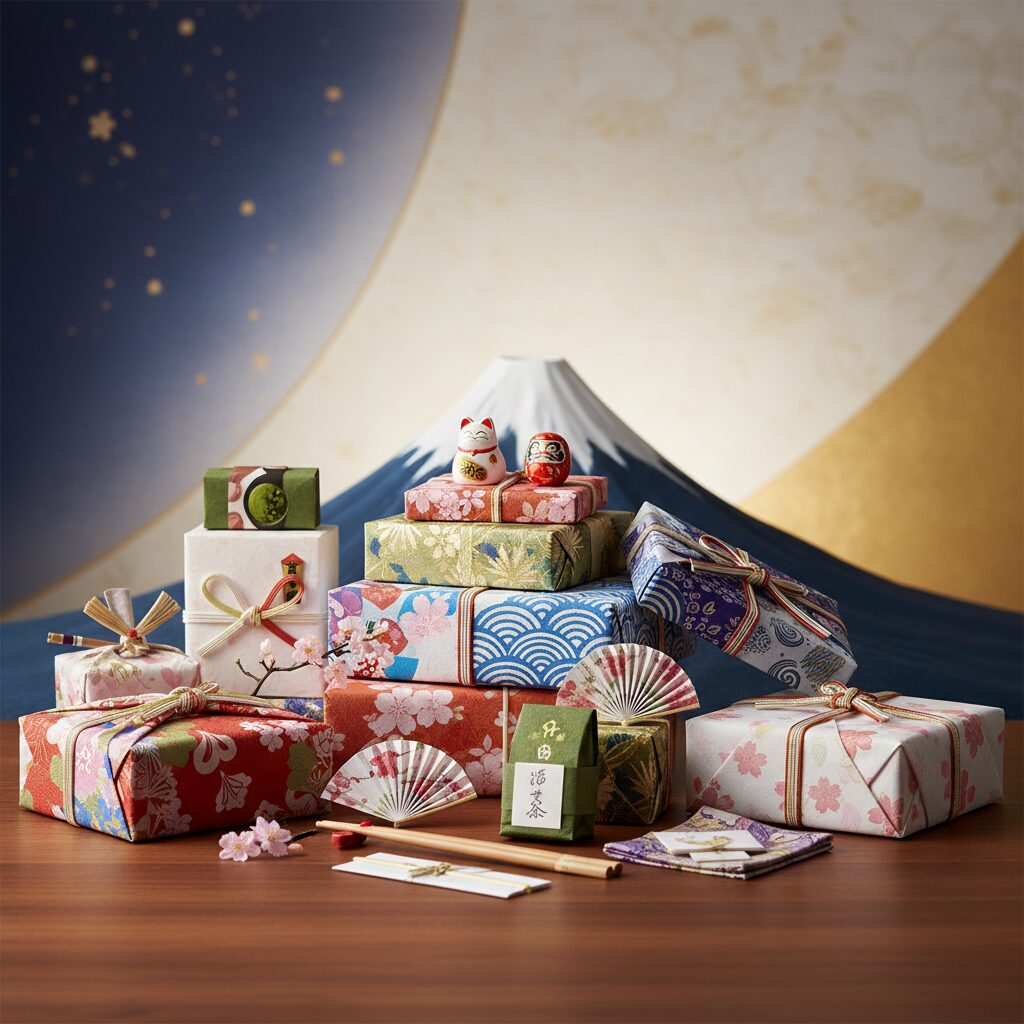
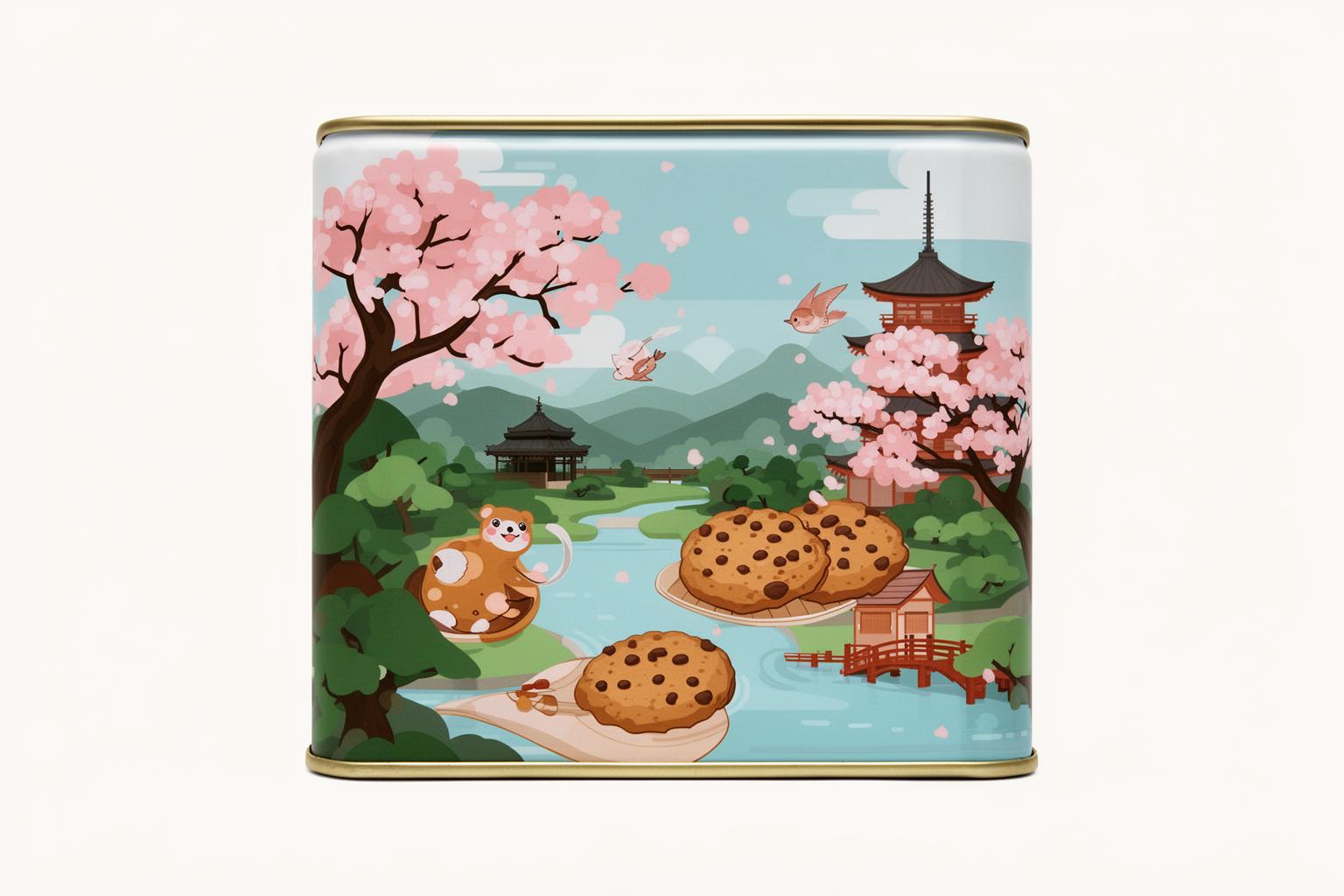
Above all, presentation is key. In Japan, packaging is an essential part of the gift, conveying as much significance as the contents. Omiyage boxes are artistic creations—beautifully designed, often adorned with illustrations of local landmarks or famous regional products. The box is usually wrapped in decorative paper from the store and sometimes placed in a branded paper bag. Inside, the true brilliance of omiyage is revealed: each item is almost always individually wrapped. This is not only for hygiene but also for practical reasons. Office omiyage must be easy to distribute. A single large cake is problematic—it requires a knife, plates, and creates a mess. A box of twelve individually wrapped biscuits for a team of twelve is ideal. It allows each person to take one back to their desk and enjoy it at their convenience without any fuss. The individual wrapping reflects deep thoughtfulness toward the recipients’ convenience.
The Doctrine of Local Specialities
The omiyage must be a meibutsu (名物) or tokusanhin (特産品)—a famous product or local specialty from the place you visited. The whole purpose is to bring back a taste of the region you traveled to. Heading to Kyoto? Then you bring back yatsuhashi (cinnamon-scented sweet rice flour dumplings). Visiting Hiroshima? It should be momiji manju (maple-leaf-shaped cakes). Bringing a generic box of chocolates from an airport convenience store is a rookie mistake. Bringing back a famous Tokyo snack from a trip to Fukuoka is a cultural faux pas. It reveals a fundamental misunderstanding of the tradition. The gift serves as a report of your travels, and its geographic identity is non-negotiable.
The Ritual of Giving
The act of presenting the omiyage is itself a small ceremony. You don’t simply place it on the table. You offer it first to your manager or the most senior person, or announce it to the group while putting it in a communal space. When handing it over, it is customary to use both hands and bow slightly. Importantly, you must humble your own gift by saying something like, “Tsumaranai mono desu ga, douzo” (つまらないものですが、どうぞ), which literally means, “This is a trivial thing, but please accept it.” This is not fake modesty; it is a prescribed phrase of humility—a linguistic device to show you are neither arrogant nor expecting lavish praise. The recipient, in response, will protest, declaring it a wonderful gift and expressing heartfelt thanks. This verbal exchange is a vital part of the interaction, easing social dynamics and reinforcing hierarchical respect.
The Omiyage Family: Know Your Gifts
To fully understand the concept, it’s essential to differentiate omiyage from its closely related counterparts in the Japanese gift-giving culture. Using the incorrect term in the wrong situation can cause confusion.
Omiyage (お土産)
As we’ve discussed, this is the souvenir gift purchased during a trip for people back home or at the workplace. Its defining feature is its association with travel. The kanji characters, 土 (earth, ground) and 産 (product), literally translate to “local product.” It is bought at the travel destination.
Temiyage (手土産)
This is a gift brought when you’re invited to someone’s home. The kanji 手 (te) means “hand,” so it literally means “hand-gift.” This corresponds to the host or hostess gift in Western traditions. It could be a bottle of sake, a dessert from a specialty bakery near your own home, or a box of fruit. You purchase this before visiting their home. Its purpose is to express gratitude for their hospitality. Arriving at a dinner party in a Japanese household empty-handed is considered rude; showing up with omiyage from a trip taken last month is simply inappropriate. The context is entirely different.
Present (プレゼント)
This is the English loanword purezento, used much like in the West. It refers to a personal gift given for a specific occasion such as a birthday, wedding, Christmas, or Valentine’s Day. It is selected specifically for the recipient and is usually more personal and often more costly than omiyage or temiyage. Presents are given to celebrate a person or an event, rather than to fulfill a social obligation related to travel or visiting.
Mixing up these three terms indicates a lack of cultural understanding. Each serves a unique social function, and using them appropriately shows awareness of the particular context of the social exchange.
The Engine of Domestic Tourism
Step into any major train station, airport, or highway rest stop (michi-no-eki) in Japan, and you’ll immediately encounter the vast scale of the omiyage industry. It’s not merely an afterthought; it’s a commercial giant, a cornerstone of the domestic travel economy. These aren’t small, dusty souvenir booths—they are expansive, brightly illuminated emporiums filled with floor-to-ceiling stacks of beautifully packaged boxes.
This industry has developed to perfectly cater to the needs of the omiyage tradition. The products are crafted for maximum convenience. Boxes come in various sizes—small (8 pieces), medium (16 pieces), and large (24 pieces)—allowing you to purchase the exact quantity needed for your office group. The flavors are generally crowd-pleasing and mild; think buttery cookies, light sponge cakes, or savory rice crackers. Packaging is lightweight and easy to carry on crowded trains.
Each region boasts its own fiercely protected lineup of omiyage favorites, often featuring local mascots or ingredients. This regional branding is a powerful marketing strategy, creating a sense of urgency and exclusivity. You can only buy Hato Sabure (dove-shaped cookies) in Kamakura, or Akafuku mochi in Ise. This encourages travelers to make purchases on the spot, knowing these treats aren’t available back home. The system forms a brilliantly self-sustaining cycle: the social obligation drives the industry, and the industry makes it incredibly simple and appealing to meet that obligation.
The Constant Cycle of Giving and Receiving
For the recipient, the omiyage culture appears as a nearly constant supply of snacks in the workplace. It’s a welcome perk, but it also serves as a continual reminder of the social network you belong to. Receiving an omiyage places you in a position of social obligation, however small. When you travel next, the responsibility falls on you to reciprocate. This establishes a steady, gentle cycle of giving and receiving that helps maintain group connections.
It also offers a way to travel vicariously. Your manager has just returned from Okinawa, so this week you get to enjoy chinsuko (shortbread-like biscuits). A sales team colleague visited Hokkaido, so next week you’ll have melon-flavored Langue de Chat cookies. Each box tells a story and offers a small glimpse into another part of the country. It becomes a shared experience, allowing participation in each other’s lives without being too personal. The ritual of gathering around the box, picking a snack, and exchanging a few remarks about the trip is a minor but meaningful team-building exercise repeated endlessly in offices throughout Japan.
This cycle can sometimes feel taxing. The pressure to select the “right” omiyage can be stressful, and the expenses add up. There’s even a term, omiyage-jigoku (omiyage hell), used to describe the anxiety of having to buy gifts for multiple social groups. Yet, for most, it remains simply an accepted part of life.
Omiyage in the 21st Century
One might question whether this tradition is diminishing in a rapidly globalizing Japan, especially among younger generations who tend to be more individualistic. Although the dynamics are gradually evolving, the core practice remains remarkably resilient. In modern startups or international firms in Tokyo, the pressure may be less intense. A simple verbal “welcome back” might be enough. However, in the vast majority of traditional companies, schools, and neighborhood associations, the omiyage ritual remains as important as ever.
What may be changing is the nature of the omiyage itself. While classic regional snacks still prevail, some people are choosing more modern or refined options. Instead of sweet cakes, a colleague might bring back artisanal coffee beans from a trendy cafe they visited or a pack of craft beer from a local brewery. The principle stays the same—a specialty from the place of travel—but the item reflects contemporary tastes. The fundamental gesture of thoughtfulness, however, continues.
In the end, the humble box of omiyage symbolizes something powerful. It embodies the delicate balance between the individual and the group that is central to much of Japanese society. It acknowledges that your actions, even your personal trip, have a ripple effect on those around you. It’s a way of saying, “I see you, I appreciate you, and I am part of this group.” It’s much more than a souvenir; it’s the price of admission to a smoothly functioning social world, paid one individually wrapped cookie at a time.