It’s a quiet moment, one you might easily miss. You’re at a simple restaurant in Japan, maybe a tiny ramen shop tucked into a Tokyo alleyway. You’ve just finished your bowl, and the chef takes it back. Instead of just rinsing it, he meticulously uses a rubber spatula to scrape every last drop of broth, every stray noodle fragment, into the drain before washing. Nothing is left. At first, you might chalk it up to Japanese fastidiousness. But it’s something else entirely. You’re witnessing a philosophy in action. You’re seeing mottainai.
Ask a Japanese person to translate “mottainai,” and they’ll likely pause. They might offer “what a waste,” but that’s a pale, inadequate shadow of the real meaning. It’s not just an observation; it’s a feeling. It’s a visceral pang of regret, a mild sense of shame, at the squandering of something’s potential. It’s the feeling you get when you throw away food that could have been eaten, when you see a beautiful fabric used for a trivial purpose, when you leave the water running for too long. The word itself, written 勿体無い, hints at its depth. The first two characters, mottai (勿体), refer to the intrinsic substance or essence of a thing, while nai (無い) means its absence. To commit an act of mottainai is to disrespect the very essence of something—the time, the labor, the natural resources, the life force—that went into creating it. It is a deep-seated cultural concept that operates like a quiet, internal compass, guiding decisions in kitchens, workshops, and boardrooms across the nation. This isn’t just about recycling. It’s a worldview woven into the fabric of Japanese society, and understanding it is key to understanding the country’s soul.
Delving deeper into Japan’s seamless blend of cultural values and deliberate decision-making can be enriching when you explore nemawashi practices, which reveal the pivotal groundwork behind many everyday actions.
More Than Just “Wasteful”: The Buddhist Roots of a National Psyche
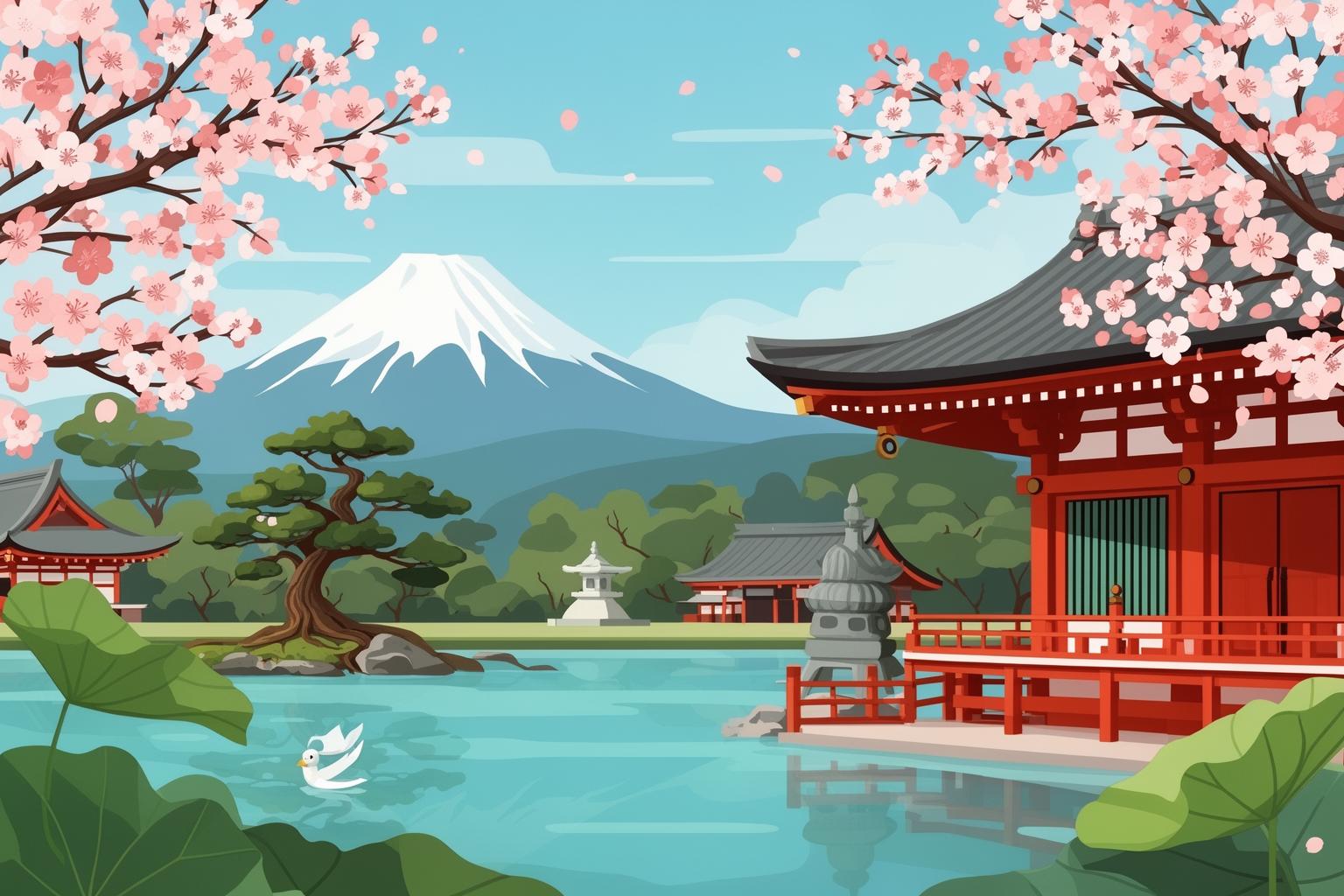
To truly understand mottainai, you need to look beyond modern environmentalism. The concept is deeply rooted in Japan’s Buddhist traditions, which stress interdependence and respect for all things, both living and non-living. In this perspective, everything is interconnected, and every object, no matter how ordinary, holds an inherent dignity that must be honored. Wasting something is not merely an economic mistake; it is a moral and spiritual lapse—a failure to recognize the web of connections that brought that item to you.
Consider a simple bowl of rice. A Western viewpoint might assign its value in monetary terms. A mottainai perspective sees the sun, rain, and soil that nurtured the crop. It acknowledges the farmer who worked for months to grow it, the laborers who harvested and transported it, and the cook who prepared it. Leaving even a single grain uneaten disregards that entire chain of effort and natural blessing. It is an act of cosmic ingratitude. This is no exaggeration; it is the subtle reasoning that supports the philosophy, giving everyday objects and actions a profound sense of significance.
This marks the key distinction between “wasteful” and mottainai. “Wasteful” is a practical critique of inefficiency. Mottainai is an emotional reaction to disrespect. It’s the universe’s quiet sigh when its gifts go unappreciated. This sentiment was crucial for survival in pre-modern Japan, a mountainous land with limited arable soil and frequent natural disasters. Every resource had to be used to its utmost potential. What started as a practical necessity eventually evolved over centuries into a sophisticated cultural and ethical ideal that remains relevant long after material scarcity has diminished.
The Philosophy on Your Plate: Mottainai in Japanese Cuisine
Nowhere is the spirit of mottainai more evident, more palpable, and more delicious than in the realm of Japanese cuisine, or washoku. It serves as the silent element in nearly every dish, an unseen force guiding the chef’s knife.
The Whole Ingredient
The most fundamental expression is the “nose-to-tail” or “root-to-leaf” method of cooking that has been followed for centuries. Here, it’s not a trendy culinary trend but simply the default mindset. A fish, for instance, is never limited to its fillets. The head and bones are simmered for hours to produce a rich, savory dashi broth, which forms the base of countless soups and sauces. The skin might be grilled until crisp and served as a snack. Even the organs are utilized in particular dishes. Nothing goes to waste because every part is regarded as having its own distinct value and flavor.
The same approach applies to vegetables. When peeling a daikon radish, the skins are not discarded. Instead, they are finely julienned and stir-fried with soy sauce and chili to create a classic side dish called kinpira. The tough outer leaves of cabbage are used for pickling. Carrot tops are transformed into savory tempura. This mindset goes beyond frugality; it is a creative endeavor to unlock the full potential of each ingredient. It fosters a deeper appreciation for the produce itself.
The Reverence for Rice
As noted earlier, rice is sacred. In Japan, the word for cooked rice, gohan (ご飯), also serves as the general term for “meal.” To eat is to eat rice. Children are taught from their first day at school to finish every last grain in their lunchbox. Leaving even a few grains stuck to the bowl is seen as poor manners. This isn’t meant to shame picky eaters. Rather, it instills a fundamental value: food is a blessing, and the labor behind it must be honored. This simple, daily ritual powerfully transmits the mottainai philosophy from one generation to the next.
The Art of the Clean Plate
The aesthetics of Japanese dining—small, beautiful portions arranged thoughtfully on a variety of dishes—also reflect mottainai. It contrasts sharply with the massive, all-you-can-eat buffets that encourage piling plates high and inevitably wasting food. The Japanese approach invites you to take only what you need, savor each element, and finish everything. A perfectly clean plate at the end of a meal is the highest compliment you can give the chef, the host, and the ingredients themselves. It is a silent “thank you” for the meal, a sign that you have fully received and cherished the gift.
From Kimono to Kintsugi: The Material Culture of Not Wasting
This philosophy reaches well beyond the kitchen, influencing Japan’s relationship with material possessions. In a world increasingly shaped by disposable culture, the traditional Japanese attitude toward belongings presents a compelling alternative.
Kintsugi: The Beauty of the Break
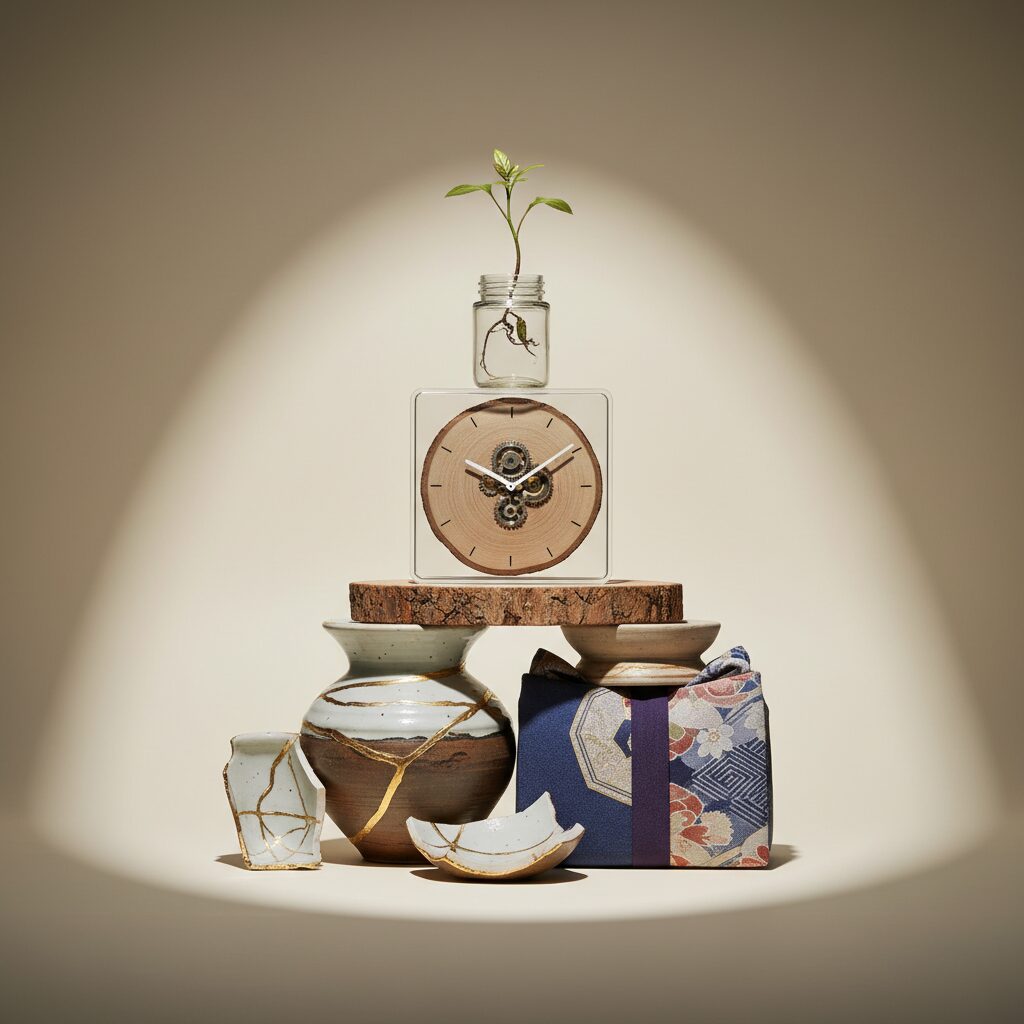
Perhaps the most striking physical expression of mottainai is kintsugi (金継ぎ), the art of repairing broken pottery. Rather than concealing the cracks, kintsugi craftsmen repair the pieces using lacquer mixed with powdered gold, silver, or platinum. The repair is not hidden but highlighted, becoming an integral part of the object’s design. A kintsugi bowl tells a story. It does not deny its past breakage; instead, it proudly showcases its history of damage and restoration, suggesting it is more beautiful and valuable for having been broken and carefully mended.
This is mottainai in its most poetic form. An object’s life doesn’t end simply because it’s damaged. Its essence, its mottai, remains intact. Discarding it would mean wasting its history and its potential for future use. Kintsugi teaches that an object’s narrative, including its flaws, should be respected, not erased.
Furoshiki and Zokin: The Endless Life of Textiles
Long before concerns about plastic bags arose, Japan had the furoshiki (風呂敷). This is a single square of decorated cloth that, through a series of graceful knots, can be transformed into a bag for carrying groceries, a protective wrap for a bento box, or an elegant covering for a gift. It is endlessly reusable, adaptable, and beautiful. It embodies a mindset where one versatile item can serve numerous purposes, eliminating the need for disposable products. Giving a gift wrapped in a furoshiki is like giving two gifts in one; the recipient can then reuse the cloth for their own needs.
This spirit of reuse continues through the final stages of a fabric’s life. A worn kimono, too valuable to simply discard, would begin a new chapter. It might be unstitched and resewn into a child’s garment, a cushion cover, or an apron. When it became too worn for these purposes, it would be cut into smaller pieces and sewn together to create a zokin, a durable cleaning rag. Even at its most modest end, the fabric serves a final, practical purpose. Its mottai is honored down to the very last thread.
The Modern Paradox: Mottainai in a Hyper-Consumerist Society

Now, it’s reasonable to ask: If Japan is so deeply committed to the philosophy of not wasting, why is it also renowned for its elaborate, multi-layered packaging? How does a culture rooted in mottainai coexist with convenience stores brimming with single-serving plastic-wrapped snacks and the relentless churn of fast fashion?
This is the central paradox of contemporary Japan, and overlooking it would present a misleading, postcard-perfect image. The reality is that the enduring traditional value of mottainai exists uneasily alongside the powerful tide of 20th and 21st-century consumer capitalism. Several factors contribute to this tension.
Firstly, the cultural emphasis on presentation and hygiene often outweighs concerns about waste. That individually wrapped cookie isn’t merely a cookie; it’s a small, impeccable gift. The plastic wrapping ensures it remains pristine and conveys a level of care from producer to consumer. Secondly, the demands of modern urban life—with long working hours and small living spaces—have made convenience paramount. Pre-packaged, single-serving meals are a vital convenience for busy office workers, even if they result in a significant amount of plastic waste.
There may also be a psychological aspect tied to the Japanese concept of uchi-soto (inside/outside). The mottainai impulse is strongest within one’s own domain—the home (uchi). People are meticulous about managing their household waste and resources. However, the realm of mass-produced goods can feel like it belongs to the impersonal “outside” (soto), where individual actions seem disconnected from their consequences. This doesn’t justify the contradiction, but it helps clarify how these two opposing forces coexist within the same society. Japan is a nation actively grappling with the tension between its traditional values and contemporary realities.
From a Japanese Feeling to a Global Slogan
While Japan wrestles with its internal contradictions, the concept of mottainai has begun to resonate far beyond its borders, largely due to an unexpected champion: the Kenyan environmentalist and Nobel Peace Prize laureate, Wangari Maathai.
During a visit to Japan for an environmental conference, she encountered the word mottainai and was immediately captivated by its significance. She realized it perfectly captured the holistic environmental philosophy she had been advocating through her Green Belt Movement. The conventional environmental mantra “Reduce, Reuse, Recycle” seemed clinical and technical to her. Mottainai, she contended, was different. It was emotional and embodied a sense of love and respect for the planet’s resources.
She began championing mottainai globally as the crucial “Fourth R”—Respect. She saw it as the missing element, the foundational value that must precede the other three actions. You reduce, reuse, and recycle only if you first hold a fundamental respect for the resources you utilize. Her efforts helped introduce this deeply Japanese term to a worldwide audience, transforming it from a cultural curiosity into a potential universal slogan for a more sustainable lifestyle.
Today, the spirit of mottainai is experiencing a revival both in Japan and internationally. It can be seen in the rise of apps that link restaurants with customers to sell surplus food at a discount. It’s reflected in the growing “slow fashion” movement, which promotes repairing and valuing clothes rather than continuously replacing them. It’s embodied in the philosophy of minimalist designers who craft beautiful, multifunctional items intended to last a lifetime.
Mottainai is not a rigid set of rules. It’s a feeling, a gentle yet persistent voice in the back of your mind asking, “Are you sure you’re done with that? Could it not have another use?” It’s a perspective that transforms how you view the world, uncovering the hidden worth in a broken cup, a vegetable peel, or a scrap of fabric. In an era of thoughtless consumption and overflowing landfills, this ancient piece of Japanese wisdom feels more urgent and necessary than ever. It’s a quiet invitation to honor the essence of things, to take only what we need, and to use what we have with gratitude and care.