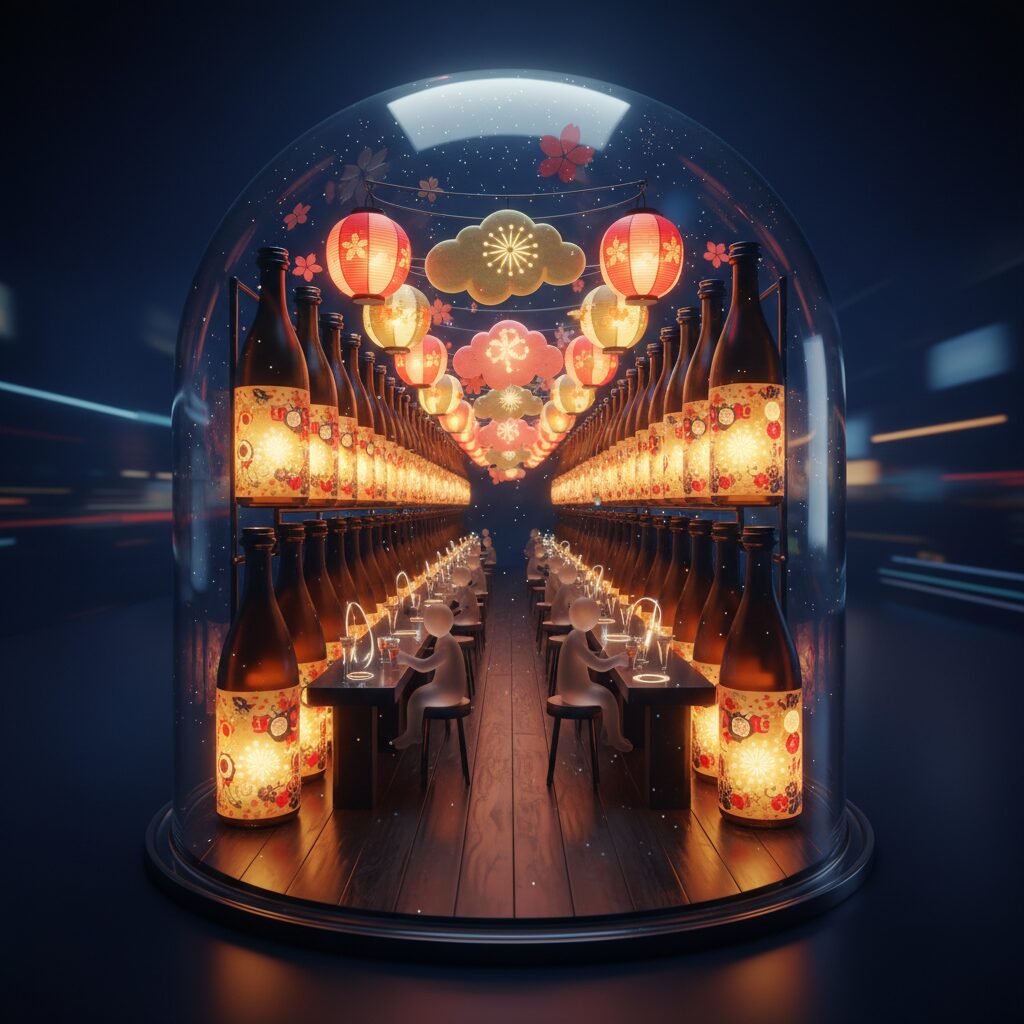
You’ve seen the pictures. A sliver of an alleyway, barely wide enough for two people to pass, sandwiched between gleaming modern towers. Red lanterns cast a warm, inviting glow on the steam rising from a grill. The air is thick with the savory smoke of grilling chicken skin and the murmur of laughter and clinking glasses. Inside tiny establishments, patrons sit elbow-to-elbow along a worn wooden counter, their faces animated in conversation with the owner. This is the yokocho, the quintessential Japanese drinking alley. It feels ancient, authentic, and impossibly atmospheric. And for many visitors, and Japanese people alike, it represents the very heart of urban nightlife.
But the question that hangs in the smoky air is why. Why did these cramped, seemingly dilapidated, and inefficiently designed spaces become such cherished cultural institutions? In a country obsessed with modernity, efficiency, and pristine aesthetics, these gritty little pockets of the past shouldn’t just survive; they should be anathema. Yet they are not only surviving, they are thriving. They are sought out, celebrated, and emulated. To understand the powerful allure of the yokocho, you can’t just look at it as a place to get a drink. You have to see it as a living monument to Japan’s most traumatic and transformative period. These alleys are not a design choice; they are a historical scar, a physical manifestation of post-war survival that has, over decades, evolved into a vital space for social connection and cultural memory.
These alleys, much like the resilient character of Japan’s oshikatsu culture, reveal how deeply historical scars can nurture new forms of social expression.
From Ashes and Illegality: The Birth of the Black Market Alley
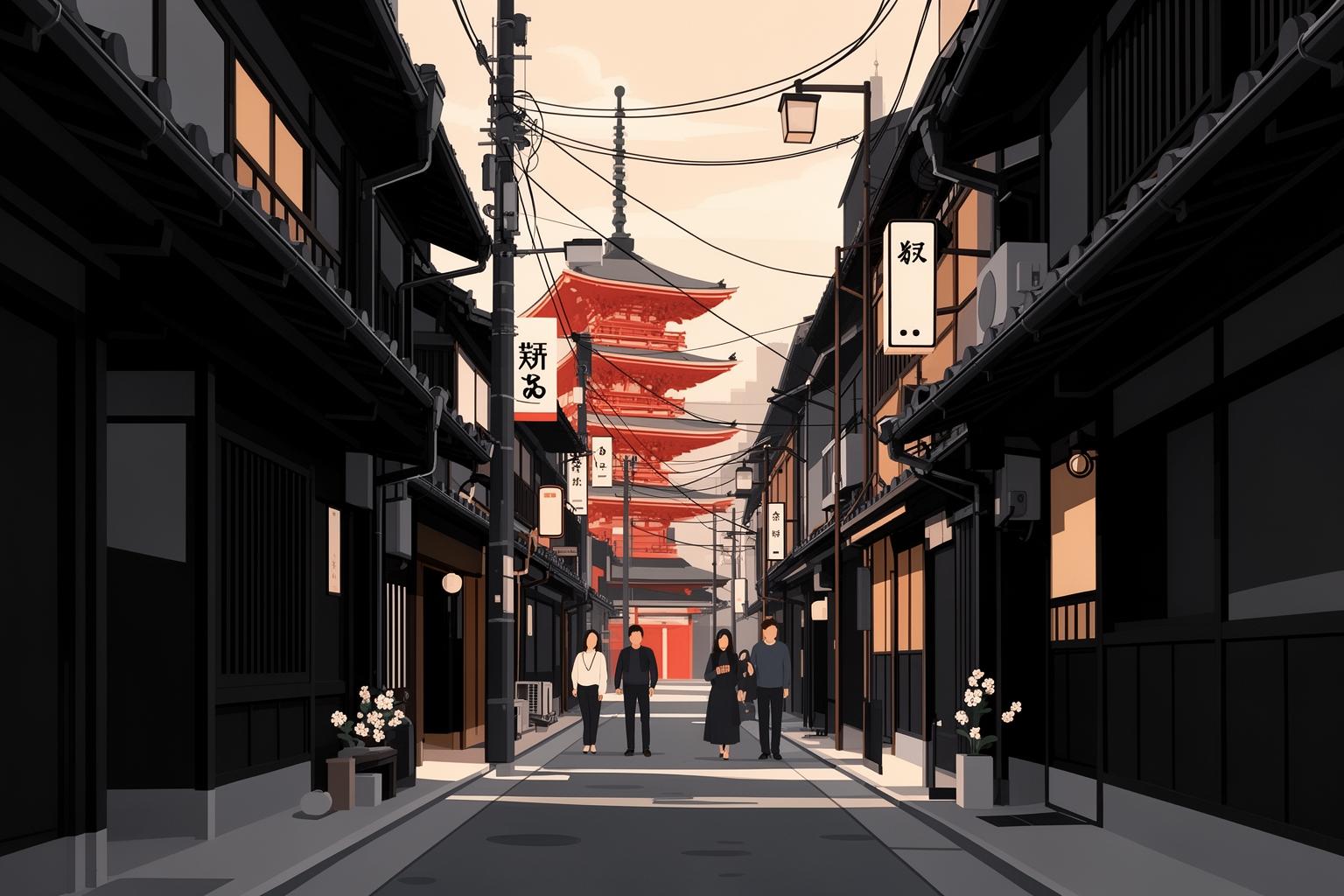
To trace the origin of the yokocho, one must return to the immediate aftermath of World War II. The year is 1945. Japan’s major cities lie in vast expanses of rubble and ash. The formal economy has collapsed entirely. The government’s food rationing system is failing catastrophically, leading to widespread starvation. In this void of order and supply, something raw and vital took hold: the yami-ichi, or black market.
These were not organized criminal enterprises as we might picture them today. Rather, they were sprawling, chaotic, and desperate networks of survival. People who had lost everything began erecting makeshift stalls and shacks, often using scrap metal and charred timber scavenged from the ruins. They gathered in strategically important spots—mainly the burnt-out areas near major train stations. This was essential. Stations were the lifelines of the crippled cities, the only places where a steady stream of people was guaranteed, bringing both potential customers and goods smuggled in from the countryside.
What was sold? Anything and everything. Stolen military supplies, sweet potatoes, scavenged metal, clothing. But most crucial for the future of the yokocho, they offered food and drink. With official restaurants closed and ingredients scarce, these black market stalls were the sole places to get a hot meal or a stiff drink. The alcohol was often kasutori, a cheap, potent, and frequently hazardous moonshine distilled from sake lees. The food was simple, made from whatever was available—particularly offal and other less desirable meat cuts grilled on skewers. This is the origin of the classic yakitori and motsuyaki stalls that still define yokocho cuisine today.
These spots operated in a legal gray zone, constantly vulnerable to police raids. They were illegal but utterly necessary. The government, knowing it couldn’t feed the population, often turned a blind eye. This fragile existence shaped the markets’ physical form. They were designed to be temporary, dense, and easily navigable by those familiar with their layout—while confusing to outsiders, including the authorities. The narrow, winding paths were not a charming design choice; they served the practical purpose of evading police raids. The tiny, open-fronted stalls allowed vendors to serve customers quickly and keep watch for trouble. This architecture of necessity, born from desperation and illegality, laid the foundation for the yokocho we know today.
The Architecture of Necessity Becomes the Architecture of Intimacy
As the Japanese economy began its remarkable recovery during the 1950s and 60s, the blatant illegality of the yami-ichi gradually disappeared. The government formalized many of these areas by granting official licenses to the stall owners who had endured the hardest times. The once desperate black markets slowly evolved into clusters of legitimate, though tiny, bars and eateries. Yet, their physical layout remained mostly intact. The narrow alleys, the tiny storefronts, and the counter-with-a-handful-of-stools setup—all were remnants of their black market roots.
Here, something intriguing occurred. The very spatial limitations born from scarcity and urgency began to create a unique and deeply appealing social atmosphere. The cramped quarters ceased to be a drawback; instead, they became the defining feature. In a typical yokocho bar, you might find only six or seven seats, all lining a counter behind which the owner, or “master,” works. You sit literally shoulder-to-shoulder with the person next to you. There is no space for private tables or hidden booths. Anonymity is out of the question.
This close proximity breaks down social barriers. In a larger, more modern bar, you can remain in your own bubble. In a yokocho, you become part of a fleeting, intimate community. Conversation is almost inevitable. You might strike up a chat with the salaryman beside you about his day, or ask the master about the sake they just poured. The master is the cornerstone of this whole experience. They are not merely a bartender; they serve as host, conductor, and confidant of the small world they oversee. They remember their regulars, welcome newcomers, and steer the flow of conversation. This elevates drinking from a mere transaction to a personal, human experience.
The architecture itself supports this dynamic. The worn wooden counter, darkened and softened by decades of use, serves as a communal table. The open kitchen—often just a grill a few feet from the patrons—evokes a feeling of being invited into someone’s home. There is a transparency and sincerity in this setup. You watch your food being prepared; you see the master’s face as they engage with you. This environment starkly contrasts with the often impersonal and highly formal nature of Japanese corporate and public life. The yokocho became a refuge—a place where the rigid hierarchies of the office could be temporarily set aside.
A Portal to the Showa Era: Nostalgia in a Glass
Step into a classic yokocho like Shinjuku’s Omoide Yokocho (“Memory Lane”) or Ebisu’s Ebisu Yokocho, and you feel as if you’ve entered a time machine. The experience offers a full-sensory immersion in the Showa Era (1926-1989), especially the vibrant, hopeful, and slightly rough period of post-war reconstruction and economic growth. This nostalgic charm is a key reason for their lasting popularity.
It’s not a staged or artificial nostalgia, like that of a retro-themed bar. It’s the genuine article, aged naturally. The buildings themselves, often fragile wooden structures that have somehow endured decades of earthquakes and redevelopment pressures, are historical artifacts. The air carries the same scents of grilled meat and aged wood that it has for seventy years. The walls are frequently covered with yellowed posters, calendars from long ago, and handwritten menus from a past era. Even the technology remains minimal. You won’t find flashy screens or complex point-of-sale systems—just a simple cash box and perhaps an old, crackling radio.
This aesthetic strikes a strong chord across generations. For older Japanese people, it’s a direct link to their youth, evoking the tastes and smells of the world they grew up in. It’s a comforting reminder of a period of national rebuilding and shared purpose. For younger generations who never lived through that time, the yokocho provides a tangible connection to a past they’ve only read about or seen in films. It feels more “real” and “authentic” than the polished, globalized Japan of today. In a world of sleek, minimalist design, the yokocho’s clutter and visible age feel genuine and inviting.
This sense of history is also evident in the glass and on the plate. The menu is a collection of Showa-era comfort foods: yakitori, motsuni (offal stew), grilled fish, and simple pickles. The drinks are classics: draft beer served in frosted mugs, inexpensive and effective shochu highballs (chuhai), and straightforward sake. There are no craft cocktails with ten ingredients or elaborate fusion dishes. The charm lies in the perfection of simplicity, a culinary tradition refined over decades in the same tiny kitchen. It’s a taste of history, a flavor profile that reflects a time before globalization and culinary trends.
The Social Logic of the Cramped Space
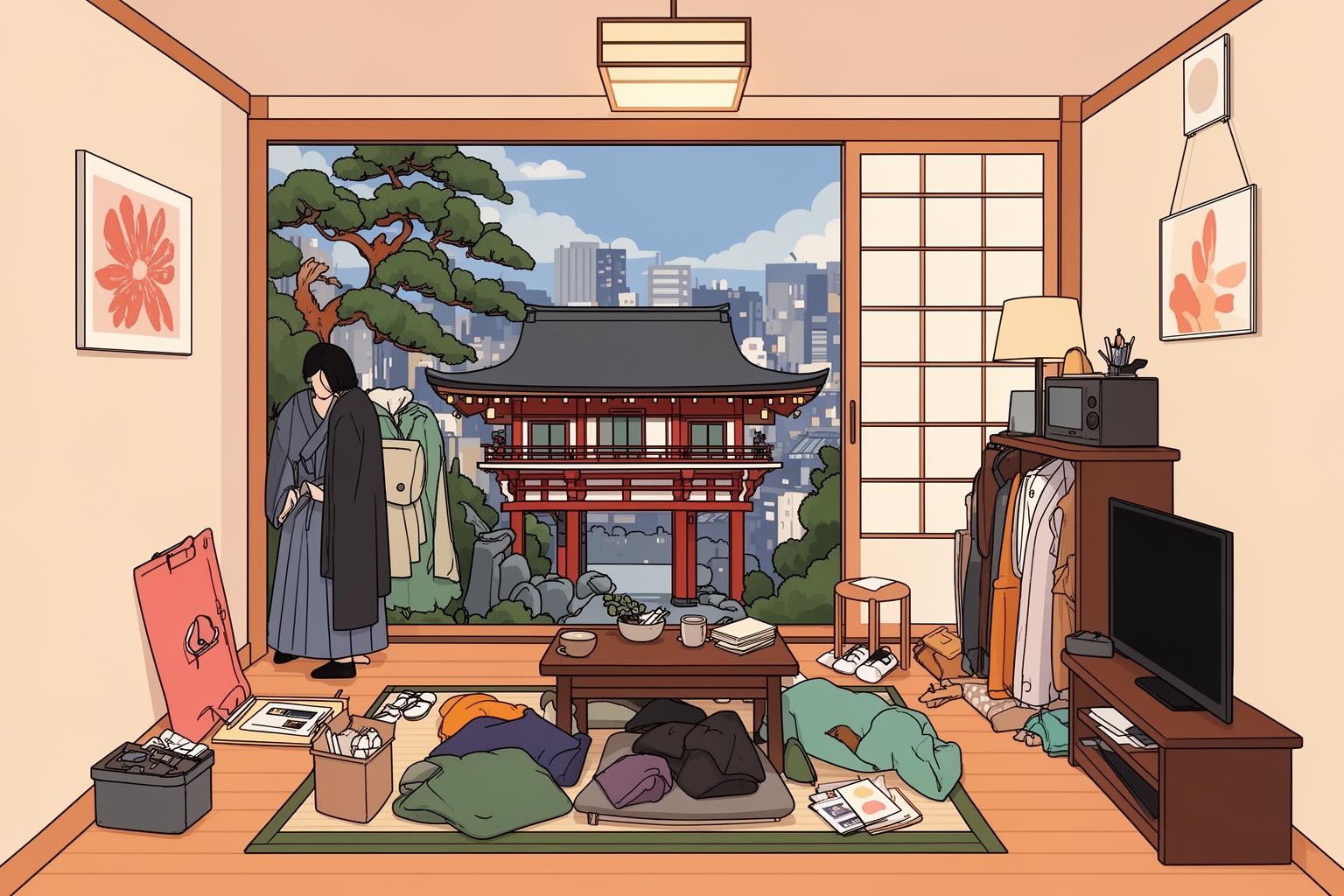
Beyond history and aesthetics, the yokocho plays a vital role in Japanese society. It is a space created, whether intentionally or not, to break down the strong social distinctions that shape everyday life. The central idea here is uchi-soto, which can be roughly translated as “inside/outside.”
Soto signifies the outside world: the office, public environments, and interactions with strangers. In this setting, behavior is regulated by strict rules of hierarchy, formality, and indirect communication (tatemae, the public facade). Uchi, on the other hand, refers to the inner world of family and trusted colleagues, where one can be more relaxed, direct, and emotionally open (honne, true feelings).
A well-run yokocho bar serves as a temporary uchi space for its visitors. Once you slip under the short noren curtain at the entrance, you leave the formal sphere of soto behind. The cramped, womb-like atmosphere, the warm greeting from the owner, and the shared experience with other patrons foster a strong sense of belonging, however brief. The rigid divide between a department manager and a junior employee can grow more flexible after a few drinks, when they find themselves squeezed together at the same counter.
This makes the yokocho an essential social release valve. It provides a place to vent frustrations, exchange gossip, and speak with a frankness that would be unthinkable in more formal contexts. The unspoken rule of the yokocho is that the conversations that take place there, remain there. It is a safe space for honne. The ephemeral nature of the interactions adds to the charm. You can have a deep, hour-long conversation with a stranger and then part ways, never to meet again. There is a freedom in this fleeting intimacy.
Moreover, the yokocho has a leveling effect. In these small spaces, your wealth or status is less visible and less significant. Everyone consumes the same simple food, drinks the same unpretentious beverages, and settles a modest bill in cash at the end. It is a fundamentally democratic experience, reminiscent of the post-war collectivist spirit when everyone was in the same boat, rebuilding from scratch. This communal atmosphere serves as a powerful antidote to the isolation that can characterize modern urban life.
Resisting the Bulldozer: The Fight for Authenticity
The story of the yokocho in the modern era is one of survival amid immense pressure. Their prime locations near major stations make the land they occupy extraordinarily valuable. For decades, developers have viewed these “eyesores” as impediments to progress, prime candidates for demolition to clear the way for gleaming office towers and shopping malls.
Many yokocho have been lost to the bulldozer. Others have resisted with remarkable determination. The best-known example is Shinjuku’s Golden Gai, a maze of six tiny alleys filled with over 200 tiny bars. During the bubble economy of the 1980s, developers, often backed by the yakuza, launched a campaign of harassment and arson to force the bar owners out. However, the community united, organizing patrols and fighting back through legal means, and ultimately saved their neighborhood. This struggle secured Golden Gai’s legendary status and underscored the deep emotional connection that owners and patrons have to these unique spaces.
Today, the threats are more subtle. One of these is gentrification. As yokocho gain popularity among tourists and younger, trend-conscious crowds, prices can increase, pushing out the original local clientele. Fire safety regulations, while essential, also present challenges to the old wooden buildings, often requiring expensive upgrades that small business owners cannot afford. There is an ongoing tension between maintaining the raw, chaotic authenticity of these places and ensuring they are safe and sustainable.
In response to the enduring popularity of the classic alleys, a new trend has emerged: the “Neo-Yokocho.” These are modern, planned developments that replicate the aesthetic of old yokocho—cramped stalls, retro decor, simple food—but occupy new buildings, often on a single floor of a commercial complex. While they can be enjoyable and offer a clean, safe, and accessible version of the experience, they often lack a vital ingredient: the weight of history. The grit, the patina of age, the sense of organic, chaotic growth—these are qualities that cannot be manufactured. They must be earned through decades of continuous human presence.
Why They Endure
So why do we seek out these smoky, cramped, and inconvenient relics of the past? Because they provide something increasingly rare in our modern, optimized world: authentic human connection within a space rich in history. The yokocho is more than just a collection of bars; it is a living museum, a social refuge, and an architectural accident that turned out to be an ingenious form of social design.
They endure as a tangible reminder of the resilience and creativity that rebuilt Japan from the ashes. They flourish because their physical constraints foster a type of intimacy and community that is urgently needed in today’s often impersonal urban environments. They are treasured as portals to a nostalgic past, allowing us to taste, smell, and experience a simpler, perhaps more genuine, era.
To squeeze onto a stool at a worn counter, watch the master skillfully flip skewers over charcoal, and share a laugh with a stranger is to engage in a ritual that has unfolded every night for over seventy years. It is to realize that in Japan, the past is never truly gone. Sometimes, it’s just waiting for you down a narrow alley, bathed in the warm glow of a red lantern. All you need to do is pull back the curtain and take a seat.