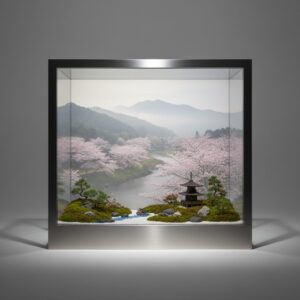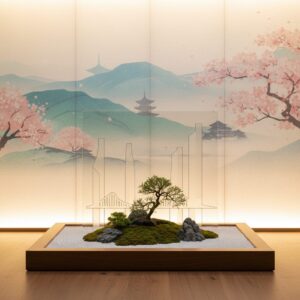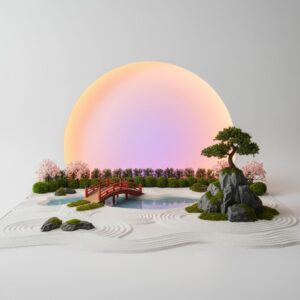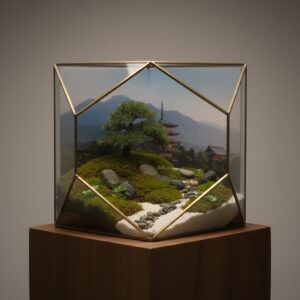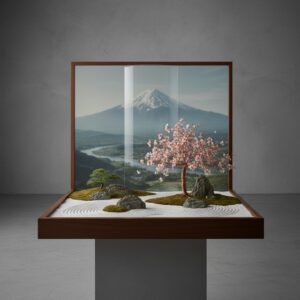
You’re standing on the wooden veranda of a temple in Kyoto, the polished floor cool beneath your feet. In front of you lies a garden—a world in miniature. A pond, still as glass, reflects the sky. A handful of moss-covered rocks are arranged with what seems like casual perfection, and a single, exquisitely shaped pine tree leans over the water. It’s beautiful, serene, meticulously crafted. You think you’re looking at the whole picture. But you’re not. You’re only looking at the foreground.
Then, someone with a deeper understanding gently directs your gaze. “Look past the pond,” they might say. “Past the trees. Look through the garden.” And when you do, everything shifts. Your focus expands, and you see it: a distant, hazy blue mountain, its familiar silhouette perfectly framed by the trees in the garden. Suddenly, the garden isn’t an enclosed space anymore. It’s a portal. The pond, the rocks, the pine tree—they aren’t the subject of the artwork. They are the frame, and the masterpiece is the mountain miles away, a piece of scenery the garden doesn’t own but has cleverly, breathtakingly, borrowed.
This is the essence of shakkei (借景), or “borrowed scenery.” It’s one of the most profound and sophisticated concepts in Japanese landscape design, yet it’s so subtle that most first-time visitors miss it entirely. It’s not just about having a nice view; it’s a deeply philosophical act of design that intentionally blurs the line between the finite, man-made space of the garden and the infinite, untamable world of nature. It’s a design principle that says the most important element of a garden might be one that lies completely outside its walls. Understanding shakkei is the key that unlocks the true genius of the Japanese garden, transforming it from a pretty park into a complex statement about humanity’s place in the universe.
This broader perspective on design invites readers to delve deeper into how the concept of shakkei redefines the boundaries between man-made space and the vast world beyond.
Beyond the Picture Frame: Deconstructing Shakkei
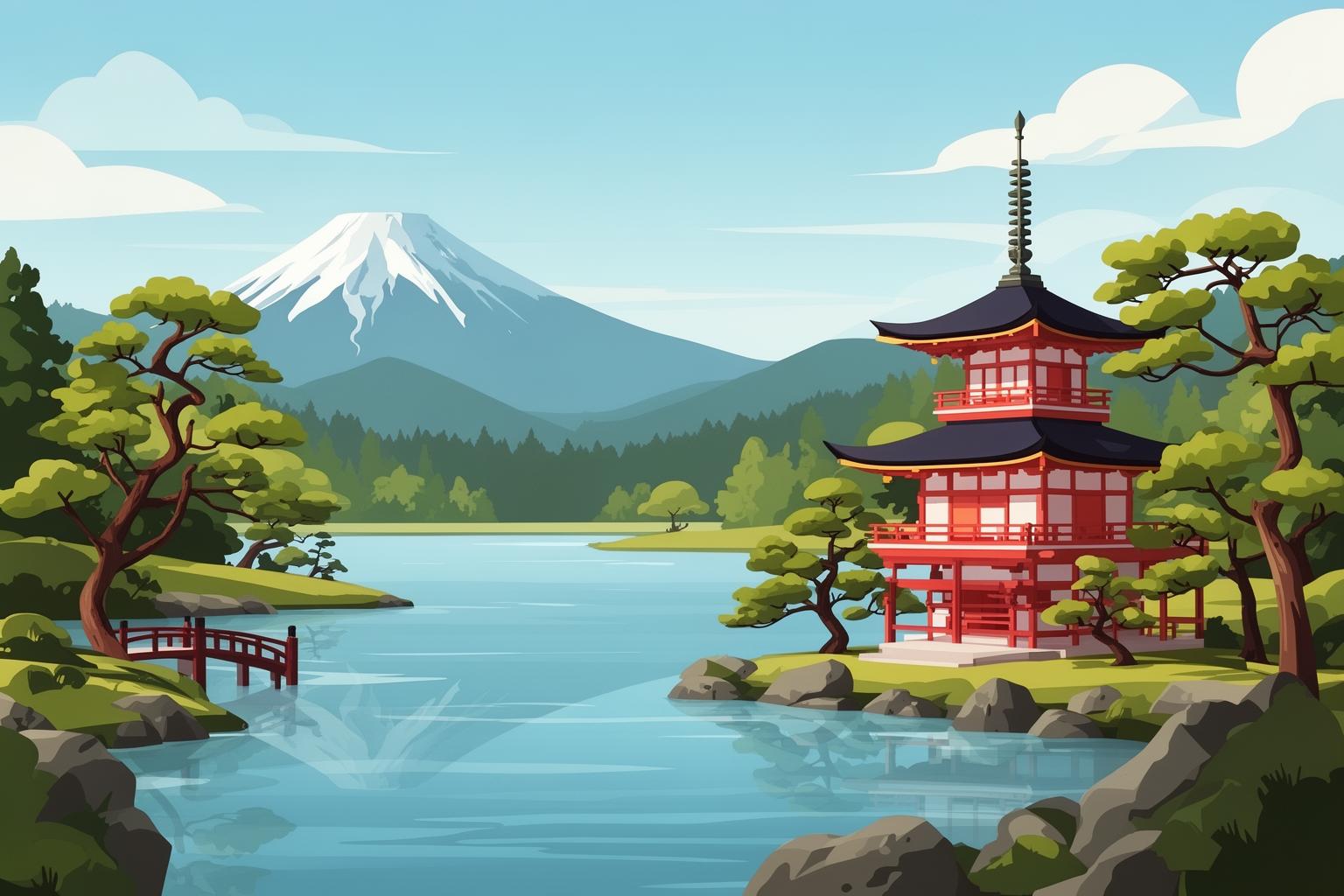
So, what exactly is going on here? The term itself provides the first hint. Shakkei is composed of two characters: 借 (shaku), meaning “to borrow” or “to rent,” and 景 (kei), meaning “scenery” or “landscape.” It represents a temporary loan of a magnificent view. The garden designer is essentially leasing a mountain, a forest, or even a neighboring temple’s pagoda, incorporating it into their own design without spending a single yen. It’s the ultimate display of visual ingenuity.
This is no mere coincidence. It’s not about placing a garden wherever there happens to be a nice view. It is a deliberate, carefully planned art form. The designer must take into account the topography, sightlines, and the elements within the garden to forge a seamless bond between the “near” and the “far.” This act of framing is vital. The garden’s internal features—a thoughtfully positioned lantern, the roofline of a teahouse, a gap between two trimmed hedges—are employed to guide the eye and capture the distant scenery, making it feel like a natural extension of the garden itself.
The Four Scales of Borrowing
Japanese garden theorists, who delight in classifying things with refined precision, have divided shakkei into four principal types. Understanding them helps to appreciate the broad scope of this technique, ranging from the grand to the subtle.
First, there is Enshaku (遠借), or “distant borrowing.” This is the most renowned and striking type, the one that usually comes to mind when thinking of shakkei. It involves incorporating large-scale, distant features such as mountains, hills, or even the sea into the garden’s backdrop. The mountains behind Tenryu-ji in Arashiyama are a perfect example; they don’t belong to the temple, yet the garden would be greatly diminished without them.
Next is Rinshaku (隣借), or “adjacent borrowing.” This is a neighborly form of the art, using elements from the adjoining property. This might include a beautiful grove of trees in a neighbor’s yard, the elegant roof of a nearby shrine, or even a striking wall. It’s about creating a harmonious connection with the immediate surroundings, dissolving the rigid property boundaries so typical of Western urban layout.
Then there is Gyōshaku (仰借), “upward borrowing.” This is perhaps the most poetic form, as it involves borrowing from the sky itself. The garden is crafted to frame drifting clouds, the brilliant blue of a clear sky, or a canopy of stars at night. The composition actively draws the heavens into its earthly realm, reminding viewers of the vastness overhead.
Finally, there is Fushaku (俯借), or “downward borrowing.” This ingenious technique uses reflections. By designing a pond with a perfectly still surface, the garden can “borrow” images of the trees, sky, and clouds above, creating a second shimmering world within its own boundaries. It’s a way of capturing the fleeting and turning it into a central feature of the landscape.
The Philosophical Blueprint: Why Bother Borrowing?
This all sounds like a clever design technique, but the true “aha” moment arrives when you grasp the philosophy behind it. Shakkei is a powerful expression of the Japanese cultural connection with nature, space, and control. It reveals what the space communicates about the culture.
Dissolving the Illusion of Control
Consider the grand formal gardens of Europe, such as those at Versailles. They stand as monuments to human supremacy over nature. Every hedge is trimmed into submission, every path is perfectly symmetrical, and every fountain is regulated by complex engineering. The message is unmistakable: nature is chaotic, and humanity’s role is to tame it, imposing order and geometry on it. The garden becomes a beautiful cage.
Shakkei suggests the exact opposite. By deliberately including a vast, untamable element like a mountain, the garden designer performs a profound act of humility. They recognize that their creation is only a small part of a much larger, uncontrollable system. The garden wall, which in the West functions to keep nature out, here becomes nearly irrelevant, a permeable membrane through which the grandeur of the outside world flows. It’s a built-in reminder that you can’t own a mountain, manicure a cloud, or fence in the horizon. The garden turns into a space for reflecting on your connection to the world, rather than your control over it.
The Art of the ‘Middle Ground’
For shakkei to succeed, simply having a window with a nice view is not enough. The effectiveness of the illusion relies on the skillful design of the “middle ground”—the garden itself. The elements within the garden are thoughtfully selected and arranged to form a visual and thematic bridge to the borrowed scenery.
This is where the real artistry is found. A carefully pruned pine tree in the foreground might be shaped to echo the slope of the distant mountain. A group of dark, jagged rocks might resemble the texture of a far-off cliff face. The color of gravel raked into patterns on the ground might harmonize with the sand of a distant shore. These connections, some obvious and some remarkably subtle, deceive the eye into perceiving a continuous, unified landscape. The middle ground guides your perception, crafting a smooth visual transition from what is controlled (the garden) to what is wild (the borrowed view), making them feel like two parts of a single whole.
A Living, Breathing Composition
Perhaps the most beautiful part of shakkei is how it creates a garden that is never static. It transforms the landscape into a living, dynamic entity that changes not only with the seasons but also with the hour. A garden that borrows a mountain appears different in spring, when a faint green fuzz softens its slopes, than in autumn, when it’s ablaze with red and orange. It shifts on a clear, crisp winter morning when it’s capped with snow, contrasting with a summer afternoon when it shimmers in the heat haze.
The borrowed scenery introduces elements of unpredictability and impermanence, two essential concepts in Japanese aesthetics. Morning mist might entirely obscure the mountain, creating mystery and revealing new facets of the foreground. A sudden rain shower might alter the color and texture of the distant forest. By connecting itself to the rhythms of the wider world, the garden becomes a timepiece for the seasons, a canvas for the weather, and a stage for the slow, ongoing dance of nature.
Experiencing Shakkei: Where to See It and What to Feel
Understanding the theory is one thing, but experiencing shakkei firsthand is quite another. It demands a subtle change in how you perceive. You must learn to see not just at a garden, but through and beyond it.
Masters of the Craft: Iconic Examples
Although the principle is applied throughout Japan, several gardens stand out as its unquestioned masterpieces. These are pilgrimage destinations for anyone eager to truly grasp the concept.
Shugaku-in Imperial Villa, Kyoto: Often regarded as the pinnacle of the art, Shugaku-in is less a single garden and more a collection of pavilions nestled within a vast landscape park. From the upper villa, the view is stunning. The designers didn’t simply borrow a mountain; they borrowed the entire northern Kyoto landscape. The surrounding rice paddies, forests, and hills are all woven into the composition, framed by the villa’s ponds and meticulously maintained shrubs. You feel as if you are gazing out over your own personal kingdom, an expansive tranquility that embodies the ultimate aim of shakkei.
Tenryu-ji Temple, Arashiyama: This renowned Zen garden offers a more focused yet equally powerful example. The Sogenchi Pond Garden in front of the main hall is beautiful on its own, but its true brilliance lies in its backdrop. The lush, seasonally changing slopes of the Arashiyama mountains are seamlessly integrated, rising directly from the far side of the pond. The boundary between the temple grounds and the wild mountains vanishes entirely.
Adachi Museum of Art, Shimane: A more modern but no less breathtaking example, the gardens at the Adachi Museum have been celebrated as the best in Japan for over twenty years. Here, the framing concept is literal. The museum’s windows serve as living picture frames. As you wander through the galleries, you encounter perfectly composed views of the gardens outside, which themselves draw upon the surrounding natural mountains. Each window offers a flawless, living painting that shifts with the light and seasons. It is shakkei realized as pure, curated art.
How to Look: A Guide for the Uninitiated
When visiting one of these gardens, resist the urge to start snapping pictures right away. Instead, seek out the primary viewing point—often a veranda or designated rock from which the scene is meant to be appreciated. If possible, take a seat.
Begin by taking in the foreground. Observe the shapes, textures, and arrangements. Then, let your eyes move through the middle ground, tracing the lines formed by trees and paths. Finally, allow your gaze to rest on the distant, borrowed scenery. Now, try to perceive it all as a unified whole. Look for visual echoes and rhymes. How does the curve of a branch mirror the hill’s ridgeline? How does the texture of a moss-covered stone relate to the distant forest?
Don’t just look; feel. The emotional effect of shakkei is one of freedom and expansion. You are meant to sense the boundaries of your small world dissolve as you connect with the larger landscape. It is a meditative experience, a moment of recognizing your place within a vast, interconnected, and beautiful world.
More Than a Pretty View
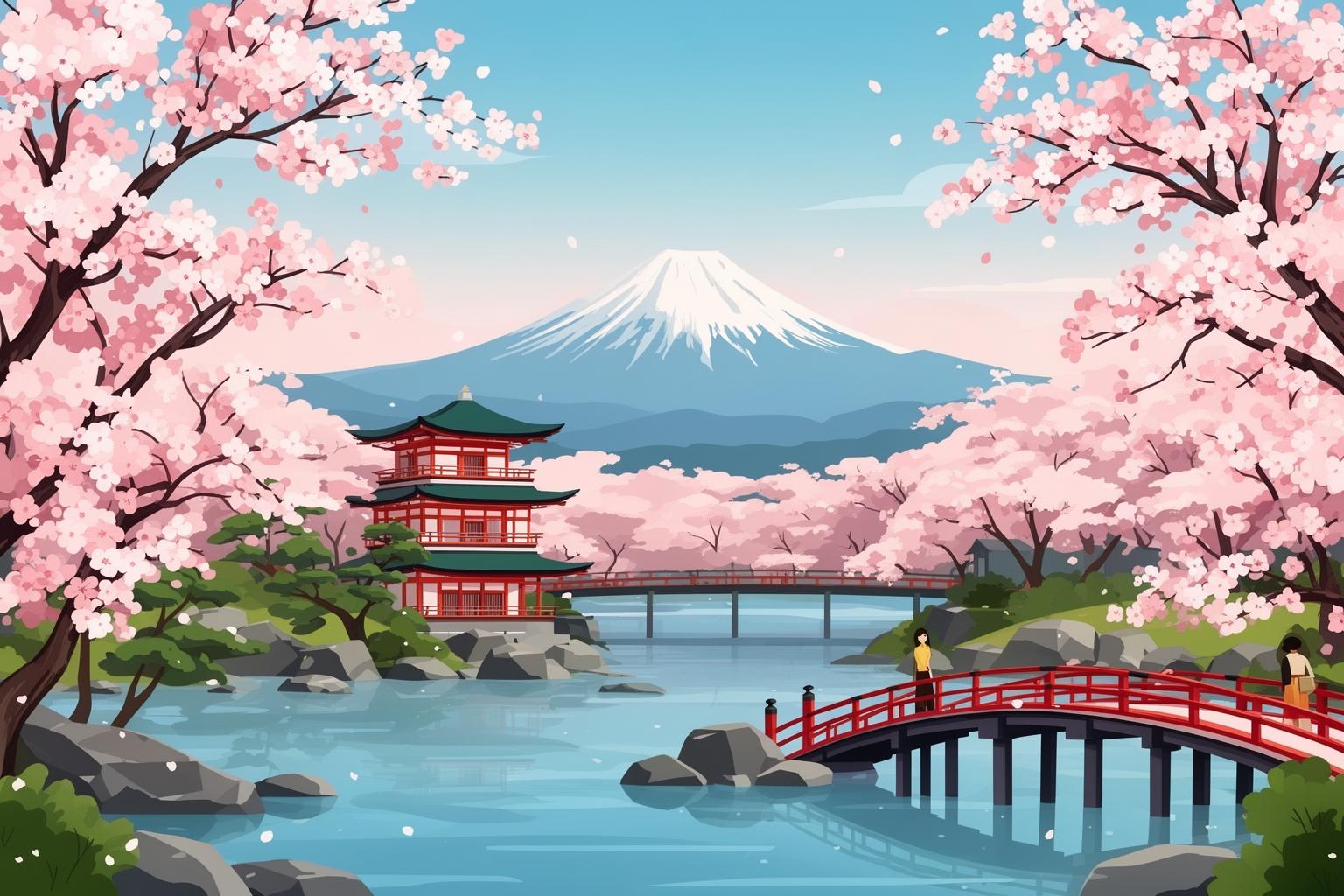
Ultimately, shakkei is far more than just a clever landscaping technique. It is a philosophy made tangible. It represents the architectural expression of a worldview that prioritizes harmony over dominance, connection over possession, and humility before nature’s majesty. It questions the very concept of boundaries, implying that the divisions we create between “mine” and “not mine,” between the designed space and the untamed world, are essentially illusions.
To stand in a Japanese garden and truly perceive the borrowed scenery is to grasp a fundamental aspect of the Japanese mindset. It reflects an appreciation for impermanence, a deep respect for nature, and the quiet wisdom in realizing that the most magnificent things in life are not those we own, but those we are fortunate enough to experience. The garden becomes a teacher, revealing that by relinquishing the desire to control everything, you can momentarily make an entire mountain your own.