It almost always starts the same way. You’re deep into a late-night YouTube session, letting the algorithm serve up one video after another. And then, it happens. A still image of a smiling woman in black and white, her expression caught somewhere between coy and wistful. The title is in Japanese, maybe with a romanized transliteration: Mariya Takeuchi – “Plastic Love.” You click, mostly out of curiosity. What follows is eight minutes of the smoothest, most impossibly lush pop music you’ve ever heard. A slick bassline kicks in, followed by shimmering keyboards and a guitar lick so clean it could cut glass. And then Takeuchi’s voice—effortless, melancholic, yet gliding over the polished production like a yacht on calm seas.
You don’t need to understand a word of Japanese to get it. The feeling is universal. It’s the sound of a city at night, rain-slicked streets reflecting neon signs. It feels like bittersweet romance, expensive cocktails, and a kind of sophisticated, adult melancholy. You look at the upload date and the view count. This single track, released in 1984, has tens of millions of views, a staggering number for a decades-old, non-English song that was never a massive hit even in its home country. The comments section is a global chorus of bewilderment and adoration: “How did the algorithm know I needed this?” “I feel nostalgia for a time I never lived in.” “This sounds more futuristic than music made today.”
This is City Pop, the ghost in the machine, the soundtrack to a party that ended thirty years ago. It’s a genre of music that was born, lived, and died within a very specific window of Japanese history, only to be resurrected by a mysterious algorithm and embraced by a global internet audience. Its resurgence isn’t just about catchy tunes; it’s about a collective longing for an imagined past. It’s the sound of a future that never quite arrived, a shimmering mirage of infinite prosperity and effortless cool. So why are we all so captivated by this audio time capsule? To understand the obsession, you have to understand the world that created it: Japan in the throes of its spectacular, and ultimately doomed, bubble economy.
The dreamy pop soundscape of City Pop echoes an era where Japan’s unique cultural currents—exemplified by the oshikatsu movement—continue to redefine nostalgia and modern allure.
The Anatomy of a Vibe

Before we explore the economics, let’s first define the sound itself. What exactly is City Pop? It’s famously difficult to categorize—less a strict genre with clear boundaries and more an aesthetic, a mood. At its essence, it’s a refined blend of American and Japanese musical influences that thrived from the late 1970s through the end of the 1980s. Imagine it as a musical cocktail, combining smooth American West Coast AOR (Adult-Oriented Rock) and soft rock reminiscent of Steely Dan or Boz Scaggs, with the catchy grooves of funk, the danceable beats of disco, and touches of tropical exotica and early synth-pop.
Production plays a crucial role. This was expensive music. Japan’s bubble economy had unleashed a flood of cash, and record companies spared no expense. They hired the country’s finest session musicians, often called ‘wasei studio musicians,’ who performed with both technical skill and effortless style. The recording technology was cutting-edge. Engineers employed advanced synthesizers like the Yamaha DX7 and Roland Juno-60 to craft those iconic shimmering keyboard pads and punchy synth-bass lines. The end result is a sound that’s impeccably clean, layered, and polished to a mirror-like sheen. It’s rich without being overwhelming, intricate without being inaccessible.
Lyrically and thematically, City Pop depicted an idealized new urban lifestyle. The songs weren’t about protest or social issues. Instead, they celebrated romance, driving along the Shonan coast with the top down, sipping cocktails by a sparkling hotel pool, dancing until dawn in Roppongi, or the bittersweet emotions of a summer love affair ending. Artists like Tatsuro Yamashita, often dubbed the “King of City Pop,” crafted cruising anthems such as “Ride on Time.” Anri’s “Last Summer Whisper” perfectly captures the mood of a wistful beach sunset. Toshiki Kadomatsu’s work features funky, complex arrangements that evoke the vibrant energy of an optimistic, bustling Tokyo. This was aspirational music for a growing cosmopolitan and affluent Japanese youth, embracing leisure and consumer culture as never before.
Soundtrack to the Economic Miracle
City Pop is inseparable from its historical backdrop. It represents the sonic essence of the Japanese bubble economy (バブル景気, baburu keiki). In the 1980s, Japan was an economic powerhouse, enjoying the fruits of decades of post-war reconstruction and innovation. Japanese technology, from the Sony Walkman to Toyota automobiles, was dominating global markets. The yen was strong, and credit was readily available. This environment sparked a speculative craze, pushing real estate and stock prices to unprecedented heights. For a brief, exhilarating time, it seemed as if prosperity would last forever.
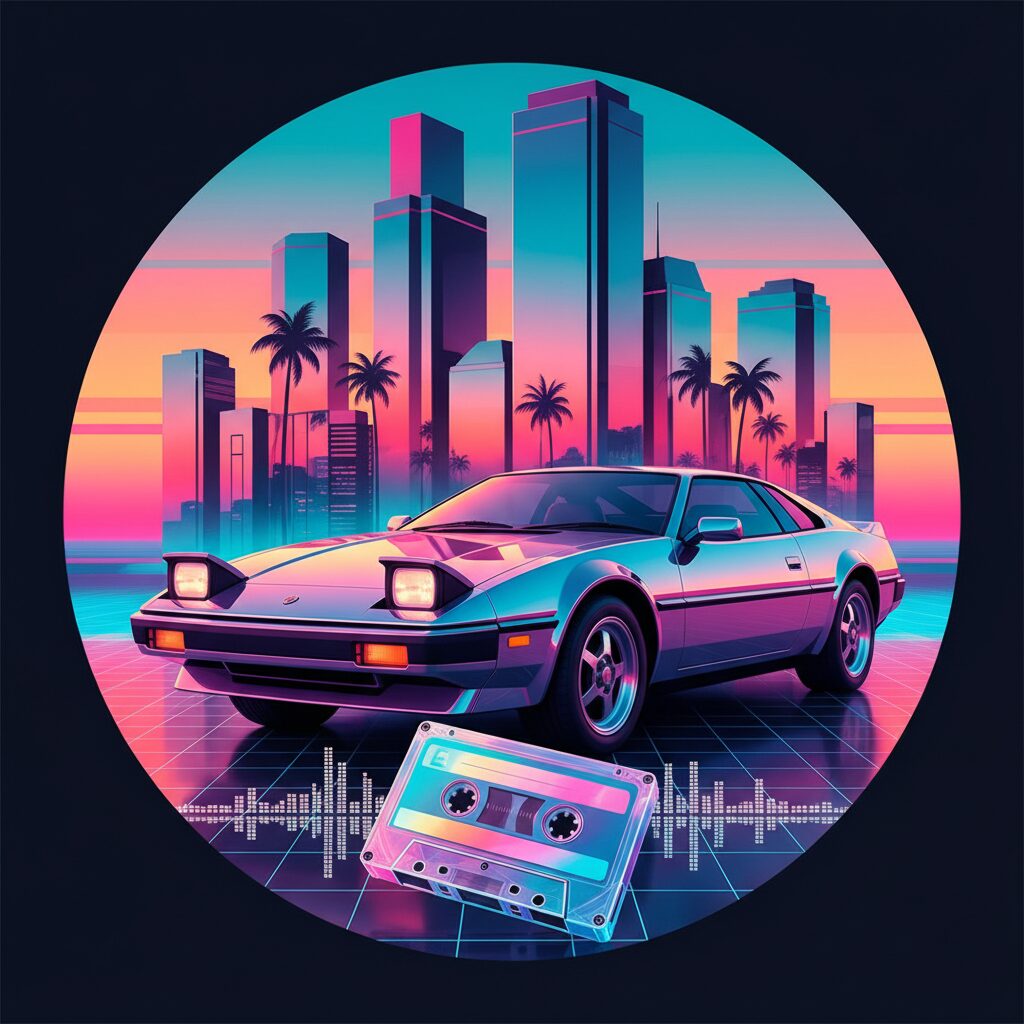
This surge in wealth reshaped Japanese society fundamentally. A new generation matured with disposable income and a desire for luxury. They weren’t merely saving for the future; they were embracing the present. City Pop both mirrored and propelled this cultural transformation. The music set the tone for this new leisure-filled lifestyle, playing in trendy cafés, through high-end stereos in new Datsun 280ZXs, and via Walkman headphones during morning commutes. It was the sound of opportunity.
The genre itself was born from this economic boom. Its lavish production values, the engagement of top American arrangers and horn sections, and the costly album artwork—all of this depended on the massive flow of funds within the Japanese music industry. The optimism heard in the music—the soaring melodies, carefree rhythms, and sense of endless summer—directly reflected the national mood. Japan viewed itself as a high-tech, highly efficient urban utopia. City Pop was the elegant, confident soundtrack of that self-perception.
When the bubble burst dramatically in the early 1990s, the celebration ended abruptly. The stock market collapsed, real estate prices crashed, and Japan entered the prolonged economic stagnation known as the “Lost Decade.” The national spirit turned sour. The unbridled optimism and consumerism of the 80s suddenly felt naive and awkward. City Pop, so intertwined with that era of excess, lost its appeal. It came to be seen as outdated, cheesy—a vestige of a past many wished to forget. For nearly twenty years, the albums gathered dust in bargain bins throughout Japan, almost entirely forgotten.
The Digital Archaeologists
So how did a genre, once culturally buried in its own country, find a massive new audience on the other side of the world thirty years later? The answer lies in two distinctly 21st-century forces: niche internet subcultures and the unpredictable whims of the YouTube algorithm.
The revival’s roots were planted in the early 2010s with the rise of Vaporwave. This internet-born microgenre was constructed by sampling and manipulating corporate muzak, smooth jazz, and pop from the 80s and 90s. Artists chopped and slowed these sounds, creating a hazy, hypnotic, and often ironic critique of consumer capitalism. Importantly, Vaporwave aesthetics heavily incorporated Japanese characters, retro technology, and a romanticized vision of a technologically advanced but soulless past. This prepared an entire generation of online music fans to be receptive to the sounds and visuals of 1980s Japan. They were already captivated by the aesthetic; they just had yet to find the authentic source material.
Then came the algorithm. Around 2016-2017, YouTube’s recommendation engine started surfacing and promoting full uploads of City Pop albums and songs. The undisputed trigger was Mariya Takeuchi’s “Plastic Love.” For reasons known only to Google’s code, this single track was suddenly being recommended to millions of users tuning into Vaporwave, funk, or disco. It was a perfect storm. Here was the real deal: the polished, melancholic, and deeply authentic sound that Vaporwave had merely been mimicking.
Digital crate-diggers and music fans began exploring further, uncovering a treasure trove of forgotten music. Channels devoted to curating and uploading rare City Pop tracks emerged, serving as digital archives for a lost sound. The iconic album art, notably the clean, sun-drenched coastal illustrations of artists like Hiroshi Nagai and Eizin Suzuki, provided an ideal visual complement to the music. It was bright, stylish, and endlessly shareable on platforms like Instagram and Tumblr. The genre became a complete aesthetic package, perfectly tailored for the internet age.
Longing for a World We Never Knew

This explains how City Pop was rediscovered, but it doesn’t entirely clarify why it resonates so deeply today. Its contemporary appeal stems from a powerful psychological phenomenon: nostalgia for a time and place you’ve never personally experienced. Most of City Pop’s global audience consists of millennials and Gen Z—people who have no firsthand memory of the 1980s, let alone 1980s Japan.
What they long for is the feeling the music provokes—a feeling noticeably missing from the modern world. We live in an era marked by pervasive anxiety. Economic instability, political polarization, climate concerns, and the constant pressure of being always connected shape everyday life. The future often seems uncertain, if not downright bleak.
City Pop provides a potent escape from this reality. It transports listeners to a simpler, more elegant world that feels overwhelmingly optimistic above all else. It’s a world without the internet, without smartphones, without the crushing burden of today’s challenges. It’s a world where the future was a source of excitement, not fear. The music’s polished production and themes of urban romance create a fantasy of sophisticated adulthood that feels both aspirational and out of reach.
Of course, it’s a bittersweet fantasy. We know how the story ends. We know the bubble burst and that the endless party ultimately stopped. This awareness adds a layer of melancholy to the experience. The music is a beautiful ghost—a reminder of a fleeting moment of pure, unfiltered confidence in the future. Listening to City Pop is not just enjoying well-crafted pop songs; it’s communing with the spirit of a lost era, borrowing its optimism for a brief escape from the complexities of our own. It’s the perfect soundtrack for dreaming of a past that never existed, and a future that will never come.