You’ve probably had this experience. It’s February, snow is on the ground in much of the world, and yet the supermarket shelves are piled high with bright red strawberries from halfway across the globe. They look the part, but when you bite into one, the flavor is a ghost of what it should be—watery, faintly sweet, a hollow promise. We’ve grown so accustomed to this year-round, on-demand availability that we barely question it. We prize convenience over character, access over essence.
In Japan, this approach to food is almost sacrilegious. Here, the entire culinary and cultural calendar revolves around a concept called shun (旬). On the surface, it simply means ‘in season.’ But that translation is woefully inadequate. It doesn’t capture the depth, the reverence, the almost spiritual significance of eating something at its absolute peak. Shun is not just about freshness; it’s a philosophy. It’s a way of marking time, connecting with nature, and participating in a ritual that stretches back for centuries.
To the uninitiated, the excitement over the first bamboo shoots of spring or the arrival of fatty autumn mackerel can seem baffling. Why build your entire diet, from Michelin-starred menus to convenience store snacks, around such a fleeting schedule? The answer reveals something profound about the Japanese worldview. It’s a mindset that finds beauty in impermanence, wisdom in nature’s rhythms, and a deep, grounding satisfaction in aligning one’s life with the cycles of the earth. Understanding shun is to understand that in Japan, a meal is never just a meal. It’s a conversation with the season.
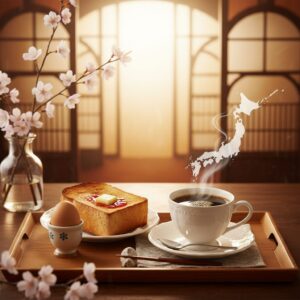
Embracing seasonal perfection not only transforms the dining table but also invites you to experience the quiet charm of Japan’s kissaten mornings, where each coffee break becomes a mindful tribute to nature’s rhythms.
The Three Faces of the Peak

One of the first things to understand about shun is that it isn’t a single, uniform moment. The Western concept of ‘in season’ covers a broad period, but shun is more subtle, dividing the experience into a clear narrative with a beginning, middle, and end. Each stage is valued for its distinct character and the particular emotion it inspires.
Hashiri: The First Blush of the Season
Hashiri (走り) means “running” and designates the very first appearance of an ingredient. These are the pioneers, the forerunners of the upcoming season. They may not be at their absolute flavor peak—they can be pricier and sometimes less mature—but their significance lies elsewhere. Eating hashiri is about anticipation and celebration. It’s the excitement of the new, a preview of what’s to come. It signals that the harsh cold of winter is finally breaking or that the oppressive heat of summer is beginning its slow withdrawal.
A classic example is hatsu-gatsuo, the first bonito of the year. In the Edo period, samurai would pawn their swords just to taste this first catch, believing it bestowed longevity. Today, that excitement remains. That first lean, clean-tasting bonito, served as sashimi with ginger and onion, is not just fish; it’s a proclamation that spring has arrived. It’s a flavor filled with hope and forward momentum.
Sakari: The Glorious Apex
After the initial thrill of hashiri comes sakari (盛り), meaning “in full bloom” or “at its peak.” This is the core of shun. This is when the ingredient is at its most plentiful, tastiest, and most nutritious. The flavors are fully matured, prices are at their lowest, and the ingredient dominates menus and kitchens nationwide. This is a time for indulgence and eating to your heart’s content.
Imagine perfectly ripe tomatoes in midsummer, so sweet and bursting with sunshine they require nothing more than a pinch of salt. Or chestnuts in autumn, their rich, earthy taste enhancing everything from steamed rice to delicate desserts. Sakari is nature’s bounty delivered in its most generous form. It’s a period of sensory fulfillment, a moment to fully immerse yourself in the now. If hashiri is the exciting trailer, sakari is the magnificent main feature, celebrating the season at its most powerful and satisfying.
Nagori: The Lingering Farewell
Perhaps the most uniquely Japanese and poignant phase is nagori (名残). The term means “relic,” “trace,” or “remains.” It marks the very end of an ingredient’s season, the final opportunity to enjoy it before it disappears until the next year. The flavors may have shifted again, perhaps deepening or becoming more complex as the season fades. Yet the experience of eating nagori carries a gentle melancholy, a bittersweet nostalgia for something soon to be lost.
It’s the last matsutake mushrooms in late autumn, their potent aroma a fleeting final fragrance. It’s the late-harvest persimmons, their sweetness intensified by the first cool winds of winter. Eating nagori is an act of mindful appreciation. It’s a farewell, a quiet recognition of impermanence. This concept aligns deeply with the Japanese aesthetic of mono no aware, the beautiful sadness of passing moments. By savoring this last taste, you are not only enjoying a food but also honoring the season that has just ended, cherishing its memory until it returns.
The Ritual’s Roots in Soil and Spirit
The profound significance of shun is not merely a contemporary foodie fad. It is a philosophy intricately woven from the fabric of Japan’s geography, spirituality, and history. Its origins are practical, religious, and deeply observant.
A Calendar Written by Nature
At its core, shun arises from Japan’s distinctive and dramatic four seasons. For an agrarian society, survival relied on a keen sensitivity to these cycles. Planting, growing, and harvesting formed the essential rhythms of life. This wasn’t an abstract idea; it was the concrete reality guiding health and prosperity. The food available was the food at peak ripeness, and this natural calendar shaped a diet inherently in harmony with the environment. This practical basis cultivated an intuitive understanding that the food nature offers at any given moment is exactly what the body requires—cooling cucumbers in summer, nourishing root vegetables in winter.
This was later formalized in the koyomi, the traditional almanac. Borrowed from ancient Chinese systems, it divided the year not only into four seasons but into 24 solar terms (sekki) and even 72 micro-seasons (kō). These five-day intervals bear poetic names such as “The East Wind Melts the Ice” or “The Praying Mantis Hatches.” This remarkably detailed calendar reflects a culture devoted to observing and honoring the subtlest changes in the natural world. Shun is the culinary expression of this meticulous, reverent attention to time and place.
Shinto and the Blessings of the Land
Shinto, Japan’s indigenous religion, forms the spiritual foundation for shun. Shintoism is animistic, believing that kami (gods or spirits) dwell in all natural elements—mountains, rivers, trees, and even the food itself. Thus, eating becomes a form of communion with the divine. The first harvest of the season (hatsuho) was traditionally presented to the kami at shrines as an expression of thanks and a prayer for future abundance. This offering reinforces the notion that food is a sacred gift from the land, not a mere commodity.
When you consume an ingredient in its shun, you partake in its life force at its peak vitality. You ingest the essence of that specific moment, blessed by the local deities. This transforms eating from simple nourishment into a spiritual practice, honoring the interconnectedness of all life and expressing gratitude for nature’s gifts.
Buddhist Mindfulness on a Plate
The influence of Buddhism, especially Zen, adds another dimension of meaning. A central principle of Buddhism is the importance of living fully in the present moment. Mindfulness involves being wholly aware of the here and now, free from attachment to the past or worry about the future. Eating shun serves as a perfect culinary metaphor for this ideal.
By eating what is available now, you anchor yourself in the present reality. You don’t long for summer strawberries in the depths of winter. Instead, you fully appreciate the daikon radish and yuzu citrus that the winter season offers. This acceptance and focus on the present embody edible mindfulness. It fosters contentment with what exists, rather than continual craving for what does not. It harmonizes the body with its immediate surroundings, promoting balance and serenity.
Shun in a World of Endless Summers
How does a philosophy so deeply connected to natural limits endure in today’s modern, globalized world of refrigerated shipping and year-round greenhouse cultivation? Remarkably, shun has not only endured but flourished, evolving from the revered culinary temples to the brightly lit aisles of 24-hour convenience stores.
The Altar of Shun: Kaiseki Cuisine
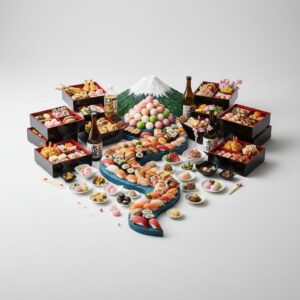
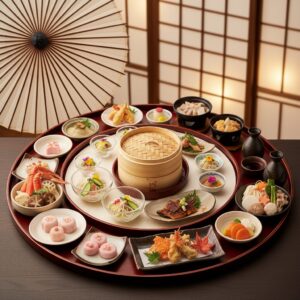
Nowhere is the principle of shun more carefully and beautifully embodied than in kaiseki, Japan’s traditional multi-course haute cuisine. A kaiseki meal unfolds like a narrative of the season, telling a story through a sequence of meticulously crafted dishes. The chef acts as a curator, selecting not only ingredients at their absolute peak but also the cooking techniques that best highlight their qualities. Spring ingredients might be lightly grilled or blanched to accentuate their fresh, slightly bitter notes, while autumn foods might be deep-fried or simmered to reveal their rich, earthy depths.
The attention to detail extends further. The plates, lacquerware, and garnishes are all chosen to evoke the current season. A thin slice of carrot might be carved into a maple leaf for autumn; a sprig of kinome (prickly ash) leaf adorns a dish in spring, its vibrant aroma serving as the season’s perfume. A kaiseki meal is the ultimate embodiment of shun—a multi-sensory immersion in a particular moment in time.
The Everyday Ritual: Home Kitchens and Supermarkets
Yet shun is not a concept confined to elitist dining. It guides everyday life. Walk into any Japanese supermarket, and you won’t need to guess what’s in season. Shun ingredients are prominently displayed at the front of the store, often accompanied by special signage and festive arrangements. Home cooks plan their meals around these seasonal stars. The arrival of spring calls for takenoko gohan (rice with bamboo shoots). The first hints of autumn bring the irresistible aroma of sanma (Pacific saury) being salted and grilled over charcoal, its rich, oily smoke a beloved seasonal hallmark.
This daily engagement keeps the tradition alive and intimate. It’s a rhythm passed down through generations—a form of communal, unspoken knowledge about when to eat what. It helps families connect with the cycles of the year through the shared, simple joy of a seasonal meal.
Modern Marketing and the Konbini Clock
Even the most modern and commercialized aspects of Japanese life have embraced shun. The ubiquitous convenience stores, or konbini, excel at seasonal marketing. This represents shun’s new face: a constant stream of limited-edition products that tap directly into cultural desires for novelty and seasonal ritual.
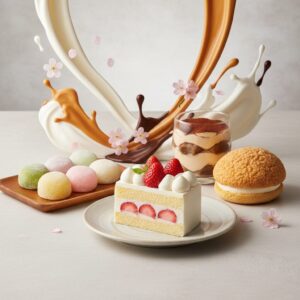
Spring floods stores with sakura (cherry blossom) and strawberry-flavored items, ranging from lattes and chocolates to rice balls and beer. Autumn delivers an abundance of sweet potato, chestnut (kuri), and pumpkin (kabocha) snacks. Winter offers rich chocolate treats and yuzu-flavored beverages. While undeniably commercial, this phenomenon plays an important role. It keeps the notion of seasonality at the forefront of public awareness, even for those who don’t cook. It provides a low-stakes, accessible way for everyone to engage with the seasonal cycle, turning a trip to 7-Eleven into a small celebration of the time of year.
More Than a Meal, It’s a Metronome for the Soul
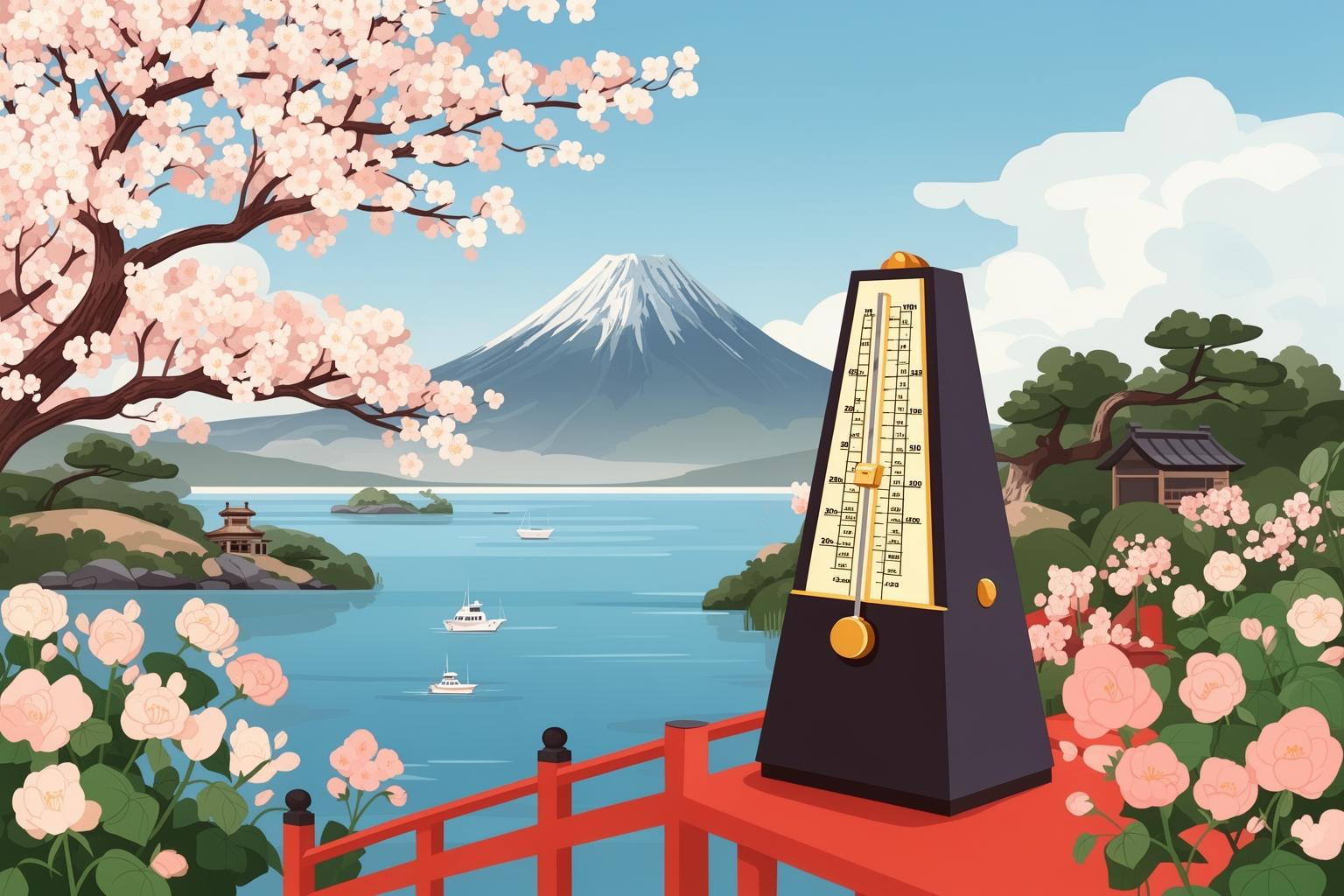
To eat shun means doing more than simply enjoying delicious food. It involves consciously engaging with the passage of time, making it tangible, edible, and memorable. The flavor of the first watermelon of the year is not just sweetness; it’s the taste of summer vacation beginning. The aroma of grilling sanma is not merely dinner; it’s the scent of crisp autumn evenings and the start of a new school term. These sensory moments become punctuation marks in the year, forming a deeply personal and visceral calendar that no digital app could ever replicate.
This practice also fosters a profound appreciation for impermanence. In a culture that has always found particular beauty in the ephemeral—the brief bloom of cherry blossoms, the fleeting life of a cicada—shun serves as the culinary equivalent. The fact that something can only be enjoyed for a few weeks or months makes it infinitely more precious. You cherish it more deeply because you are keenly aware of its eventual absence. It is a powerful antidote to the entitlement of the modern consumer, teaching instead patience, appreciation, and acceptance of natural limits. It suggests that a little longing is beneficial; it makes the eventual fulfillment all the sweeter.
Ultimately, practicing shun means maintaining a dialogue with the natural world. In a country of sprawling megacities, it remains a vital ritual that keeps people connected to the land and sea. It is a humble acknowledgment that we are not masters of our environment, but participants in its grand, cyclical rhythm. It is a choice to listen to what the earth offers and respond with creativity and gratitude. This simple, daily act aligns the body with the season and the soul with the elegant, recurring poetry of time.