Walk into any 7-Eleven, FamilyMart, or Lawson in Japan, and you’ll notice a particular kind of pilgrimage. Past the humming drink refrigerators, beyond the golden glow of the fried chicken case, and around the shelves of perfectly triangular onigiri, you’ll see people stop and gaze into a brightly lit chilled section. They aren’t looking for milk or yogurt. They’re deliberating, weighing their options with the quiet intensity of a museum-goer studying a masterpiece. This is the konbini dessert aisle, and it’s one of the most dynamic and competitive retail spaces in the entire country.
Forget what you think you know about convenience store food. In Japan, the sweets section is not a sad collection of dusty, pre-packaged pastries with a shelf life measured in months. It is a high-stakes, fast-moving battleground where culinary trends are born, patisserie-level techniques are democratized, and fortunes are made and lost on the success of a 300-yen cream puff. This is a world where new products arrive weekly, only to vanish forever a month later, creating a frantic cycle of desire and discovery. To understand the konbini dessert case is to understand a core ritual of modern Japanese life: the pursuit of small, affordable, and fleeting moments of absolute delight.
This dynamic dessert evolution mirrors Japan’s deep-seated appreciation for seasonal ingredients, as evidenced by its shun traditions, which continue to shape culinary innovation.
More Than Just Convenience: The Rise of Premium Sweets

It wasn’t always like this. For decades, the sweet treats at Japanese convenience stores were straightforward and practical. You could find a standard anpan (a bun filled with red bean paste) or a melonpan (a sweet bun with a cookie-like crust), both filling and comforting but hardly thrilling. They were snacks of necessity rather than indulgence. However, sometime in the past fifteen years, a quiet revolution occurred.
The major konbini chains realized they were not just competing with one another but also with specialty bakeries, department store food halls, and upscale cafes. They recognized an opportunity to attract customers who desired high-quality sweets but didn’t have the time or budget to visit a formal patisserie. The focus shifted from simply offering a sweet snack to providing an authentic dessert experience. This change marked the rise of the premium konbini sweet.
From Pre-Packaged Buns to Patisserie-Level Creations
This shift was driven by the three giants of the konbini world: 7-Eleven, FamilyMart, and Lawson. Each created its own dessert brand—7-Eleven’s “Seven Sweets,” FamilyMart’s “Famima Sweets,” and Lawson’s “Uchi Café”—and invested heavily in research and development. They hired professional pastry chefs, adopted advanced manufacturing methods, and focused intently on ingredient quality.
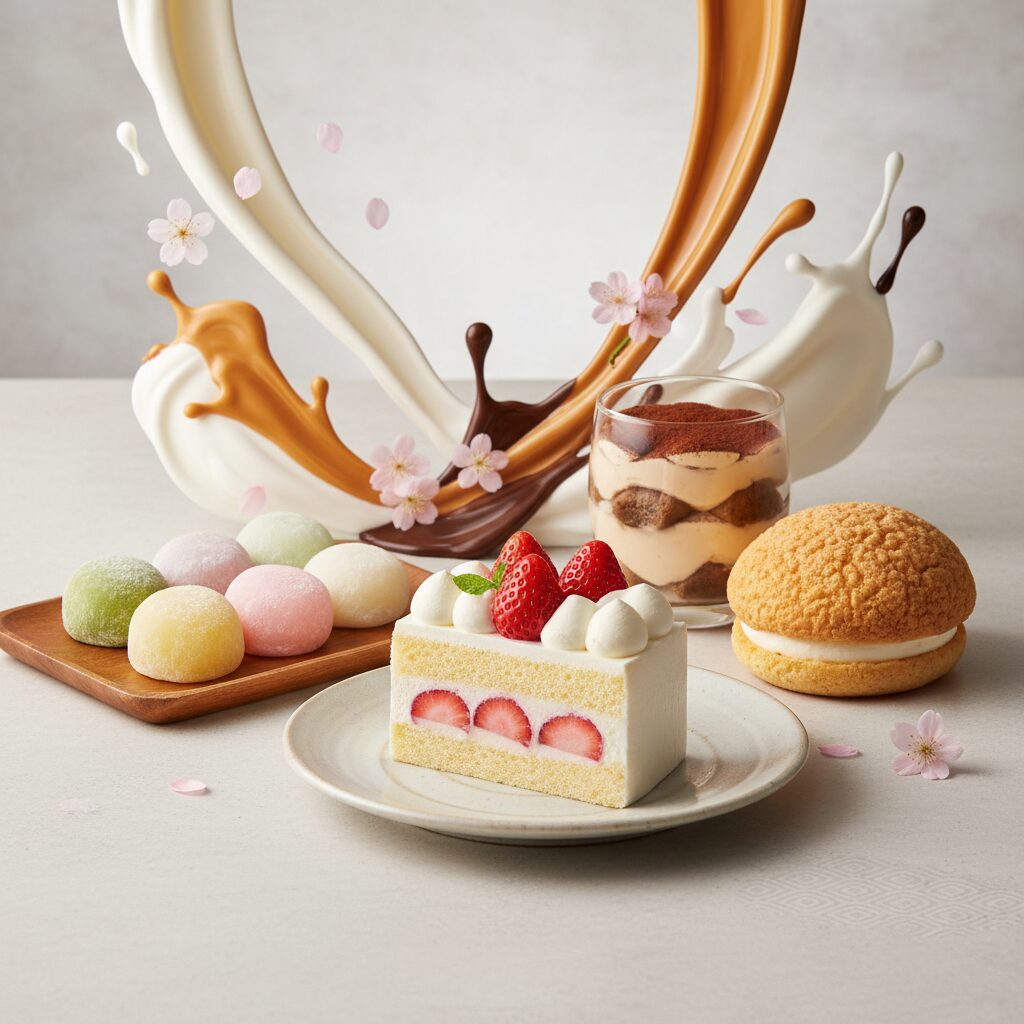
Suddenly, the shelves were stocked with items that appeared and tasted as if they belonged in a more upscale venue. There were delicate roll cakes with impossibly light sponge and Hokkaido cream, multi-layered parfaits in cups with intricate textures, and choux pastries filled with rich, double-layered custard. The language describing them evolved as well. It was no longer simply about sweetness; it emphasized the exact origin of the vanilla beans, the precise mousse texture, or the melt-in-your-mouth sponge quality.
Lawson’s Uchi Café, in particular, emerged as a trailblazer. Their Premium Roll Cake, a straightforward slice of sponge cake rolled around a generous filling of fresh cream, became a cultural sensation upon its release. It was a simple idea executed with near-perfect skill, selling in enormous quantities. This success demonstrated that customers were ready to view the konbini not as a last option but as a primary destination for genuinely satisfying desserts.
The Engine of Desire: Seasonality and Scarcity
Certainly, high quality alone doesn’t spark the frenzy seen nowadays. The true brilliance of the konbini sweets market lies in its ingenious manipulation of time. Its product lineup is like a constantly turning carousel, driven by two cultural and commercial forces: a profound appreciation for seasonality and a skillful use of strategic scarcity.
A Four-Season Sugar Rush
In Japan, the calendar is deeply marked by seasonal changes, and this rhythm is intimately connected to food. The concept of shun (旬) refers to an ingredient’s peak season, when it is at its most flavorful and plentiful. While a high-end restaurant might showcase this with a delicate bamboo shoot dish in spring or grilled sanma fish in autumn, the konbini expresses it through its dessert case. The shelf becomes a tasteable calendar.
Spring bursts forth with an array of pink hues. Sakura (cherry blossom) and strawberry flavors dominate everything from mochi to cheesecakes. As early summer brings humid warmth, the flavors shift toward refreshing matcha, tangy Setouchi lemon, and juicy melon. Autumn presents comforting, earthy tones of chestnuts (marron), sweet potato (satsumaimo), and pumpkin (kabocha), often found in rich Mont Blanc-style parfaits. Winter calls for indulgence. Deep dark chocolate, creamy pistachio, and special strawberry editions linked to the Christmas season fill the shelves. This ongoing rotation does more than offer variety; it ties a daily purchase to a broader, beloved cultural cycle. Buying a sakura-flavored cream puff isn’t just a snack—it’s a way to partake in the arrival of spring.
The Limited-Edition Treadmill
Even more potent than seasonality is the relentless strategy of gentei (限定), or limited-edition items. Most new sweets are explicitly promoted as available only for a brief period. A new parfait may appear on a Tuesday and vanish forever three weeks later. This isn’t a flaw; it’s the foundation of the entire business model.
This cycle generates a strong sense of urgency, a nearly irresistible fear of missing out. You can’t simply think, “Oh, that looks good, I’ll try it next time.” There might not be a next time. This drives impulse purchases and, more importantly, turns browsing into a treasure hunt. Every konbini visit holds the promise of a new discovery. It keeps customers returning, not just when they need something, but out of pure curiosity to see what’s new. This constant churn is a logistical feat, requiring an exceptionally agile supply chain, yet it’s the engine that keeps the entire ecosystem vibrant with excitement.
The Anatomy of a Konbini Hit
What distinguishes a runaway success from a forgettable flop that quietly fades away? While flavor is crucial, a truly successful konbini sweet represents a marvel of engineering, marketing, and cultural insight. It is a thoughtfully crafted product designed to satisfy multiple criteria simultaneously, from prestige and novelty to sheer textural delight.
The Collaboration Gold Rush
The quickest way to signal quality and spark excitement is through collaboration. Konbini chains have become adept at forging partnerships with a diverse array of prestigious names. This might involve a famous pastry chef, like Toshi Yoroizuka, who lends his expertise to a dessert line, or a collaboration with a cherished specialty shop, such as a renowned matcha producer from Uji or a chocolatier like Godiva.
These collaborations benefit all parties involved. The konbini leverages the luxury brand’s equity, instantly raising its product’s perceived value and justifying a slightly higher price. Meanwhile, the partner brand gains extensive exposure, reaching millions who might never visit their standalone store. For consumers, it offers the opportunity to enjoy products from world-famous names like Pierre Hermé at a fraction of the usual cost, right under the bright lights of their local FamilyMart.
Texture is Everything: Mochi, Cream, and Crunch
Beyond flavor, Japanese cuisine emphasizes texture highly, and konbini sweets excel in delivering complex mouthfeel experiences. There is an elaborate vocabulary to capture these sensations, and the finest desserts create a symphony of contrasting textures.
You’ll experience fuwa-fuwa (ふわふわ), the airy fluffiness of a soufflé pancake or a premium roll cake. There’s mochi-mochi (もちもち), the uniquely soft, chewy, and slightly elastic texture of glutinous rice cakes, incorporated into everything from roll cakes to ice cream wrappers. Then there’s toro-toro (とろとろ), describing a luscious, thick, melty creaminess found in the center of a Basque cheesecake or a rich pudding. This is often paired with pari-pari (パリパリ), a thin, crisp chocolate layer, or zaku-zaku (ザクザク), the satisfying coarse crunch of cookie crumbles or nuts.
Many desserts combine several of these textures. A chocolate parfait, for example, might feature a layer of fluffy chocolate mousse (fuwa-fuwa), a pool of rich ganache (toro-toro), and a scattering of crunchy chocolate bits (zaku-zaku), all in one cup. This intricate play of textures elevates these sweets from simply good to truly sublime.
The Rise of the Hybrid Sweet
To keep novelty alive, creators continuously invent “hybrid” sweets that blend two beloved classics into something fresh and exciting. This innovation fuels buzz and social media sharing. Why settle for a simple dorayaki when you can enjoy a Dora-mocchi—a pancake-like dorayaki with the distinctive chewiness (mochi-mochi) and filled not only with red bean paste but also rich whipped cream? Other popular innovations include tiramisu pancakes, crème brûlée ice cream bars with a crisp caramelized sugar shell, and cheesecakes baked inside flaky pastry cups. This spirit of playful invention ensures there is always something new on the horizon, even for the most experienced dessert enthusiast.
The Ritual of the Daily Indulgence

The runaway success of konbini sweets isn’t just due to clever product design; it’s about how seamlessly these treats fit into the emotional rhythm of daily life in Japan. They meet a specific cultural and psychological need for a small, accessible moment of happiness.
Your “Gohoubi” for the Day
There is a Japanese word, gohoubi (ご褒美), which roughly means “personal reward.” It’s a treat you give yourself for working hard, making it through a tough day, or simply reaching Friday. It’s a minor act of self-care, a moment of indulgence that helps recharge your energy. The konbini sweet is the perfect example of gohoubi.
Priced around 200 to 400 yen, it’s an affordable indulgence. It requires no planning or special trip. It’s right there on the way home from the train station, available 24/7. That beautifully crafted Mont Blanc parfait becomes a punctuation mark at the end of a long day, a cue to relax and unwind. This ritual elevates the product from just a commodity to an essential part of a person’s emotional toolkit for managing modern life’s stresses.
The Social Media Stage
In the Instagram era, we eat with our eyes first, and konbini sweets are made for their close-up. They are highly photogenic. The packaging is often designed to peel away neatly, and the sweets themselves are created with their cross-sections in mind. The clear layers of a parfait, the creamy filling oozing from a choux pastry, or the vibrant hue of a matcha terrine are all meant to be shared visually.
The limited-edition nature of these sweets fuels this social media buzz. When you discover a new, highly anticipated item, the first instinct is often to post a photo, sharing your find with friends and followers. This creates a powerful, organic marketing loop. Hashtags like #コンビニスイーツ (konbini sweets) provide a constantly updating stream of reviews, recommendations, and envious reactions. For konbini chains, this user-generated content serves as invaluable free advertising, turning every customer into a potential brand ambassador and food influencer.
Ultimately, the chilled dessert case is much more than the sum of its parts. It offers a glimpse into the mechanics of Japanese consumer culture—its speed, precision, and dedication to quality at every price point. It reflects a deep cultural appreciation for the seasons and a passion for the excitement of something new. But above all, it’s proof that moments of true happiness don’t have to be grand or costly. Sometimes, they’re waiting just around the corner, in a perfectly crafted, 300-yen cup of joy.