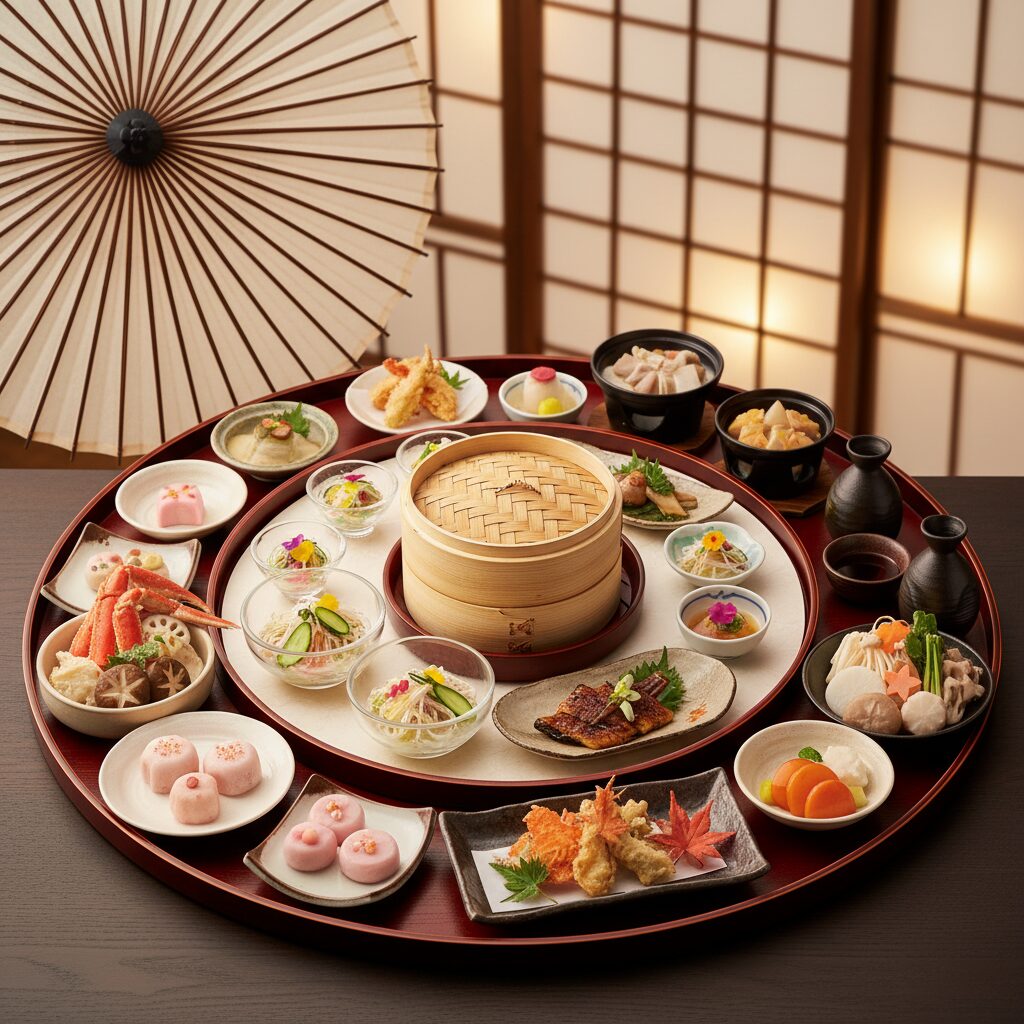
You’ve probably heard that Japan is obsessed with seasons. It’s a bit of a cliché, trotted out in travel brochures alongside images of cherry blossoms and autumn maples. But clichés often hold a kernel of truth, and in Japan, that kernel is deep, complex, and profoundly delicious. It’s a concept called shun (旬), a word that gets translated simply as “in season,” but that translation is as inadequate as describing a symphony as “a bunch of sounds.” It misses the entire point.
To an outsider, the intensity can seem baffling. You see a single, perfect strawberry in a department store in January, nestled in a cushioned box like a jewel, costing more than an entire meal. You see people lining up for the year’s first catch of a specific fish, or paying a premium for a bamboo shoot that was just pulled from the earth. The logical part of your brain thinks, “It’s just a strawberry. It’s just a fish.” But in Japan, it’s never just about the food. It’s about time itself.
Shun is a philosophy served on a plate. It’s a way of experiencing the calendar, a deep-seated cultural practice of aligning human life with the subtle, shifting rhythms of the natural world. It’s not about a vague notion of “eating local” or a modern health trend; it’s a centuries-old conversation between the land, the sea, and the people. Understanding shun is understanding the hidden logic behind the Japanese palate, the reverence for ingredients, and why a simple meal can feel like a profound event. It’s the answer to why that single strawberry matters so much.
This deep cultural reverence for seasonal ingredients not only elevates everyday dining but also inspires the subtle artistry found in Japan’s fake food displays that blend culinary excellence with storytelling.
The Calendar on Your Plate
To truly understand shun, one must look beyond the four seasons we commonly know. The traditional Japanese calendar is much more detailed, serving as a finely tuned tool to observe nature’s subtle changes. For centuries, it was divided not into four seasons, but twenty-four sub-seasons called nijūshi sekki (二十四節気). These were poetically named to mark moments like Keichitsu (啓蟄), when hibernating insects awaken, or Kokuu (穀雨), the “grain rains” that nurture young crops.
Yet, the Japanese sensitivity went even further. Each of these twenty-four seasons was divided into three parts, creating seventy-two micro-seasons known as shichijūni kō (七十二候). Lasting about five days each, they read like a naturalist’s journal: “The east wind melts the ice,” “The first peach blossoms appear,” “Worms surface from the ground.”
This was not merely an intellectual pursuit for poets and farmers; it was a fundamental guide to life, especially in the kitchen. Every tiny, transient period was associated with a specific food at its peak. Shun embodies this calendar in culinary form. It’s the understanding that the briny, delicate hotaru-ika (firefly squid) arrive in Toyama Bay just as fields are being prepared for rice planting. It’s recognizing that the earthy aroma of matsutake mushrooms signals the arrival of crisp, clear autumn air. Eating shun means, in a very real way, eating the season itself. It’s a way to absorb the season’s essence, marking its passage not by a calendar on the wall, but through the tastes on your palate.
A Taste of Impermanence
So why does this practice run so deep? Why such careful attention to timing? The answer is rooted in the foundational pillars of Japanese thought: Shinto and Buddhism.
Shinto, Japan’s native religion, is a form of animism. It teaches that divinity, or kami, resides in all things—a majestic old tree, a uniquely shaped rock, a waterfall, and, naturally, the bounty of the land and sea. Consuming an ingredient at its shun is therefore more than savoring peak flavor; it is an act of communion. You are partaking in the life force of that ingredient at its most vibrant. It expresses gratitude and respect for the local gods who provided it. A plump, sun-ripened summer tomato isn’t merely a vegetable; it embodies the concentrated energy of the summer sun, a gift from the kami of that patch of earth.
Buddhism added another essential layer: the concept of impermanence. Life is a fleeting, transient current. Nothing endures. This idea is reflected in the aesthetic ideal of mono no aware (物の哀れ), a gentle, wistful awareness of the temporary nature of beauty. The cherry blossoms are so breathtaking precisely because they last only a week.
Shun is the edible manifestation of mono no aware. The peak of a season’s ingredient is, by definition, a brief and perfect moment. A white peach in August is irresistibly sweet and fragrant, its skin so delicate it bruises at a touch. For a few short weeks, it embodies perfection. Then, it vanishes. To eat that peach at its peak is to fully embrace that moment of flawless existence. You are tasting its fleeting, beautiful life. The enjoyment is deepened by the knowledge that it will not endure. This infuses the act of eating with a sense of preciousness and a hint of melancholy, transforming a simple snack into an experience of mindful reflection.
The Three Acts of Shun
Adding complexity and depth to this concept is the understanding that shun is not a single moment but a brief narrative with a beginning, middle, and end. The Japanese palate recognizes three distinct phases, each possessing its own character and cultural significance.
Hashiri: The First Glimpse
Hashiri (走り), meaning “running,” denotes the very first appearance of an ingredient at the onset of its season. It heralds the arrival, an exciting preview of what lies ahead. The flavor of a hashiri ingredient may not yet be as rich or deep as it will become later; it can be sharper, more delicate, almost green in its youthfulness. Yet, it holds immense symbolic importance—a taste of the future.
Historically, hashiri items were the ultimate luxury, prized for their novelty and the vitality they were believed to convey. There is a famous saying from the Edo period that one would be willing to “pawn one’s wife” for a taste of hatsu-gatsuo, the first bonito of the year. Eating hashiri was a way to absorb the fresh energy of the coming season, a ritual to ensure one’s health and good fortune. It was, and remains, a status symbol—a demonstration of being in harmony with the calendar and having the means to celebrate its first arrivals.
Sakari: The Glorious Peak
Sakari (盛り) represents the heart of the season. This is the main event, when the ingredient is at its most plentiful, most affordable, and, most importantly, at its most delicious. The flavors are fully developed, balanced, and robust. This is the ideal embodiment of the food—the strawberry that tastes most like a strawberry, the mackerel at its fattiest and most savory.
While hashiri emphasizes excitement and symbolism, sakari focuses on pure, unadulterated enjoyment. It is when kitchens throughout Japan—from modest homes to Michelin-starred establishments—celebrate the ingredient in its purest form. It’s the time you’ll find mountains of sweet corn at the supermarket and when restaurants feature multi-course menus devoted entirely to the season’s highlight, whether it’s sweetfish (ayu) in summer or crab in winter. This is the democratic phase of shun, where everyone can partake in nature’s peak generosity.
Nagori: The Lingering Farewell
Lastly, there is nagori (名残), which means “remains” or “relics.” This marks the end of the season, the final opportunity to savor something before it disappears for another year. The word carries a sense of wistfulness, a tender farewell. The flavors of nagori ingredients often differ from those at their peak—they can be deeper, more mature, sometimes with a hint of bitterness or earthiness, as if the food has absorbed the full journey of its season.
Eating nagori is a poignant experience. It acknowledges the close of the cycle and offers a moment to store away the memory of that taste for the months ahead. It’s enjoying the last autumn eggplants, noted for their richer skin, or the final, slightly tougher greens of late spring. There is a quiet beauty in this phase, a mature appreciation that contrasts with the youthful exuberance of hashiri. It’s a final, satisfying note before the season fades into memory.
Shun in the Age of Global Logistics

Certainly, we now live in a world of refrigerated shipping containers and climate-controlled greenhouses. You can step into a Tokyo supermarket in the middle of winter and buy tomatoes sourced from halfway across the globe. So, has shun become an outdated, romanticized concept?
Not at all. It has merely evolved. While the need to eat seasonally has disappeared, the cultural appreciation for it remains. In fact, in some respects, the year-round availability of everything has made genuine shun ingredients feel even more precious.
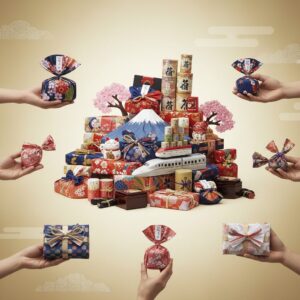
High-end restaurants and the luxurious food halls of department stores (depachika) have become the modern-day custodians of shun. They announce the arrival of hashiri items with the excitement of a fashion show debut. A box of early-season cherries or the first sandfish of autumn is showcased as a luxury gift, with its prefectural origin proudly highlighted as a symbol of terroir and quality. These venues reinforce the notion that shun is to be celebrated, a ritual worth investing in.
Even in everyday supermarkets, the essence of shun endures. You’ll see that produce truly in season is stacked high, appears fresher, and is noticeably cheaper. Signs will boldly declare “旬!” beside piles of winter daikon radish or spring cabbages. Home cooks naturally gravitate toward these ingredients, not only for cost reasons but because of a deeply rooted cultural instinct. The rhythm of the home kitchen still follows the traditional calendar. Spring calls for a pot of rice with fresh bamboo shoots (takenoko gohan). Early summer means carefully salting and pickling green plums (ume). The arrival of autumn is heralded by the aroma of pacific saury (sanma) grilling over charcoal.
The Philosophy on the Tongue
Ultimately, the obsession with shun defines the very core of Japanese cuisine, or washoku. This culinary philosophy emphasizes subtraction rather than addition. The aim is not to transform an ingredient with elaborate techniques and heavy sauces, but to present it in a way that highlights its natural, peak-season flavor.
Why cover a perfect summer eggplant, bursting with sweetness, under a thick cream sauce? Instead, you might gently grill it with a touch of miso or chill it and serve it with a few bonito flakes and ginger. This approach allows the eggplant to take center stage. The same applies to sashimi. The respect for raw fish comes from the ability to appreciate the subtle variations in fat and texture that change throughout the year—the lean, clean taste of spring sea bream versus the rich, oily flesh of winter yellowtail.
This is why a meal in Japan can feel so profound. It offers a direct connection to a place and a moment. You’re not merely eating food; you are experiencing a philosophy. You’re tasting the Shinto reverence for nature’s vitality, the Buddhist acceptance of impermanence, and the accumulated wisdom of a culture that has learned to listen closely to the earth. Shun is the silent, delicious language that speaks of cycles, of time, and of the simple, fleeting beauty of living fully in the moment. It’s a reminder that the most exquisite luxury isn’t something rare or exotic, but something perfect, right now.