You see it without realizing what you’re seeing. A guy in Harajuku with bleached hair and pants so wide they seem to defy gravity. A pop star on television in an intricately embroidered satin jacket, slouching with a practiced air of indifference. It all looks so current, so quintessentially Tokyo street style. But what if I told you that the DNA of these modern looks comes from a place most outsiders would never expect: the reviled, rebellious, and often violent youth gangs of the 1980s?
This isn’t just about a retro trend. This is about the strange, enduring ghost of the Yanki, Japan’s iconic home-grown delinquent. For decades, they were the antithesis of everything Japan supposedly valued—harmony, discipline, and quiet conformity. They were loud, crude, and lived by their own codes on the fringes of society. Yet, their aesthetic, born from a desire to reject the system, has been absorbed, sanitized, and re-packaged by the very mainstream they despised. The style of the outcast has become a foundational element of Japanese pop fashion. Understanding how this happened is to understand a fundamental paradox at the heart of Japanese culture: its simultaneous obsession with order and its deep, quiet fascination with those who dare to break it. This is the story of how the bad boy’s uniform became a national mood board.
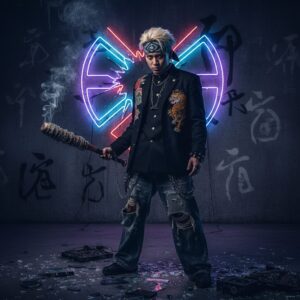
Blending the rebellious legacy of the Yanki with contemporary urban flair, the cultural DNA of 90s JDM reveals how outlaw aesthetics continue to shape modern Japanese style.
Who Were the Yanki? More Than Just Pompadours and Attitude
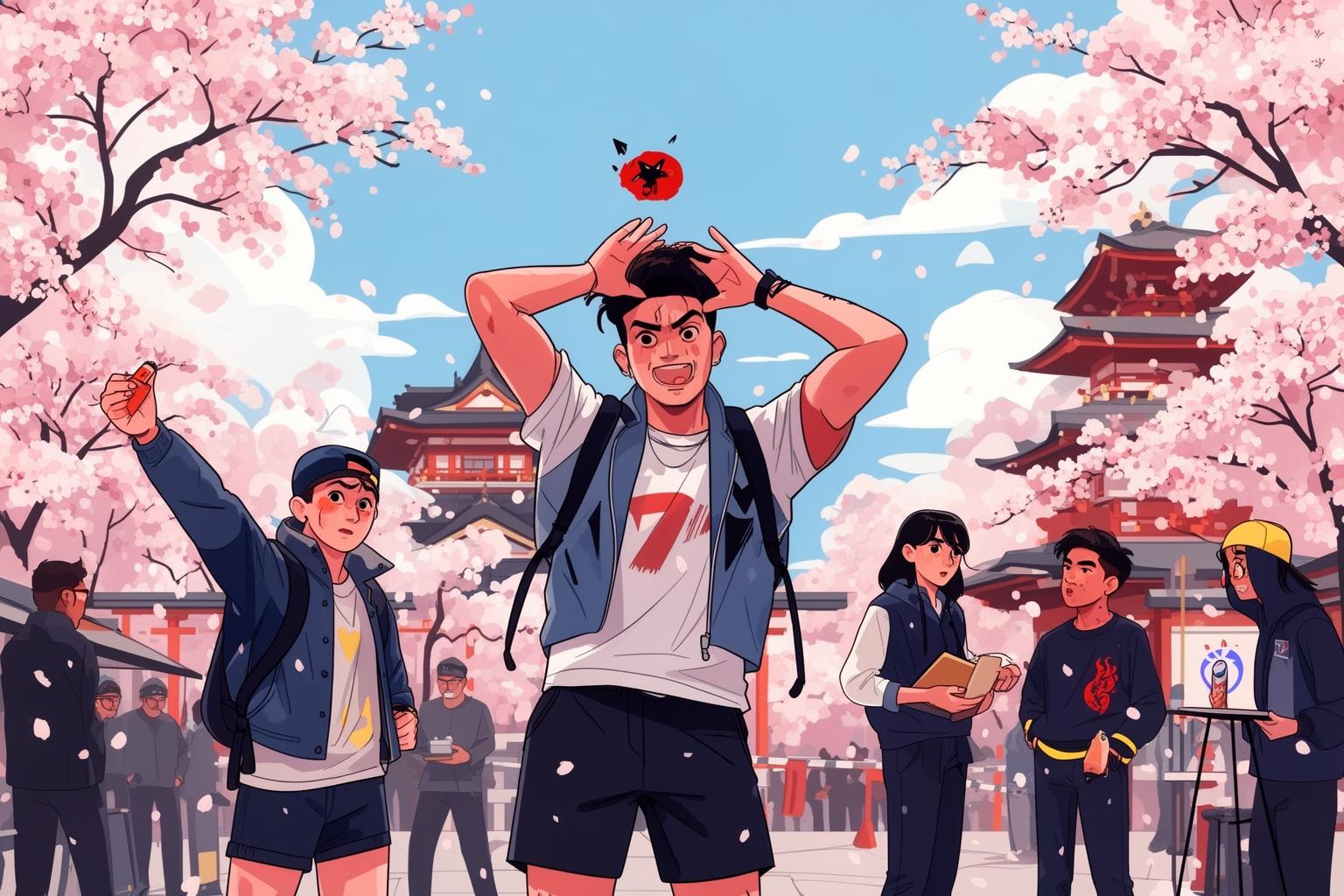
To understand why a modern designer might find inspiration in a 1980s troublemaker, you first need to grasp who the Yanki were and what they opposed. They didn’t emerge out of nowhere; rather, they were a direct, visceral response to the overwhelming social pressures of post-war Japan, especially during the economic boom of the 70s and 80s.
A Portrait of Rebellion in a High-Pressure Environment
Picture a society operating at full speed. The economy is thriving, and the path to a good life appears rigid and non-negotiable: study tirelessly, pass rigorous entrance exams, attend a prestigious university, and land a lifelong job as a “salaryman” at a major corporation. This was the ideal, but it also served as a straitjacket. The education system was notoriously strict, enforcing conformity down to the smallest detail of your haircut. Individuality wasn’t merely discouraged; it was often considered a flaw.
The Yanki were the youths who either couldn’t or wouldn’t fit this mold. Typically from working-class or rural backgrounds, they viewed the corporate ladder as not just difficult to climb but fundamentally unattractive. They rejected the offer of a stable yet stifling future in a gray suit. Their rebellion was neither intellectual nor political in a formal sense. Instead, it was stylistic, loud, and visually striking. They built an entire subculture with its own rules, hierarchies, and, most importantly, a distinctive uniform. Their style was a bold declaration against the dullness of the mainstream.
The Anatomy of a Classic Yanki Look
The Yanki style was anything but understated. Every element was a deliberate affront to societal norms, especially the strict regulations of Japanese middle and high schools.
First came the hair. For boys, the hallmark was the “Regent” pompadour—a towering, greased-up masterpiece often achieved with a perm to get the right volume and shape. It was frequently bleached blond or dyed in other unnatural hues. For girls, the sukeban (delinquent girl boss), long, wavy perms were favored, also often bleached. In a school system where boys were expected to have near-buzzcuts and girls wore straight, black, unembellished hair, this style was a powerful act of defiance. Maintaining such hairstyles required time, effort, and commitment, ensuring frequent reprimands from teachers.
Next were the clothes, centered on the ultimate symbol of conformity: the school uniform. Yanki youth transformed their standard uniforms into intimidating emblems of rebellion. Boys wore their black, high-collared gakuran jackets unbuttoned to reveal flashy shirts or had them custom-tailored to be longer or shorter. Their pants, known as bontan or dokan, were outrageously wide at the thighs and sharply tapered at the ankles. Girls, the sukeban, opposed the knee-length pleated skirts demanded by schools by wearing theirs down to the ankles—a clear warning not to be messed with. They might also shorten their sailor-style blouses to expose their midriffs and often hid weapons like razor blades or chains inside their uniforms.
For special occasions—or among the more hardcore members tied to motorcycle gangs (bosozoku), there was the tokko-fuku. These long, flowing coats resembled military greatcoats and were adorned with detailed kanji embroidery. The phrases stitched on their backs weren’t mere decoration but declarations of gang ties, philosophies, and loyalty, often expressed in grand, pseudo-poetic language. This garment, inspired by the uniforms of WWII Kamikaze pilots, repurposed a national symbol of sacrifice into one of personal rebellion.
From Delinquent to Designer: The Fashion Cycle Eats Its Own
So, how did this hyper-specific, socially charged uniform of the outcast make the jump from the back alleys of Yokohama to the runways of Tokyo and Paris? The answer lies in the relentless, unsentimental machinery of the fashion industry.
The Decontextualization of Rebellion
Fashion has an insatiable appetite for symbols. It discovers powerful images, strips them of their original context and danger, and presents them as pure aesthetics. The raw, anti-social energy of the Yanki provided a potent source of such symbols. Once the real threat of the Yanki diminished with the shifting economy and social structures of the 90s, the style was left behind, becoming a relic detached from its initial purpose. A designer could regard a tokko-fuku not as a statement of gang warfare, but as a beautifully embroidered long coat with a dramatic silhouette. They might see the wide-legged bontan pants not as a method to conceal a wooden sword, but as an intriguing new shape for menswear.
This process dilutes the rebellion. The danger dissipates, the social friction disappears, and only the visual cool remains. Wearing wide pants today doesn’t mark you as a societal outcast; it marks you as fashion-conscious. The meaning has been completely inverted. It’s a classic example of the mainstream absorbing its own counter-culture, turning yesterday’s threat into today’s trend.
Echoes on the Runway and the Street
Once you know what to look for, the Yanki influence is everywhere. It’s not always a direct copy, but the DNA is unmistakable.
The most obvious example is the sukajan, or souvenir jacket. These silky, embroidered bomber jackets were originally brought home by American GIs after the occupation of Japan. Their flashy, often thug-like appearance was quickly adopted by Yanki in the 60s and 70s as a sign of rebellious, American-influenced cool. Fast forward to today, and the sukajan is a global high-fashion staple, produced by brands ranging from Gucci to Saint Laurent to countless streetwear labels. The iconography—the tigers, dragons, and eagles—comes directly from that lineage.
Observe the silhouettes in contemporary Japanese menswear. The fascination with oversized tops and extremely wide-leg trousers tapered at the ankle is a direct echo of the classic Yanki uniform. It follows the same principle of distorting a standard silhouette to create an intimidating, non-conformist shape. Designers have refined it, fashioned it in luxurious fabrics, but the blueprint remains pure Yanki.
Even attitudes and poses are recycled. The “Yanki sit”—a distinctive style of squatting on one’s haunches, projecting an aura of bored menace—is a recurring motif in fashion editorials and Instagram posts. It’s a posture of defiance transformed into a pose of effortless cool. The original meaning is lost, yet the visual impact remains.
The Modern Incarnation: Neo-Yanki and Pop Culture’s Love Affair
The survival of the Yanki aesthetic isn’t merely a story about high fashion; it’s also about how pop culture immortalized the archetype, ensuring it would be discovered by new generations who never directly experienced the original phenomenon.
From Back Alleys to Anime and Manga
Media played a vital role in shifting the Yanki image from a social problem to a romantic anti-hero. From the 1980s onward, numerous manga and anime series focused on hot-blooded, pompadoured high school delinquents who, despite their tendency for fighting, often adhered to a strict code of honor and loyalty. Iconic series such as Slam Dunk, Yu Yu Hakusho, and Kyou Kara Ore Wa!! showcased protagonists sporting classic Yanki styles. More recently, the huge global hit Tokyo Revengers single-handedly reintroduced the entire bosozoku aesthetic to a new audience.
In these stories, Yanki aren’t merely thugs; they are charismatic rebels fighting for their friends and pride. They are underdogs with hearts of gold. This fictional portrayal smoothed over the harshest realities—petty crime, bullying, violence—and replaced them with a romantic narrative of brotherhood and rebellion. For kids growing up in the 2000s and 2010s, their first encounter with a Yanki wasn’t a menacing figure on the street but rather a cool, powerful character in their favorite manga. This made the style aspirational.
The “Yankii-kei” and Its Descendants
This romanticized image gave rise to modern fashion subcultures that embrace the look without the lifestyle. Yankii-kei (Yanki-style) is a fashion category used to describe a particular type of flashy, slightly aggressive casualwear. It involves adopting aesthetic markers—the hair, silhouettes, and attitude—as purely stylistic choices. A related, more intense style is Ora-Ora-kei, often linked to men in the host club scene or underground fighting circles. It is characterized by flashy tracksuits from brands like Ed Hardy, deep tans, and an overtly macho swagger drawn from the same Yanki rebellious spirit.
These individuals aren’t true delinquents but participants in a fashion subculture. Nevertheless, their existence demonstrates how the aesthetic has become a permanent part of the catalog of Japanese style identities—something that can be chosen and worn like any other look.
Why the Enduring Appeal? A Craving for Authenticity
In a world flooded with fleeting micro-trends and digitally-driven fast fashion, there’s a clear reason this particular style keeps resurfacing. The Yanki aesthetic feels grounded and genuine. It carries history, narrative, and a defined set of visual codes. It embodies a fantasy of raw, unfiltered self-expression within a society that still highly values social harmony and subtlety.
To dress in a way that channels the Yanki style is to borrow a piece of that rebellious spirit without having to shoulder the social consequences the originals faced. It’s a way to convey strength, independence, and a touch of danger in a safe, controlled, and fashionable manner. It represents the ultimate rebellion fantasy—conveniently available as a wardrobe option.
Seeing the Yanki Ghost in Everyday Tokyo
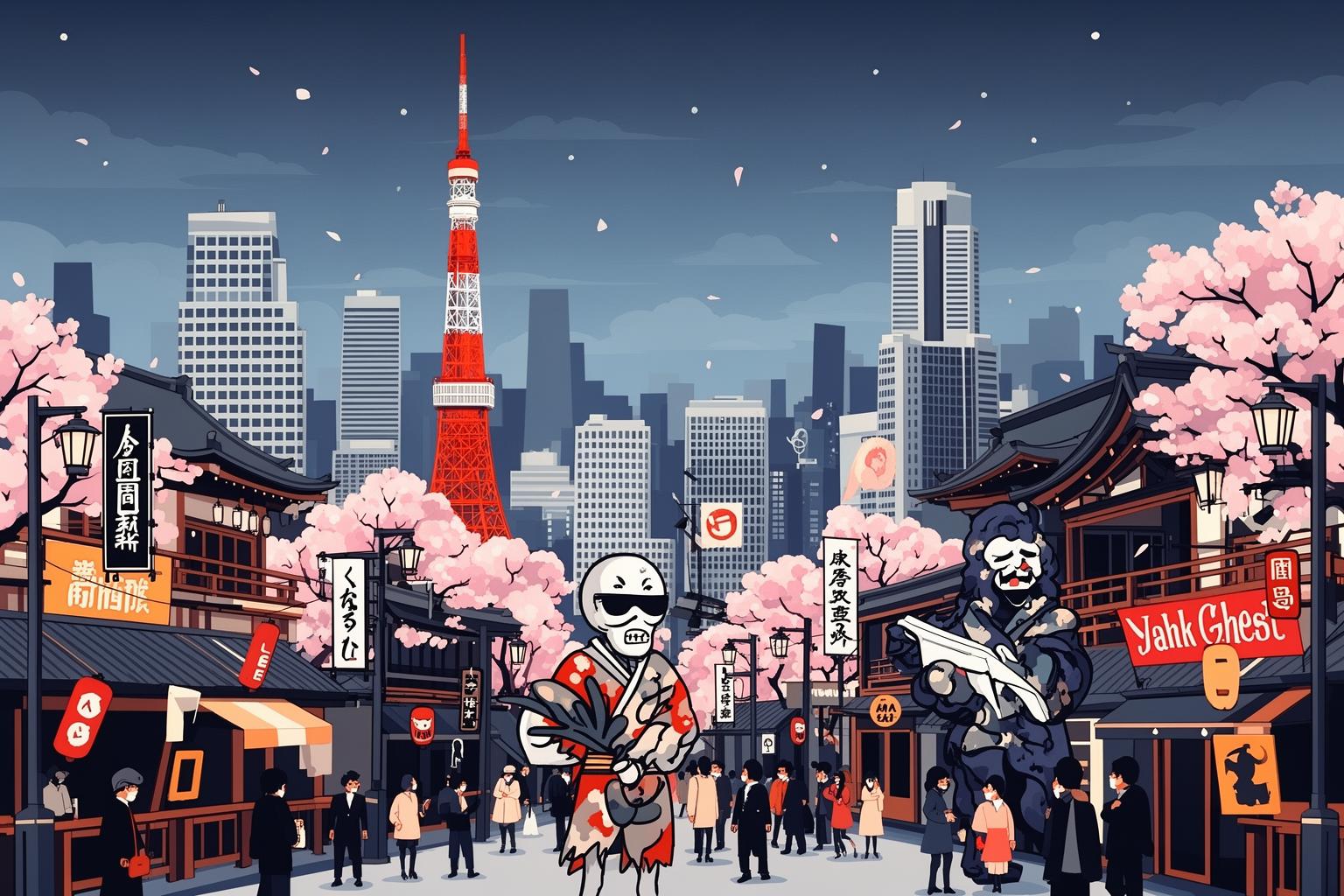
Now that you’re familiar with the history, you can begin to perceive the ghost. It’s not only present in the obvious, costume-like recreations but also in the subtle details of how fashionable, ordinary people in Tokyo style themselves.
It’s More Than a Costume; It’s a Silhouette
Look beyond the embroidered jackets and pompadours. The true influence lies in the silhouette. Next time you find yourself in a trendy Tokyo neighborhood like Shimokitazawa or Koenji, observe the shapes. Notice the widespread use of drop-shoulder tops that create a strong, slouchy upper body. See how many young men wear wide, pleated trousers that gather around their ankles. This contrast between oversized tops and baggy bottoms is the prevailing silhouette in contemporary Japanese casualwear and directly descends from how delinquents altered their uniforms to appear tougher and more imposing. The spirit of the Yanki is embedded in the very proportions of today’s streetwear.
The Feminine Counterpart: From Sukeban to “Strong” Styles
The influence is not solely masculine. The sukeban archetype has had a significant, albeit less direct, effect on female fashion and popular culture. The image of the tough, independent schoolgirl who leads her own gang and refuses to be victimized is compelling. Her uniform—the long skirt, the altered sailor collar, the defiant gaze—has been repeatedly referenced in film, anime, and music.
This aesthetic contributes to the “girl crush” concept popular in both J-Pop and K-Pop, which celebrates strong, charismatic female performers rather than solely cute or demure ones. The desire for a female look that conveys power and agency instead of submissiveness finds some of its deepest Japanese roots in the sukeban. When you see a modern idol group performing in stylized, vaguely military-inspired school uniforms, you’re witnessing a refined, pop-friendly echo of the delinquent girl gangs from the ’70s.
A Final Reflection on a Fashion Paradox
Herein lies the beautiful irony of it all. A subculture born from a fierce rejection of the Japanese system has become one of that system’s most enduring stylistic exports. The Yanki resisted the pressure to become faceless cogs in the machine by crafting a visual identity so bold it couldn’t be ignored. They may have lost their battle against the mainstream, but they achieved a strange and lasting victory in its wardrobe. The ghost of the pompadoured rebel isn’t haunting Japan; he’s now woven into the fabric, a silent, stylish reminder that sometimes the kids who refuse to follow the rules end up setting them for everyone else.