Ask someone what a “car enthusiast” is, and you might get a picture of an older man in a lawn chair polishing a vintage American muscle car, or a tech billionaire showing off the latest electric hypercar. But then there’s another image, one that feels distinctly different. It’s night. The air is cool. A sleek, low-slung coupe with a massive wing sits under the orange glow of a highway lamp, its turbocharged engine humming a tense, impatient rhythm. This is the world of JDM, the Japanese Domestic Market, and for a global legion of followers, it’s less a hobby and more a complete aesthetic universe.
The fascination isn’t just with the machines themselves—the legendary Nissan Skylines, Toyota Supras, and Mazda RX-7s of the 1990s. It’s with the entire atmosphere they inhabit. It’s a vibe captured in grainy film photos, late-night video game sessions, and meticulously drawn manga panels. It’s the feeling of a lonely mountain pass, the blur of city lights on a midnight expressway run, the quiet camaraderie of a car meet in a dimly lit parking structure. This global obsession with a specific era of Japanese automotive culture begs a bigger question: why? Why do these cars, and the world they represent, exert such a powerful pull decades later and thousands of miles away from their origin? The answer has little to do with horsepower specs or 0-60 times. It’s about a unique convergence of economic reality, artistic expression, and technological ambition that could only have happened in 1990s Japan.
This evocative blend of art, engineering, and midnight allure is perfectly encapsulated in the unique soul of 90s JDM cars that continues to inspire a global following.
The Bubble’s Echo: A Counter-Culture Forged in Recession
To understand 90s JDM culture, you first need to grasp the decade that came before. Japan’s 1980s was the era of the “bubble economy,” a time of extravagant economic excess. Money flowed freely. Companies poured fortunes into lavish parties and architectural wonders. The national mood was one of boundless optimism. Then, in the early 90s, the bubble burst—spectacularly.
The stock market collapsed, real estate prices plunged, and Japan entered a period of economic stagnation known as the “Lost Decade.” The flamboyant confidence of the 80s vanished, replaced by widespread uncertainty and austerity. For the generation coming of age during this era, the prospect of a guaranteed corporate job and lifelong security was no longer assured. They felt adrift in a way their parents never had.
It was in this environment that the street-level car culture of the 90s found its essence. This wasn’t about flaunting wealth—that was the tasteless legacy of the bubble era. Instead, tuning and modifying affordable, high-performance domestic cars became a form of accessible rebellion and profound personal expression. It was a subculture rooted in technical skill, mechanical knowledge, and creativity, rather than financial means. A well-driven, cleverly modified Nissan Silvia could outperform far pricier European imports. This was meritocracy in action, played out on the asphalt.
This grassroots movement rejected the mainstream. While the country struggled through its economic hangover, groups of drivers—hashiriya—crafted their own worlds with distinct rules, hierarchies, and codes of honor. Whether a crew was perfecting their drift technique on a remote mountain pass or a team was chasing top-speed records on the Wangan expressway, they were building communities and identities beyond a society that felt stuck. The car was the medium, but the message was about reclaiming a sense of purpose and control.
The Canvases: Why These Specific Cars Became Icons
The machines driving this movement were, ironically, a direct outcome of the bubble economy’s excesses. During the boom years, Japanese automakers were flush with cash and engaged in an intense race for technological dominance. They invested unprecedented resources into research and development, resulting in some of the most advanced and “over-engineered” cars the world had ever witnessed.
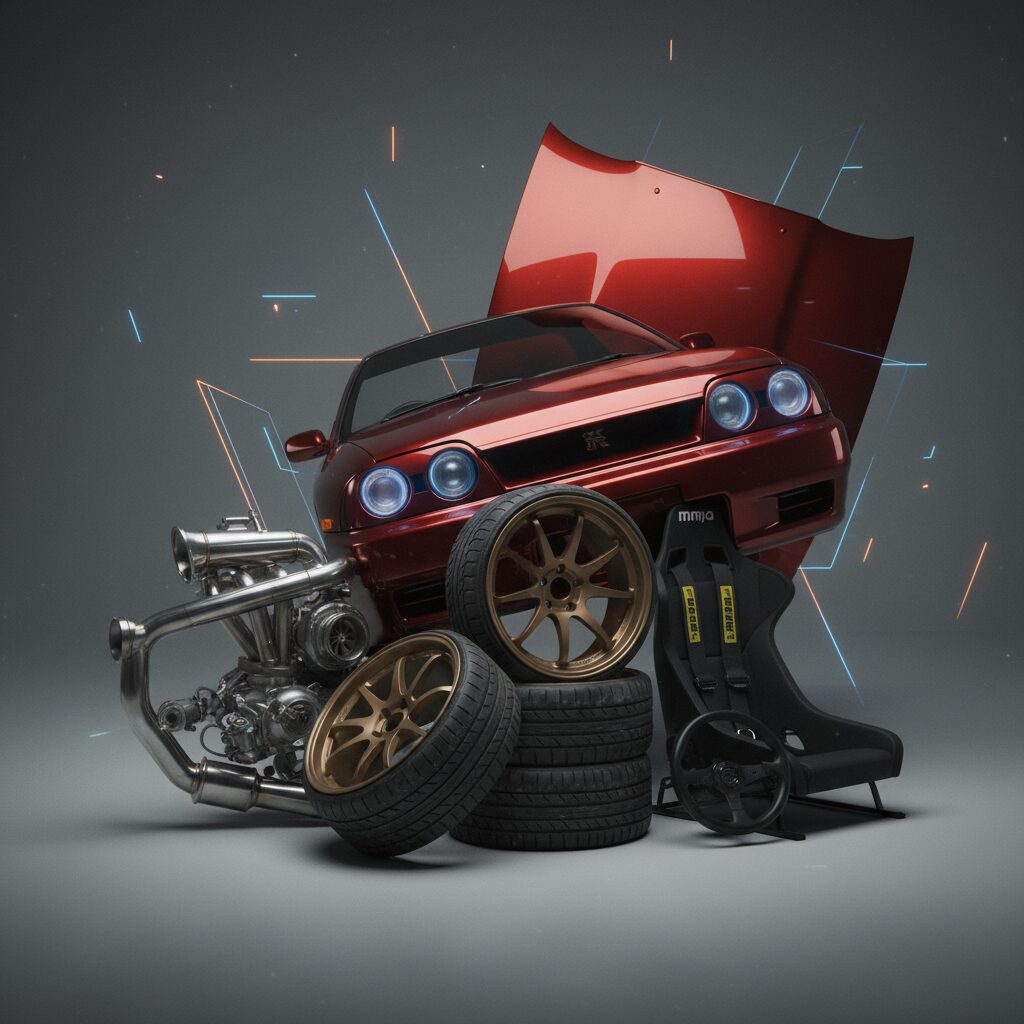
The Nissan Skyline GT-R (R32/R33/R34) featured a sophisticated all-wheel-drive system alongside the legendary RB26DETT twin-turbo engine. The Toyota Supra (A80) was equipped with the famously robust 2JZ-GTE engine, capable of handling immense power modifications. The Mazda RX-7 (FD3S) was a lightweight marvel, boasting a unique twin-rotor engine and near-perfect balance. The Honda NSX was a mid-engine supercar developed with input from Ayrton Senna himself. These vehicles were more than just cars; they were technological icons.
Importantly, they were built with significant tuning potential in mind. The engineers, perhaps unofficially, anticipated these cars would be modified. Their engines featured strong internal components, their chassis were rigid, and their electronic systems were relatively simple by today’s standards, making them highly adaptable to mechanical enhancements. This made them ideal canvases for self-expression. A stock GT-R commanded respect, but a GT-R customized to its owner’s exact specifications—with a specific turbo, a distinctive exhaust sound, and a carefully selected set of wheels—became a true work of art. It reflected the owner’s personality and philosophy.
The visual language of these modifications became central to the overall aesthetic. This wasn’t about subtlety. Aerodynamic body kits from tuners like VeilSide, RE Amemiya, and C-West dramatically transformed the cars’ profiles. Towering rear wings were not merely decorative; they provided downforce at high speeds. Deep-dish, multi-piece wheels from brands such as Volk Racing and Work were essential. The style was both functional and aggressive, serving as a clear statement that this was no longer a standard production vehicle. It had become something much more.
The Digital Gospel: How a Niche Vibe Went Global
The 90s JDM scene might have remained an intriguing but niche Japanese subculture. The reason it surged into a worldwide phenomenon can be largely attributed to a new kind of cultural export: digital media.
The Video Game Revolution
Before 1997, racing games were primarily arcade fantasies. Then came Gran Turismo for the Sony PlayStation. It was more than just a game; it was a meticulously detailed automotive encyclopedia. For the first time, players in London, Los Angeles, and Sydney could virtually “own,” customize, and race hundreds of Japanese cars they had never encountered on their own streets. They learned to distinguish a Silvia K’s from a Q’s, memorized engine codes, and experienced the excitement of tuning a Mitsubishi Lancer Evolution to its absolute peak. Gran Turismo didn’t merely simulate driving; it simulated the entire culture of ownership and tuning, turning millions of kids into JDM aficionados without ever setting foot in a real car.
Later, games like the Need for Speed: Underground series built on this foundation and heightened the emphasis on aesthetics, focusing heavily on visual customization—the body kits, vinyl graphics, and neon underglow—that were popular in the tuner scene. It captured the whole 90s JDM vibe and brought it to a mainstream Western audience.
The Anime and Manga Connection
At the same time, two manga series delivered the narrative soul that video games couldn’t provide. The first was Initial D. It told the story of Takumi Fujiwara, an apparently indifferent teenager who unknowingly masters his driving skills by delivering tofu for his father’s shop on the treacherous mountain roads of Mount Akina. His car is an unassuming 1980s Toyota Sprinter Trueno (AE86), yet he uses it to outdrive more powerful, modern sports cars through sheer technique.
Initial D romanticized the world of touge (mountain pass) racing. It wasn’t about money or fame; it was a deeply personal, almost spiritual quest for perfection. It celebrated the underdog and glorified driver skill over raw horsepower. The series created a mythology around its cars and settings, turning the AE86 into a legend and making icons out of real-life drift pioneers like Keiichi Tsuchiya, who acted as a consultant for the series.
In contrast to Initial D’s focus on technique was Wangan Midnight. Set on Tokyo’s vast Shuto Expressway system, it told a darker, more philosophical story about the obsession with ultimate top speed. Its protagonist drives a heavily modified Nissan Fairlady Z, nicknamed the “Devil Z,” a car seemingly possessed by a malevolent will of its own. Wangan Midnight captured the existential thrill and grave danger of highway racing, examining the fine line between passion and self-destruction. Together, these two series established a rich narrative world that gave the cars context, personality, and emotional depth.
The Sacred Spaces: Where the Culture Came to Life
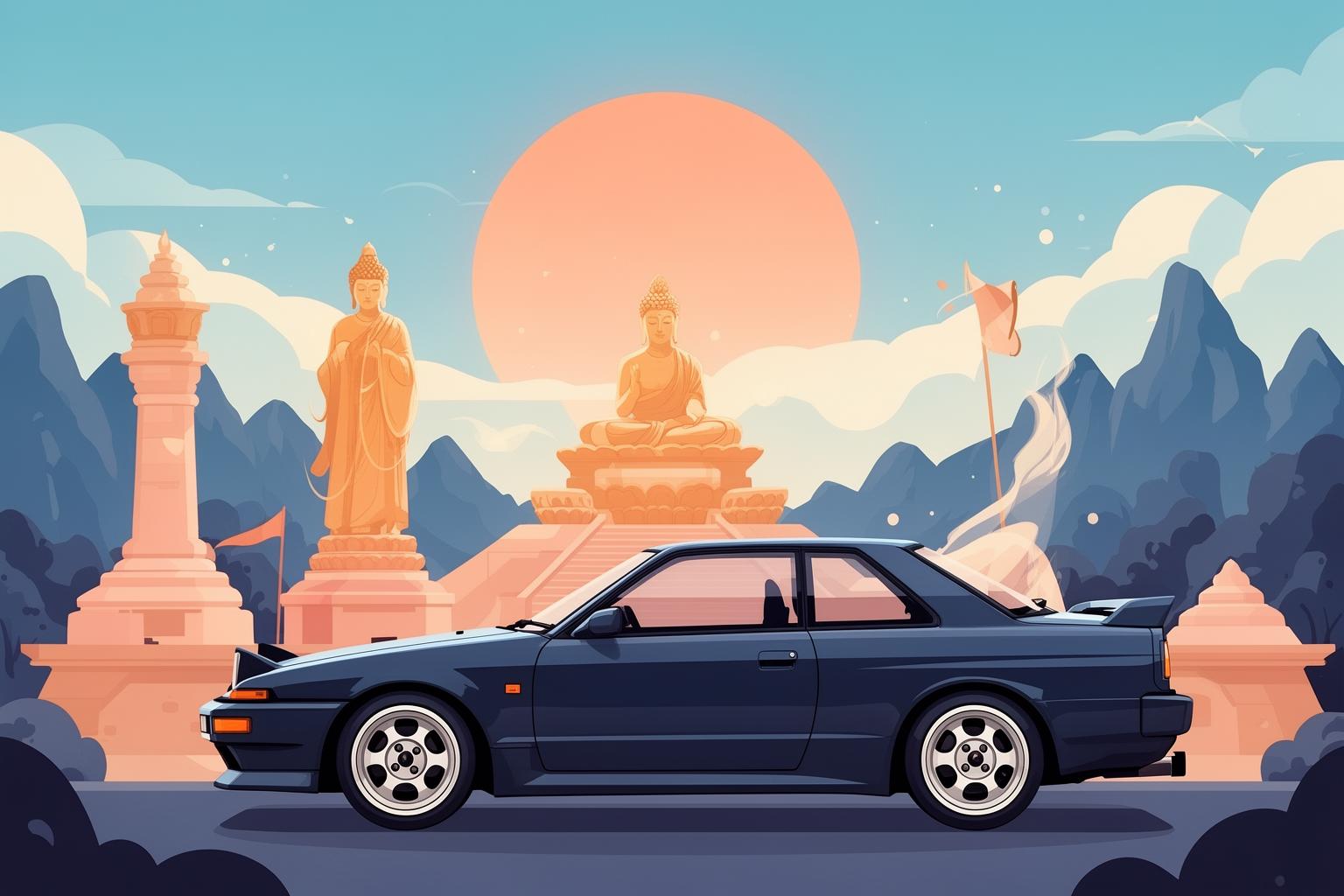
The environment plays a vital role as a character in the JDM story. This culture didn’t emerge on pristine, professional racetracks; it was shaped in the wild—on public roads that doubled as proving grounds and pilgrimage sites.
Touge: The Mountain Passes
The touge are the countless winding mountain roads that weave through Japan’s volcanic terrain. Narrow, often dimly lit, and unforgiving, they serve as the natural habitat for drifters and grip drivers alike. Racing here isn’t about top speed but about rhythm, precision, and mastering the perfect line through a complex sequence of corners. It’s an intimate dance between driver, machine, and road. The touge captures the zen-like focus of Initial D—a quiet, intense competition requiring a profound understanding of your car’s limits. The atmosphere is one of solitude and mutual respect among those brave enough to challenge the mountain.
Wangan: The Bayshore Route
If the touge is a scalpel, the Wangan is a sledgehammer. This is Tokyo’s Shuto Expressway Bayshore Route, a long, multi-lane elevated highway slicing through the city’s industrial core. At night, it becomes an unofficial high-speed track, the domain of legendary street racing teams like the Mid Night Club, an exclusive group known for enforcing a strict code of conduct and dedicated to surpassing 300 km/h (186 mph). The Wangan embodies a different philosophy: the relentless chase for power and speed. The setting is not peaceful nature but the overwhelming, impersonal expanse of the megacity, with endless lights blurring into streaks as cars roar through the night. It’s a world marked by immense risk, mechanical endurance, and urban anonymity.
These real-world locations, immortalized in media, gave the JDM subculture a tangible sense of place. They were more than just roads; they were the stages where legends were born.
The Enduring Vibe: Analogue Grit in a Digital Age
So why does this particular aesthetic continue to resonate so strongly? In a world dominated by seamless digital interfaces, electric vehicle hums, and AI-assisted driving, the 90s JDM scene feels defiantly analogue and human.
It’s an aesthetic rooted in imperfection. It’s captured in the grain of a 35mm photograph, rather than the sterile clarity of a smartphone image. It’s the sharp flare of a xenon headlight slicing through darkness, the reflection of a neon convenience store sign on a rain-slicked street. It’s the mechanical symphony of a finely tuned engine: the whistle of a turbo spooling, the sharp hiss of a blow-off valve, the raspy growl of a straight-pipe exhaust. This sensory richness starkly contrasts with the quiet, frictionless nature of modern technology.
This world offers a sense of authenticity and hard-earned skill. Mastering a rear-wheel-drive car on a slippery mountain pass requires thousands of hours of practice. Building an engine capable of enduring the abuse of the Wangan demands deep mechanical expertise. It’s a culture that values what you can do with your hands and feet, not just what you can purchase off the shelf. This hands-on, visceral connection is deeply compelling in an age where so much of our interaction with the world is filtered through screens.
Ultimately, the 90s JDM aesthetic represents a fully realized, self-contained universe. It has its own visual language, its sacred texts in the form of manga, its legendary heroes, and its revered landmarks. It offers a powerful sense of identity and belonging for those who feel disconnected from mainstream consumer culture. It’s a tribute to a time when cars had distinct, sometimes flawed, personalities, and when a group of young people, confronting an uncertain future, chose to create their own meaning at 7,000 RPM in the dead of night.