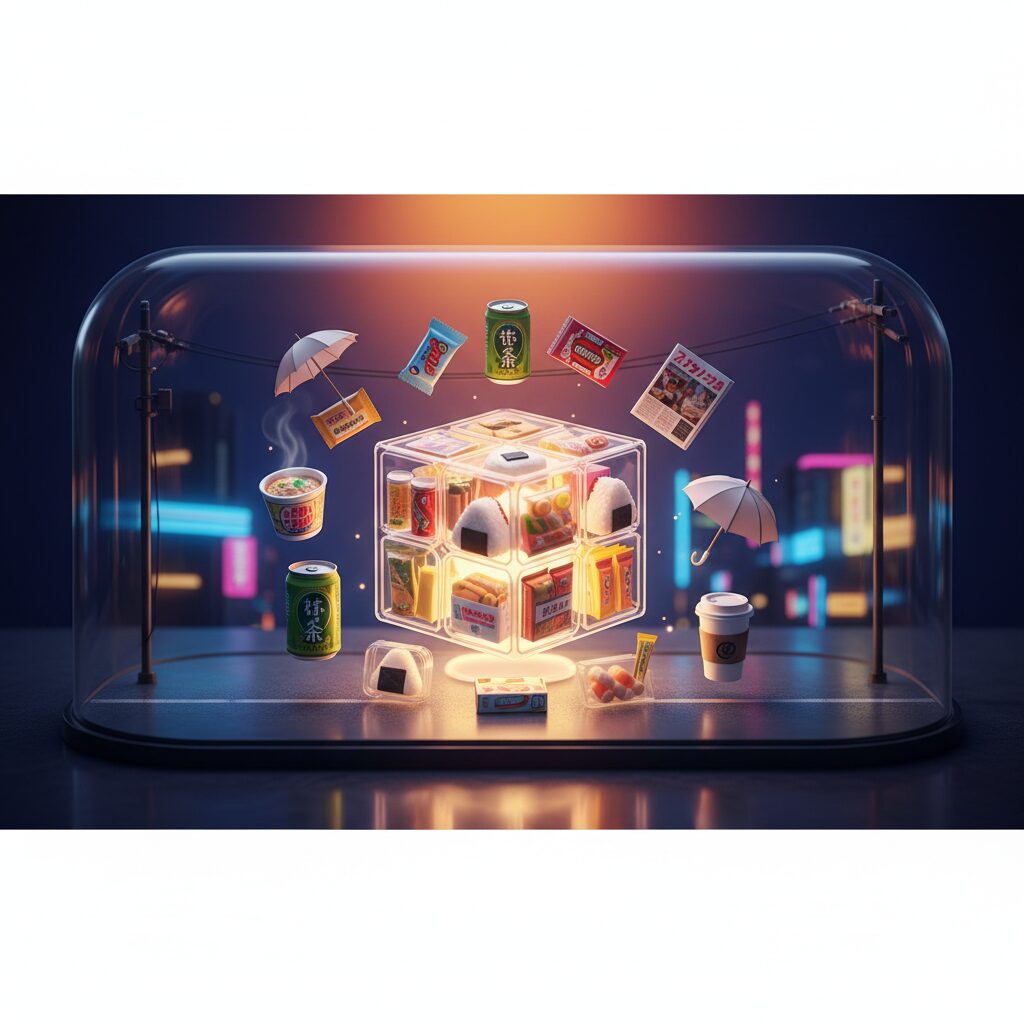
Every visitor to Japan has their konbini moment. It might be the first time they bite into an egg salad sandwich so surprisingly perfect it feels like a culinary revelation. Or maybe it’s the quiet hum of the drink coolers at 3 AM in a silent Tokyo neighborhood, a glowing beacon of reliable comfort. You go in for a bottle of water and emerge with a flawless onigiri, a limited-edition melon-flavored soda, a ticket to a Ghibli Museum you didn’t know you could buy there, and a profound sense of order in the universe. It’s easy to dismiss these places as mere convenience stores, the Japanese equivalent of a 7-Eleven or a Wawa. But that’s like calling a Michelin-starred restaurant a place to get a snack. The Japanese konbini is something else entirely. It’s a finely tuned engine of social infrastructure, a gallery of consumer desire, and arguably one of the most honest reflections of modern Japanese culture you can find. It’s not just about what they sell; it’s about how they sell it, why it’s there, and the invisible social contract it upholds with every transaction. To understand the konbini is to understand the quiet rhythms, the unspoken priorities, and the relentless pursuit of perfection that define daily life in Japan.
This interplay of meticulous service and vibrant cultural identity not only defines the konbini experience but also mirrors the spirited energy of an oshi-katsu lifestyle thriving within modern Japan.
The Third Place, Perfected

Sociologists refer to the “third place”—a location that isn’t home (the first place) or work (the second). It’s a public space where people can gather, connect, and experience a sense of community. Think of traditional European cafes or American pubs. In Japan, the konbini has developed into a distinctive and powerful version of this idea, adapted to the particular needs of a dense, urban, and often solitary society. It serves as a third place that operates without the pressure of social interaction, allowing you to exist there in complete, anonymous comfort.
It’s a refuge of solitude. You can enter at any time, grab a hot coffee from the self-service machine, stand by the window at the counter, and simply be. No one will bother you. No one expects conversation. The space is impeccably clean, brightly lit, and completely safe. This atmosphere of non-committal presence is essential. In a culture that highly values social harmony and well-defined roles, the konbini offers a brief escape into a neutral zone. It’s a place to unwind between the demands of work and the privacy of home.
But its role goes far beyond a mere pit stop. The konbini acts as the central nervous system for life’s mundane errands. Need to pay your electricity bill? Scan it at the register. Need to print a document from a USB drive? The multifunction copier is ready. Want to send a package across the country? They handle that as well. You can purchase tickets for concerts, theme parks, and buses. You can withdraw cash from an ATM that reliably accepts foreign cards. This concentration of services directly answers the demands of modern Japanese life, where time is valuable and efficiency is crucial. The konbini streamlines the routine, freeing up mental and physical energy for more important matters. It’s not just a store; it’s a life-support system, seamlessly woven into the neighborhood’s fabric.
The Relentless Pursuit of ‘Just Right’: Product Curation as Cultural Text
The true brilliance of the konbini, however, lies in its shelves. The product selection is not a random mix of goods; it’s a carefully curated display of contemporary Japanese taste, refreshed with a frequency that would likely cause a Western retail executive to panic. This continual, thoughtful renewal is driven by powerful cultural influences.
The Seasonal Obsession
In the West, seasons are marked by changes in weather and major holidays. In Japan, they represent a profound aesthetic principle called kisetsukan (季節感), a feeling or sense of the season that permeates everything from high art to cuisine. The konbini is where this ancient appreciation for seasonality is made accessible to the public on a daily, consumable level.
Spring isn’t just about warmer weather; it signals the arrival of sakura and strawberry-flavored items in abundance. From sakura mochi and strawberry sandwiches (with the crusts meticulously removed) to pink-hued lattes and beers, the shelves blush with seasonal colors. Summer brings a wave of cooling treats: mint-and-chocolate ice creams, salt-and-lemon potato chips, and special cold noodle kits. Autumn takes over with sweet potato, chestnut, and pumpkin, offering rich, earthy flavors in buns, cakes, and even canned coffee. Winter introduces hearty stews and warming yuzu-citrus drinks. This is more than a marketing strategy—it’s a way to participate in a shared cultural rhythm, allowing the urban office worker, distanced from traditional agricultural cycles, to connect with the passage of time. The konbini transforms the abstract concept of the season into something tangible and delicious.
The Art of the ‘Limited Edition’ (Gentei)
Closely linked to seasonality is the Japanese fixation on gentei (限定), or limited-edition products. Step into any konbini, and you’ll see this term everywhere. It might be a collaboration between a well-known snack brand and a Michelin-starred ramen restaurant, available for only three weeks. It could be a unique Kit Kat flavor sold only in a specific region or during a certain month. This culture of ephemerality turns ordinary shopping into a low-stakes treasure hunt.
This phenomenon reflects a deep cultural appreciation for transience, a concept embodied in the aesthetic of mono no aware, the gentle sorrow for the passing of things. By making a product temporary, its value increases. You have to get it now. This creates a continual sense of novelty and discovery. The konbini is never the same store twice. This week’s favorite drink may vanish next week, replaced by something fresh and intriguing. It wards off consumer boredom and encourages regular visits, not out of necessity, but curiosity. It turns a simple transaction into an experience.
Quality in the Mundane: The Onigiri Paradox
Consider the rice ball. The onigiri stands as perhaps the ultimate symbol of konbini excellence. To an outsider, it’s just rice and filling. But to grasp the konbini onigiri is to understand kodawari—the relentless, nearly obsessive pursuit of perfection in the smallest details. The rice isn’t just any rice; it’s cooked to flawless consistency, lightly seasoned, and shaped with the perfect amount of pressure. The fillings, whether traditional salted plum or modern tuna-mayonnaise, are precisely portioned.
Yet the true masterpiece lies in the packaging. The ingenious three-step plastic wrapper keeps the crispy sheet of nori seaweed separate from the moist rice until the moment it’s eaten. This prevents the seaweed from turning into a soggy mess. Someone, somewhere, devoted serious thought and engineering skill to solving the problem of a limp onigiri. This refusal to compromise on quality, even for a product costing just over a dollar, is quintessentially Japanese. It reflects a cultural belief that if something is worth doing, it’s worth doing perfectly. This philosophy extends to everything: the rich, flavorful broths of instant noodles, the surprising fluffiness of steamed buns, and the complex profiles of canned coffees. The konbini demonstrates that convenience and quality need not be mutually exclusive.
The Invisible Choreography: Service, Space, and Social Logic

Beyond the products, the experience of being in a konbini is shaped by a set of unspoken rules and systems that emphasize efficiency and seamless interaction. It’s a carefully orchestrated routine where every detail serves a purpose.
The Silent Service
The interaction with a konbini clerk exemplifies streamlined Japanese service. It’s a predictable and comforting ritual. They welcome you with a crisp “Irasshaimase!” (Welcome!). They scan your items with impressive speed. If you purchase a bento box or onigiri, they will ask, “Atatamemasu ka?” (Shall I heat this for you?). They place your items in a bag with near-reverent precision. The transaction concludes with a polite “Arigatou gozaimashita!” (Thank you very much!).
There is no small talk, no idle chatting about the weather. This is not rude; it is a form of respect. The service is designed to be as efficient and unobtrusive as possible. It is a type of omotenashi—wholehearted hospitality—that anticipates the customer’s needs (speed, accuracy, politeness) without imposing any social obligation. In a high-traffic environment, this consistent, silent service is reassuring, ensuring that a simple purchase remains just that: simple.
The Grammar of the Layout
Nothing in a konbini is placed by chance. The store layout is a physical expression of behavioral psychology, designed to guide you with ease. High-demand items, such as drinks and milk, are almost always kept in coolers at the very back of the store. This is deliberate. To reach these, you must walk past aisles filled with snacks, instant noodles, and limited-edition sweets, increasing the likelihood of an impulse purchase.
Hot snacks, like fried chicken and croquettes, are displayed in a heated case right by the cash register, tempting you as you wait to pay. Magazines are positioned near the entrance or windows, encouraging browsing while also acting as a visual screen for those eating inside. The flow is intuitive. The aisles are just wide enough. Everything is arranged to reduce friction and decision time. It’s a space engineered for a society that values systems working quietly in the background.
A 24/7 Safety Net
The konbini is more than a business; it’s a community cornerstone. Its constant light serves as both a literal and figurative beacon of safety. In a country susceptible to natural disasters, konbini are recognized as vital infrastructure. After an earthquake, they often remain open, supplying essential items like water, food, and batteries. Their strong supply chains mean they are usually among the first to be restocked. Staff are trained to support the community during emergencies, and the stores can function as impromptu information centers or shelters. This role cements the konbini’s status in the public consciousness not just as a store, but as a dependable, indispensable part of society. It’s the one place you can always rely on, no matter the circumstance.
The Konbini and the Consumer Psyche
Ultimately, the Japanese konbini perfectly reflects the modern consumer it serves. It accommodates the realities of urban life: long working hours that leave little time for cooking, and compact apartments with limited pantry space. It offers high-quality, single-serving meals designed for the increasing number of people living alone. It also fulfills the craving for novelty and small indulgences that break up the routine of daily life.
Additionally, it embodies a comfort with a curated environment. Unlike expansive Western supermarkets with numerous choices for every product, the konbini provides a limited selection. Instead of twenty brands of ketchup, you get two or three carefully chosen for their quality. This helps reduce decision fatigue in a society already overwhelmed by information and pressure. The konbini quietly assures, “We’ve done the research for you. These are the best options. You can trust us.” And people do.
So, the next time you walk through those chiming automatic doors, take a moment to look beyond the bright packaging and tempting snacks. You are standing in a cultural crossroads, where enduring traditions of seasonality and quality meet the advanced logistics of 21st-century retail. It’s a space that recognizes the need for both quiet solitude and communal function. The konbini isn’t merely convenient. It’s a coherent and thoughtfully designed system, a subtle hero that makes modern life in Japan not only feasible but enjoyable. It represents one of the most brilliant and insightful expressions of a culture you will ever encounter.