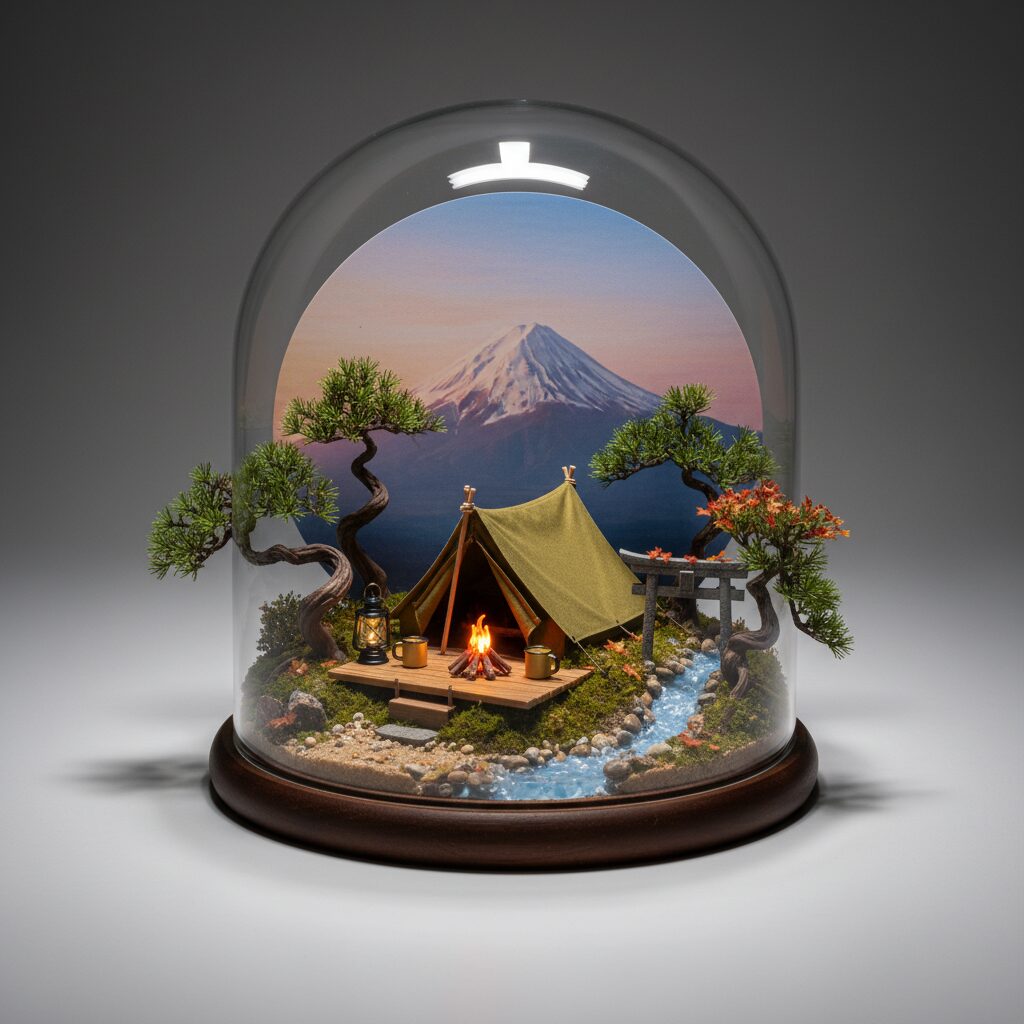
You’ve probably seen camping portrayed as a boisterous group activity. It involves a sprawling tent city, a cooler overflowing with beer, someone enthusiastically butchering a song on an acoustic guitar, and the constant, overlapping chatter of friends. It’s about community, shared experience, and maybe a little bit of chaos. In Japan, however, another form of camping has quietly but firmly taken root, one that turns this entire picture on its head. It’s called solo-kyan, or solo camping, and it’s less about partying with others and more about finding a quiet conversation with yourself.
To the uninitiated, the idea might sound lonely, maybe even a little strange. Why would someone want to venture into the woods entirely by themselves? But that question misses the point entirely. Solo camping in Japan isn’t an exercise in enduring loneliness; it’s a deliberate pursuit of solitude. It’s a modern pilgrimage, a ritual of disconnection from the hyper-social, digitally saturated world of the city in order to reconnect with something more fundamental. It’s about finding a rhythm that is purely your own, dictated only by the rising sun, the rumbling of your stomach, and the slow dance of flames in a campfire. This isn’t about survivalism or ruggedly conquering the wilderness. It’s about gracefully inhabiting it for a short time, armed with thoughtfully designed gear and an intention to simply be. The recent popularity of media like the anime Yuru Camp △ (Laid-Back Camp) has certainly brought solo-kyan into the spotlight, but its soul is tied to much older Japanese and, more broadly, East Asian philosophies of finding clarity in nature and simplicity.
Solo camping’s embrace of quiet introspection often goes hand-in-hand with adopting a mottainai philosophy that celebrates simplicity and resourcefulness in every aspect of life.
Beyond the Tent: The Mindset of Solo-kyan
At its core, solo-kyan (ソロキャン) is a mindfulness practice disguised as a hobby. The true aim isn’t merely to sleep outdoors; it’s to deliberately carve out a pocket of time and space free from outside demands. This strikes a chord in a society that highly values the group and social harmony. To fully grasp solo camping, you first need to understand the growing cultural acceptance of ohitorisama (お一人様), meaning “party of one.”
For decades, doing things alone in Japan could draw pitying looks. Eating, traveling, or attending concerts solo was often viewed as a sign of social failure. But that view has shifted significantly. Today, ohitorisama culture is embraced as a symbol of independence and self-reliance. Restaurants offer solo dining booths, karaoke bars provide rooms for one, and travel agencies promote individual tours. It acknowledges that choosing to be alone is not the same as being lonely. Solo camping may be the ultimate expression of this mindset. It’s a statement that one’s own company is not only enough but also desirable.
This is not solely a modern Japanese phenomenon. Having spent time exploring the cultural links between China and Japan, I observe echoes of ancient traditions. Consider the Chinese scholar-poets or Chan (Zen) Buddhist monks who retreated to mountain hermitages not to escape the world, but to perceive it more clearly. They sought quiet reflection to compose poetry, practice calligraphy, or simply watch the changing seasons. Solo-kyan is a contemporary, accessible iteration of this impulse. You don’t need to be a sage or a monk; you only need a small tent, a quiet spot of land, and a willingness to listen to the silence.
The Gear is the Ritual: Preparing for Solitude
In Japanese culture, the tools used for an activity are seldom merely functional items; they are integral to the ritual itself. Consider the tea ceremony, where every utensil is carefully chosen and handled with deliberate intention. This same approach applies to solo camping. The act of selecting, packing, and using your gear becomes a meditative practice, a way to prepare your mind for the tranquility ahead.
The Minimalist’s Toolkit
Japanese camping gear exemplifies elegant, functional minimalism. The focus is on equipment that is lightweight, compact, and impeccably crafted. It’s not about having the largest or flashiest setup, but rather about having exactly what you need—and nothing more. This philosophy of curated simplicity eliminates distractions, leaving only the essentials.
A typical solo-kyan kit includes a small, one-person tent that can be pitched quickly. A comfortable yet compact folding chair is essential—designed for relaxed observation, not just sitting on a log. A portable table, just big enough to hold a lantern and a modest meal, completes the setup. Brands like Snow Peak, Montbell, and Logos are celebrated for their blend of aesthetic elegance and durable performance. Using this gear feels less like roughing it and more like creating a temporary, personal sanctuary. The quality and design are not about showing off, but about ensuring a smooth, frustration-free experience, letting your mind stay focused on your surroundings rather than dealing with a stuck tent pole or an unstable stove.
The Culinary Ceremony for One
Food is never an afterthought in solo-kyan; it holds a central place in the experience. Cooking for one becomes a deliberate, mindful ritual. There’s no rush to feed a crowd, no compromise on the menu. It’s an act of self-care.
The iconic cookware for many solo campers is the messtin, a simple aluminum box ideal for cooking a single portion of rice perfectly. The process itself is soothing: washing the rice, letting it soak, carefully tending the flame, and waiting for the steam to clear. It requires your full attention. Other popular meals are similarly straightforward yet satisfying. Grilling a piece of seasoned meat or fish over a small tabletop grill, simmering a personal hot pot (nabe), or simply enjoying instant noodles made with water heated on your own stove feels profoundly rewarding.
The morning coffee ritual is equally important. Many campers bring whole beans, a hand grinder, and a pour-over set. The act of grinding the beans, boiling water, and slowly pouring it over the grounds fills the quiet morning air with a rich aroma. Each step is unhurried. This isn’t about grabbing a quick caffeine fix; it’s about savoring the entire process. This culinary ceremony anchors you in the present, transforming a basic necessity into a source of quiet pleasure.
Finding Your Space: The Japanese Campsite
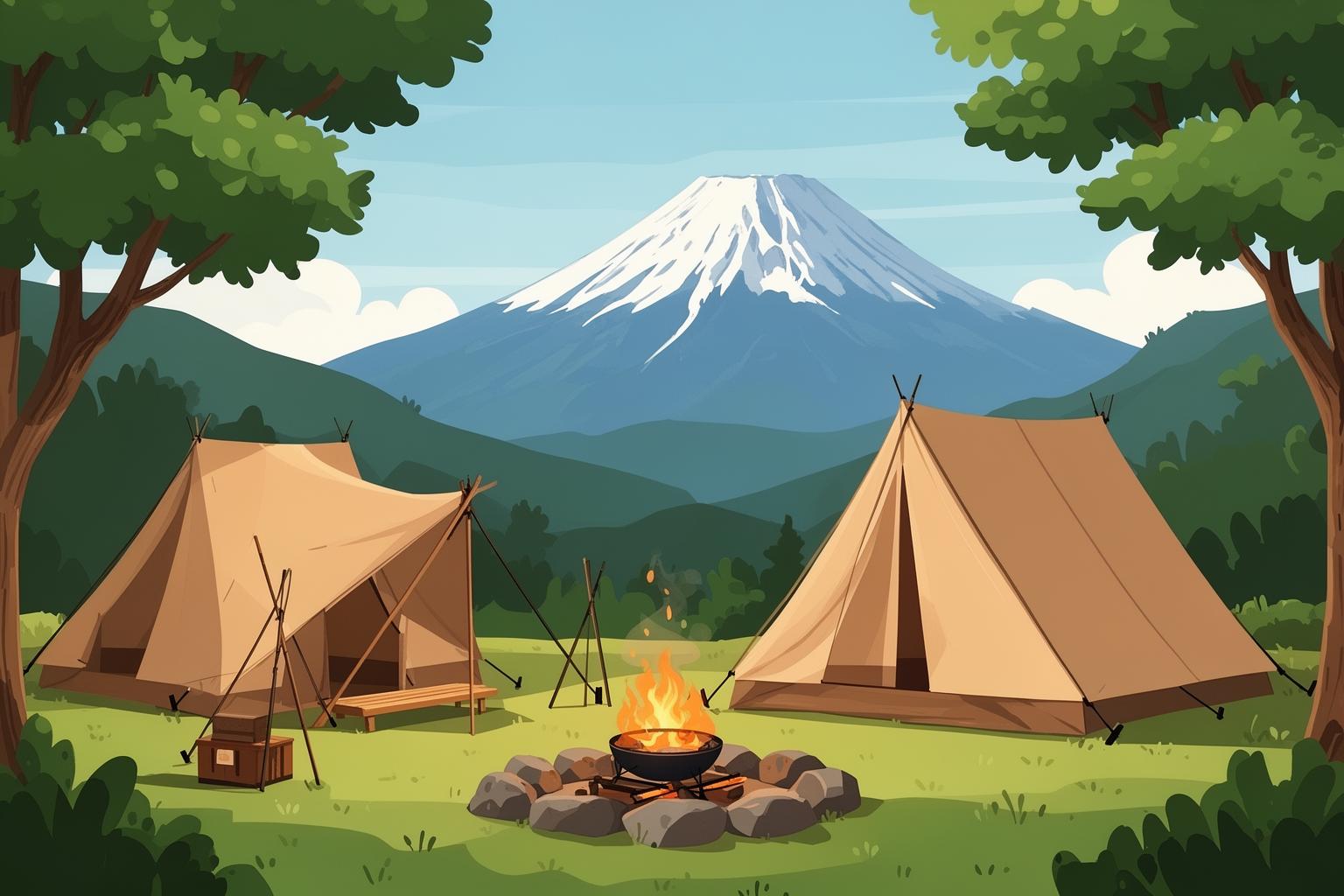
In contrast to the vast, untamed wilderness commonly linked with North American camping, campsites in Japan are generally well-defined and carefully maintained. The idea of “wild camping” is uncommon and often prohibited. Instead, campers reserve a spot at an established campground, which offers a structure of safety and order within a natural environment.
These campsites, referred to as kyanpujō (キャンプ場), often feature pristine amenities, such as clean toilets, sinks with running water for washing dishes, and designated waste disposal areas. The sites themselves are typically clearly marked plots, offering a sense of personal space while remaining close to others. This may seem contradictory for a solitary experience, but it reflects a culture that prioritizes harmony and predictability. It eliminates the stress of finding a suitable spot or concerns about safety, freeing mental energy for the true goal of the trip: relaxation.
Importantly, Japanese campsites function on a foundation of unspoken rules and shared etiquette. The most essential of these is respect for quiet. Loud music, shouting, and late-night noise are strongly discouraged. Although there are often strict quiet hours, most campers instinctively understand that they are there to appreciate the sounds of nature, not overpower them. You are surrounded by others, yet a sense of communal solitude persists. Everyone participates in their own quiet ritual, with a profound, mutual respect for each individual’s space of peace. It exemplifies the concept of wa (和), or group harmony, applied to a group of individuals seeking solitude. You are alone, together.
The Activities of Inaction: Meditations in the Wild
So what exactly does one do for hours at a solo campsite? This is where the Western focus on productivity and entertainment often conflicts with the Eastern philosophy of simply being. The purpose of solo-kyan is not to occupy time, but to experience its flow. The most cherished activities are often those of intentional inaction.
Takibi: The Philosophy of the Campfire
The campfire, or takibi (焚き火), lies at the core of the solo camping experience. It’s much more than a source of warmth or light; it serves as a center for reflection. Many campsites offer perfectly sized bundles of firewood, and the careful arranging of kindling and logs to create a steady flame is the opening act of meditation.
Once the fire is burning steadily, the main activity is simply observing it. In Japanese, there’s a casual term for this: hi-asobi, literally meaning “fire play.” It’s about being captivated by the flames as they flicker over the wood, flare up, and gradually fade to glowing embers. With no phone to scroll through and no one to converse with, the fire becomes your sole companion and source of entertainment. It’s a primal human experience that resonates deeply within us. As you gaze into the flames, the constant inner chatter begins to calm. Concerns about deadlines and social demands seem to dissipate with the rising smoke. The fire asks nothing from you but your attention, and in return, you find a profound sense of calm.
The Art of Doing Nothing, Purposefully
Beyond the campfire, the solo camper’s day is wonderfully open, ready to be filled with simple, analogue pleasures. Reading a physical book without the distraction of notifications is a true luxury. You might read a single page multiple times, letting the words settle, or finish an entire novel in one sitting. There is no one to break your concentration.
Making and savoring a cup of coffee or tea transforms into an event itself. You become aware of the warmth of the mug in your hands, the steam rising in the cool air, and the subtle flavors on your tongue. It’s a sensory experience often rushed through in everyday life, here given space to unfold.
Another key activity is simply listening. As your ears adjust to the stillness, you begin to notice the forest’s intricate soundscape: leaves rustling in the wind, a distant deer’s call, insects chirping, the gentle lapping of water if you’re near a lake. This practice nurtures an awareness of ma (間), the Japanese aesthetic of negative space, or the intervals between sounds. By paying attention to the silence between noises, you deepen your appreciation of the sounds themselves.
And when night falls, far from the city’s light pollution, you partake in hoshizora kansatsu—stargazing. You lie back and gaze up at a universe always present but seldom seen. It’s a humbling, perspective-shifting experience, a final reminder of your small yet peaceful place in the world.
Why Now? The Modern Appeal of an Ancient Idea
It’s no accident that solo camping is flourishing in one of the most densely populated, technologically advanced, and socially demanding countries in the world. It acts as an essential counterbalance to the stresses of contemporary Japanese life. The unceasing demands of work, constant smartphone connectivity, and the intricate network of social obligations can be mentally and emotionally exhausting. Solo-kyan offers a sanctioned and accessible refuge.
It provides a temporary break from the strict social frameworks of uchi-soto (inside/outside groups), where behavior is constantly adapted according to one’s relationship with the group. In the woods, alone, you are simply yourself. There are no roles to fulfill, no expectations to satisfy. This freedom is deeply restorative.
In the end, solo camping isn’t about escaping life but about discovering a way to return to it with a renewed sense of self. It’s a controlled, safe, and deeply personal way to connect with both nature and your inner world. The skills you cultivate—patience, self-reliance, and the ability to find contentment in stillness—are not left behind at the campsite. You pack them up along with your tent and bring them back with you into the city. It is a modern ritual for resetting the soul, a quiet adventure that demonstrates the richest experiences often occur when nothing much is happening at all.